
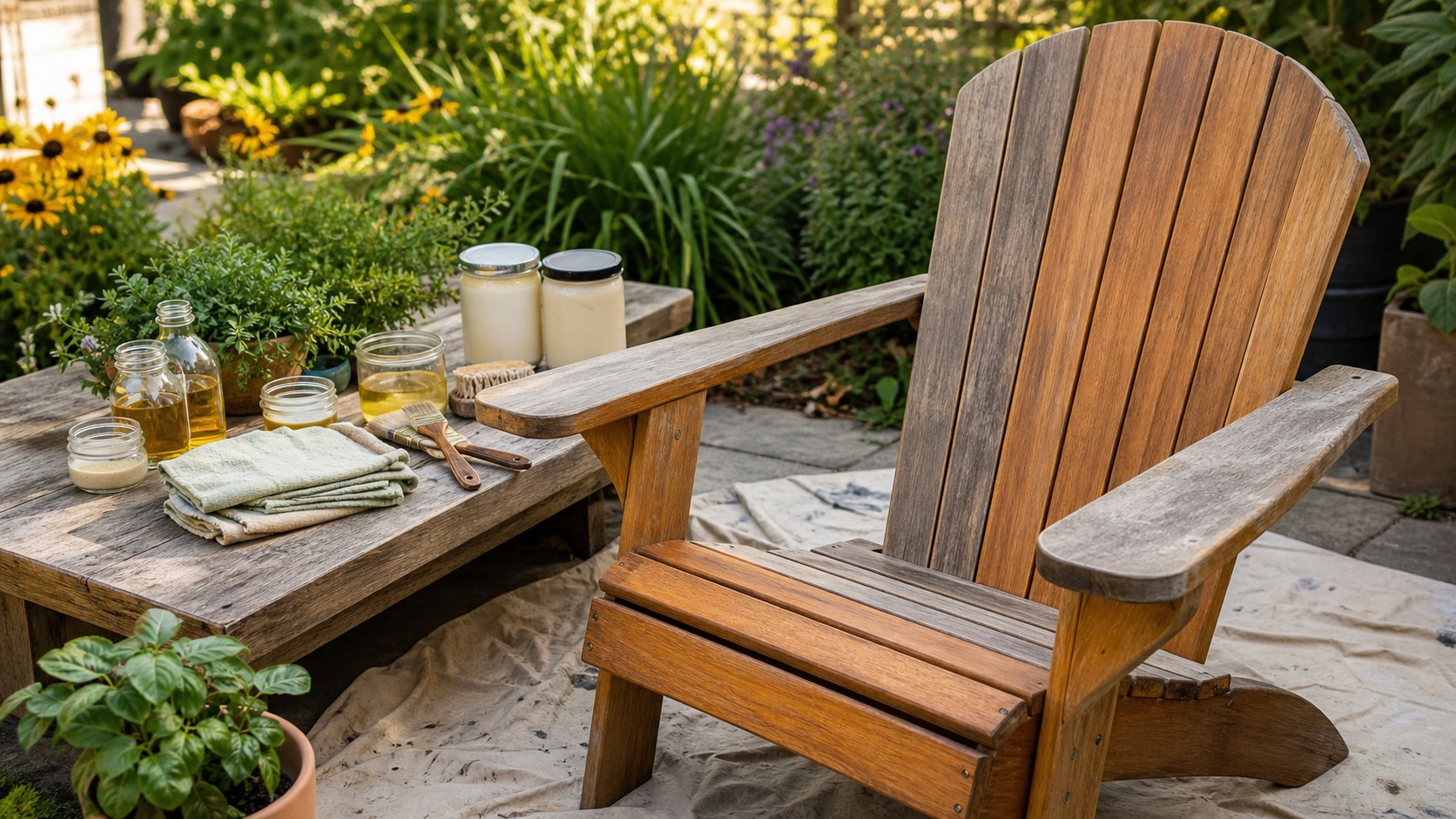
Eco-friendly refinishing is not about making an Adirondack chair look natural at any cost. It is about choosing products and methods that reduce harsh fumes, limit waste, protect soil and plants, and still leave the chair durable enough for real outdoor life. A green refinishing project should respect both sides of the equation: the environment around the workspace and the chair's need for moisture resistance, UV protection, and structural care. When those goals are balanced, an old Adirondack chair can be renewed beautifully without turning the process into a chemical-heavy restoration.
A: Some are very durable, but they must be exterior-rated and matched to the chair's exposure.
A: Often yes for light grime, but mildew, old coatings, or stains may need a purpose-made wood cleaner.
A: It can be managed responsibly with dust collection, a respirator, and careful cleanup.
A: They can improve water resistance, but they may not protect like a full exterior coating in harsh exposure.
A: No. Use them only when needed and choose safer formulas with controlled residue collection.
A: It refers to reduced volatile organic compounds, which can lower odor and air-quality impact.
A: Yes, especially if its age and ingredients are unknown, so contain dust and chips carefully.
A: Sometimes they are necessary, but reusable tools are better when they can be cleaned safely.
A: Follow local rules, especially for old paint, stripper sludge, and solvent-contaminated materials.
A: Keep the chair clean and touch up small failures before they require a full restoration.
Defining Green Refinishing in Practical Terms
The most sustainable chair is often the one you do not replace. Refinishing extends the life of existing wood, keeps bulky furniture out of the waste stream, and reduces demand for new materials. That benefit can disappear, however, if the project uses needlessly aggressive products, disposable supplies, or sloppy cleanup. Eco-friendly refinishing asks a simple question at every step: what is the least harmful method that will still do the job well?
This does not mean every product must be homemade or every finish must be raw oil. Outdoor chairs live through rain, sunlight, temperature swings, and abrasion. A finish that fails in one season is not truly green if it forces repeated stripping and repainting. Look for low-VOC, water-based, biodegradable, plant-derived, or responsibly manufactured options, but judge them by durability as well as the label.
Read product instructions carefully. Some safer products work more slowly than conventional alternatives. Giving them enough dwell time, dry time, and curing time is part of the process. Rushing a green product and then blaming it for poor performance defeats the purpose.
Cleaning Without Punishing the Wood or the Yard
Begin with dry cleanup. Brush away leaves, cobwebs, loose dirt, and flaking debris before introducing water. This simple step reduces the amount of cleaner needed and prevents dirty runoff from spreading across a patio or lawn. Place the chair on a reusable canvas drop cloth rather than disposable plastic sheeting when possible.
For routine grime, mild plant-based soap and warm water are often enough. Use a soft brush for the spaces between slats and a cloth for broad arms. Avoid chlorine bleach near gardens and avoid pressure washing unless the chair is extremely sturdy and the pressure is controlled. High pressure can scar soft wood and create more sanding dust later.
If mildew is present, use a cleaner labeled for outdoor wood and follow dilution instructions. More product is not automatically better. Keep rinse water controlled, especially near edible plants or storm drains. Eco-friendly work includes where the residue goes after it leaves the chair.
Choosing Safer Strippers and Smarter Removal Methods
Not every chair needs chemical stripping. If the old finish is mostly sound, scuff sanding and spot repair may be enough. Removing a finish just because it is old can create unnecessary dust and waste. Reserve stripping for peeling paint, incompatible coatings, or heavy buildup that prevents a new finish from bonding.
When stripping is necessary, consider low-odor or citrus-based products designed to reduce harsh fumes. They may require more patience and several passes, but they can be friendlier to a small home workspace. Work in shade when recommended, keep the surface wet for the required time, and scrape gently with a reusable tool that will not gouge the wood.
Collect residue carefully. Old paint may contain materials you do not want in soil, even when the new products are safer. Use a lined tray or drop cloth, bag the waste according to local guidance, and clean tools before residue hardens. Responsible disposal is one of the least glamorous but most important parts of green refinishing.
Low-VOC Stains, Natural Oils, and Water-Based Sealers
Eco-friendly finishing options fall into several families. Water-based exterior stains and sealers often have lower odor and easier cleanup than solvent-heavy products. Plant-based oils can enrich wood beautifully, especially on chairs where a natural look is preferred. Low-VOC exterior paints provide color while reducing indoor-style fumes in the workspace.
The right choice depends on the chair, climate, and desired appearance. A cedar chair in a covered porch may do well with a penetrating oil or semi-transparent stain. A pine chair exposed to weather may need a more protective paint or film-forming exterior coating. A teak chair may only need cleaning and a compatible oil if the owner wants to slow silver-gray weathering.
Look for exterior durability, UV resistance, water repellency, and clear maintenance instructions. A product can be environmentally preferable and still be wrong for a fully exposed outdoor chair. Testing on the underside or back of a slat helps confirm color, absorption, and sheen before committing.
Reducing Waste During Sanding and Application
Sanding is sometimes treated as a disposable step: use sheets, clog them, throw them away, and repeat. A more thoughtful approach starts with the right grit and pressure. Let the abrasive do the work. Clean or replace it only when it stops cutting. Sanding blocks, reusable detail pads, and vacuum attachments can reduce mess and improve control.
Capture dust instead of letting it drift into garden beds or across neighboring patios. Wear a respirator, work with airflow, and vacuum the chair before wiping it down. If the old finish is unknown, be conservative about dust containment. Eco-friendly does not mean casual about health.
Application supplies matter too. Reusable cloths, washable brushes, metal paint trays, and carefully stored leftovers reduce waste. Pour only what you need into a working container so the main can stays clean. Label leftover finish with the chair name and date for future touch-ups.
Protecting People, Pets, and Pollinators
A greener project also considers who shares the workspace. Keep pets and children away from wet coatings, sanding dust, and rinse water. Even safer products are not meant for paws, hands, or curious mouths. Choose a calm work area with airflow, shade, and enough room to move around the chair without stepping through residue.
If the chair is being refinished near a garden, cover nearby soil and avoid windy application days. Pollinator plants, vegetable beds, and storm drains should not receive sanding dust or finish droplets. This may sound cautious, but it is simply good workshop housekeeping brought outdoors. A tidy worksite usually produces a better finish too.
Balancing Natural Appearance With Real Weather Demands
Many eco-minded projects lean toward a natural wood look, but natural does not always mean low maintenance. Transparent oils and clear finishes allow grain to show beautifully, yet they may require more frequent renewal in full sun. A pigmented stain or low-VOC paint can sometimes be the more sustainable choice because it blocks UV more effectively and delays the next major refinishing cycle.
Think honestly about exposure. A chair under a covered porch has different needs than one beside a pool, fire pit, or open lawn. Eco-friendly refinishing succeeds when the finish is chosen for the actual life the chair will lead, not just the ideal look on the day it leaves the workbench.
Building an Eco-Friendly Maintenance Calendar
After refinishing, create a simple rhythm. In spring, wash the chair with mild soap and inspect high-wear areas. In summer, wipe sunscreen, pollen, and food residue before they bake into the finish. In fall, remove leaves and refresh any exposed wood before cold wet weather arrives. In winter, store the chair dry or cover it with breathable protection.
This calendar keeps the environmental benefits of refinishing alive. The fewer times you need to strip, sand aggressively, and recoat, the less material and energy the chair consumes over its lifetime. Maintenance is not separate from sustainability; it is the practice that makes sustainability visible.
Reading Labels Without Getting Lost in Claims
Eco-friendly product labels can be helpful, but they are not all equally specific. Look for clear information about VOC content, exterior use, cleanup method, drying time, disposal, and compatible surfaces. A vague green-looking label is less useful than a technical sheet that explains exactly how the finish protects outdoor wood. If a product does not mention exterior exposure, assume it may not be right for an Adirondack chair that lives outside.
Pay attention to the entire system, not just one can. A low-VOC topcoat may still require a primer, cleaner, or stripper with its own safety rules. Choose compatible products from the beginning so you do not have to sand off a failed experiment. Compatibility reduces waste because every layer supports the next one instead of fighting it.
When Repair Is Greener Than Refinishing
Sometimes the most responsible choice is to repair first and refinish later. A cracked seat slat, loose arm support, or rotten foot can make a beautiful new coating short-lived. Replacing one damaged board, tightening hardware, or sealing exposed end grain may extend the chair's life more than changing its color. Sustainable work looks at function before appearance.
Repair also helps you use fewer finishing products. A stable chair accepts thinner, more even coats because the joints are not shifting and cracking the coating. If you refinish a wobbly chair, the new finish may split around movement points within weeks. A half hour of structural attention can save another full refinishing cycle.
Making the Green Finish Last Longer
Longevity is the quiet heart of sustainable refinishing. A chair that receives light maintenance every season will need fewer major interventions. Keep it clean, store cushions dry, lift feet away from standing water, and refresh exposed arms or front edges before the finish fails.
Eco-friendly products often perform best when maintenance is gentle and regular. Avoid harsh cleaners after the project is complete. Use mild soap, water, and soft cloths. Check the finish after pollen season, long rain periods, and before winter storage. Small touch-ups prevent water from creeping under the coating.
A greener refinishing project is not a compromise when it is planned well. It produces a chair that looks cared for, feels safe to use, and fits comfortably into an outdoor space without unnecessary fumes, waste, or runoff. The result is practical stewardship: keep the chair, improve it, and make the next refresh easier.
The final test is whether the project reduces future effort. If the chair is clean, repaired, protected, and easy to maintain, the eco-friendly choices have done their job. A thoughtful finish means fewer emergency repairs, fewer discarded supplies, fewer strong chemicals, and more seasons of use from the wood already in your hands.
That mindset also makes refinishing more satisfying. Instead of chasing a perfect showroom surface, you are building a responsible outdoor object with a longer life. The chair can still look beautiful, but its beauty comes from restraint, care, and material respect.
The same approach can guide future outdoor projects. Buy less, repair more, choose safer products when they fit the job, and maintain what you already own. An Adirondack chair is a manageable place to practice those habits because every improvement is visible and every season tests the result honestly. Over time, those small choices turn routine furniture care into a quieter form of conservation, one weekend project at a time, with less waste left behind and more useful life preserved.


