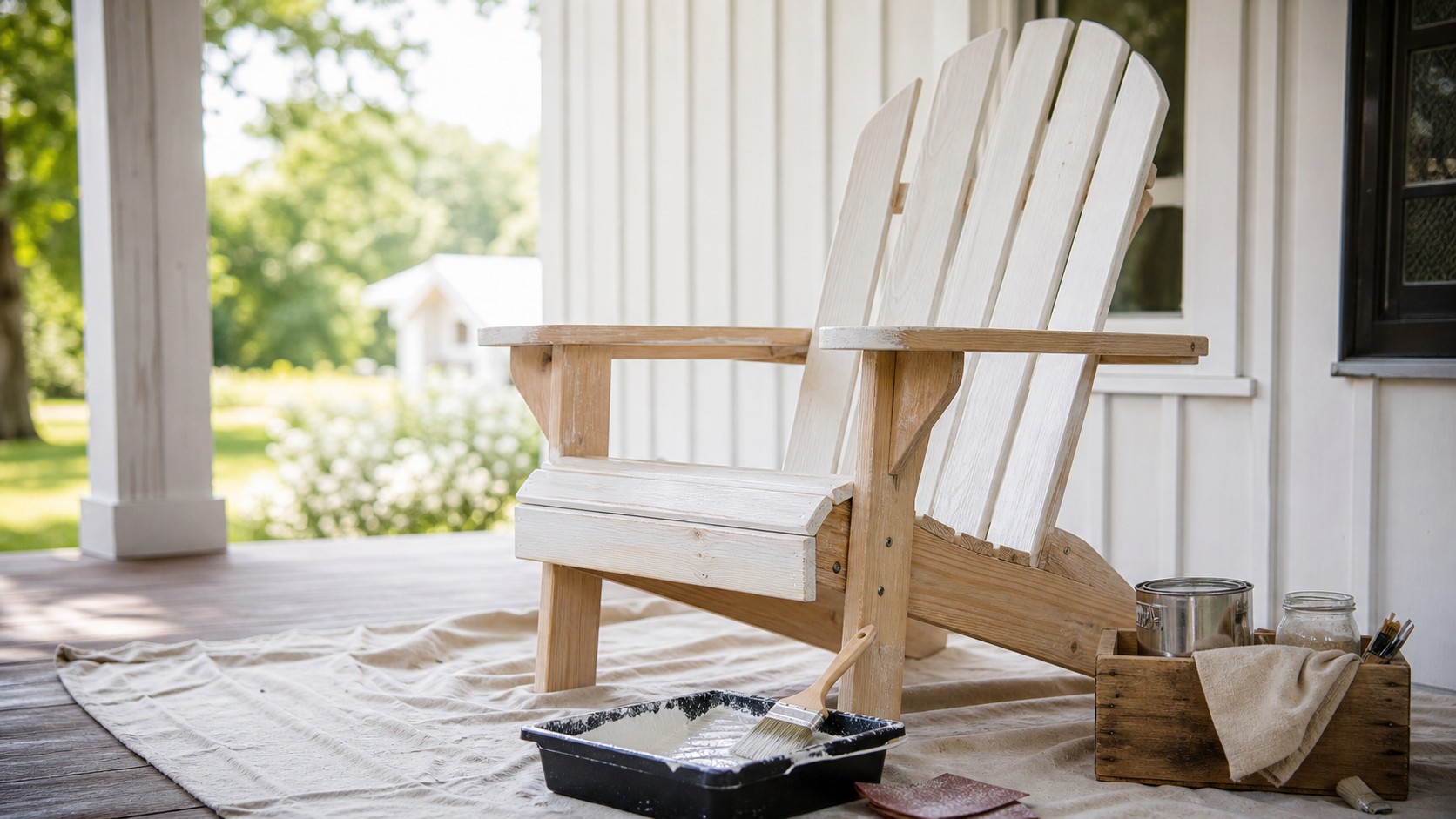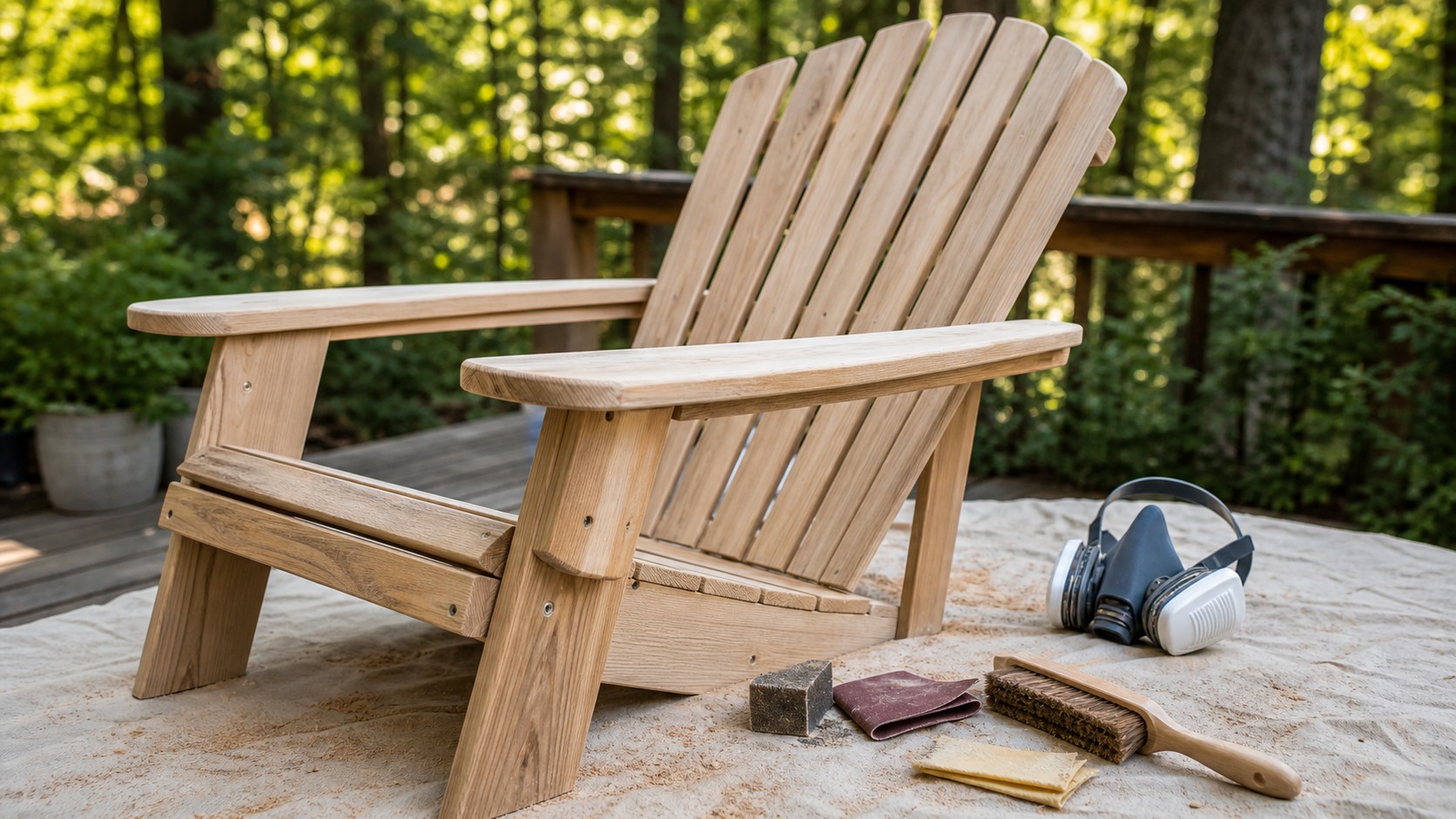
Sanding is the step that decides whether a refinished Adirondack chair looks smooth, bonds well, and survives outdoor weather. Paint, stain, oil, and sealer can only perform as well as the surface beneath them. Adirondack chairs make sanding more interesting than a flat tabletop because they combine broad arms, narrow slats, curved backs, angled seats, exposed screw heads, end grain, and weathered feet. A rushed sanding job leaves old finish in corners, scratches across visible arms, and rough edges that shed paint early. A careful sanding plan turns the chair into a receptive surface without erasing its character.
A: Usually yes, at least lightly, so the new finish bonds evenly across old and repaired areas.
A: No. Power sanders help on flat areas, but slats, curves, and corners need hand control.
A: Start with the least aggressive grit that removes failing finish or creates proper scuffing.
A: Clean first when possible so dirt and residue do not clog the abrasive.
A: The chair should feel comfortable and look uniformly dull without shiny missed spots.
A: Avoid it. Damp fibers sand poorly and may rise after the chair dries.
A: Use folded paper, a detail pad, or a narrow sanding sponge with light pressure.
A: Tighten or reset them first so sanding does not chew up surrounding wood.
A: A tack cloth or lint-free wipe helps remove fine dust before finishing.
A: Stop when the surface is sound, clean, lightly textured for bonding, and free of rough touch points.
Start With Inspection, Not Sandpaper
Before choosing a grit, study the chair in good light. Look for peeling finish, gray weathering, mildew stains, raised grain, splinters, loose screws, cracked slats, and softened feet. Sanding is not a repair for every problem. If a support is split or a screw no longer holds, fix that before smoothing the surface. Otherwise the finished chair may look better while remaining weak.
Check the underside and the back as carefully as the visible front. Outdoor chairs often fail where they touch damp surfaces, not where they are most photographed. Mark problem areas with small pieces of tape. This lets you sand intentionally rather than treating the entire chair with unnecessary aggression.
If the existing coating may be old paint of unknown origin, use extra caution with dust. Containment, a respirator, and local guidance are important. Sanding should prepare the chair, not spread questionable residue through a workspace.
Clean First So the Abrasive Can Work
Dirt ruins sandpaper quickly. Wash the chair before sanding unless the surface is so fragile that water would worsen lifting finish. Mild soap, warm water, and a soft brush remove the outdoor film that clogs abrasive sheets. Pay special attention to the inside corners where arms meet supports and where seat slats overlap the frame.
Let the chair dry completely. Damp wood sands poorly, loads paper, and can feel smooth while fibers are merely compressed. When the chair dries later, those fibers may rise and create a fuzzy surface. Drying time depends on weather, wood species, and how much water entered the joints.
After cleaning, remove hardware only if it blocks proper sanding or needs replacement. Some chairs can be sanded assembled. Others benefit from removing cup holders, loose accessories, or badly rusted screws. Keep small parts labeled so reassembly stays simple.
Choosing the Right Grit Sequence
The correct grit depends on the finish condition. For a chair with flaking paint or rough weathered wood, starting around 80 or 100 grit may be necessary on damaged areas. For a chair with a mostly sound finish that only needs scuffing before repainting, 120 or 150 grit may be enough. Jumping immediately to very fine paper can polish the surface without creating good adhesion.
Move through grits gradually. Deep scratches from coarse paper must be removed before finishing, especially on broad arms and the front of the seat. A practical sequence might move from 100 to 150 to 180, adjusting for the wood and finish type. For stain or clear oil, final sanding is more visible than it is under opaque paint, so be more careful with scratch patterns.
Do not oversand soft woods. Pine and cedar can lose crisp edges quickly if pressed hard with a power sander. Let the tool float. On curves and slat edges, hand sanding gives better control.
Handling Slats, Curves, Arms, and End Grain
Adirondack chairs are comfortable because they are not simple boxes. That means sanding must follow the form. Broad arms can usually be sanded with a flat block or random orbital sander, but the edges should be softened by hand. The back slats need long strokes with the grain to avoid cross scratches that show under stain.
Seat slats collect grit, spilled drinks, sunscreen, and rain marks. Sand each top surface, then fold paper or use a detail pad for the narrow gaps. Avoid rounding slat ends too much. A small eased edge is helpful, but a heavily rounded end can change the chair's crisp visual rhythm.
End grain on feet, arms, and slat tips absorbs finish differently. Sand it smooth enough to seal, but remember that it may still darken more than face grain under stain. If painting, well-sanded and primed end grain helps prevent moisture from sneaking into the chair.
Power Sanders, Hand Blocks, and Detail Tools
A random orbital sander can save time on arms, wide supports, and flat backs, but it should not be the only tool. Adirondack chairs have too many corners for a single machine. A sanding block keeps flat surfaces even, foam pads conform to curves, and folded paper reaches tight lines. Detail sanders can help, but they can also dig into soft spots if used impatiently.
Keep the sander moving and avoid tilting it on edges. Tilt marks become shallow scoops that catch light after finish is applied. Work in manageable zones: one arm, one side frame, the seat, the back, then the underside. This prevents fatigue from turning into careless pressure.
Replace or clean abrasives when they clog. Worn paper burns time and encourages pressing harder, which creates uneven surfaces. Good sanding feels steady rather than forceful.
Avoiding the Sanding Mistakes That Show Later
Most sanding mistakes are invisible until finish goes on. Cross-grain scratches on arms may hide under dust, then appear as dark lines under stain. Shiny islands of old finish may seem harmless, then reject new paint. Rounded corners may feel smooth, then lose the crisp outline that makes the chair recognizable. The safest approach is to pause often and inspect from several angles.
Another common mistake is treating every surface the same. The underside needs cleaning and scuffing, but it usually does not need the same cosmetic perfection as the arms. The top of the arms and the front edge of the seat deserve extra care because they are both visible and touched constantly. Sanding should match the importance of each surface.
Preparing for Paint, Stain, or Oil Differently
A chair destined for paint needs a clean, dull, stable surface with no loose finish. A chair destined for stain needs more visual consistency because color will reveal sanding patterns and old blotches. A chair destined for oil needs open, dust-free grain so the oil can penetrate evenly. The final finish should guide the sanding standard from the beginning.
For paint, do not polish the wood so finely that primer has little to grip. For stain, avoid stopping at a coarse grit that leaves visible tracks. For oil, remove all sanding dust from pores and end grain. The chair may be the same object, but the surface preparation changes with the finish system.
Knowing When to Stop
Sanding can become addictive because each pass seems to promise a more perfect surface. Outdoor furniture does not need to be made fragile in pursuit of perfection. Stop when the wood is sound, the old coating is either removed or properly scuffed, touch points feel comfortable, and the surface is evenly dull. Removing more material after that can weaken edges and blur details.
The best test is practical. Would primer, stain, or oil meet a clean, consistent surface everywhere it needs to bond? Would a person sitting down feel smooth arms and seat edges? Would water have fewer rough openings to exploit? If the answer is yes, put down the sandpaper, clean the dust, and move to finishing.
Setting Up a Comfortable Sanding Station
A good sanding station prevents sloppy work. Raise the chair on a sturdy bench, sawhorses, or blocks so you are not bending awkwardly for every pass. Keep the chair stable before using a power sander. If the chair rocks while you work, your pressure will change and the surface may become uneven. Good body position is not a luxury; it directly affects the finish quality.
Arrange abrasives by grit, keep a vacuum within reach, and set aside a clean area for wiped surfaces. When dust-covered tools sit on freshly cleaned arms, you end up repeating work. Lighting matters too. Side light from a window or portable work lamp shows scratches and remaining gloss far better than flat overhead light.
Special Care for Weathered Gray Wood
Weathered gray wood needs judgment. The gray layer may be thin surface oxidation, or it may include deeper checking and loosened fibers. If you plan to paint, you do not always need to sand back to fresh golden wood everywhere, but you do need to remove loose fibers and create a stable surface. If you plan to stain, uneven gray patches can create uneven color unless they are cleaned and blended carefully.
Work slowly on weathered arms and seat fronts. These areas may have soft earlywood between harder grain lines, and aggressive sanding can leave ridges. A brush, cleaner, and moderate sanding often produce a better surface than brute force. The goal is not to make the chair new again; it is to make the weathered wood reliable enough to carry the next finish.
Dust Removal and the Final Surface Test
After sanding, dust removal is part of the sanding job, not a separate afterthought. Vacuum the chair thoroughly, brushing between slats and around screw heads. Wipe with a tack cloth or a clean lint-free cloth suited to the finish you plan to use. Avoid leaving oily residue if you will apply water-based products.
Use your hand and your eyes for the final check. Run fingertips over arms, front seat edges, back slats, and feet. Look across the surface from a low angle to spot shiny old finish, swirl marks, or fuzzy grain. A bright raking light reveals problems that overhead light hides.
If you raise the grain intentionally with a damp wipe for a very smooth clear finish, let it dry and sand lightly again. For many painted outdoor chairs, a clean scuff and dust-free surface is enough. The goal is not perfection for its own sake. The goal is a chair ready to accept finish evenly, bond strongly, and feel comfortable every time someone settles into it.
When sanding is done well, the refinishing steps become calmer. Primer spreads predictably, stain absorbs with fewer surprises, and oil reveals grain instead of scratches. The chair also feels better in use because hands meet softened arms and knees touch smooth front edges. Good sanding disappears into the finished piece, but it is the reason the finished piece works.
Take your time with this stage and the rest of the project becomes easier. Adirondack chairs are built for slow outdoor comfort, and preparing them benefits from the same pace.
A patient sanding routine also protects the chair's history. You can remove roughness, failing finish, and weather damage without erasing every mark of use. That is often the best result: a surface clean enough for a durable new finish, yet still recognizably shaped by real outdoor seasons. In that sense, sanding is both preparation and judgment, and it deserves unhurried attention before any finish is opened or any color choice is made for the project.