
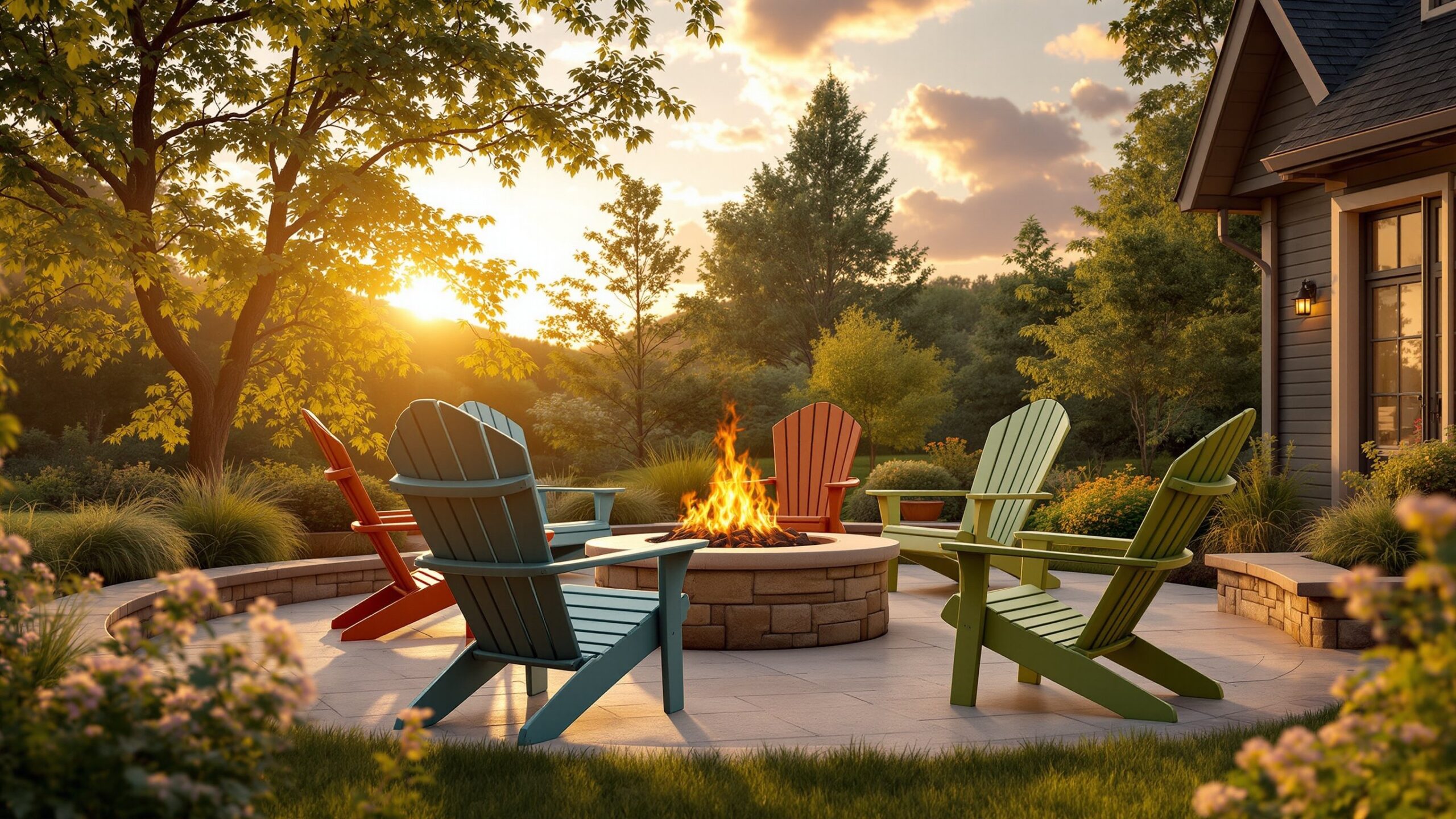
Adirondack chairs have long been the unofficial throne of outdoor relaxation. With their wide armrests, deep recline, and unmistakable silhouette, they’ve defined backyard comfort for more than a century. Traditionally crafted from wood, these iconic chairs have graced porches, lakeside docks, patios, and garden paths across the world. Yet over the past two decades, a new material has quietly reshaped the Adirondack chair landscape: Polywood. Polywood Adirondack chairs are rapidly becoming the modern standard for outdoor furniture durability. Designed to mimic the timeless beauty of wood while eliminating many of its vulnerabilities, Polywood offers exceptional resistance to weather, moisture, UV radiation, insects, and structural degradation. As homeowners search for furniture that requires less maintenance while delivering longer lifespans, Polywood chairs consistently outperform traditional wooden Adirondack chairs in real-world outdoor conditions. Understanding why Polywood chairs last longer than wooden ones requires a closer look at materials science, environmental exposure, construction methods, and long-term maintenance requirements. While wood has a natural charm that has captivated designers for generations, it also carries inherent weaknesses that outdoor environments exploit. Polywood was engineered specifically to solve these problems. From UV stability and moisture resistance to structural durability and eco-conscious manufacturing, Polywood Adirondack chairs offer a compelling combination of longevity and practicality. For homeowners investing in outdoor furniture meant to endure years of sun, rain, snow, and seasonal temperature swings, Polywood has proven itself as one of the most resilient materials available today.
A: It resists moisture, rot, insects, cracking, and finish breakdown far better in typical outdoor conditions.
A: It can weather slightly over time, but UV-stabilized material typically holds color better than painted or stained wood.
A: Yes, but they usually need more regular sealing, painting, staining, and repair to stay in strong shape.
A: It is highly water-resistant and non-porous, which is a major reason it performs so well outdoors.
A: Not in the same way. It does not dry out and split along grain lines because it has no wood grain.
A: Polywood is often the easier long-term choice because salt air and moisture are hard on many woods and finishes.
A: No. Routine cleaning is usually enough, which is why many people choose it over wood.
A: Not necessarily. Many modern designs look substantial, clean, and polished while still offering classic Adirondack character.
A: For many buyers, yes, because less maintenance and longer service life can improve long-term value.
A: Someone who loves natural grain, traditional craftsmanship, and does not mind the upkeep that comes with it.
The Evolution of the Adirondack Chair
The Adirondack chair originated in the early 1900s in the Adirondack Mountains of New York. Designed for relaxation while enjoying scenic landscapes, the chair featured a slanted seat, wide armrests, and a high slatted back that distributed weight comfortably.
Originally constructed from local woods such as hemlock, pine, cedar, or teak, these chairs were crafted using traditional woodworking methods. Wood was readily available, relatively easy to shape, and visually appealing. However, these early chairs required regular maintenance to survive outdoor conditions.
Over time, homeowners discovered that wooden Adirondack chairs demanded frequent sanding, sealing, staining, or painting to prevent deterioration. Without protection, moisture and UV radiation slowly break down wood fibers, leading to cracking, fading, warping, and rot.
The search for a more durable alternative eventually led to the development of Polywood—a synthetic lumber designed to replicate the look of painted wood while dramatically increasing longevity.
Today, Polywood Adirondack chairs represent a modern evolution of a classic design. They preserve the iconic aesthetic while introducing materials engineered specifically for outdoor endurance.
What Exactly Is Polywood?
Polywood is not a traditional plastic chair. It is a high-density polyethylene lumber, often abbreviated as HDPE lumber, made primarily from recycled plastics such as milk jugs, detergent bottles, and other post-consumer materials. The plastic is cleaned, melted, and extruded into solid boards that resemble painted wood planks. These boards are then cut, shaped, and assembled into furniture. Unlike hollow plastic patio chairs, Polywood furniture is made from dense, solid material that resists cracking and structural failure. It feels substantial, with weight and rigidity comparable to hardwood furniture.
Another defining characteristic of Polywood is that the color is infused throughout the material rather than applied as surface paint. This means scratches or wear do not expose a different underlying color, allowing the furniture to maintain its appearance over time. This engineering approach is the foundation of Polywood’s durability advantage over traditional wooden Adirondack chairs.
Resistance to Moisture and Rot
One of the greatest threats to wooden outdoor furniture is moisture. Rain, humidity, snow, and even morning dew slowly penetrate wood fibers. Over time, this moisture encourages fungal growth that leads to rot. Wooden Adirondack chairs must constantly battle water intrusion. Even hardwood species such as teak and cedar eventually degrade if left untreated for extended periods. Polywood, by contrast, is completely non-porous. Water cannot penetrate the material, eliminating the possibility of rot entirely. After heavy rain or snow, a Polywood Adirondack chair simply dries off with no structural impact. The material does not absorb water, swell, or develop mold inside its structure. This moisture resistance alone dramatically extends the lifespan of Polywood furniture compared with wooden chairs that endure repeated wet-dry cycles.
Superior UV Protection Against Sun Damage
Sunlight may seem harmless, but ultraviolet radiation is one of the most destructive forces affecting outdoor furniture.
Wood exposed to sunlight undergoes a process known as photodegradation. UV rays break down lignin, a natural binding compound that holds wood fibers together. As lignin deteriorates, the wood fades, weakens, and eventually splinters.
Without regular refinishing, wooden Adirondack chairs can lose their structural integrity within just a few seasons of intense sunlight.
Polywood materials are engineered with UV inhibitors embedded directly into the plastic during manufacturing. These inhibitors slow the breakdown of the polymer structure and prevent color fading.
As a result, Polywood Adirondack chairs maintain their original color far longer than painted or stained wooden chairs. Even after years of exposure, Polywood surfaces typically remain vibrant with minimal fading.
This UV stability significantly contributes to the extended lifespan of Polywood furniture in sunny climates.
Freedom from Splinters, Cracks, and Warping
Wood is an organic material that constantly expands and contracts as humidity and temperature change. This natural movement can lead to splitting, cracking, and warping over time.
Adirondack chairs made from wood often develop surface cracks that widen with each seasonal cycle. Screws may loosen as boards shrink or expand. Armrests can warp, and slats may twist slightly out of alignment.
Polywood eliminates this issue because its synthetic structure does not absorb moisture or react dramatically to humidity changes.
The material remains dimensionally stable across temperature shifts. While it may expand slightly in extreme heat, it does not warp or split the way wood does.
Additionally, Polywood surfaces are smooth and splinter-free. This makes the chairs safer and more comfortable for users, particularly children who might run their hands along the armrests or seat slats.
Insect and Pest Resistance
Wooden furniture is vulnerable to insects such as termites, carpenter ants, and wood-boring beetles. These pests can weaken structural components by tunneling through the material. Even hardwood Adirondack chairs can eventually fall victim to insect damage, particularly in humid environments where pests thrive. Polywood contains no organic material, making it completely unappealing to insects. Termites and carpenter ants simply cannot digest or inhabit synthetic polymer lumber. This natural pest resistance adds another layer of durability that wooden chairs cannot match.
Minimal Maintenance Requirements
Perhaps one of the most appreciated advantages of Polywood Adirondack chairs is their incredibly low maintenance requirements.
Wooden chairs require ongoing care to preserve their appearance and structural integrity. Owners must regularly sand rough surfaces, apply sealants, repaint faded areas, and repair minor cracks.
These maintenance routines are necessary because wood naturally degrades when exposed to outdoor elements.
Polywood eliminates nearly all of these tasks.
Cleaning typically requires nothing more than occasional rinsing with water and mild soap. Dirt, pollen, and bird droppings wash away easily without damaging the surface.
Because the material is color-stable and moisture-resistant, it never requires painting, staining, sealing, or waterproofing treatments.
For homeowners seeking outdoor furniture that looks good without ongoing labor, Polywood chairs offer an enormous advantage.
Strength and Structural Durability
Durability is not just about resisting weather—it also involves structural strength.
Polywood Adirondack chairs are built using thick, solid HDPE boards that provide impressive load-bearing capacity. The material does not become brittle in cold temperatures or overly soft in moderate heat. Manufacturers often reinforce Polywood furniture using marine-grade stainless steel hardware. This combination of corrosion-resistant metal and solid synthetic lumber results in extremely sturdy construction.
Many Polywood chairs are rated to support hundreds of pounds without structural strain.
Wooden chairs, by contrast, can weaken over time as moisture infiltration and UV damage degrade internal fibers. Even well-built wooden chairs may develop soft spots or weakened joints after prolonged outdoor exposure. Polywood maintains its structural integrity far longer under identical conditions.
Performance in Harsh Climates
Outdoor furniture must endure a wide range of environmental conditions depending on location.
In coastal areas, salt air accelerates corrosion and material degradation. In northern climates, freeze-thaw cycles can damage porous materials like wood. In desert environments, intense sunlight and extreme temperature swings place enormous stress on outdoor surfaces.
Polywood Adirondack chairs perform exceptionally well in all of these scenarios.
Because the material does not absorb water, freezing temperatures do not cause internal expansion that could crack the structure. Salt air has little effect on synthetic polymers, and stainless steel hardware resists corrosion.
Even in extremely hot environments, Polywood remains structurally stable.
This adaptability makes Polywood chairs suitable for lakeside docks, beach homes, mountain cabins, and urban patios alike.
Environmental Sustainability
At first glance, plastic furniture may seem less environmentally friendly than wood. However, Polywood manufacturing actually offers several environmental advantages.
Most Polywood lumber is made from recycled high-density polyethylene plastics, including discarded milk jugs and detergent containers. By repurposing these materials, Polywood manufacturing diverts large amounts of plastic waste from landfills.
Additionally, Polywood chairs do not require chemical sealants, stains, or paints that can introduce toxins into the environment.
Because Polywood furniture lasts for decades, fewer chairs need to be manufactured over time, reducing overall resource consumption.
By contrast, wooden furniture often requires harvested timber and repeated chemical treatments to maintain outdoor durability.
In terms of long-term environmental impact, Polywood can be a surprisingly sustainable choice.
Longevity and Real-World Lifespan
The most compelling argument for Polywood Adirondack chairs is their longevity. Well-maintained wooden Adirondack chairs typically last between 5 and 15 years depending on climate, wood species, and maintenance frequency. Polywood chairs, however, often last 20 to 30 years or more with minimal care. Some manufacturers offer warranties extending up to 20 years, reflecting the material’s exceptional durability. Over decades of exposure to sun, rain, and seasonal weather changes, Polywood chairs maintain their structural integrity and visual appearance far longer than traditional wooden alternatives.
Aesthetic Appeal and Color Stability
One reason many homeowners hesitate to switch from wood to synthetic materials is aesthetic concern. Wood offers natural grain patterns and organic beauty that many people find appealing.
Polywood addresses this concern by offering a wide range of colors and finishes designed to mimic painted wood styles commonly used in outdoor furniture.
Popular colors include classic white, coastal blue, forest green, charcoal gray, and vibrant summer hues like turquoise or red.
Because the pigment runs throughout the material rather than sitting on the surface, Polywood chairs maintain consistent color even if scratched.
This color stability helps Polywood furniture maintain a clean, polished appearance for many years without repainting.
Comfort and Ergonomic Design
Modern Polywood Adirondack chairs maintain the ergonomic features that made the original wooden designs so beloved.The angled seat supports natural posture, allowing users to relax comfortably for extended periods. Wide armrests provide space for beverages, books, or small plates. Many Polywood chairs also incorporate slightly contoured back slats that conform to the spine more naturally than rigid wooden boards. Because the material is smooth and splinter-free, users can enjoy barefoot relaxation without worrying about rough edges. Comfort remains a defining characteristic of Adirondack chairs regardless of material—but Polywood enhances the experience through durability and consistency.
Cost Over Time
Polywood Adirondack chairs often have a higher upfront cost than basic wooden models. However, long-term ownership costs tell a different story.
Wooden chairs require periodic refinishing products, replacement hardware, and sometimes structural repairs. These maintenance costs accumulate over the years.
Polywood furniture requires virtually no additional investment beyond occasional cleaning.
When considering lifespan, maintenance costs, and replacement frequency, Polywood chairs often become the more economical option over time.
Homeowners who initially choose wooden chairs may find themselves replacing them several times within the lifespan of a single Polywood chair.
The Future of Outdoor Furniture Materials
The rise of Polywood represents a broader trend in outdoor furniture design: engineering materials specifically for environmental durability. As climate patterns shift and homeowners demand longer-lasting products, manufacturers continue developing new materials that outperform traditional options. Polywood’s success demonstrates how recycled materials and modern polymer science can create products that balance sustainability, durability, and aesthetics. While wood will always maintain a place in outdoor design due to its natural beauty, Polywood Adirondack chairs have firmly established themselves as one of the most resilient seating options available.
Final Thoughts: Why Polywood Wins the Longevity Battle
Adirondack chairs symbolize relaxation, outdoor living, and timeless design. For decades, wood served as the primary material for these iconic chairs, but it also carried inherent weaknesses when exposed to the elements.
Polywood reimagines the Adirondack chair using advanced materials engineered for longevity.
Its resistance to moisture, UV radiation, insects, and structural deterioration allows Polywood chairs to endure years of outdoor exposure with minimal maintenance.
While wooden Adirondack chairs can certainly remain beautiful when carefully maintained, Polywood chairs offer a practical alternative that dramatically extends lifespan without sacrificing comfort or style.
For homeowners seeking outdoor furniture that can withstand the challenges of weather, time, and everyday use, Polywood Adirondack chairs provide one of the most durable solutions available today.
The result is a chair that looks inviting on day one—and continues to welcome guests, sunsets, and quiet moments for decades to come.


