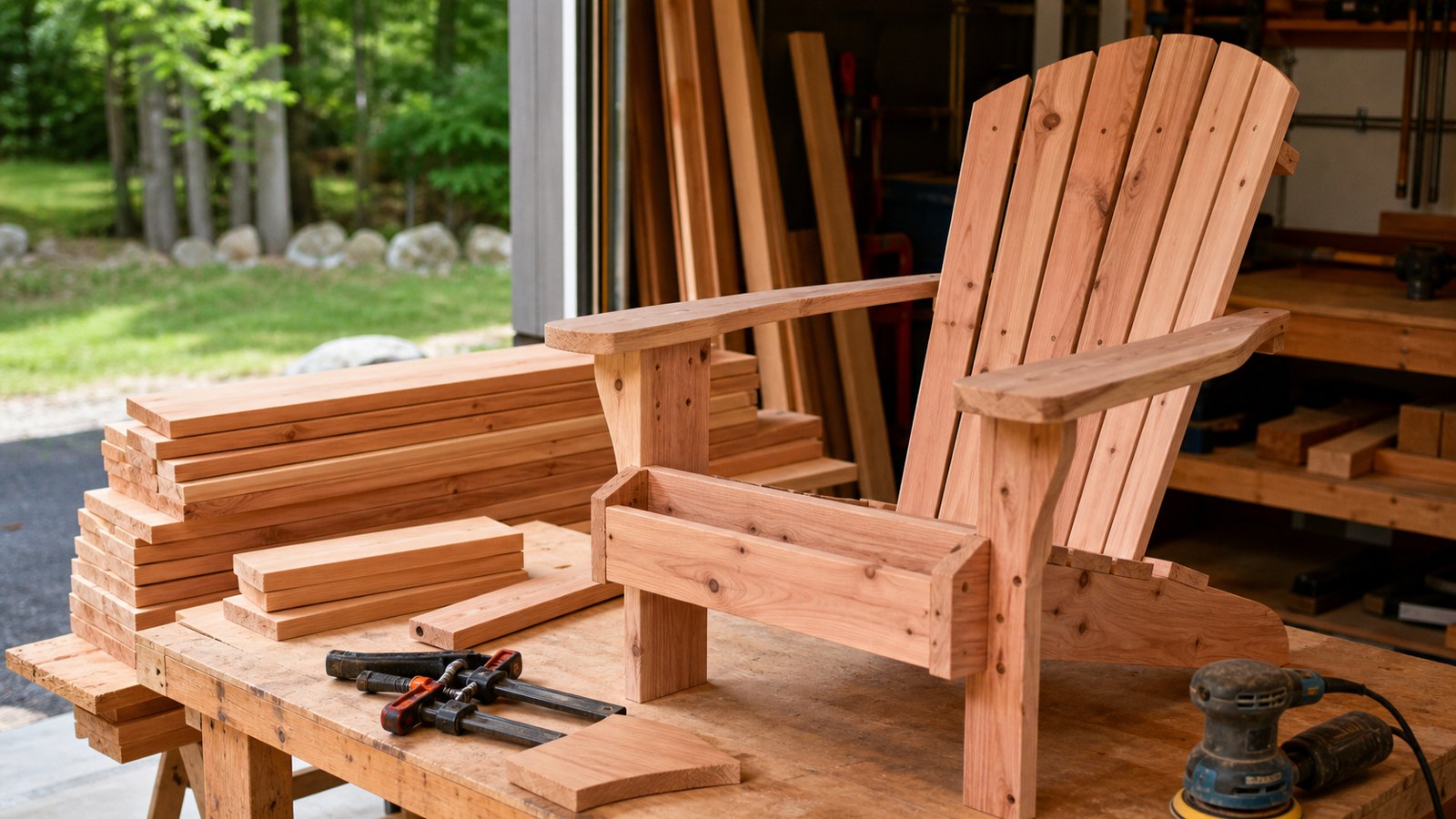
Crafting Scaled-Down Comfort and Backyard Magic
There’s something timeless about an Adirondack chair. Its slanted seat, wide arms, and laid-back comfort evoke lazy summer afternoons, cool lemonade, and backyard laughter. But when you scale that design down to child-size proportions, something even more special happens — a perfect blend of craftsmanship and childhood wonder. Building a kids’ Adirondack chair is not just a woodworking project; it’s a memory-maker. This guide will walk you through every stage — from choosing the right wood to sanding the final smooth edge — with a clear, step-by-step approach designed for hobbyists, parents, or anyone who loves hands-on projects that last for years.
A: Cedar or pine—both are light, smooth, and easy to work with.
A: Yes—with adult supervision on sanding and painting steps.
A: Absolutely—just ensure all edges are smooth and splinter-free.
A: Typically 3–5 hours spread over a weekend for a fun family build.
A: Exterior screws give stronger joints and easier repairs later.
A: Apply outdoor-rated paint or clear sealer; recoat annually.
A: Yes—just allow it to dry in the sun to prevent mildew.
A: Non-toxic, water-based exterior paint labeled kid-safe or low-VOC.
A: Indoors or under a covered porch; avoid snow piling on the seat.
A: Yes—scale up the same template by about 130% for adults.
1. The Allure of the Adirondack
Before sawdust starts to fly, it helps to understand what makes an Adirondack chair such a beloved design. Originally crafted in the early 1900s by Thomas Lee in the Adirondack Mountains, the chair was designed to be stable on uneven ground and comfortable for hours. Its trademark sloped seat and backrest cradle the sitter in a relaxed recline, while the wide armrests make perfect surfaces for a book, drink, or even a small plate of snacks. When adapted for kids, this ergonomic brilliance becomes both functional and whimsical — a sturdy piece scaled for story time, painting outdoors, or just watching clouds drift by.
For a child, their very own chair is more than furniture. It’s independence in wood form — a place to call their own during picnics, campfire nights, or backyard tea parties. That’s why this build guide pays close attention to scale, safety, and proportion, ensuring your finished chair is as durable as it is delightful.
2. Planning Your Build
Every successful woodworking project starts with careful planning. For a kids’ Adirondack chair, proportion is everything. Typical adult chairs measure about 36 inches high and 33 inches wide. For a child’s version, reduce that by roughly one-third. Aim for a height around 24 inches, a width of 22 inches, and a seat height of about 9 inches. These dimensions create the perfect perch for ages 3 to 8. Sketch your plan before you cut a single board. Many free or paid templates are available online, but it’s worth customizing based on your child’s age or available space. If you’re feeling creative, you can even tweak the armrest shapes or back slat curves for a personalized touch. Always label parts clearly — arms, legs, seat supports, and back slats — before cutting. It keeps the process organized and efficient.
3. Choosing the Right Wood
Wood choice defines both the look and longevity of your chair. For outdoor use, durability and resistance to weather are paramount. Cedar, redwood, and teak are top contenders for natural rot resistance. Pine or fir are also popular, especially for painted finishes, though they benefit from sealant and seasonal maintenance.
Cedar stands out for kids’ projects because it’s lightweight, smooth, and resists splintering — an important detail for small hands. It also emits a pleasant aroma and ages gracefully into a silvery patina. If you’re painting or staining, choose boards with minimal knots for an even, professional finish. Always check for warped or cracked boards before starting.
4. Essential Tools and Materials
You don’t need a professional workshop to make a kids’ Adirondack chair. Basic hand and power tools will do. Here’s what your workspace should include:
- Circular saw or jigsaw
- Drill with countersink bit
- Orbital sander or sanding block
- Measuring tape and carpenter’s square
- Exterior-grade screws (1¼” and 2”)
- Wood glue rated for outdoor use
- Sandpaper (80, 120, and 220 grit)
- Clamps for securing pieces
- Paintbrushes or sprayer for finishing
For safety, wear protective eyewear and hearing protection, and make sure children helping in the build are supervised and using age-appropriate tools.
5. Cutting the Pieces
Each Adirondack chair follows the same fundamental anatomy: legs, seat slats, armrests, and back slats — all joined to create that signature angled shape. Accuracy here ensures everything fits together later without wobbles.
Seat Slats
Cut five to six slats approximately 1¾” wide by 20” long. Slightly round off the front corners with a jigsaw to make the seat edge more comfortable.
Back Slats
Cut five slats about 2½” wide by 22” long. The tops can be arched or scalloped for style — trace a gentle curve using a large bowl or compass, then cut and sand the edges smooth.
Legs and Supports
The rear legs define the chair’s reclining posture. Cut them from 1×4 boards, about 18 inches long, with a gentle angle cut at the back for tilt. The front legs, roughly 12 inches long, will hold the front seat slat height.
Armrests
Adirondack arms are iconic. Cut two boards 20 inches long by 3½ inches wide. Round the front ends into a soft curve — both aesthetic and safe for little elbows.
Keep each piece labeled as you go to avoid confusion later.
6. Building the Frame
Start with the chair’s skeleton — the frame that will hold everything together.
- Attach the Rear Legs: Position the rear legs at a gentle 20-degree angle. Use clamps to hold them steady while attaching the seat supports with screws and glue. This establishes the chair’s recline.
- Add the Front Legs: The front legs attach vertically near the lower ends of the seat supports. Ensure they’re even by measuring from the ground up before securing.
- Cross Supports: Connect the left and right sides using front and back cross braces. These strengthen the structure and prepare it for slats.
At this stage, your frame should resemble a sturdy little ladder with a tilted seat line. Check for level balance on a flat surface before proceeding.
7. Installing the Seat Slats
Seat slats determine comfort and strength. Lay them across the seat supports with even spacing — around ½ inch gaps for drainage. Start with the back slat and move forward, checking that each slat aligns properly and sits flush with the supports.
Pre-drill holes to prevent splitting, then attach each slat with two screws per side. Countersink the screws slightly so they sit below the wood surface, giving a smoother, safer finish.
A handy tip: use a scrap piece of wood as a spacer between slats to keep the gaps consistent.
8. Shaping the Backrest
This part gives your Adirondack its classic silhouette. Arrange the back slats vertically, starting from the center outward. Align them along the curved top edge you designed earlier. Secure them to a horizontal support board at the base, about two inches above the seat. The slats should fan gently outward, forming that iconic back curve. Don’t worry if the spacing isn’t mathematically perfect — a bit of handmade charm adds personality. When finished, attach the entire backrest unit to the seat frame using screws through the bottom seat supports and side braces. Check that it sits at a comfortable 15- to 20-degree recline.
9. Adding the Armrests
With the backrest in place, the arms define the finishing lines of your chair. Position each armrest so that it sits level when viewed from the side. Secure it at the front to the leg top and at the back to the rear support near the backrest.
Double-check symmetry before final tightening — mismatched arms can throw off balance. If you like, you can round the outer edges or add decorative notches to personalize the design.
Kids love to rest books, drinks, or toys on these wide armrests, so sturdiness matters. Use long screws or bolts if necessary, reinforced with a bit of glue underneath for extra stability.
10. Sanding for Smoothness and Safety
A smooth finish is more than visual — it’s critical for child safety. Start with 80-grit sandpaper to round all edges and corners, then move to 120- and 220-grit for a buttery finish. Focus especially on the armrests, seat edges, and back slats, where fingers and legs will touch. Run your hand along every surface. If you feel even the faintest roughness, sand it again. Kids’ furniture should feel silky, not scratchy. After sanding, wipe down the entire chair with a damp cloth to remove sawdust before finishing.
11. Painting, Staining, and Sealing
Finishing not only beautifies but protects your handiwork. For outdoor use, always choose exterior-grade finishes. You can paint, stain, or leave the wood natural depending on your aesthetic.
Paint
A colorful painted Adirondack adds cheer to any yard. Kids love bold shades — sunshine yellow, ocean blue, or watermelon pink. Use primer first, followed by two coats of weather-resistant acrylic latex paint. Between coats, lightly sand for professional smoothness.
Stain
For a more natural look, apply an exterior wood stain that enhances the grain. Follow with a UV-resistant clear coat or polyurethane for protection.
Natural Finish
If you’re using cedar or teak, you might prefer to leave the wood bare and let it age gracefully. Just apply a penetrating oil to seal against moisture.
Whichever finish you choose, let the chair dry thoroughly — preferably for 24 hours — before use.
12. Testing for Safety
Before your young craftsman claims their throne, inspect every connection. Press and wiggle the backrest to ensure no movement. Sit on it yourself — if it holds an adult comfortably, it will easily support a child. Verify all screws are flush, and no sharp corners remain.
Add soft rubber pads under each leg if the chair will sit on a patio or deck. They protect both surfaces and prevent sliding. Finally, double-check for splinters after the finish cures.
13. Making It Fun: Customization and Themes
Building for kids invites imagination. Why stop at plain wood when you can turn their chair into a masterpiece? Consider creative customization ideas:
- Name personalization: Paint your child’s name or initials across the back slats using stencils.
- Color themes: Match the chair to a favorite sports team, cartoon, or seasonal palette.
- Decoupage: Add weatherproof stickers or seal in pressed flowers for a whimsical touch.
- Two-tone design: Paint the seat one color and the arms another for a playful accent.
- Matching sets: Build multiple chairs in coordinating hues for siblings or cousins.
Creativity enhances ownership — when kids see their design choices come to life, they’ll treasure the chair even more.
14. Teaching Opportunity: Building With Kids
This project isn’t only about the finished chair; it’s about the process. Involve children safely in every stage. They can help with sanding, painting, and assembly under supervision. Explain what each tool does and why measurements matter. It’s a great way to introduce STEM principles — geometry, physics, and problem-solving — in a fun, tactile form. By including them, you foster confidence and creativity. Imagine their pride when they sit in something they helped make. That’s craftsmanship in its most rewarding form.
15. Maintenance and Longevity
Even small chairs need care to last through seasons. Every spring, inspect for loose screws, worn finishes, or moisture spots. Clean with mild soap and water, then reapply sealant or paint as needed. If stored outdoors year-round, consider a waterproof cover during harsh weather.
Avoid leaving the chair in constant contact with damp ground. A small paver pad or deck tile beneath each leg extends lifespan significantly. With care, your mini Adirondack could easily last a decade or more — long enough to pass down to younger siblings or future grandkids.
16. Eco-Friendly Options
Sustainability adds another dimension of pride. Opt for FSC-certified wood, meaning it’s responsibly harvested. Water-based stains and low-VOC paints reduce environmental impact while keeping your workspace healthier. For hardware, stainless steel or coated screws last longer and prevent rust runoff into soil. If you’re particularly green-minded, consider using reclaimed lumber — old fence boards or deck planks — cleaned and sanded smooth. Each knot and nail mark tells a story, giving your project rustic charm and an eco-friendly heart.
17. Troubleshooting Common Build Issues
Even seasoned DIYers encounter hiccups. Here’s how to navigate the most frequent ones:
- Wobbly Legs: Usually caused by uneven cuts or loose screws. Re-measure leg lengths, tighten fasteners, and test on a flat surface before finishing.
- Misaligned Backrest: If it tilts unevenly, loosen the screws slightly, reposition using a carpenter’s square, then retighten.
- Splitting Wood: Always pre-drill holes slightly smaller than your screw diameter to prevent cracks, especially near edges.
- Uneven Paint Coverage: Sand lightly between coats and use a primer if painting over previously stained or oily wood.
Each small fix teaches patience — an essential woodworking skill.
18. Scaling the Design
One beauty of the Adirondack blueprint is its flexibility. Once you’ve mastered the kids’ version, scaling up becomes natural. The same proportions and joinery methods work for youth, teen, or adult sizes. You can even build a whole family set — small, medium, and large — for matching backyard harmony.
If you’d like to turn this into a learning series, document the process step-by-step with photos or short videos. Many builders find that sharing their project helps inspire others to craft their own.
19. Indoor Variations
While Adirondack chairs are iconic outdoors, smaller versions can work beautifully indoors too. Painted in soft pastel tones, they make charming reading nooks or nursery seats. Add a small cushion or throw blanket for comfort, and you have an heirloom piece suitable for all seasons. To adapt for indoor use, skip weatherproof coatings and use furniture-grade finishes instead. Felt pads under the legs protect hardwood floors, and lightweight pine makes moving the chair easy for little hands.
20. Why Build Instead of Buy?
Mass-produced kids’ chairs are everywhere — so why go through the effort of building your own? Because DIY craftsmanship creates value beyond price tags. When you build, you control quality, choose materials, and ensure safety. Store-bought versions often use cheap composites or unsealed paints that wear quickly outdoors. Your handmade chair, by contrast, becomes a durable legacy.
More importantly, the project itself offers joy — the satisfaction of shaping raw wood into something functional and beautiful. That’s a feeling no store purchase can replicate.
21. Creating Lasting Memories
When the sawdust settles and the paint dries, the finished chair isn’t just furniture — it’s a story. Maybe your child helped drive the final screw, or maybe you built it as a surprise gift. Either way, each time they climb into it with a book or snack, you’ll see the result of time well spent. Adirondack chairs have always been about rest, reflection, and connection to nature. Scaled for kids, they embody those same ideals — comfort, creativity, and care — in miniature form.
22. Quick Reference: Key Build Insights
While we’ve covered each step in detail, here’s a mental recap for when you’re mid-project:
- Plan the right scale — roughly two-thirds the size of an adult chair.
- Use cedar or pine for smoothness and safety.
- Pre-drill all screw holes to prevent splitting.
- Sand everything — twice if you must — before finishing.
- Seal, paint, or stain with child-safe outdoor coatings.
- Inspect regularly for wear or wobble.
These principles apply whether you’re crafting one chair or a dozen.
23. Future-Proofing the Design
Kids grow fast, but their memories don’t. If you want to extend usability, consider modular tweaks:
- Adjustable seat slats: Mount the seat slightly higher or lower as they grow.
- Stackable legs: Add small riser blocks later to increase height.
- Removable armrests: Great for older kids who prefer less confinement.
With foresight, your project evolves alongside its owner — turning a child’s chair into a keepsake bench or planter base in later years.
24. The Joy of Craftsmanship
In a world filled with fast-made products, taking time to build something by hand is both grounding and meaningful. Every plane stroke, screw turn, and brush of paint becomes an act of care. A kids’ Adirondack chair may be small, but its spirit represents the larger values of craftsmanship — patience, creativity, and love.
Whether you’re a parent, grandparent, teacher, or weekend woodworker, this build offers the perfect blend of challenge and reward. It’s a way to slow down, teach by doing, and share in the simple pleasures of making something real.
25.The Miniature Classic
The kids’ Adirondack chair may be scaled down, but its heart remains full-sized. Built properly, it will outlast childhood summers and remind your family of sunny days spent together in sawdust and laughter. Few projects balance form, function, and fun as perfectly as this one. So roll up your sleeves, grab your tools, and begin. Each cut, screw, and brushstroke will shape not just a chair — but a piece of family history. Long after it’s outgrown, that little chair will still sit proudly on the porch, waiting for the next generation of dreamers.