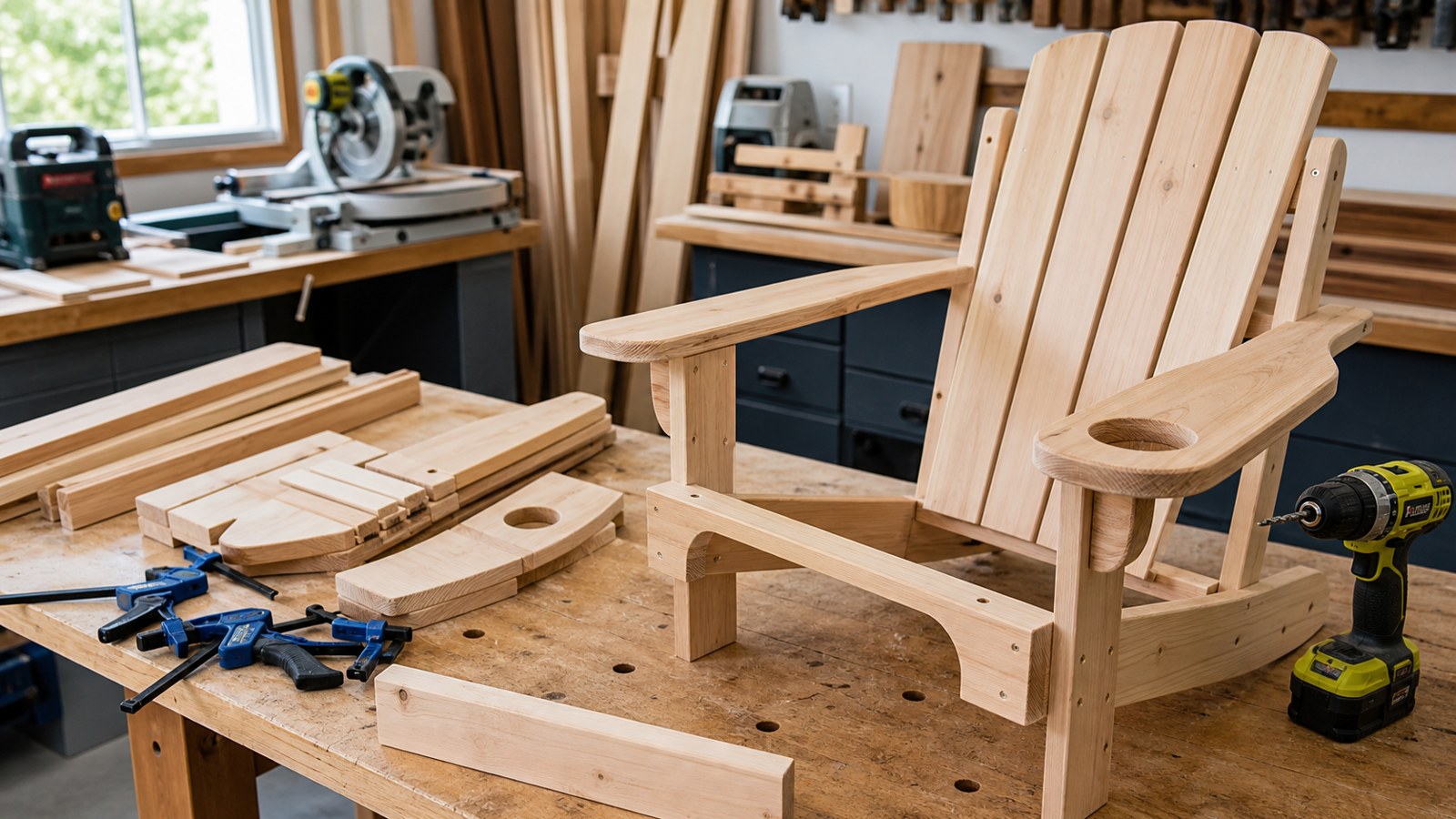
Few outdoor furniture pieces capture the relaxed spirit of summer quite like the Adirondack chair — and when you double it up into a cozy loveseat version, it becomes a shared retreat for coffee chats, sunsets, and stargazing. Whether you’re a beginner looking to learn woodworking basics or a seasoned DIYer wanting to expand your outdoor seating collection, this guide walks you through every step of building a strong, comfortable, and timeless double Adirondack chair. Let’s dive into the wood, the tools, and the heart of what makes Adirondack design so enduring — a blend of rustic simplicity and ergonomic perfection.
A: Expect 10–14 hours for a detailed first build; quicker with jigs and pre-cut parts.
A: Cedar or cypress for lightness and rot resistance; HDPE for zero maintenance.
A: Use exterior screws only—adhesives can restrict natural wood movement.
A: Build one side fully, then mirror its measurements for the second.
A: Yes—choose folding versions or reduce the center table width.
A: Yes—coating all sides improves moisture protection.
A: Stainless steel or coated deck screws, 1¼" to 2½" depending on joint thickness.
A: Check squareness, use diagonal braces, and anchor leg joints firmly.
A: Yes—rubber feet or furniture glides protect decks and ease movement.
A: No—it’s maintenance-free; just clean with mild soap and water seasonally.
1. Understanding the Adirondack Design
Before you pick up a saw or hammer, it’s worth understanding what makes an Adirondack chair special. Originating in the early 1900s in the rugged Adirondack Mountains of New York, these chairs were designed to blend seamlessly with nature — wide armrests, reclined backrests, and deep contoured seats invite relaxation while maintaining stability on uneven ground.
The double Adirondack, or loveseat version, keeps the same signature design but adds a middle support rail and shared armrest span. The result: two chairs joined at the hip (sometimes literally), ideal for porches, decks, gardens, and firepits. Its charm lies not just in looks but in comfort and longevity — and building one yourself ensures both craftsmanship and pride in ownership.
2. Choosing the Right Wood
The type of wood you choose affects everything: the look, lifespan, weight, and weather resistance of your finished loveseat. Because this chair will likely live outdoors, durability is key.
Cedar is the classic choice — lightweight, naturally resistant to rot and insects, and beautifully aromatic. Redwood offers similar weather resistance with a richer hue. Teak and white oak are extremely durable but heavier and pricier. Pine is affordable and easy to cut but must be sealed thoroughly for outdoor use.
Look for boards that are kiln-dried and smooth, free of warping or deep knots. You’ll typically need about 35 to 40 linear feet of 1×6 lumber for one double chair build, depending on design variations. Keep in mind that the more uniform your wood grain, the easier it will be to sand and finish evenly later.
3. Tools and Materials You’ll Need
Here’s what you’ll want to gather before starting. Having everything ready will save you from mid-project delays.
- Measuring tape and carpenter’s square
- Jigsaw or bandsaw (for curves)
- Circular saw or miter saw
- Drill and countersink bit
- Orbital sander or sanding block
- Clamps
- Exterior wood glue
- Stainless steel or coated deck screws (1¼”, 2″, and 2½”)
- Waterproof wood filler
- Paintbrushes or rags for finish
A dedicated workbench or sawhorses will make assembly much smoother, and safety gear — goggles, gloves, and ear protection — should always be on hand.
4. Planning Your Build and Layout
The loveseat Adirondack consists of several major components:
- Seat frame and supports
- Back slats and backrest frame
- Legs and stretchers
- Armrests and connecting bridge
- Finishing elements (sanding, sealing, and hardware touch-ups)
Before cutting, sketch or print a scaled layout plan. A finished double Adirondack chair typically measures around 58 to 62 inches wide, 36 inches high, and 36 inches deep. The seat is usually 15 inches off the ground at the front and dips back slightly for that famous laid-back recline.
Lay out your boards and mark them clearly before cutting — it’s easy to mix up seat slats or back supports since many look similar.
5. Cutting the Main Components
Start by cutting your main frame and slat pieces. Consistency is crucial — even small variations in length can throw off alignment later.
Seat slats: Cut 10 to 12 slats about 1×3 or 1×4 inches wide and 48–50 inches long.
Back slats: Cut 12 to 14 slats slightly longer (up to 36 inches), with the top ends curved.
Legs and front supports: Cut two front legs (around 20 inches) and two rear legs (around 30 inches) with angled ends for the seat’s recline.
Armrests: Each arm should be about 30 inches long, 5½ inches wide, and slightly rounded at the front.
Center connector board: This middle plank joins both chairs; cut it roughly 8–10 inches wide and the same depth as your seat frame.
Mark all your pieces with pencil codes (A for arm, B for back, etc.) so reassembly is easier when sanding and finishing later.
6. Shaping the Signature Curves
Adirondack chairs are famous for their rounded backs and contoured seats — that’s where comfort truly lives. For the backrest slats, trace an even arc across the top edges. You can use a large compass, flexible curve ruler, or even a piece of string tied between two points to guide your pencil line. Cut slowly with a jigsaw, then sand smooth. The seat slats should form a gentle curve from front to back. To achieve this, slightly vary their mounting height along the frame — the frontmost slat sits higher, and each successive one steps down about ⅛ inch. You’ll feel the ergonomic difference immediately. Sand every curved edge thoroughly; smooth transitions are what separate handcrafted furniture from store-bought builds.
7. Building the Seat Frame
Lay out the two side rails parallel to each other, spaced about 48 inches apart. Attach front and rear crosspieces using 2½-inch screws and wood glue. Check for squareness using your carpenter’s square.
Next, attach the center divider rail that will separate the two seat sections. This rail should run lengthwise down the middle and will later support the shared armrest. Reinforce it with glue and screws.
Once the frame is stable, begin attaching seat slats from the front to back. Leave roughly ¼-inch gaps between slats for water drainage. Pre-drill screw holes to prevent splitting, and keep each row aligned.
By the time you reach the back of the frame, you’ll have the gently reclined contour typical of Adirondack comfort.
8. Constructing the Backrest Panels
Now for the back — the visual focal point of the chair.
Lay out your back slats side by side with the curved tops aligned. Position two horizontal support boards (called battens) across them about one-third and two-thirds down the length. Screw through the battens into each slat, making sure all edges are flush. Repeat for the second set of slats (since the loveseat has two back panels). You should end up with two independent backrest assemblies that can later be attached to the frame at an angle. To determine the perfect recline, temporarily prop them in place on the seat frame. Most builders prefer a 15- to 20-degree tilt for optimal lounging comfort. Once satisfied, fasten each panel to the rear seat rail using screws through the lower battens.
9. Attaching the Legs and Front Supports
Flip the partially assembled seat frame upside-down on your work surface. Attach the rear legs first — these usually form part of the chair’s back support structure and angle backward about 20 degrees. Then attach the front legs, ensuring they’re plumb and sturdy.
Between the front legs, install a front stretcher board to reinforce stability. This also adds visual symmetry beneath the front seat slat line.
Before turning the chair upright, double-check screw tightness and apply a dab of waterproof wood glue to all joints. Stability at this stage ensures decades of safe use later.
10. Adding the Armrests and Center Bridge
This step transforms two separate seats into a single shared loveseat.
Start by attaching each outer armrest — position them so they overhang the front legs slightly and provide enough width to rest a cup or book. Then, add the middle connecting bridge, which serves as a shared armrest between both seats. You can either make this a flat plank (for a clean continuous look) or a small table section (perfect for drinks or snacks).
Secure the arms to the seat and back supports, ensuring both sides mirror each other perfectly. A slightly wider center arm (8–10 inches) adds comfort and visual balance.
11. Smoothing, Sanding, and Sealing
With assembly complete, now comes the most transformative stage — sanding. Use an orbital sander with 120-grit paper to smooth every surface, then follow up with 220-grit for a silky finish. Round any sharp corners and edges that could catch clothing or skin.
After sanding, wipe the entire chair clean with a damp cloth to remove dust. Then seal the wood. You have several finishing options:
- Natural oil (like tung or teak oil) for a warm, organic glow
- Exterior polyurethane or spar varnish for a glossy, protective finish
- Outdoor stain and sealant combo for color with UV protection
- Exterior paint if you want to match existing patio décor
Apply at least two coats, allowing full drying between each. The goal is weatherproofing without losing the grain’s natural beauty.
12. Comfort Upgrades and Personal Touches
Building your own double Adirondack opens endless customization options. Want added comfort? Consider these enhancements:
- Slightly contour the seat slats for a deeper “scoop.”
- Add a small lumbar support curve along the lower back battens.
- Integrate a cup holder into one armrest or the center bridge.
- For extra flair, attach a removable footrest or ottoman built to the same width.
Finishing touches like engraved initials, two-tone stain effects, or decorative plugs over screw holes can make your loveseat feel truly personal.
13. Safety and Durability Tips
A handcrafted Adirondack chair can last 15–25 years with care. A few best practices ensure it stands the test of time:
- Always use stainless steel or coated deck screws — ordinary steel will rust and streak.
- Reapply finish every 12–18 months, especially if your chair is exposed to full sunlight or rain.
- Elevate the legs slightly off damp ground with small rubber feet or paver stones.
- Store indoors or under cover during harsh winters.
Perform quick seasonal check-ups: tighten any loose screws and inspect for splinters or cracks that might emerge as the wood expands and contracts.
14. Cost and Time Expectations
Building a double Adirondack chair is one of those projects where you invest more time than money. Expect to spend $100–$250 in materials, depending on wood type and finish, versus $400–$700 for pre-made models.
Timewise, beginners may take two full weekends — one for cutting and assembly, another for sanding and finishing. Experienced builders can often complete it in a day and a half. Either way, the satisfaction of creating something both beautiful and functional is priceless.
15. Common Mistakes to Avoid
Even with a straightforward design, Adirondack builds can go wrong if rushed. Watch for these common pitfalls:
- Skipping pre-drilling: leads to cracked slats or split arms.
- Ignoring grain direction: weakens joints and causes uneven staining.
- Uneven leg angles: results in wobble on flat surfaces.
- Overtightening screws: can warp thin boards or strip holes.
Measure twice, cut once — that old saying is your best insurance against frustration later.
16. Sustainable Building Practices
If you care about sustainability (and who doesn’t?), this project is an opportunity to make eco-friendly choices. Opt for FSC-certified lumber from responsibly managed forests, or repurpose old decking boards or barn wood for a rustic charm. Use low-VOC sealants and stains to minimize chemical emissions, and collect sawdust for garden compost or mulch. Handcrafted furniture already cuts carbon footprint compared to mass-produced imports, so you’re off to a great start.
17. Styling Your Finished Loveseat
Once complete, your Adirondack loveseat becomes a natural centerpiece. Its broad silhouette and warm wood tones complement nearly any outdoor setting.
For a coastal look, paint it crisp white or soft blue and pair with nautical cushions.
For a mountain cabin vibe, keep it stained cedar brown and accent with plaid throws.
For modern patios, go with deep charcoal paint and minimalist cushions in neutral tones.
Add a small side table, potted ferns, or string lights nearby to complete your outdoor oasis. The beauty of a handmade piece is how easily it adapts to your personal space.
18. Seasonal Maintenance and Longevity
Every year, give your chair a little TLC. Start by washing it down with mild soap and water to remove pollen or grime. Lightly sand any rough patches, then apply a fresh coat of oil or sealant.
If stored outdoors year-round, consider covering it during heavy rain or snow seasons. Re-tighten screws each spring to counteract seasonal swelling and shrinkage.
Properly maintained, a cedar or teak double Adirondack can last decades, aging gracefully with a silvery patina or staying golden with regular oiling — your choice.
19. Why Build Instead of Buy?
Building your own double Adirondack chair is more than a cost-saving exercise — it’s a creative experience. Every measurement, curve, and joint connects you to generations of craftsmanship that value patience over convenience. Store-bought furniture can’t match the pride of a self-built piece. When friends ask, “Where did you get that?” you’ll answer with a grin, “I made it.” And that story adds more comfort than any cushion ever could. Plus, customizing the size, angle, or color means the final product fits you — literally and stylistically — far better than any factory standard.
20.Crafting Relaxation Itself
Building a double Adirondack chair isn’t just about assembling wood; it’s about crafting an experience — a shared seat for conversation, reflection, and connection. It’s an art that invites you to slow down, breathe the sawdust-filled air, and rediscover the satisfaction of making something by hand.
When you step back to admire your finished piece — sturdy, smooth, perfectly reclined, ready to welcome laughter or quiet sunset moments — you’ll understand why Adirondack furniture has endured for more than a century. It’s not just a chair. It’s a way of life, shaped by your own two hands.