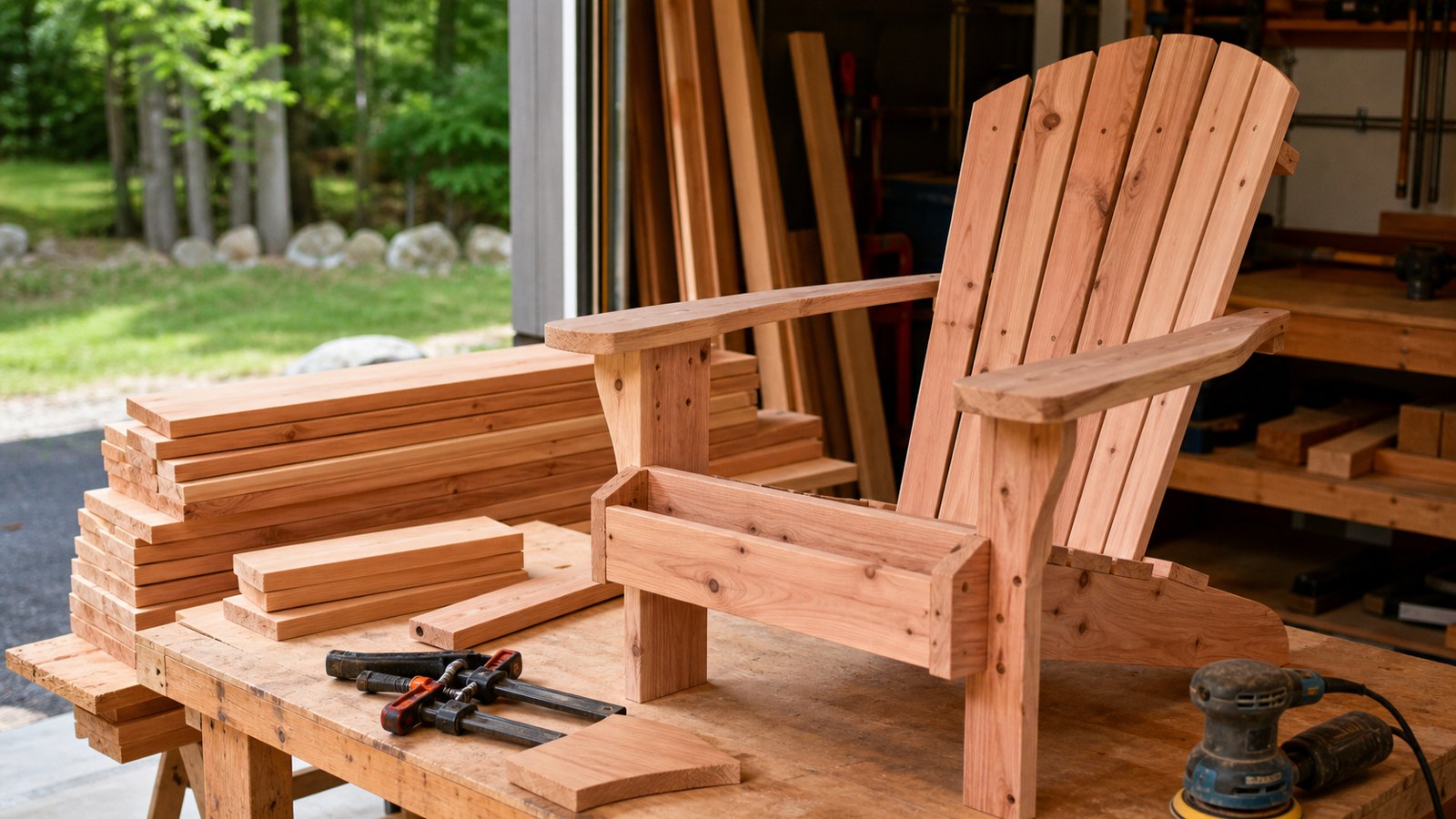
Few pieces of outdoor furniture capture the essence of relaxation like an Adirondack chair. Its deep-sloping seat, wide armrests, and high, gently curved back invite hours of lounging on porches, patios, and lakesides. Among its many variations, the curved-back Adirondack chair stands out as the most ergonomic and visually refined — offering superior lumbar comfort and a graceful silhouette. Whether you’re a seasoned woodworker or a motivated beginner, this project blends craftsmanship, design, and satisfaction into one rewarding build. Below is your full guide to constructing a curved-back Adirondack chair, from gathering materials and tools to final sanding and sealing. You’ll learn not only the how but also the why behind each step — ensuring your finished chair is as sturdy, comfortable, and timeless as the Adirondack legacy itself.
A: No—use a jigsaw + template + pattern bit to clean the edge.
A: Cedar is forgiving and light; white oak is tougher but heavier and durable.
A: Make one master template and pattern-route all matching parts.
A: Paint adds UV pop; oils/varnish highlight grain. Prep and maintenance decide longevity.
A: Pre-drill, stay ¾" from ends, and don’t overtighten stainless screws.
A: Widen seat to 22", raise arm height slightly, and add a touch more lumbar arc.
A: It works with thorough sealing/paint, but expect more maintenance outdoors.
A: Match the seat slope; hinge or slide-out ottoman keeps storage simple.
A: First build: a weekend. With templates: a single long day.
A: Standard versions don’t stack; add fold hardware/bolts if compact storage is critical.
1. Understanding the Curved-Back Design
The hallmark of the curved-back Adirondack chair is its anatomical contour. Unlike straight-slat backs, the curved design mirrors the natural arc of the human spine, providing supportive relaxation without pressure points. The curvature is typically achieved by arranging individual back slats along a gentle radius — usually between 20 and 30 inches — and attaching them to curved back braces that create that smooth, continuous line.
Functionally, this curvature improves weight distribution and encourages proper reclining posture. Visually, it adds refinement: a seamless rise from seat to crest that enhances any garden or deck. Recognizing this geometry early helps guide accurate cutting, assembly, and alignment later in the project.
2. Choosing the Right Materials
The material you choose determines your chair’s lifespan and character. For outdoor furniture, rot-resistant woods are key. Cedar, redwood, and teak remain top favorites thanks to their natural oils that repel moisture and insects. Pine can also work if sealed properly, offering a budget-friendly alternative for painters and stainers alike. Each species affects the chair’s final look. Cedar weathers to a silvery gray, teak glows golden brown, and pine takes stains beautifully for color customization. Opt for kiln-dried lumber to prevent warping, and ensure all boards are straight and knot-free where structural integrity matters most — such as the legs and back supports. In addition to wood, you’ll need galvanized or stainless-steel screws to prevent rust, waterproof wood glue, and outdoor wood filler for smooth finishing.
3. Tools and Equipment Checklist
Before you start cutting, confirm your workspace is safe, well-lit, and ventilated. You’ll need:
- Circular or jigsaw for curved cuts
- Miter saw for precision angle cuts
- Power drill and driver bits
- Random-orbit sander or sanding block
- Clamps for securing joints
- Measuring tape, square, compass, and pencil
- Safety gear: goggles, gloves, ear protection, and dust mask
Preparation is half the project. Organize all materials and tools before you begin to maintain momentum once assembly starts.
4. Creating the Template and Measuring for Accuracy
The success of a curved-back Adirondack chair depends on symmetry and proportion. Many builders start with printable templates, but drawing your own offers flexibility. Begin with a full-scale layout on craft paper or cardboard. Trace the seat profile, back curvature, and leg angles.
The typical dimensions are:
- Seat height (front): 15–16 inches
- Seat depth: 18–20 inches
- Back height from seat: 32–36 inches
- Armrest width: 4–5 inches
- Recline angle: 15–20 degrees
Marking accurate reference lines ensures your curves align properly later. Use a large compass or improvisational method (such as tying a pencil to a string anchored at a set radius point) to draw the back’s arc. This geometry will guide your back slats and braces.
5. Cutting the Frame Components
Cutting forms the foundation of precision. Start with the front legs, rear legs, and seat supports. The front legs are usually straight, while the rear legs curve upward to support both the seat and backrest. Use your miter saw for clean edges and ensure each pair matches perfectly in length and angle. Next, cut the seat slats — typically five or six pieces, each about 2½ inches wide and spaced evenly for drainage. Follow with the back slats, which vary in length to form the curved top line. The center slat will be the tallest, gradually tapering outward to shorter outer pieces. Finally, cut the armrests and arm supports, rounding or tapering their ends for aesthetic flow. When cutting curves, work slowly with a jigsaw and sand edges immediately afterward. Smooth contours not only enhance the look but also prevent splintering during finishing.
6. Shaping the Curved Back Supports
The curved back supports — also called back braces — define the chair’s ergonomic form. To create them, trace your chosen radius onto two identical boards. Cut the curve with your jigsaw, keeping edges uniform. Smooth the curves using a sander or spokeshave until both pieces match perfectly when stacked.
These braces act as structural ribs that hold the vertical slats in their precise curve. Later, you’ll attach the slats to these braces before connecting the entire assembly to the seat base. For added accuracy, label each brace’s top, middle, and bottom sections, so you know their orientation during assembly.
7. Constructing the Seat Base
The seat forms the anchor of the chair, so strength and angle matter most. Begin by attaching the rear legs to the seat supports, aligning them according to your template’s recline angle. Secure each joint with waterproof glue and screws. Once the frame is stable, install the seat slats starting from the back. Maintain consistent gaps (around ⅜ inch) between each slat for drainage. Use spacers or a nail as a guide to keep the gaps uniform. Ensure each screw sits flush or slightly recessed to avoid snags later. Check that the seat surface forms a gentle downward slope — around 5 to 7 degrees from front to back — for comfortable sitting posture.
8. Assembling the Curved Backrest
Lay the curved back braces on a flat surface at the correct spacing, usually one at the bottom and one midway up the slats. Align the longest slat in the center, ensuring it’s perfectly vertical. Attach it using screws or dowels, then work outward on each side, following the curvature line.
As you move outward, each slat will tilt slightly to match the curve. Use a flexible straightedge or template to double-check alignment. Once all slats are secured, sand the entire backrest surface to remove sharp edges and smooth transitions.
When lifted upright, the backrest should display a pleasing continuous arc. This curvature is what distinguishes your chair from flat-back versions — combining aesthetics with ergonomic support.
9. Attaching the Backrest to the Seat
Now it’s time to bring the structure together. Position the completed backrest assembly onto the seat base. The bottom of the backrest should overlap the rear seat slat slightly, while the curved braces rest snugly against the rear legs. Angle the backrest until it feels naturally reclined — about 15 to 20 degrees from vertical. Clamp it temporarily and test the feel by sitting gently on the seat. Adjust if necessary before securing permanently with screws through the braces into the rear legs. Double-check symmetry by measuring from the seat to the top of the backrest on both sides. Any unevenness can be corrected now before the final tightening.
10. Adding the Armrests and Supports
The wide armrests are both functional and iconic. Measure and cut each piece to extend slightly past the front legs and curve gently at the front edge for comfort. Attach the arm supports first — one vertical post connecting the front leg and one slanted support anchored into the backrest brace.
Apply glue and screws for stability, then position the armrests on top of the supports. Check levelness side to side before fastening. Wide arms (around 5 inches) provide an ideal resting spot for beverages or books — a signature Adirondack feature.
Once attached, your chair’s silhouette should finally resemble the classic Adirondack form — grounded, balanced, and welcoming.
11. Sanding for Comfort and Finish
No Adirondack chair feels right until it’s been thoroughly sanded. Begin with 80-grit paper to remove rough edges, tool marks, or uneven joints. Then move progressively to 120- and 220-grit for a silky surface. Round over all corners slightly to prevent discomfort against skin or clothing. Focus extra attention on armrests, seat edges, and slat tops — wherever hands or legs will rest. If you plan to paint or stain, sanding prepares the surface for uniform absorption. Wipe away dust with a damp cloth before moving to finishing. Sanding is more than cosmetic — it defines the tactile experience. A well-sanded Adirondack chair invites touch and enhances the sense of quality craftsmanship.
12. Finishing: Paint, Stain, or Natural Oil
Finishing transforms your chair from raw wood to outdoor-ready art. The choice depends on your aesthetic preference and maintenance expectations:
- Paint: Ideal for color customization and maximum UV protection. Use an exterior primer and two coats of outdoor-grade paint.
- Stain: Brings out natural grain while adding moderate protection. Apply two coats of penetrating oil-based stain followed by clear sealer.
- Natural Oil or Varnish: Enhances wood’s organic warmth with easy touch-ups. Teak or tung oil deepens color and offers water resistance.
Always finish in a dust-free area. Allow proper drying between coats, lightly sanding between them for adhesion. Avoid polyurethane if you plan on keeping a rustic, breathable finish — it can trap moisture and lead to peeling in humid climates.
13. Weatherproofing and Longevity
Outdoor exposure can challenge even the most solid build. Extend your chair’s lifespan with smart maintenance habits. Position it on a level surface to avoid stress on joints. Add felt or rubber feet if placed on damp ground to reduce moisture absorption.
Reapply protective finishes annually or as needed, especially on sun-facing or rain-exposed areas. If you live in regions with harsh winters, store your chair indoors or cover it with a breathable furniture cover to prevent cracking.
Inspect screws yearly for rust or loosening. Tighten gently to maintain structural integrity without over-torquing. With this care, a cedar or teak Adirondack chair can last decades.
14. Design Variations and Customization Ideas
Once you’ve mastered the curved-back version, customization becomes a playground for creativity. Consider slightly adjusting the back curvature for personal comfort or altering seat width to create a “lounger” model. You might also experiment with contrasting stains — a darker seat and lighter back, for example — to highlight craftsmanship. Adding cup holders or engraved designs into the armrests introduces personal flair. If you prefer portability, swap wood screws for bolted joints that can be disassembled for transport or seasonal storage. The Adirondack’s simplicity makes it adaptable without losing its iconic charm.
15. Common Mistakes and How to Avoid Them
Even seasoned builders encounter challenges. The most frequent error lies in misjudging the curve radius. A back too sharply curved feels awkward; too flat and it loses comfort. Aim for a natural spine-like contour — gentle, not exaggerated.
Another pitfall is inconsistent slat spacing, which disrupts the visual flow and can collect water unevenly. Always use spacers and double-check alignment before fastening.
Lastly, don’t underestimate surface preparation. Rough sanding or skipped grits can lead to uneven staining, while missed sealant coverage accelerates decay. Patience during these steps ensures the chair’s professional look and resilience.
16. Safety Considerations During Construction
Power tools bring efficiency but demand caution. Always wear eye protection when cutting or sanding. Secure all boards firmly before sawing to prevent kickback. Maintain stable footing and focus on blade paths. Work at a comfortable height — a pair of sturdy sawhorses can save strain and increase accuracy. If using wood glue, wipe excess immediately before it dries; dried residue can interfere with stain absorption. Finally, always unplug or power down tools when changing blades or bits. A methodical pace is safer and results in cleaner craftsmanship.
17. Sustainability and Eco-Friendly Choices
Building an Adirondack chair can also reflect sustainable practices. Choose FSC-certified lumber harvested from responsibly managed forests. Use low-VOC finishes and water-based sealers to reduce environmental impact.
Reclaimed wood is another excellent option — old decking, barn boards, or pallets can gain new life as rustic Adirondack chairs. Sand them thoroughly to remove weathered layers and check for hidden nails before cutting.
By making these eco-friendly decisions, you craft not only furniture but a story of environmental respect and mindful design.
18. Testing Comfort and Adjustments
Before declaring the project complete, sit in your chair — several times, ideally. Feel the recline angle, seat depth, and arm height. The curved-back design should cradle your shoulders comfortably while supporting your lower spine.
If anything feels off, minor tweaks can make a major difference. Slightly adjusting the backrest angle or shaving a fraction off an armrest height often perfects the ergonomics. Custom comfort is part of the Adirondack’s enduring appeal — it’s a handmade invitation to rest.
19. Adding a Personal Touch
Once your chair is structurally complete and finished, consider personal details that make it uniquely yours. Wood-burn initials, a small brass nameplate, or color themes matching your patio décor can elevate the aesthetic.
Cushions, while optional, enhance comfort and introduce seasonal flair. Use weather-resistant fabrics like Sunbrella or polyester blends. Tie-on pads or full-back cushions fit well with curved-back models, adding both comfort and protection from sun-heated wood.
Your Adirondack chair can become more than furniture — it’s a personal heirloom reflecting your craftsmanship and creativity.
20. Troubleshooting After Completion
If your finished chair rocks slightly, adjust leg ends with light sanding until it sits firmly. Minor wobbles often result from uneven ground rather than construction errors.
Should any joints squeak, apply a drop of outdoor wood glue or re-tighten screws. For surface scratches or nicks, light sanding and touch-up stain usually restore appearance quickly.
Moisture marks can be minimized with a light oil rub-down. Routine inspection ensures your curved-back chair stays as sturdy and graceful as the day you built it.
21. The Reward of Craftsmanship
Building a curved-back Adirondack chair offers more than a comfortable seat — it reconnects you with the tactile satisfaction of craftsmanship. Each curve you cut, each slat you align, tells a story of patience and precision. When you finally settle into its contours, there’s a deep sense of reward in knowing you created something both beautiful and lasting.
This project also teaches transferable skills: geometry, joinery, finishing, and problem-solving. Many builders find it addictive, soon creating pairs or even entire patio sets. The curved-back Adirondack chair thus becomes a gateway to greater woodworking confidence — and to endless moments of outdoor relaxation.
22. Long-Term Care and Restoration
Years down the road, weather may dull your chair’s sheen, but restoration is easy. Clean with mild soap and water, sand lightly, and reapply your original finish. If joints loosen, disassemble and reglue rather than forcing new screws — this preserves the wood and keeps lines clean.
For older chairs, you can even refinish with a bold new color or decorative pattern. Many crafters stencil botanical or nautical motifs onto Adirondacks for coastal or garden themes. With minimal effort, your chair can evolve with your tastes.
23. Display and Placement Ideas
Placement influences not just appearance but longevity. Set your chair where it complements natural surroundings — facing a lake, garden, or sunset view. If on grass, place stone or paver pads beneath each leg to prevent moisture wicking.
In pairs or trios, curved-back Adirondacks encourage conversation circles. Add a small matching table between them for drinks or lanterns. Under a pergola or by a firepit, their sculpted backs and generous arms create an instantly inviting atmosphere.
Your craftsmanship deserves a stage that highlights its form — a reminder that design and setting are inseparable.
24. Passing the Tradition Forward
The Adirondack chair has roots in early 20th-century upstate New York, originally called the “Westport chair.” Over time, its functional simplicity and ergonomic angles inspired countless variations, including today’s curved-back refinement.
By building your own, you join a lineage of makers who valued self-reliance, beauty, and outdoor life. Teaching this process to others — family members, students, or friends — keeps that tradition alive. Each builder adds personal interpretation, ensuring the design remains timeless yet evolving.
25. From Lumber to Legacy
When you stand back to admire your finished curved-back Adirondack chair, you’ll see more than shaped wood — you’ll see patience, precision, and artistry realized in tangible form. From the moment you drew the first arc to the final brush of sealant, every step fused craftsmanship with creativity.
This chair isn’t just furniture; it’s an emblem of leisure, craftsmanship, and enduring design. Built properly, it will outlast fleeting trends, offering decades of comfort and pride. Whether on a mountain deck, a lakeside dock, or a quiet garden, your curved-back Adirondack chair becomes a statement — of both your handiwork and the simple joys of slowing down.