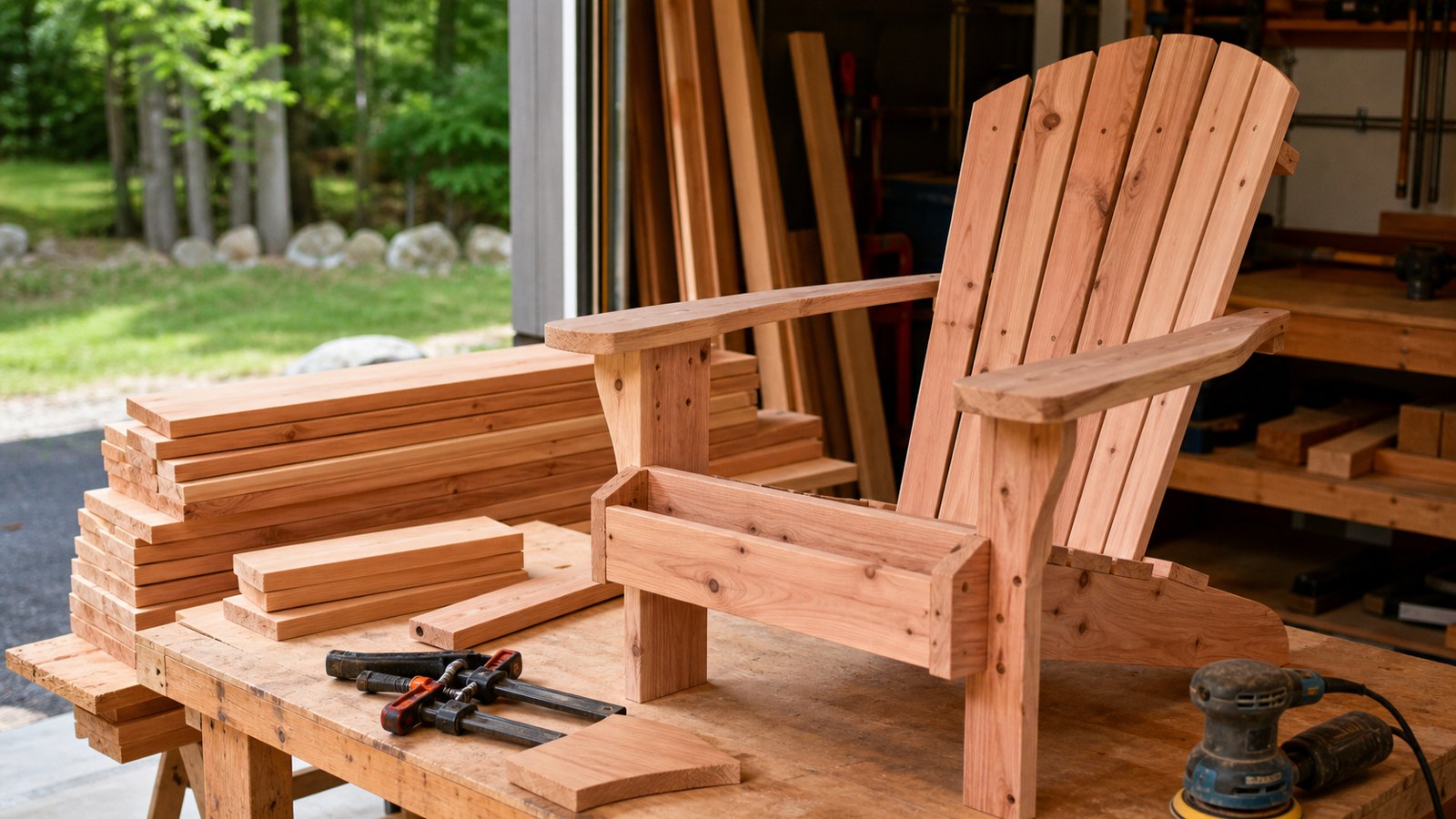
A Complete DIY Guide for Comfort, Craftsmanship, and Backyard Bliss
There’s something timeless about the slow, steady rhythm of a rocking chair. Combine that with the classic Adirondack silhouette—wide arms, contoured seat, and a deep recline—and you have the perfect blend of comfort and charm. A rocking Adirondack chair isn’t just a piece of outdoor furniture; it’s a project that rewards you with craftsmanship, relaxation, and pride. Building your own rocking Adirondack chair is an achievable goal, even if you’re relatively new to woodworking. With a bit of patience, a few tools, and some careful planning, you can transform ordinary boards into a backyard showpiece. This guide walks you through every stage of the build—from selecting the right materials to sanding, assembling, and adding that final touch of finish that makes your chair last for years.
A: 36–42" works well. Larger = slower, smaller = more “lively.”
A: Set a safe stop angle and a slight flat at the tail of each runner.
A: Yes—add runners at proper pivot points and ensure clearance.
A: Exterior screws + plugs are common; bolts at runner pivots add durability.
A: Cedar/cypress (value), white oak/teak (premium). Seal edges and end grain well.
A: Paint = bold color, more prep; oil/varnish = natural look, easier maintenance.
A: Ultra low-maintenance, heavier (good for wind), colorfast—excellent for resorts.
A: Check runner symmetry and floor contact; fair the curves and re-seat fasteners.
A: Avoid pinch points near runner tips; ensure stable, non-snag edges.
A: Yes—use quick-dry foam and UV fabrics; secure with ties that won’t foul the rockers.
The Allure of the Rocking Adirondack
Before cutting a single board, it helps to appreciate why the rocking version of the Adirondack chair is so beloved. Its deep seat and angled back cradle your body in a natural lounging position. The rockers add gentle motion—perfect for reading, sunset watching, or quiet conversation on a porch or deck. Unlike some rockers that feel upright and stiff, the Adirondack rocker preserves the low-slung, reclined feel that defines its mountain-resort heritage.
Crafting one yourself means you can fine-tune that balance: the length of the rockers, the curve of the seat, even the tilt of the arms. It’s a hands-on way to merge ergonomics with artistry.
Gathering Tools and Materials
A great build starts with great prep. You don’t need a workshop full of industrial machines, but a few reliable tools make the process smooth and precise.
Recommended Tools
- A circular saw or jigsaw for curved cuts
- A miter saw for angled joints
- Drill and driver bits for screws
- Belt or orbital sander
- Clamps for securing pieces during assembly
- Measuring tape, square, and pencil for layout
- Countersink bit for clean screw holes
Material Choices
For classic outdoor durability, cedar, teak, or redwood are ideal—they resist rot and weather beautifully. Pressure-treated pine is a budget-friendly alternative, though you’ll want to seal it carefully. Plan on roughly 40 to 45 board feet of lumber for a single chair, depending on your dimensions. Use stainless steel or coated deck screws, which hold up against rain and humidity far better than uncoated steel.
Planning Your Build
Every great Adirondack starts on paper—or at least, with a clear plan. Before cutting, it’s worth sketching or printing a template. Many DIYers trace patterns onto cardboard or plywood for reuse. A typical rocking Adirondack chair measures about 37 inches tall, 30 inches wide, and 38 inches deep, but you can tweak these dimensions for comfort or available space.
When adding rockers, note that the radius of the curve affects how smoothly it rocks. Too shallow, and it may not move much; too deep, and it can feel unstable. A 36- to 40-inch arc radius provides a balanced, gentle motion.
Label each piece—back slats, seat slats, armrests, legs, supports—so nothing gets confused once the cutting begins.
Step 1: Cutting the Pieces
Start by cutting all your lumber to length. Accuracy here sets the tone for the whole project.
- Back slats: Typically 5 or 6 boards, about ¾ inch thick and 22–24 inches long.
- Seat slats: Around 6 boards, 20 inches long, gently curved to form a comfortable contour.
- Legs and front supports: These form the chair’s base. The rear legs will be longer and angled backward to give the Adirondack its recline.
- Armrests: Wide and flat—about 3½ to 4 inches across—for resting drinks or books.
- Rockers: Cut two identical curved pieces from a 1×6 or 2×6 board. Use a large circular template (a trash can lid or garden hose works in a pinch) to trace a smooth curve before cutting with a jigsaw.
Once everything is cut, lightly sand each piece to remove splinters and pencil marks.
Step 2: Building the Seat Frame
The seat frame anchors everything—the legs, slats, and eventually the backrest. Lay out the two side rails (the long pieces that will hold the seat slats) parallel to each other. Use your square to ensure they stay aligned as you attach the front crosspiece and rear seat support. Most builders angle the rear seat support downward about 12 to 15 degrees, giving the chair its classic recline. Dry-fit the frame before screwing it together. Once it looks right, drive in your screws and double-check that all corners are square.
Step 3: Attaching the Seat Slats
Now for the part that brings visible progress. Start at the front and work backward, spacing each slat about ⅜ inch apart. You can use a scrap of wood as a spacer to keep it consistent.
Slightly round the front edges of the slats to make them more comfortable on the legs. Attach each slat with two screws on either end. Don’t overtighten—you want the wood to flex slightly as it’s sat on.
If you’re contouring the seat (for that famous Adirondack dip), sand the middle slats more aggressively or use slightly thinner boards in the center. This subtle curve can make the chair dramatically more comfortable.
Step 4: Assembling the Backrest
The backrest gives the Adirondack its distinct silhouette. Lay your back slats on a flat surface with even spacing. Place two horizontal back supports across them—one near the top, one midway down—and screw them into place. Then, trim the top ends of the slats into a gentle arc. A flexible strip of wood or yardstick makes a perfect guide for drawing the curve. Cut along that line with your jigsaw, and sand the edge smooth. Before attaching it to the seat, test the angle: a 15- to 20-degree recline is typical. You can adjust this later when mounting.
Step 5: Adding the Legs and Arm Supports
Stand the seat frame upright and attach the front legs using screws and waterproof wood glue. They should sit flush with the outer edges of the frame for stability.
Next, add the rear legs, which will extend backward and upward to connect with the backrest. These long, angled legs create that signature backward pitch.
Once those are secure, add the arm supports—short vertical pieces connecting the front legs to the top of the back legs. These will later hold up the wide armrests.
At this stage, your chair will look like a sturdy skeleton waiting to come to life.
Step 6: Mounting the Backrest
Position the backrest so its bottom edge meets the rear of the seat frame. Adjust its tilt until it feels natural when you sit against it. Have a helper hold it steady while you mark the screw holes through the rear legs into the back supports. Secure it in place, checking that it’s centered. Once attached, the chair begins to feel solid—this is when the Adirondack character truly emerges. If the top edge of the backrest feels too tall or too straight, you can shave a little off for a more flowing contour. Small adjustments here dramatically affect comfort.
Step 7: Installing the Armrests
The armrests are one of the Adirondack’s trademarks—broad, smooth, and inviting. Align each arm so it extends from the backrest to the front leg. The front edge should overhang slightly for aesthetics and easy gripping when you stand up.
Screw the arms into both the front legs and the arm supports. Add a cross brace underneath if you want extra sturdiness.
Once attached, test the feel. You should be able to rest your elbows comfortably without leaning forward.
Step 8: Shaping and Mounting the Rockers
Here comes the most satisfying—and delicate—part: giving your chair its rock. Use your rocker templates or traced curves to cut two identical arcs. The front of the rocker should rise gently, while the back sweeps slightly longer to maintain balance. To mount them, position each rocker under the chair’s legs. Sit the chair on a flat surface and shim it so all four leg bottoms sit evenly on the rockers before screwing them in. You want both rockers to be perfectly parallel; even a small difference can cause uneven rocking. Once secure, test the motion. If it feels too steep or shallow, you can adjust the arc slightly with sanding or trimming.
Step 9: Sanding, Detailing, and Finishing
This is where craftsmanship transforms a project from “homemade” to “handcrafted.” Start with coarse sandpaper (80 grit), smoothing away rough edges and leveling any uneven joints. Then move to 120- and 180-grit for a silky finish.
Round over sharp corners on the arms and seat edges—it not only looks better but prevents snags and splinters.
If you’d like to add decorative touches, now’s the time: engraving initials, routing a soft edge along the arms, or subtly curving the seat sides for style.
Before finishing, wipe everything clean with a damp cloth to remove dust.
Step 10: Sealing and Protecting Your Chair
Outdoor furniture endures a lot—rain, sun, and shifting temperatures. Proper sealing ensures your hard work lasts. For natural woods like cedar or teak, a clear penetrating oil enhances grain while protecting from moisture. For pine or other softwoods, a quality exterior paint or polyurethane offers longer-term durability. Apply your chosen finish with a brush or cloth, working along the grain. Two thin coats usually outperform one thick coat. Let it dry thoroughly between applications, and lightly sand between coats for a smooth surface. If your chair will sit on grass or damp decking, consider adding rubber feet or small risers beneath the rockers to reduce moisture absorption.
Comfort Adjustments and Final Touches
Once the finish has cured, test your chair. Sit in it for a few minutes—notice the angle, arm height, and rocker motion. If it feels too upright, you can adjust the rear leg or rocker position slightly.
Adding weather-resistant cushions or lumbar pillows can elevate comfort even more. Stick to UV-stable outdoor fabrics like Sunbrella or Olefin.
You can also personalize your creation with paint. A deep forest green or coastal blue pairs beautifully with garden settings, while natural stains complement cabin or deck aesthetics.
The Science of a Perfect Rock
The smooth rocking motion of your Adirondack isn’t accidental—it’s a balance of geometry and physics. The rocker’s arc must align with the chair’s center of gravity. Too far forward, and you’ll tip easily; too far back, and you’ll struggle to rock at all. The sweet spot occurs when your body’s weight passes smoothly through the midpoint of the arc. This is why many woodworkers test the chair’s balance before final assembly by temporarily clamping the rockers in place and gently rocking to find that equilibrium. This understanding transforms your DIY into craftsmanship: you’re not just building a chair, you’re engineering relaxation.
Troubleshooting Common Build Challenges
Even experienced builders encounter a few hiccups. Here are practical ways to handle them:
Uneven rocking:
If one side rocks higher, the rocker curves may differ slightly. Sand the longer one gradually until balance returns.
Squeaky motion:
Usually from friction where the legs meet the rockers. A dab of wood wax or a thin rubber washer between joints can eliminate noise.
Loose joints over time:
Outdoor wood expands and contracts. Use exterior-grade glue plus screws, and retighten seasonally.
Surface cracking:
This often happens with softwoods that dry too quickly. Applying finish evenly on all sides (including underside surfaces) minimizes uneven drying.
Adapting the Design
One joy of building your own Adirondack rocker is customization. You can scale it for children, make a double-rocker “loveseat,” or even add a folding feature for easy storage. Want more back support? Increase the number of slats or add a contoured lumbar piece. Prefer a smoother rock? Extend the arc radius slightly. Creative builders sometimes integrate cup holders, headrest pillows, or built-in side tables. Each modification personalizes your chair while deepening your woodworking experience.
Caring for Your Rocking Adirondack
Maintenance ensures your chair becomes a long-term companion rather than a one-summer wonder.
- Reapply protective oil or varnish once a year.
- Store under cover during harsh winters, or use a breathable furniture cover.
- Check for loose screws each spring.
- Wipe away pollen or debris regularly to prevent surface wear.
If you’ve painted your chair, touch up chips quickly to stop moisture intrusion. The more care you give it, the more character it gains with time.
Sustainable Craftsmanship
In today’s eco-conscious world, choosing sustainable materials adds another layer of pride. Opt for FSC-certified lumber, which ensures responsible forestry. Consider using reclaimed wood from old decks or barns for a rustic patina that tells its own story.
Water-based finishes and low-VOC sealers keep your workspace safer and your environmental footprint lighter. Even small projects like this can reflect a commitment to craftsmanship that respects nature.
The Joy of Building Your Own
When you finish, step back and admire what you’ve created. Each curve, screw, and smooth armrest is the product of your hands and patience. Unlike store-bought furniture, this rocking Adirondack carries the memory of its making—the scent of fresh-cut wood, the hum of your sander, the satisfaction of that first gentle rock. A handmade chair becomes part of your outdoor story. It’s where you sip morning coffee, read on lazy afternoons, and watch the seasons change. You built it to last, and every creak and sway is proof of your effort and skill.
A Timeless Project for Every DIYer
Whether it’s your first woodworking project or one of many, the rocking Adirondack chair represents the perfect mix of simplicity and sophistication. Its design is forgiving enough for beginners yet rewarding for seasoned builders who crave precision.
Building one teaches more than just joinery—it fosters patience, attention to detail, and respect for materials. And once you’re done, you don’t just own a chair—you own an experience, a rhythm, and a place to unwind.
So gather your tools, pick your favorite lumber, and let the shavings fall. With every cut and curve, you’re not just crafting furniture—you’re crafting peace.