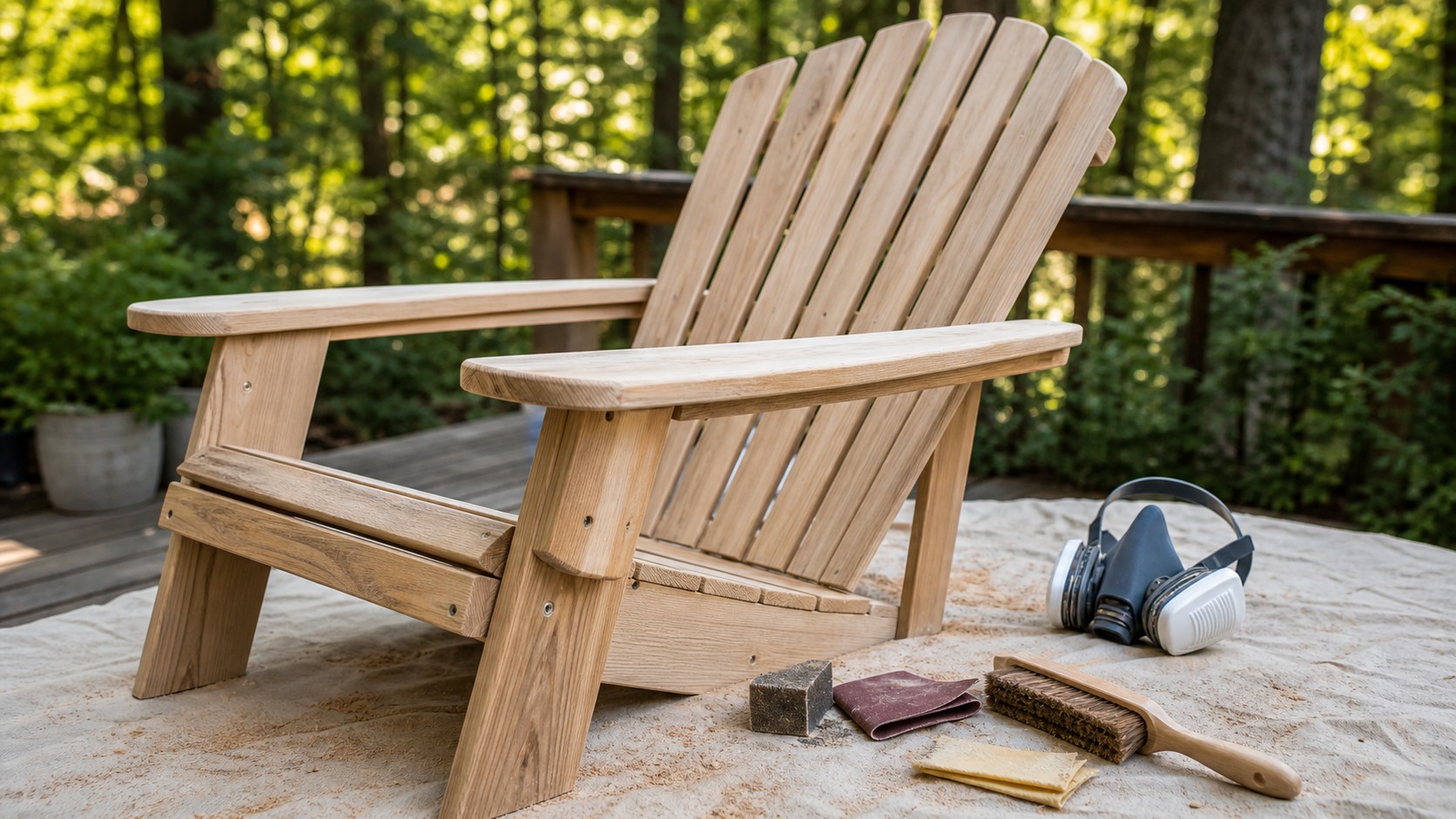
Bringing Weathered Wood Back to Life
There’s a reason Adirondack chairs are iconic. They’re wide-armed summer companions, low to the ground, relaxed in posture, and built for real life—sunny afternoons, lakeside breezes, porch naps, and barbecue smoke curling through the air. But time and weather leave their mark. Even the most beloved chair begins to gray, splinter, peel, and fade under long exposure to UV rays, rain, and seasonal temperature swings. Thankfully, refinishing a wooden Adirondack chair is not just a practical maintenance task—it’s a deeply satisfying transformation. Restoring wood breathes life back into outdoor furniture, returning richness to natural grain and extending functional durability for years to come. This complete guide walks through every step of the refinishing process with clarity and confidence—from assessment and stripping to sanding, staining, sealing, and final curing. Whether your chair is cedar, teak, pine, acacia, or another hardwood, the process remains rewarding and accessible. With patience, the right tools, and an understanding of the wood beneath your fingertips, the result becomes more than a chair. It becomes a restored classic—one you shaped, revived, and protected.
A: Only remove what’s loose, peeling, or thickly built up; sound, well-adhered finish can often be sanded and coated.
A: Yes—clean, sand thoroughly, spot-prime bare wood, then use a quality exterior bonding primer before paint.
A: No, but a random-orbit sander saves time on flat areas; use hand sanding for curves and detailed edges.
A: Coats may be too thick or recoated too soon; allow more dry time and avoid finishing in cool, damp weather.
A: High-quality exterior paint or solid stain generally outperforms clear coats in harsh sun and rain.
A: Expect touch-ups every 1–3 years depending on climate, sun exposure, and how hard your chairs work.
A: Most HDPE chairs are color-through and not meant to be painted; just clean them—no sanding or staining needed.
A: Treat with a cleaner rated for mildew on wood, rinse well, dry fully, then refinish with a mildew-resistant product.
A: Choose low-VOC products, work outdoors, and keep little ones away until surfaces are fully dry and cured.
A: Deep clean, scuff-sand worn spots, and apply one fresh coat to arms and seat—your chair will look dramatically better.
Understanding the Wood Before You Begin
Before any refinishing work begins, it helps to understand the wood itself. Adirondack chairs are commonly made from cedar, fir, teak, acacia or treated pine. Cedar resists rot naturally and refinishes beautifully, especially when treated with oils. Teak has dense natural oils and requires very specific finishing techniques, often benefitting from teak oil rather than thick polyurethane. Pine is softer and more delicate but stains well with correct sanding and sealing. Acacia is strong and grain-rich, thriving under penetrating oil finishes.
The starting condition of the chair determines much of what follows. A heavily weathered chair may need deeper sanding or multiple coats of finish. A paint-chipped chair may require chemical stripping or heat removal. A stained chair from last season may only need light sanding and a fresh seal. Studying the surface up close reveals grain direction, cracks, mildew spots, water stains, exposed screw heads, and rough edges. Refinishing isn’t a rush to the end—it’s a conversation with the material, one layer at a time.
Setting Up Your Workspace for Success
A proper refinishing project begins with a clean, controlled workspace. Ideally, refinish outdoors or in a ventilated garage. Airflow matters because sanding produces fine dust, and finish products require oxygen to settle and cure. Avoid windy areas that may carry debris into drying coatings. Lay down a tarp or drop cloth to catch dust and drips. Have a sturdy table or stand ready so you aren’t crouched over the chair for hours, especially during sanding and detail work. Lighting is crucial. Natural daylight is best because it reveals wood tone and scratches that artificial lighting can hide. If working indoors, position overhead lamps to hit the surface from angles, allowing imperfections to become visible. Ventilation keeps fumes from oils, varnishes, stains, and polyurethane manageable and safe. A project that begins organised will finish smooth. Preparation avoids interruption, eliminates mistakes, and keeps the process flowing. With space ready, the transformation begins.
Part One: Cleaning and Surface Preparation
Before stripping, sanding, staining, or sealing, every Adirondack chair must be thoroughly cleaned. Dirt, pollen, mildew, and body oils accumulate invisibly in outdoor furniture. Simply sanding over them pushes contaminants deeper into the wood. Cleaning restores neutral moisture levels and prepares fibers to accept finish properly.
Start with a bucket of warm water mixed with mild soap or dedicated wood cleaner. A soft-bristle brush works well to loosen dirt embedded in the slats and joints. Move with the grain rather than against it so bristles lift grime rather than push it sideways. Pay extra attention to under-slat edges, armrest curves, and joints where moisture settles. If mildew or mold spots appear, apply a diluted vinegar or oxygen-based wood brightener to eliminate growth safely without harsh bleach that can weaken fibers.
After scrubbing, rinse with clean water, but never soak the chair. Excess moisture warps wood and slows refinishing. Allow the chair to dry for at least twenty-four to forty-eight hours in shaded open air. Drying is non-negotiable; finish cannot bond to damp fibers. Once moisture evaporates, the wood feels lighter, less cool to the touch, and grain texture becomes more pronounced under fingertips.
This clean-and-dry phase is the threshold. Only from here can the real refinishing work begin.
Part Two: Stripping the Old Finish
Stripping removes old paint, varnish, sealer, or stain, revealing bare wood beneath. Some chairs may require minimal stripping if only lightly weathered. Heavily finished or painted surfaces, however, must be removed for stain and sealer to penetrate evenly. The first approach involves sanding to remove coatings manually. Coarse grit sandpaper (60–80 grit) cuts through finish, gradually advancing toward a smooth raw surface. Sanding by hand works well for flat panels, but detailed Adirondack curves may require a palm sander or contour sponge. The goal is consistency, not speed. Rushing burns through soft wood unevenly, leaving troughs and waves. For stubborn paint layers, chemical strippers offer a second method. Gel or citrus-based strippers cling to angled surfaces, dissolving finish over time. After application, coatings bubble and soften, allowing easy scraping without excessive sanding. Always scrape gently with a wood-safe tool to avoid gouges. A hybrid approach often works best: chemical removal to break through thick layers followed by sanding to refine bare timber. Once old finishes disappear, the wood breathes again. Grain lines emerge. Natural tone returns. Original character stands where dull coating once lived. This moment alone makes the effort worthwhile.
Part Three: Sanding — The Soul of the Refinish
Sanding is where the chair comes back to life. It smooths texture, erases damage, and prepares fibers to absorb new stain or sealant. Begin with coarse grit to remove leftover finish, then progress gradually through medium grit (120–150) and finish with fine grit (220 or above). Never jump directly to fine grit without leveling the surface first. Finishing products reflect surface condition like light off still water—any imperfection left behind becomes visible under stain.
Move sanding strokes with the grain, never against it. Sanding against fibers tears rather than smooths them, leading to roughness no finish can hide. Work each surface evenly, including armrests, seat slats, and backrest curves. Do not forget the underside and back edges; a professionally refinished chair looks beautiful from every angle.
Dust removal after sanding is critical. Use a tack cloth or vacuum hose to lift fine powder that hides in cracks and grooves. Dust left behind turns to muddy residue when stain hits. When the surface feels uniformly smooth—like satin beneath your palm—the chair is ready for color.
Part Four: Choosing Your Finish — Paint, Stain, or Oil?
Finishing transforms raw wood into a protected, polished piece of outdoor furniture. Choosing the right finish depends on style preference, weather exposure, and maintenance expectations.
Stain preserves natural grain while adding color depth. Cedar stains beautifully with soft amber tones. Acacia shows dramatic variation under darker walnut shades. Pine accepts stain but may require wood conditioner first to prevent patchiness. Water-based stains dry quickly and offer low odor, while oil-based stains penetrate deeply, enhancing richness and longevity.
Paint provides an entirely different look—solid color rather than grain visibility. Painted Adirondack chairs are bold, expressive, and coastal in personality. A crisp white finish blends with beach homes, while navy blues, forest greens, and barn reds define rustic style. Paint requires primer to bond properly and withstand seasonal weather.
Oils like teak, linseed, or tung oil soak into the wood rather than sit atop it, creating a natural matte glow. Oil finishes feel organic, warm, and tactile. They resist cracking and remain easy to refresh over time. However, oils may require more frequent re-application than varnishes.
Polyurethane and spar varnish create a glossy protective shell that shields wood from moisture and UV. These topcoats require patience and multiple curing cycles but reward with long-lasting durability. There is no wrong choice—only the preference that matches your vision.
Part Five: Applying the Finish with Precision
Application matters as much as product selection. Begin with thin, even coats. Thick layers pool, drip, and dry unevenly. Use a natural-bristle brush for oil finishes, and a foam or synthetic brush for water-based varnishes or polyurethane. Long, continuous strokes prevent lap marks. Always work in the direction of the grain.
When staining, allow the stain to penetrate for several minutes before wiping off excess. The longer the stain sits, the deeper the tone. Test on an inconspicuous underside area first to preview color intensity. Multiple coats amplify richness, but let each layer dry independently. Rushing leads to tackiness and uneven sheen.
Sealers require even more patience. If applying varnish or polyurethane, lightly sand between coats with extra-fine grit to remove raised fibers and create flawless adhesion. Each coat adds depth and strength. Three coats often achieve the ideal balance between clarity and protection.
Drying time varies by humidity, temperature, and product formula. A warm, dry day accelerates curing; cold, damp conditions slow it dramatically. Resist the urge to touch surfaces prematurely. A perfect finish rewards restraint.
Part Six: Reassembly, Final Cure, and Finishing Touches
If your chair was disassembled for sanding or stripping, now is the time to reassemble with care. Tighten screws gradually to avoid cracking panels. Replace rusted or stripped hardware with stainless steel to prevent future staining. Consider adding felt or rubber pads beneath leg bases to reduce moisture absorption from patios or decks. Allow the finished chair to cure fully before outdoor use. Surface dryness occurs within hours, but deep cure may take days. Once cured, feel the surface. Run fingertips across the armrests. The grain feels warm, smooth, and renewed. Sunlight catches the finish with subtle glow. The chair looks revitalized—proof of your time, patience, and craftsmanship. Small touches elevate presentation: a new cushion, a throw blanket, or placement beside garden greenery. The chair that once weathered silently now stands proud again, ready for seasons of relaxation.
Long-Term Maintenance for Multi-Year Beauty
A refinished Adirondack chair thrives when maintained annually. At season’s end, wash with gentle soap and soft brush to remove salt, pollen, and sunscreen residue. Re-oil or reseal as needed to reinforce protection. Even a quick maintenance coat each spring prevents the cycle of graying and peeling from returning.
If stored outdoors in winter, protect with a breathable cover rather than solid plastic tarps that trap moisture. Ideally, chairs overwinter inside a shed or garage where humidity and snow cannot encroach. Like all wood, Adirondack chairs reward stewardship. Your refinished chair will last years longer than neglected furniture. It becomes a living object—aging gracefully rather than wearing down.
Refinishing as Craft, Care, and Restoration
Refinishing wooden Adirondack chairs is far more than surface improvement. It’s an act of renewal. A revived chair becomes a reminder that wood responds beautifully to patience, restoration, and intentional craft. What first appears faded and tired transforms into rich character and smooth longevity. With every sanded slat and cured finish stroke, the chair tells a story—not just of weather endured but of care applied. Sit back in your restored Adirondack chair and listen to the world again. Feel sunlight warming the wood. Notice the smoothness beneath your palm. The grain runs like topographic lines across a landscape, textured but softened through work. A refinished chair is both a summer seat and a testament to what human attention can restore. And every season forward, as you settle into its familiar contours, you’ll know the transformation was yours.