A Timeless Classic of Outdoor Relaxation
Few pieces of outdoor furniture have the nostalgic power of the Adirondack chair. With its wide armrests, slanted seat, and tall, fan-shaped back, it symbolizes lazy summer afternoons, lakeside sunsets, and family gatherings on the porch. Yet, despite its elegant simplicity, building one from scratch is surprisingly accessible—even for beginners. Thanks to countless free plans online, DIY enthusiasts can now create their own Adirondack chair without expensive blueprints or years of woodworking experience. This guide explores the best free Adirondack chair plans available today, breaking down what makes each one beginner-friendly, how to choose the right design for your skill level, and what materials and tools you’ll need. Along the way, you’ll learn useful building tips, finishing secrets, and subtle design variations that make each chair uniquely your own.
A: Pine is cheapest to learn on; cedar is lighter and more weather-friendly.
A: A circular saw + speed square works fine; add a jigsaw for curves.
A: Use “Actual Size” (100%); tile across pages; align registration marks with tape.
A: Yes—use gentler radii or a straight-slat back; comfort comes mostly from the seat/back angle.
A: Exterior-coated or stainless; pair with pilot holes and countersinks.
A: Nudge seat height ±1" and test-sit before final fastening.
A: Paint hides beginner putty/screwups; oil finishes are faster to refresh.
A: Great for storage/small decks, but hardware and alignment add complexity.
A: Skipping a dry fit—assemble loosely, sit-test, then commit.
A: With exterior screws and seasonal touch-ups, a pine chair can last years; cedar even longer.
Why Build Your Own Adirondack Chair?
Building an Adirondack chair from scratch offers more than just a practical piece of furniture—it’s a satisfying creative project that brings craftsmanship and comfort together. Store-bought chairs can cost hundreds of dollars, especially those made from cedar, teak, or poly lumber. A DIY version, however, can be built for a fraction of that price, using common pine, cedar, or reclaimed wood.
Beyond cost savings, there’s the unmatched satisfaction of sitting in something you built with your own hands. Beginners often find that a well-chosen Adirondack chair plan serves as the perfect introduction to woodworking—teaching basic techniques like cutting angled pieces, pre-drilling, countersinking screws, and sanding curves. Plus, it’s forgiving: small imperfections disappear once the chair is painted, stained, or weathered by the sun.
From a design standpoint, an Adirondack chair is also a timeless fixture of outdoor décor. It fits equally well on a rustic cabin porch, a modern patio, or beside a backyard fire pit. With free plans, anyone can craft this classic piece without needing to guess dimensions or geometry—the hardest part has already been done.
Key Features of a Beginner-Friendly Plan
Before diving into the best plans, it’s worth knowing what makes one “beginner-friendly.” Not all Adirondack designs are created equal—some involve curved back slats and compound angles that demand more advanced joinery. The best plans for new builders keep things simple while preserving comfort and visual appeal.
Look for plans that feature:
- Straightforward measurements – clearly labeled dimensions and cut lists for each board.
- Common lumber sizes – typically 1×4, 1×6, or 2×4 boards available at any home improvement store.
- Minimal specialty tools – requiring only a circular saw or jigsaw, drill, and sander.
- Full-size templates or diagrams – helping visualize curved cuts and back slats.
- Step-by-step illustrations – so you can follow along visually.
- Assembly in logical stages – separating legs, seat, and back construction for clarity.
When a plan offers these, even someone who has never built a piece of furniture can succeed. Let’s explore some of the best examples.
1. The Classic DIY Network Adirondack Chair
The DIY Network’s Adirondack chair plan remains a favorite among first-time builders for its balance of simplicity and style. The project uses common pine boards, a few screws, and basic tools. The plans include detailed measurements, clear illustrations, and labeled part diagrams that remove guesswork.
The finished chair captures the traditional Adirondack silhouette—slanted seat, low profile, and a broad back made of vertical slats—but without complicated joinery. The back pieces are screwed directly into the seat frame, simplifying alignment. The entire chair can be completed in a weekend, and the tutorial includes optional finishing suggestions, from outdoor stain to vibrant paint.
What’s great for beginners is the margin for flexibility: dimensions can be slightly adjusted to fit your height or preference for recline angle. Many users have also adapted this plan to build love seats and double-wide versions.
2. Ana White’s Modern Adirondack Chair
Ana White, a well-known name in the DIY furniture world, offers a free modernized Adirondack chair plan that trades curves for sleek, clean lines. Designed for simplicity and speed, this version can be built in as little as two hours once the lumber is cut.
The flat, geometric style is easier for beginners because it eliminates most of the angled cuts typical of traditional designs. It’s built from 2×4 and 1×4 boards, which are sturdy and easy to handle. The plan includes printable PDFs, a complete materials list, and a companion video guide—making it perfect for those who prefer learning visually.
Beyond ease of construction, this plan fits contemporary patios beautifully. Its crisp silhouette looks right at home beside a fire pit, on a balcony, or in a minimalist garden setting. For those intimidated by curves and templates, Ana White’s design is a welcoming first step into DIY outdoor furniture.
3. Family Handyman’s Foldable Adirondack Chair
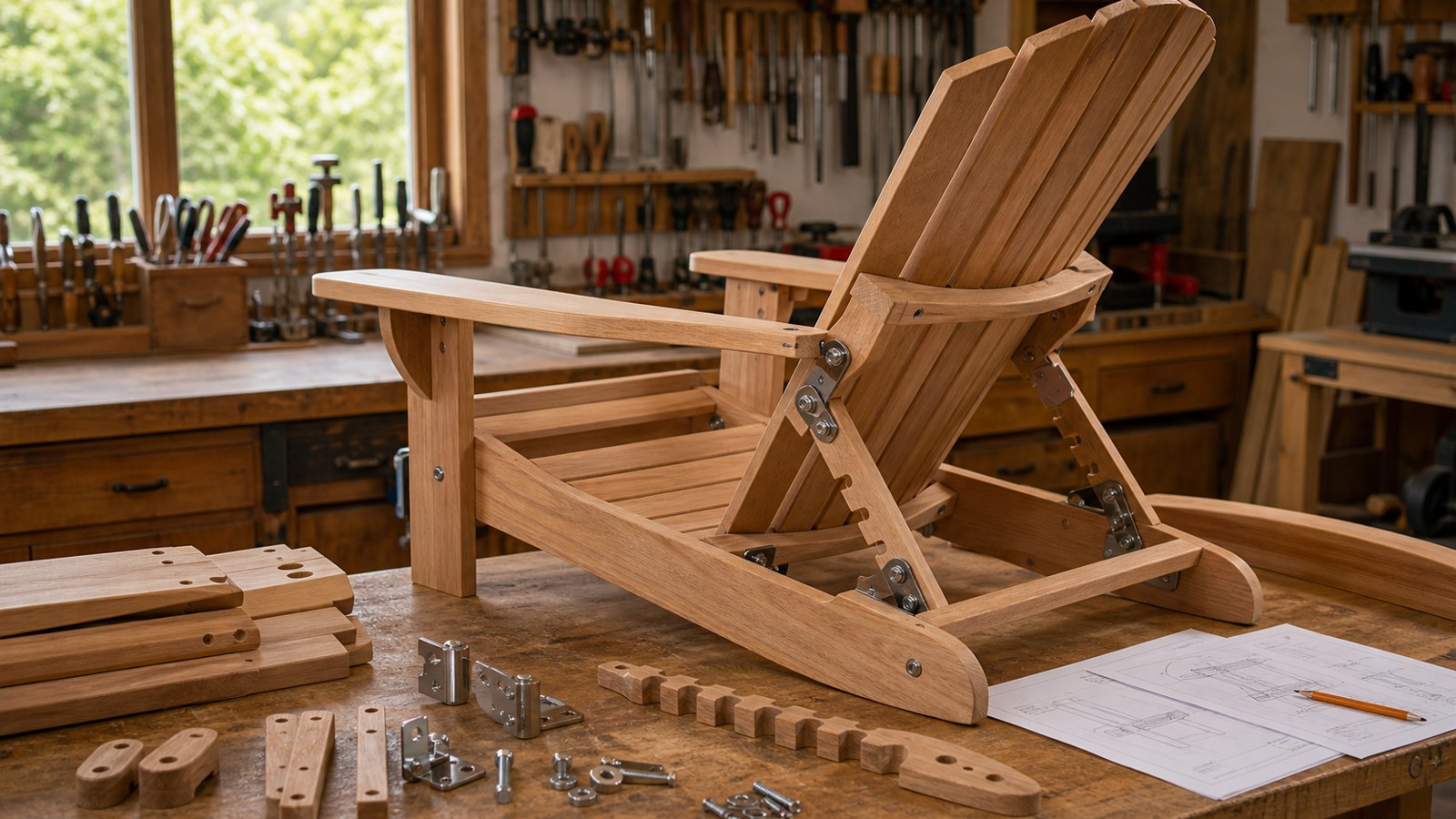
For those who love function as much as form, the Family Handyman Foldable Adirondack Chair plan adds a clever twist: portability. This free plan allows your finished chair to fold flat for storage or transport, making it ideal for seasonal use or small patios. The design introduces a few more steps than the simplest versions, but the clear diagrams and instructions make it manageable for beginners who are comfortable using a drill and saw. You’ll learn to attach pivot points, use carriage bolts, and create slotted joints—all while maintaining the iconic Adirondack shape. Many builders love that this project teaches valuable woodworking skills without being overwhelming. When folded, the chair is just a few inches thick, yet when opened, it feels every bit as solid as a permanent fixture.
4. Lowe’s Free Adirondack Chair Blueprint
Lowe’s provides a beautifully formatted set of printable Adirondack chair plans that include measured diagrams, 3D views, and a materials shopping list linked directly to their store inventory. This makes sourcing materials exceptionally convenient.
The Lowe’s version leans traditional, featuring the curved fan back and contoured seat slats that make Adirondack chairs so comfortable. Yet, it’s simplified so that each piece can be cut from straight boards using templates. The guide also includes sanding, assembly, and finishing tips—perfect for a weekend builder with access to basic power tools.
The resulting chair is sturdy, ergonomic, and perfect for painting or staining in vibrant colors. For those who appreciate a professionally formatted plan backed by a reliable source, this one’s hard to beat.
5. Home Depot’s Beginner Adirondack Chair Video Plan
Home Depot complements its written instructions with a clear step-by-step video guide—an invaluable tool for visual learners. Their Beginner Adirondack Chair uses pressure-treated lumber or cedar, ensuring outdoor durability with minimal maintenance. The plan emphasizes efficiency: pre-cut boards can be prepared right at the store, and the design avoids any hard-to-measure compound angles. The slats are evenly spaced using simple spacers, and the screws are hidden for a clean finish. The accompanying video walks through each step—cutting, assembly, and finishing—so you can follow along at your own pace. For many beginners, this visual support removes the anxiety of mismeasuring or assembling incorrectly. The final chair is sturdy enough for daily use and stylish enough to display proudly.
6. Popular Mechanics Adirondack Chair with Templates
If you want a slightly more advanced yet still accessible project, the Popular Mechanics Adirondack Chair Plan offers downloadable full-size templates for every curved component. This allows beginners to build a truly classic-looking chair without needing to draw arcs or guess radii.
The article accompanying the plan delves into design reasoning—why the back slats taper, how the seat pitch supports posture, and how to ensure structural integrity even in softer woods like pine. Beginners benefit not just from the plan but also from understanding the why behind each measurement.
For builders eager to take their first project a little further, this plan blends education with craftsmanship. The finished result is heirloom-worthy, and many DIYers keep these chairs for decades.
7. Construct101’s Simple Adirondack Chair
Construct101 offers one of the most straightforward free plans online. Designed specifically for first-time woodworkers, it uses only 1×6 and 2×4 boards and features a flat back instead of a curved one. Each step includes a diagram, measurements, and cut instructions—no guesswork required. It also comes with a printable materials list that fits neatly on one page. What sets this apart is its straightforwardness: you can start cutting boards in the morning and sit in your chair by evening. Despite its simplicity, the finished design remains sturdy and comfortable. The wide armrests and slightly reclined seat maintain that quintessential Adirondack feel without the need for advanced cuts or angles.
8. Build Something’s Cedar Adirondack Chair
Sponsored by Kreg Tools, Build Something’s Cedar Adirondack Chair plan is ideal for those who already own a Kreg Jig or pocket-hole system. It teaches joinery techniques that improve strength and appearance—useful for anyone hoping to advance their woodworking skills while still staying within a beginner-friendly project. Cedar is naturally resistant to rot and insects, making this a low-maintenance choice for humid or coastal climates. The plan includes cutting diagrams, 3D renderings, and downloadable PDFs. Builders love that the seat angle is more upright than usual, making it easier to stand up from—perfect for older adults or anyone who prefers less recline. Even if you don’t use pocket holes, the overall structure can be assembled with standard exterior screws, keeping the design accessible.
9. Canadian Woodworking’s Adirondack Chair for Beginners
For those seeking a professional-grade plan that still accommodates first-timers, Canadian Woodworking Magazine offers a detailed Adirondack chair project featuring step-by-step photos and metric/imperial dimensions. The article breaks down cutting techniques, pilot drilling, and edge rounding in approachable language.
This plan emphasizes craftsmanship, encouraging users to sand each part before assembly and suggesting optional upgrades like plug covers for screw holes or beveled edges for aesthetics. The back slats are gently curved to enhance comfort without complicating construction.
Builders who follow this guide often comment on how it feels like a woodworking lesson in disguise—it not only produces a beautiful chair but also teaches transferable skills for future furniture projects.
Choosing the Right Plan for Your Skill Level
With so many options available, how do you pick the one that’s right for you? Start by assessing your comfort with tools and your workspace setup. If you’re limited to basic hand tools or a small garage, stick to simpler flat-back designs that use straight cuts. If you already have access to a jigsaw or band saw, curved-back models like those from Lowe’s or Popular Mechanics might be a rewarding challenge. Time commitment is another factor. Some chairs can be built in a single afternoon; others may take a full weekend if you include sanding, painting, and sealing. The important thing is to pace yourself—measure twice, cut once, and enjoy the process.
Recommended Materials for Beginners
Most Adirondack chairs are made from softwoods that balance affordability and workability. Here are the best options:
- Cedar: Lightweight, naturally weather-resistant, and aromatic. Ideal for long-term outdoor use without chemical treatments.
- Pine: Inexpensive and widely available; best if you plan to paint or seal the chair thoroughly.
- Fir or Spruce: Affordable framing lumber that works well when sealed properly.
- Reclaimed wood: Adds rustic character and eco-friendly charm. Always inspect for nails and rot before use.
Avoid untreated wood if your chair will remain outdoors year-round. Exterior-grade screws, galvanized bolts, and waterproof glue will ensure your build lasts for many seasons.
Essential Tools You’ll Need
You don’t need a full woodworking shop to build your first Adirondack chair. A few simple tools are enough:
- Circular saw or jigsaw for cutting boards
- Power drill with screwdriver bits
- Tape measure, square, and pencil
- Clamps for holding parts during assembly
- Orbital sander or sanding block for smooth edges
- Exterior wood screws and weatherproof adhesive
Optional but helpful tools include a miter saw for angled cuts and a Kreg Jig for pocket holes. Even if you work primarily with hand tools, these plans are forgiving enough to adapt.
Finishing Touches: Paint, Stain, and Protection
A well-finished Adirondack chair not only looks beautiful but also lasts much longer. The finish you choose depends on the wood type and the style you want to achieve.
- Natural finish: Ideal for cedar or teak—simply seal with an exterior wood oil or clear polyurethane.
- Stain: Brings out the grain and adds warm tones while protecting against UV rays.
- Paint: Great for pine or mixed wood builds. Use exterior-grade latex or marine enamel for bright, durable color.
Before applying any finish, sand every surface with progressively finer grit paper and remove dust thoroughly. Apply at least two coats, letting each dry fully. If possible, elevate the chair off the ground while it cures to prevent moisture absorption.
Customization Ideas for Creative Builders
Once you’ve mastered the basics, it’s easy to personalize your Adirondack chair to match your outdoor aesthetic:
- Add a footrest: Many free companion plans include matching ottomans for full-body comfort.
- Attach cup holders or wine glass slots: A fun and practical upgrade.
- Try two-tone paint: Use contrasting armrests or slat colors for a modern twist.
- Engrave or stencil details: Personalize with initials or a family name.
- Build matching side tables: Extend your new woodworking skills into a full outdoor set.
These touches transform a simple project into a lasting centerpiece of your patio or porch.
Safety and Assembly Tips for First-Time Builders
A successful build depends as much on patience as on precision. Beginners should focus on slow, steady progress and good habits:
- Always wear safety glasses when cutting or drilling.
- Double-check angles before cutting—Adirondack chairs rely on consistent geometry.
- Pre-drill holes to prevent wood splitting, especially near ends of boards.
- Test-fit assemblies before gluing or screwing permanently.
- Sand edges and corners for comfort—your skin will thank you later.
Even with the most detailed plans, small adjustments are normal. Wood is a living material, and outdoor furniture thrives on flexibility. Trust your measurements, take your time, and remember: no two chairs are ever exactly alike—and that’s part of their charm.
Understanding Angles and Comfort
The secret behind an Adirondack chair’s signature comfort lies in its angles. The seat typically slopes backward at about 15–20 degrees, while the backrest leans another 15–25 degrees. This combination cradles the sitter, distributing weight evenly and reducing lower-back pressure. Beginner plans handle this geometry for you by predefining the leg and seat support cuts. If you ever design your own variation, remember that small angle adjustments can dramatically change comfort. Too steep, and the chair feels like a recliner; too shallow, and you lose the relaxed feel. This is why following trusted free plans is invaluable—they’ve already been tested for ergonomics. Over time, you’ll develop an intuition for these details and may even experiment with your own modifications.
Maintenance: Keeping Your Chair Beautiful for Years
Even the sturdiest chair needs periodic care to withstand the elements. Clean your Adirondack chair annually with mild soap and water, reapply finish as needed, and tighten screws that may loosen from seasonal expansion.
If left outside all year, cover or store it during harsh winters. A breathable furniture cover prevents mildew while protecting the wood. Painted chairs may require touch-ups every few years, while oiled cedar versions typically only need re-oiling once a season.
By maintaining it well, your handcrafted Adirondack chair will last for decades—and might even become a family heirloom, passed down through generations of porch-sitters.
Sustainability and Eco-Friendly Building
For environmentally conscious DIYers, building your own chair also allows sustainable choices. Use FSC-certified lumber when possible, avoid toxic finishes, and reuse offcuts for small accessories or compostable mulch. Reclaimed barn wood, pallet boards, or even salvaged decking can become charming Adirondack chairs with unique character. You can also explore newer eco-friendly materials like composite decking boards or recycled plastic lumber, which mimic wood texture while resisting decay. Many free plans can be adapted for these materials with minor measurement adjustments. Creating your chair sustainably isn’t just good for the planet—it also enhances the story behind every piece you build.
Where to Find These Free Plans
Most of the top free plans mentioned above are available directly from trusted websites:
- DIY Network – classic Adirondack with printable diagrams.
- Ana White – modern flat-panel design.
- Family Handyman – foldable version with easy hardware list.
- Lowe’s – traditional curved-back blueprint.
- Home Depot – step-by-step video guide.
- Popular Mechanics – full-template traditional model.
- Construct101 – ultra-simple flat-back plan.
- Build Something – cedar design using pocket holes.
- Canadian Woodworking – detailed educational guide.
Each site provides downloadable PDFs or video walkthroughs to ensure even first-timers can succeed. Always read through the entire plan before starting so you understand the workflow, material sizes, and tool requirements.
The Joy of the Build
The real reward of building an Adirondack chair isn’t simply the end product—it’s the process itself. The tactile feel of shaping wood, the aroma of sawdust, and the moment when rough boards transform into a recognizable form offer genuine satisfaction. For many, that first chair becomes the gateway to a lifelong hobby.
Every imperfection tells a story: the small gap where two boards meet, the uneven brushstroke on the armrest—all reminders that it’s truly yours. The knowledge gained from this project can later be applied to benches, tables, or other outdoor furniture, building both confidence and skill.
Your Perfect First Woodworking Project
Building your own Adirondack chair is one of the most approachable, rewarding woodworking projects a beginner can undertake. With a free, well-structured plan, you’ll gain hands-on experience in measuring, cutting, sanding, and finishing—while ending up with a functional work of art for your porch, deck, or garden.
Whether you prefer the modern simplicity of Ana White’s design, the foldable innovation from Family Handyman, or the traditional curves of Lowe’s and Popular Mechanics, there’s a free plan suited to your tools, time, and taste.
What begins as a weekend project may soon turn into a lifelong love for craftsmanship and design. So gather your boards, charge