
Stackability Needs Its Own Evidence
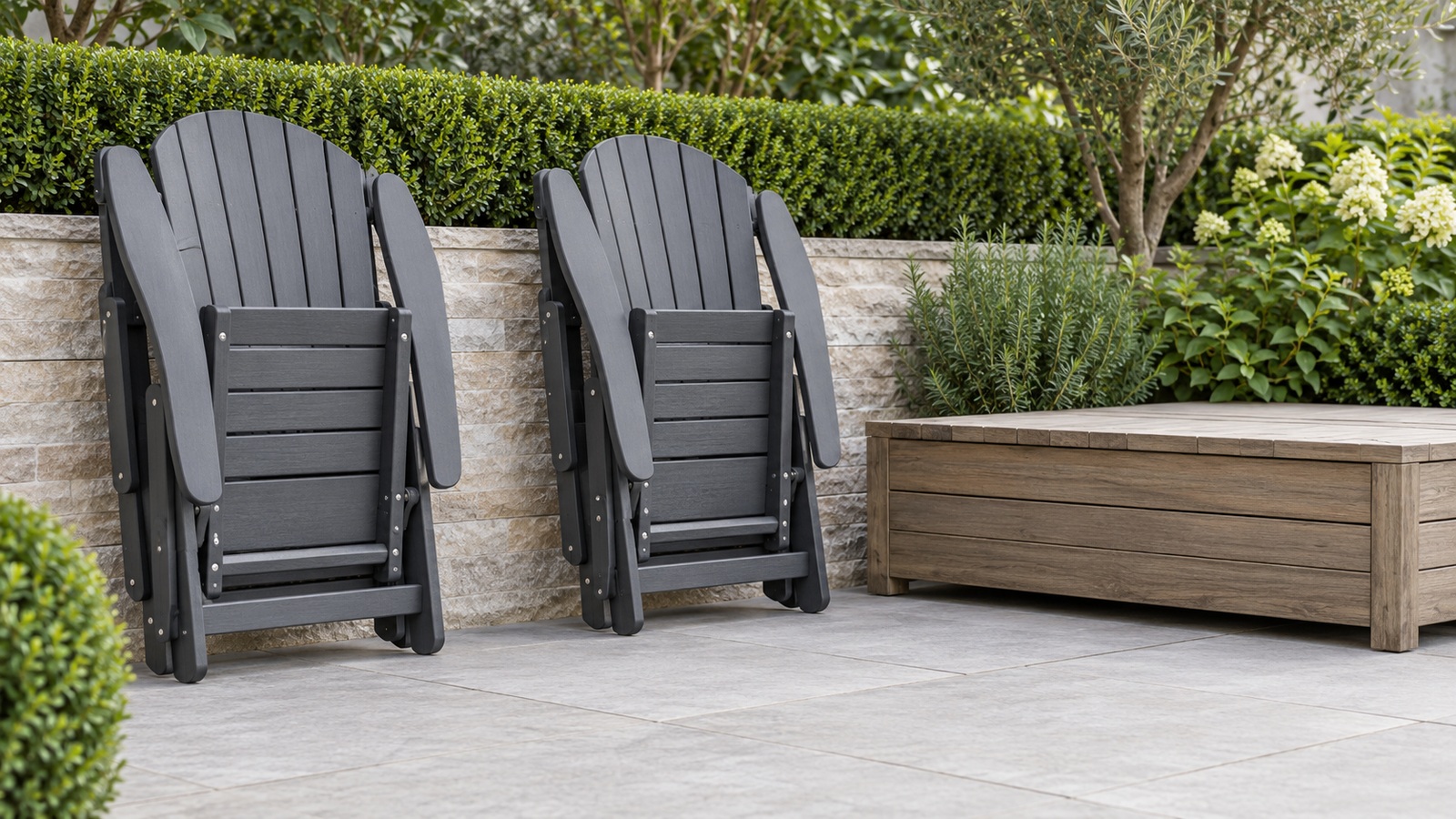
Folding Adirondack chairs can shrink an outdoor seating footprint, and a properly designed stack may save still more space. Those are two different capabilities, however. A chair that closes neatly is not automatically intended to carry another chair, and a photograph of furniture piled together does not establish an approved arrangement. Before buying around the promise of extra space savings, confirm whether the exact model can stack, whether that means open or folded chairs, and what limits the manufacturer specifies. Then consider the space needed to build, reach, and dismantle the arrangement. The most useful compact system is one that remains appropriate and manageable throughout ordinary use. It should reduce storage demand without creating a handling problem or relying on improvised support.
A: No. The two capabilities need separate product-specific evidence.
A: The configuration, applicable models, limits, and relevant handling details.
A: No. Surface padding does not establish component load support.
A: The chairs must be placed and retrieved through a manageable movement.
A: Only when that combination is explicitly supported.
A: No. Capacity and handling limits must be checked for the complete group.
A: It can make accessible separate placement more practical than a compact stack.
A: Recheck model compatibility, count limits, footprint, and handling.
A: Do not turn the approved chair arrangement into an unintended storage rack.
A: Confirmed suitability, a real measured benefit, and a repeatable routine for its users.
Read Folding and Stacking as Separate Features
Folding changes the chair’s geometry through a designed mechanism. Stacking creates a load relationship among several chairs. One feature can exist without the other, and neither should be inferred from a familiar silhouette. Product information needs to state the relevant capability for the model being compared. This distinction is the starting point for an honest space-saving calculation.
Ask whether a stacking description applies when the chair is open, closed, or placed in some other approved configuration. These arrangements can have very different footprints and handling requirements. A seller’s general phrase such as easy storage may not answer the question. Obtain the specific instructions before relying on an image or short product summary.
Keep the answer tied to the exact version. A useful inquiry can describe the number of chairs, their intended folded state, and the proposed location. Request confirmation of the arrangement rather than asking whether the furniture is generally easy to store. That gives support a specific question and leaves a clearer record for the owner. A manufacturer may offer fixed, folding, and stacking chairs within one visual collection. Their similar colors and back shapes can make differences easy to miss. Record the model identifier with the relevant guidance so the planned arrangement remains connected to the product actually ordered.
Identify What Supports the Next Chair
An appropriate stack depends on intended contact points and load paths. Those details may not be obvious from a casual view of two chairs together. Broad arms, back slats, hinges, and other components should not be assumed to support added furniture. Follow the maker’s specified arrangement rather than selecting whichever orientation appears to nest most tightly.
Surface protection and support are also different issues. A cloth placed between chairs may reduce rubbing, but it does not establish that the lower components can carry the load. Padding can even obscure where contact occurs. Use protective materials only within an approved arrangement and as the relevant instructions permit.
Check for guidance about orientation, number of chairs, and any retaining feature. If those details are missing, ask the manufacturer to clarify rather than completing the design yourself. A practical purchase comparison can pause at uncertainty without losing its purpose. It is better to know that stackability remains unconfirmed than to assign imaginary savings to it.
Do not mix models in a stack simply because the surfaces touch in similar places. Differences in arm width, folded thickness, or component strength can alter the arrangement. Approval for a group of identical chairs is not evidence for a mixed collection. Separate storage may be the appropriate solution when several versions share one property.
Calculate the Real Storage Footprint
Use the dimensions of the approved arrangement, not just a single chair’s smallest profile. A stack may extend in a direction that is easy to overlook, such as broad arms projecting beyond the folded bodies. Include any support platform or other required equipment. The complete system is the object that must fit the storage location.
Compare it with practical alternatives using the same boundary. Several folded chairs stored separately may need more floor area but less handling clearance above them. A stack may reduce one dimension while increasing another. The useful comparison records both footprint and access, rather than declaring a winner from floor area alone. Imagine a storage bay that also serves gardening equipment. A chair arrangement occupying less floor may still block the object retrieved most often. Another arrangement can use a slightly wider strip while leaving that equipment accessible. The better solution depends on the room’s combined tasks. Draw the alternatives at the same scale and mark the route each requires. This makes the supposed savings visible without reducing the room to an empty rectangle.
Access Space Is Part of the Savings
Furniture must enter and leave the arrangement. Allow space for the person handling it, the turning movement, and any assistance required. A tightly fitted stack behind other belongings can appear efficient while being inconvenient to use. If retrieval requires moving several unrelated objects, the saved floor space may simply transfer work elsewhere.
Consider which chair will be needed first. In an approved stack, accessing a lower chair may require removing those above it. That sequence can matter when only one seat is taken outside on most days. A storage plan for occasional whole-group setup differs from one intended for frequent individual retrieval.
Look at overhead clearance before choosing height as the solution. Low rafters, shelves, garage doors, or other objects can limit the handling movement even when the stored stack fits beneath them. The work of lifting a chair into place needs its own room. Measure the full task rather than only the finished position.
Doorways and narrow routes can become limiting points for an assembled storage system. Do not assume the whole group can be moved together unless the maker explicitly supports that procedure and it is practical at the site. Often the handling task is chair by chair. Account for the repeated route when judging convenience.
Leave a realistic margin for routine use. A storage plan that works only when every object is placed with extreme precision may be hard to maintain in a shared room. The goal is a repeatable arrangement with a clear purpose. Some open space can preserve its usefulness better than the smallest imaginable footprint.
Compare Handling Effort with the Space Gained
Chair weight affects both stacking and retrieval. The burden can grow as each chair must be raised to a higher position or removed in sequence. Assess the task for the people who will actually perform it. A configuration that is manageable with two adults may be unsuitable for one person working alone.
Use approved gripping and handling guidance, and keep hands clear of moving mechanisms. A folded chair can still have an awkward breadth or an uncertain balance during lifting. Folding does not transform every component into a carrying handle. When help is needed, include it as part of the routine rather than as an occasional rescue.
Frequency changes the value of a compact arrangement. A group stored once each winter may justify more setup work than furniture moved in and out every weekend. Compare the space gained with the recurring effort. A less compact but accessible plan can be more useful for a property with frequent small changes.
Look for Clear Manufacturer Support
The maker’s written guidance should be the basis for the storage claim. POLYWOOD’s storage guidance, for example, treats stacking and folding as capabilities that depend on the furniture design. A brand-level storage page does not establish that every Adirondack in the range shares those features. Check the exact product information and ask support to resolve any ambiguity.
Save the answer with the purchase documents. Instructions can be useful years later when another person takes over storage duties or an additional chair is considered. A remembered conversation is harder to verify than a model-specific written explanation. Documentation also helps distinguish a permitted routine from an improvisation that gradually becomes household habit.
Inspect Before Building the Arrangement
Condition matters even when the stacking method is approved. Inspect chairs for loose parts, damaged components, and changes to folding mechanisms before placing them together. A damaged chair should not become a load-bearing foundation simply because it is no longer being used for sitting. Resolve the condition through the appropriate repair or support route.
Clean and dry the furniture as directed before storage. Debris can interfere with contact points or hide a damaged surface. Moisture trapped between closely placed components can complicate care. The requirements depend on the material and instructions, so avoid assuming that any compact stack can be covered immediately after outdoor use.
Recheck the floor or support where the arrangement will rest. It should be suitable, stable, and protected from ordinary collisions or shifting belongings. Do not place the stack where a moving door or vehicle routinely approaches it. The furniture’s approved relationship does not solve a poor choice of storage location.
Keep surrounding objects from adding unintended pressure. Boxes placed on top or tools leaned against the group create a different loading arrangement from the one evaluated by the maker. A chair stack should not become an all-purpose storage rack. Clear boundaries help preserve the intended use and simplify inspection.
Buy for the Capacity You Actually Need
A property may need fewer chairs than a large promotional scene suggests. Consider the number regularly used and how often additional seating is required. Buying several folding Adirondacks for rare peak gatherings can create year-round storage work. Compare occasional alternatives before allowing a space-saving claim to justify an unnecessarily large collection.
If several chairs are appropriate, start with confirmed dimensions and handling needs for the full group. A successful two-chair arrangement does not automatically scale to a larger count. Limits, height, access, and effort all change. Use the manufacturer’s stated capacity rather than extrapolating from a small trial.
Think about future additions too. A later version may differ from the original model, and a matching color does not establish compatibility. Keep records that allow the question to be checked before expanding. Include the original model identifier when asking whether a proposed addition can use the same arrangement. This prevents the collection from quietly outgrowing the storage method on which the initial purchase was based.
Choose Repeatable Efficiency Over a Clever Pile
The best space-saving arrangement can be explained clearly to another person. It identifies which chairs belong, how they are configured, what limits apply, and how they are retrieved. If the system depends on delicate balancing or an improvised contact point, revisit it. A useful storage method should remain suitable during normal household activity. Review the plan after a season of use. Ask whether the group stayed accessible, whether care was manageable, and whether the available help matched the handling demands. Those observations may support the approved stack or favor separate placement. Practical experience can refine a sound plan without turning unsupported arrangements into acceptable ones.
Folding Adirondacks can save space, and explicitly stackable designs may offer further efficiencies. The evidence needs to cover the exact arrangement rather than the general appeal of compact furniture. Combine that evidence with honest measurements and a manageable routine. Then the saved space becomes a real benefit rather than an assumption built into the purchase.


