Good Storage Makes the Next Season Easier
Folding Adirondack chairs can reduce the space needed for seasonal storage, but the useful result depends on more than closing the chair and finding an empty corner. A garage or shed should provide a suitable resting place, access for moving the furniture, and conditions that do not undermine the reason for bringing it inside. Cleaning, drying, mechanism checks, and the arrangement of nearby belongings all affect the outcome. A clear routine also helps when several chairs must be put away at once or retrieved after months without use. Start with the instructions for the exact model and the space you actually have. The goal is a stable, accessible storage arrangement that preserves the chair’s condition and leaves you with a manageable task when outdoor sitting returns.
A: No. Moisture, ventilation, stable placement, and access still need assessment.
A: Inspect accessible surfaces and connections while open, then follow the folding instructions.
A: Use only an appropriate stable orientation permitted for the model.
A: No. Stacking requires separate model-specific approval and guidance.
A: No. It should support a sound arrangement and appropriate ventilation.
A: Keep required parts clearly identified with the chair according to its instructions.
A: Leaks, crowding, and nearby equipment can change the original conditions.
A: Follow their own care and storage requirements and avoid unsuitable moisture or pressure.
A: Stop and resolve the condition using the maker's guidance rather than forcing it.
A: A controlled return to the correct open condition with a satisfactory inspection before use.
Choose the Storage Space Before Closing the Chairs
Look at both the destination and the route into it. A shed may have an apparently empty corner behind a narrow doorway, while a garage may offer broad access but little protected floor space. Measure the limiting opening and the area where each chair will rest. Folding changes the shape of the furniture without removing the need for a workable route.
Observe how the space is used throughout the storage season. A location that is clear today may later hold snow equipment, holiday boxes, or a vehicle in a different position. Place chairs where routine activity will not repeatedly push them aside. A storage plan is more dependable when it accounts for the room’s other jobs.
Check the environment as well. Leaks, persistent dampness, and poor ventilation can make an indoor-looking location unsuitable. Bringing a chair under a roof does not automatically establish good storage conditions. Resolve the space’s problems or choose another location before relying on it for months.
Use the Instructions for the Exact Folding Design
Different folding Adirondacks use different sequences, pivots, and locking details. Read the maker’s instructions before operating the mechanism, especially if the chair has not been folded recently. Identify any parts that must be released and any components that should remain in place. Do not force an unfamiliar mechanism because another chair folded in a simpler way.
A product described as folding is not necessarily designed for repeated disassembly or wall suspension. Manufacturer guidance defines the intended handling. For example, POLYWOOD’s Modern Folding Adirondack information distinguishes folding for storage from taking the furniture apart. Confirm the corresponding directions for your model rather than treating that example as a universal procedure.
Clean and Inspect While the Chair Is Still Open
An open chair makes surfaces and connections easier to see. Remove loose debris and use the cleaning method appropriate to the material, finish, and hardware. Follow the selected product’s instructions instead of applying a strong universal recipe. Care should prepare the chair for storage without adding damage or residue.
Look for loose connections, cracked or damaged components, and changes around the mechanism. A chair that moves unexpectedly or has an uncertain support condition needs attention before the next use. Record the issue while it is visible. Folding and storing it without a record can allow the problem to disappear from memory.
Separate cosmetic concerns from repairs that affect suitability for sitting. A faded surface may lead to a future finish project, whereas a damaged connection needs a different response. Do not assume that cleaning or repainting resolves both. Seek the maker’s directions or appropriate assistance when the repair is unclear.
Keep any approved repair plan with the chair’s documents. If several people share storage duties, identify who will complete the work and when. A clear record is useful at reopening time, when a clean chair may otherwise be mistaken for a ready chair. Storage should pause use responsibly rather than hide an unresolved concern.
Allow Appropriate Drying Before Packing the Space
Wet furniture should not be crowded into a poorly ventilated corner simply because the outdoor season has ended. Follow the chair’s drying and storage guidance and allow suitable conditions before folding or covering it. Pay attention to places where moisture can remain around joints and between closely placed surfaces. The time required depends on the product and conditions, so avoid a universal deadline. A dry-looking broad slat does not necessarily describe every hidden area of the chair. Plan this stage before the last convenient day for moving furniture indoors. If cleaning is postponed until the chairs must immediately be packed away, the owner may feel pressure to skip drying or choose a poor temporary location. A little scheduling space allows the instructions to be followed without haste. This is particularly helpful when several chairs and their cushions need different care. Prepare the storage area first, then allow the furniture routine to proceed in the appropriate order.
Arrange Stable Floor Storage
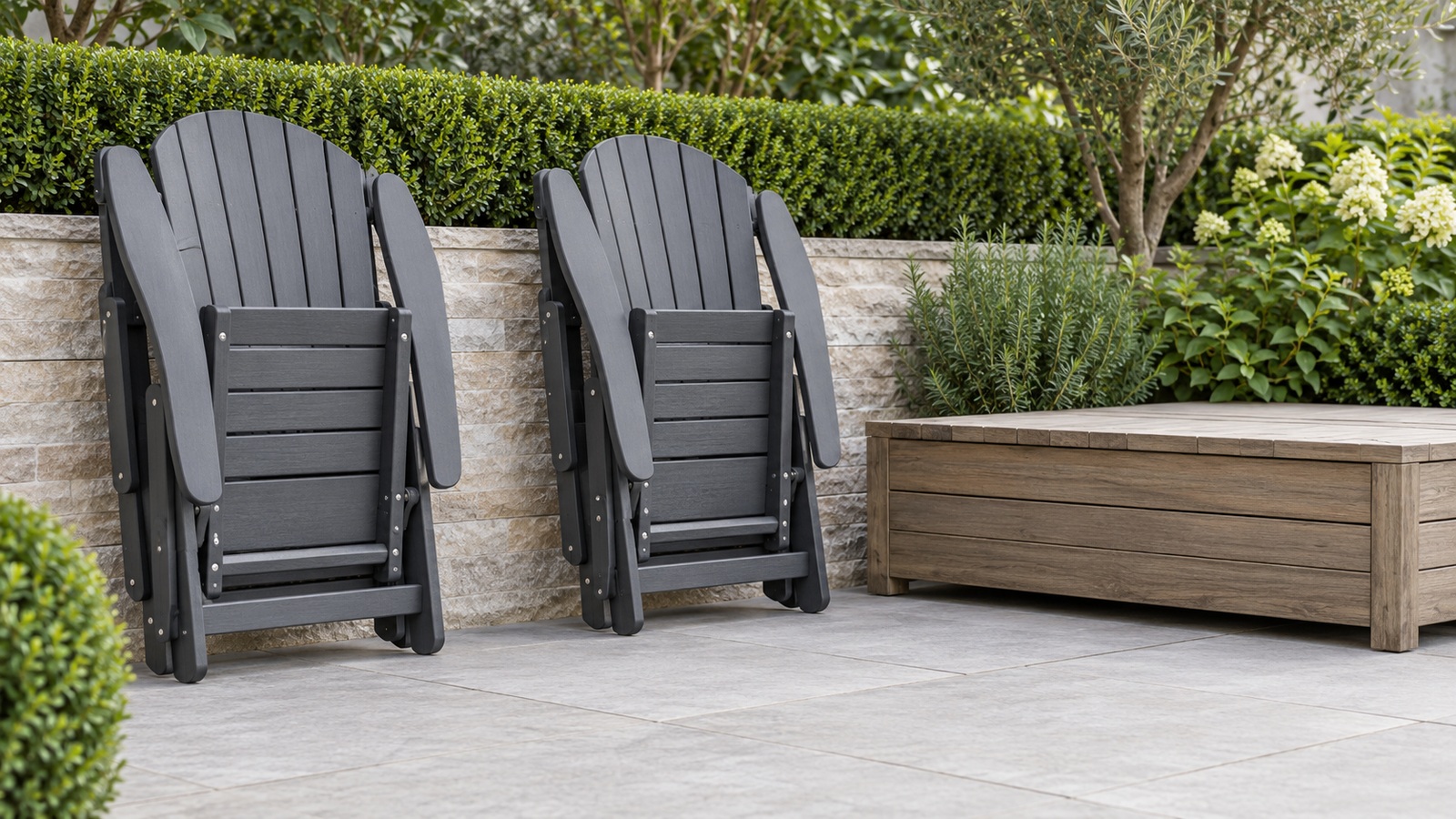
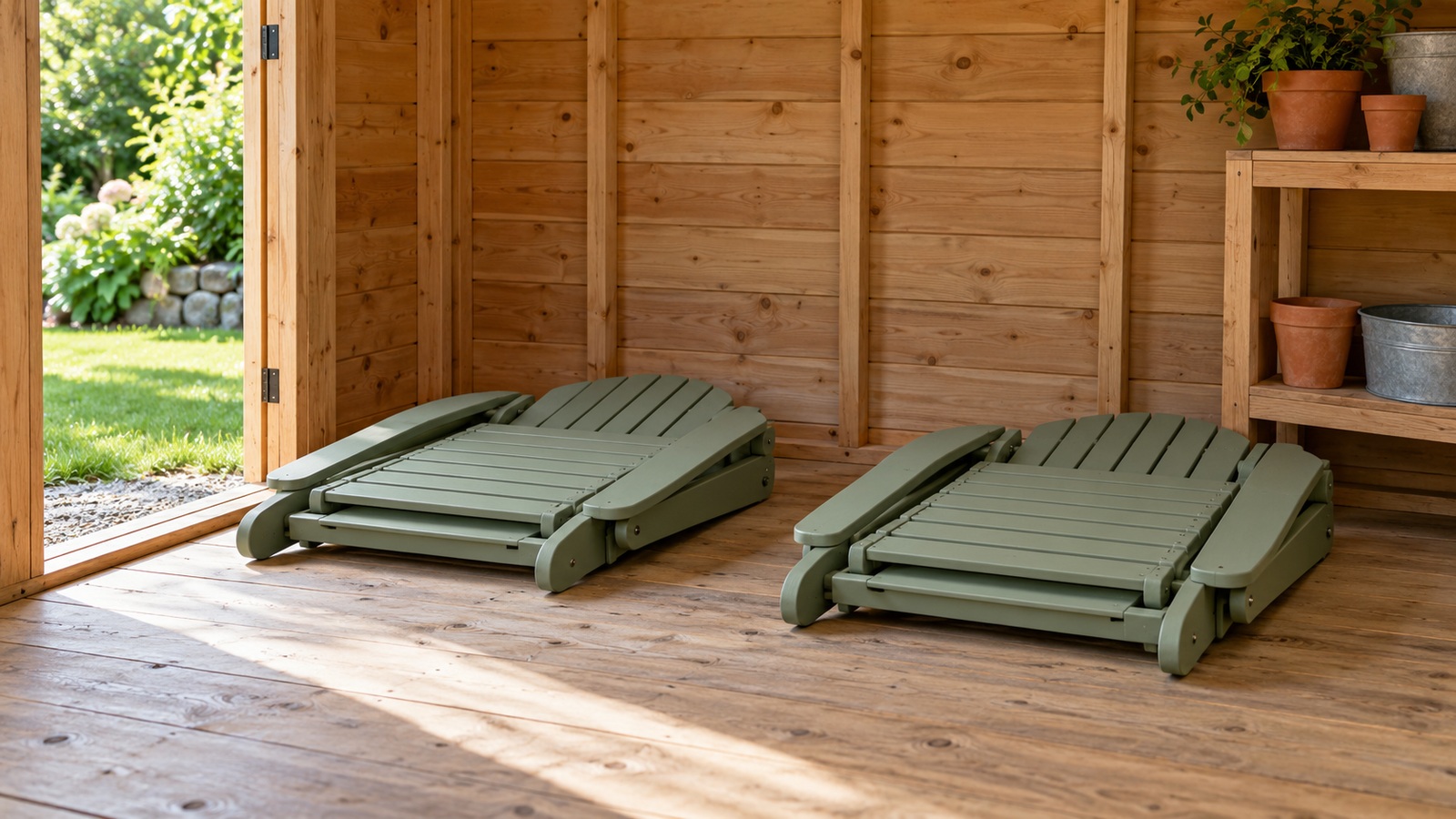
Choose a resting orientation that the manufacturer permits and that remains stable without improvised support. A folded chair’s narrow profile can be convenient, but convenience does not establish that it will stand safely on an edge. Check the actual shape and placement. If the chair cannot remain secure in the proposed orientation, use another appropriate arrangement.
Keep each chair away from moving garage doors, vehicle paths, and frequently handled tools. Leave enough access to retrieve it without pulling through a pile of unrelated objects. The benefit of a folding design is reduced space demand, not permission to fill every remaining gap. A small clear access area can make the whole routine easier.
Look upward as well as around the floor. Shelves and stored equipment should not create a risk of objects falling onto the furniture. Avoid using folded chairs as supports for boxes or long tools. Their storage role does not turn them into general-purpose racks.
Do Not Assume Folding Means Stackable
Two folded chairs may appear to nest neatly, yet their contact points may not be designed for the load. Check whether the manufacturer explicitly permits stacking and what configuration it specifies. Without that information, store them separately in stable positions. A compact-looking pile is not enough evidence of an appropriate storage method.
Stacking claims should apply to the exact model and state of the chair. Open-chair stackability, folded-chair placement, and a marketing photograph can describe different arrangements. Ask for clarification if the wording is ambiguous. Protecting surface finishes does not resolve an unsupported structural loading arrangement.
If approved stacking is available, follow its limits and handling sequence. Account for access to the lowest chair and the work of lifting later additions. A storage arrangement should remain manageable for the people who will use it. Choose floor placement instead when a proposed stack creates an awkward repeated task.
Recheck the plan when a new chair joins the collection. Similar appearance does not mean different models can share an approved stack. Keep each product’s instructions visible in the decision. A mixed group may need separate storage even when all chairs fold.
Use Covers and Padding Only Where Appropriate
A cover can protect against dust or certain exposure, depending on the product and storage situation. It can also complicate ventilation if used incorrectly. Follow the chair and cover instructions and check the fit. Do not assume that a tightly wrapped object is better protected simply because the surface is hidden.
Padding can reduce contact with a suitable resting surface, but it should not conceal instability or dampness. Choose materials that fit the storage guidance and inspect the arrangement rather than sealing it away indefinitely. The main task is a sound storage position in suitable conditions. Protective accessories support that task rather than replace it.
Keep Small Parts and Soft Goods Organized
If the approved folding process involves a removable pin or another small component, keep it in a clearly identified place with the chair. Use the maker’s guidance for what may be removed and how it should be retained. A missing part can prevent safe reopening even when the main furniture remains in excellent condition. Do not substitute an unidentified fastener because it appears to fit.
Cushions and other soft goods often need a separate care and storage routine. Clean and dry them as their instructions require, then choose a suitable place that does not compress them beneath heavy belongings. Keep track of which cushion fits which chair when sizes differ. Retrieval becomes simpler when accessories do not need to be rediscovered across several boxes.
Store documents where they remain readable and accessible. Purchase details, model identification, assembly instructions, and care information support later repairs as well as reopening. A digital copy can be useful, provided it clearly identifies the correct version. Photograph any identifying information before it becomes difficult to locate among stored objects. Keep the record associated with the chair rather than with a general outdoor-furniture folder full of unrelated models. That distinction can save time if replacement support asks which version is involved. Avoid relying on memory after a long seasonal gap.
Check the Storage Arrangement During the Season
A garage or shed can change after the chairs are put away. New belongings, leaks, or a shift in routine use may affect the original plan. Include a quick look at the furniture when you are already using the space. There is no need to dismantle a sound arrangement repeatedly, but its conditions should remain suitable.
Look for unexpected moisture, displacement, or pressure from nearby items. If the storage position has become crowded or unstable, correct it before the problem grows. Moving a box away can be easier than addressing damage months later. Treat the arrangement as part of the room’s ongoing organization.
If the chair has been struck or moved roughly, inspect it appropriately before assuming its condition is unchanged. A protective cover can hide the result of an impact. Remove the chair from future use when a concern requires assessment or repair. Seasonal storage is a period of reduced use, not a guarantee against damage.
Shared spaces benefit from clear responsibilities. Let household members know which areas need to remain open and which objects should not be placed on the chairs. A simple practical agreement can protect a good storage plan. It is easier to maintain than a complicated arrangement nobody understands.
Reopen with a Condition Check
When the season returns, move the chair through the planned route and operate the mechanism according to its instructions. Check that all required parts are present and correctly engaged. Inspect surfaces and connections before anyone sits. A chair that was sound when stored still deserves attention after months in a shared space.
Set it on a suitable outdoor surface and confirm the normal open condition. Address stiffness, looseness, missing parts, or other unexpected changes through the proper support route. Do not force the mechanism into service because the day is sunny. Reopening is the final step of storage rather than a separate shortcut.
A good garage or shed routine leaves folding Adirondacks clean, appropriately dry, stable, and easy to retrieve. It also preserves the instructions and observations needed to return them to use responsibly. With those details settled, folding becomes a practical space-saving feature and the next outdoor season begins with less guesswork.