
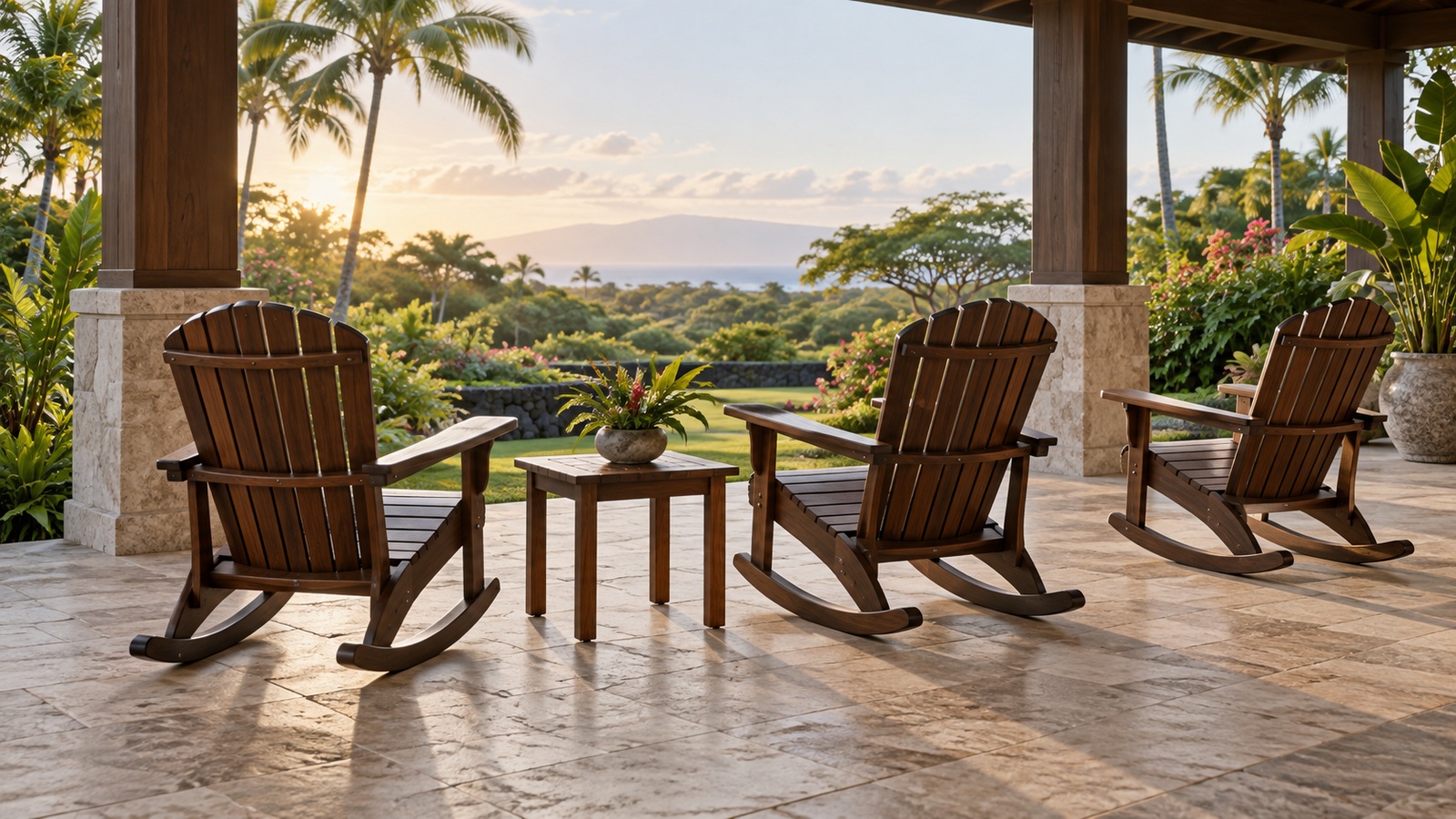
A Guest Amenity with an Operating Plan
Rocking Adirondack chairs can make a hotel veranda or resort garden feel like a place to stay for a while. Their recognizable backs and gentle movement offer a different experience from dining chairs or fixed lounge seats. In a hospitality setting, however, appearance is only the beginning of the decision. Staff must keep the area clean, inspect the furniture, accommodate different guests, and manage weather or event changes without disrupting service. The chairs also need suitable surfaces and enough space for their motion. Treat the purchase as an operating amenity with a defined location and routine. That approach helps a property choose a useful number of rockers, understand the commercial documentation, and preserve the welcoming experience shown in its guest-facing photographs.
A: Define the guest experience, intended location, and operating routine.
A: Its motion requires an additional model-specific layout review.
A: No. Fit, entry, exit, and preference also influence seating usefulness.
A: The intended hospitality use may have different coverage and responsibilities.
A: A mix with fixed seating can offer useful guest choice.
A: Remove it from guest use until appropriately assessed and addressed.
A: Verify any folding or stacking capability for the exact model.
A: It reveals guest use, surface behavior, and staff demands before a larger order.
A: Show an arrangement the property can normally provide.
A: Operations and maintenance staff need the information that supports continued service.
Define the Guest Experience Before Selecting a Model
Decide what the seating area is meant to provide. A quiet veranda outside a lobby serves a different purpose from a social terrace beside a resort bar. The desired activity affects placement, companion tables, nearby sound, and how long guests are likely to remain. A rocker should contribute to a clear experience rather than merely fill an empty patch of floor.
Consider the property’s existing seating choices. Rocking Adirondacks can add variety, but they do not need to replace fixed seats throughout an area. Some guests may prefer stillness, a higher seat, or a different support relationship. A mixed selection can make the amenity more useful without diluting its visual character.
Observe the intended location during ordinary service. Guests may pass through with luggage, staff may move trays, and equipment may occupy the space at particular hours. These activities should be represented in the furniture plan. A quiet early-morning photograph can hide conflicts that appear later in the day.
Write the purpose in practical terms before requesting quotes. Describe the site, anticipated use, surface, exposure, and handling routine. Suppliers can respond more usefully to those details than to a general request for resort furniture. The same description helps the property evaluate whether a proposed model fits the operating plan.
Allow for the Rocker’s Motion
A rocking chair needs space beyond its stationary outline. Check the manufacturer’s dimensions and movement guidance, then test the intended layout with the actual model when possible. Walls, rails, tables, and nearby furniture should remain clear during normal motion. Do not base the group solely on how closely empty chairs can be aligned.
Include pedestrian routes in that test. A guest walking behind the group may encounter a different relationship when someone is rocking. The furniture area should be distinguishable from a through route without creating an awkward barrier. Review the complete arrangement with the property’s appropriate planning staff, particularly where site-specific requirements apply.
Match the Model to a Suitable Surface
Rocker runners interact with the floor in a way fixed legs do not. Uneven paving, gaps, soft ground, or changes in level can affect the movement and placement. Check what surfaces the maker permits and assess the actual location. A landscape area that looks appealing may be better served by fixed seating.
Try the model on the proposed surface before expanding the order. Evaluate the ordinary motion, the chair’s resting position, and the space needed to enter or leave. Include the table and neighboring seats in the trial. Surface suitability and group layout should be assessed together rather than as separate catalog choices.
Floor appearance and noise can matter in a hotel setting. Ask about the product’s intended contact surfaces and approved protection, if any. Do not add an improvised runner covering or attachment that changes how the chair operates. A quieter or more protective arrangement needs support from the relevant guidance.
Review Commercial Terms Explicitly
Residential and commercial use may have different warranty terms and support expectations. Confirm how the intended hotel or resort use is classified for the selected product. POLYWOOD’s commercial warranty policy is one example of a maker documenting commercial coverage separately. Read the current terms, exclusions, and responsibilities for the actual purchase rather than assuming a prominent residential warranty applies. A warranty is useful information, but it does not replace appropriate selection, care, or inspection. Purchasing staff should also clarify the process for reporting a defect and the records needed to support a request. The time and work involved can affect how the property manages an unavailable seat. Ask whether replacement components, approved repairs, or other support are available for the specific model. Keep that answer with the operational records instead of leaving it in an individual buyer’s inbox. A future staff member should be able to understand the support route without reconstructing the original order.
Compare Guest Fit Beyond a Single Capacity Number
A stated weight capacity is one specification among several. Seat width, depth, height, back contour, and arm relationships affect whether a guest finds the chair comfortable. Verify the capacity for the exact model, but avoid treating it as a complete description of suitability. A broad range of visitors may need more than one seating type.
Try entry and exit as well as seated comfort during a sample review. A low lounge position can be pleasant for some guests while presenting a challenge for others. Rocking movement adds another characteristic that not everyone wants. Fixed companion seats can offer an alternative without requiring guests to explain their preferences.
Soft goods should be tested as part of the chair rather than selected only for the hotel’s palette. A cushion changes effective depth and support and adds cleaning and storage work. Confirm that its dimensions and material fit the intended use. In a high-turnover area, the staff routine can be as relevant as the visual effect.
Keep claims appropriately limited in guest materials. Describe the seating and setting accurately rather than presenting the rockers as universally ergonomic or therapeutic. A comfortable amenity does not need a medical promise to be appealing. Clear language helps guests understand the offered experience without overstating it.
Build Inspection into Service
Assign responsibility for checking furniture condition. Housekeeping may notice cleanliness, while maintenance may assess connections or damage; those roles should connect rather than leave gaps. A clear reporting route helps an observation reach the person who can resolve it. A chair with an unresolved concern should be removed from guest use until appropriately addressed.
Use the manufacturer’s care and inspection guidance to establish the routine. Do not assume that an attractive main material means every connection needs no attention. Staff should know what changes to report and where instructions are kept. The process should be simple enough to survive shift changes. Include a clear record of withdrawal and return to service so the next team understands the chair’s status.
Keep a record of repairs and replacements for each relevant model or location. That information can reveal recurring issues, inform later purchasing, and prevent an unresolved concern from being mistaken for completed work. It also supports communication with the supplier. Documentation becomes more useful as the furniture group grows.
Choose Materials Around Staff Capacity
Material preferences should reflect both the property design and the work required to preserve it. Wood may suit a timber veranda, while another outdoor material may offer a care routine better matched to staffing. Compare the selected products rather than broad material stereotypes. Construction, finish, hardware, and exposure can differ within one category.
Ask where cleaning and any approved finish work will occur without interfering with guests. A routine that requires extensive temporary closures or difficult furniture movement deserves attention before purchase. The care plan should include suitable drying and return-to-service conditions. Manageable upkeep helps the amenity remain available.
Plan Weather and Event Changes
Resort spaces often change for weather, private functions, or seasonal schedules. Determine who moves the chairs and where they go when the area is cleared. Rocking runners and broad backs can make handling awkward through narrow routes. Test the task with appropriate assistance before relying on it during a hurried changeover.
Do not assume a rocker folds or stacks because another Adirondack model does. Verify any storage capability explicitly. Keep required space and handling guidance in the operations plan. A storage method should preserve condition and remain practical for the staff assigned to use it.
Severe-weather response needs its own plan based on relevant guidance. Everyday furniture weight is not a complete wind strategy. Identify an appropriate destination or method for the selected products and train the responsible staff. Loose cushions and companion tables belong in the same review.
After furniture is moved, check the restored layout before reopening the area. Chairs can return too close to rails or into a previously clear route. A reference plan or location record can help staff re-create the intended arrangement. The amenity’s usability depends on placement each time, not just on the original installation.
Run a Pilot Before a Large Order
A small pilot can reveal whether guests choose the rockers and whether staff can maintain them comfortably. Place sample furniture in the actual intended setting and observe normal service. Avoid judging success only from an attractive launch photograph. The pilot should answer practical questions that matter to a larger purchase.
Gather specific feedback. Ask whether the seat, motion, table reach, and location work, and note which alternative seats are chosen. Staff observations about cleaning and movement can be equally useful. These details help refine the arrangement without turning one person’s preference into a universal conclusion. Compare observations across different service periods and conditions. A quiet weekday trial may miss how the area functions when several guests arrive together. The sample does not need to prove that every visitor will enjoy rocking; it should reveal whether the planned amenity works alongside normal operations. Include staff who perform the actual setup and cleanup in the discussion. Their experience can identify practical work that was absent from the initial furniture brief.
Compare the pilot with its original purpose. If the group was meant for quiet morning use but mainly creates a congestion point, revisit placement before adding chairs. If the material’s care routine proves difficult, investigate the product or process. A pilot is most valuable when its findings can change the order.
Keep the Amenity Consistent with the Property Promise
Guest-facing images should show a seating area the property can normally provide. Do not stage a crowded or impractical arrangement solely for photography and then leave guests with a different experience. Keep descriptions current when access or seasonal availability changes. A well-maintained modest group can make a more reliable impression than a larger arrangement that rarely stays ready. Budget for support after installation, including care, replacement parts, and eventual renewal. Procurement should hand relevant records to operations rather than ending at delivery. The chairs will be used by people who have not seen the purchasing conversation. Clear records help staff preserve the intended experience.
Rocking Adirondacks can become a distinctive hotel or resort amenity when the design and operating plan agree. Suitable motion space, clear commercial information, guest choice, and dependable upkeep are part of that agreement. With those details settled, the recognizable chair shape supports a place where visitors can comfortably pause.


