ChatGPT said:
A Tale of Two Materials
The Adirondack chair is one of the most recognizable pieces of outdoor furniture in the world. Its broad paddle arms, reclined back, and deep seat have welcomed people into moments of relaxation for more than a century. Born in the Adirondack Mountains of New York in the early 1900s, the original chair was made from simple planks of wood cut from local trees. Since then, the design has remained iconic, but the materials have expanded dramatically. Today, one of the most common debates among homeowners is whether to invest in wooden Adirondack chairs, which stay true to tradition, or to opt for modern plastic versions, which promise durability and easy care.
Both options have passionate supporters. Wood evokes heritage, authenticity, and natural beauty, while plastic offers convenience, bold colors, and weather resistance. Deciding between the two comes down to more than personal taste—it requires thinking about climate, lifestyle, budget, and the overall look you want for your outdoor living space. To make the best decision, it helps to explore the qualities, advantages, and trade-offs of both materials in detail.
A: Premium woods (teak/ipe) and quality HDPE both do 10–20+ years with care; softwoods less.
A: HDPE—no refinishing, just wash.
A: Wood—yes (best custom look). HDPE—not recommended; choose color at purchase.
A: HDPE with 316 stainless hardware; teak works too with periodic rinses.
A: Paint on wood may chalk/peel eventually; HDPE has UV inhibitors and fades minimally.
A: FSC/PEFC wood or recycled HDPE—both strong. Longevity + repair wins for sustainability.
A: Both can stay out; use vented covers and raise feet. Dry storage extends life further.
A: Look for wider seats (22"+), deeper recline, and extended ottomans—material doesn’t decide comfort.
A: HDPE or dense hardwoods; aim for 35–50 lb per chair.
A: Love grain + DIY touchups? Wood. Prefer zero-drama upkeep + bold color? HDPE.
The Legacy of Wood in Adirondack Chairs
Wood was the material of choice when Thomas Lee created the first Adirondack chair in 1903. Using local hemlock, he constructed a chair that could withstand uneven ground while providing a comfortable resting spot in the rugged outdoors. From there, the design spread across North America, often made from whatever wood was readily available—pine, cedar, oak, or cypress. Over time, wood became inseparable from the chair’s image, blending seamlessly with porches, gardens, and lakesides.
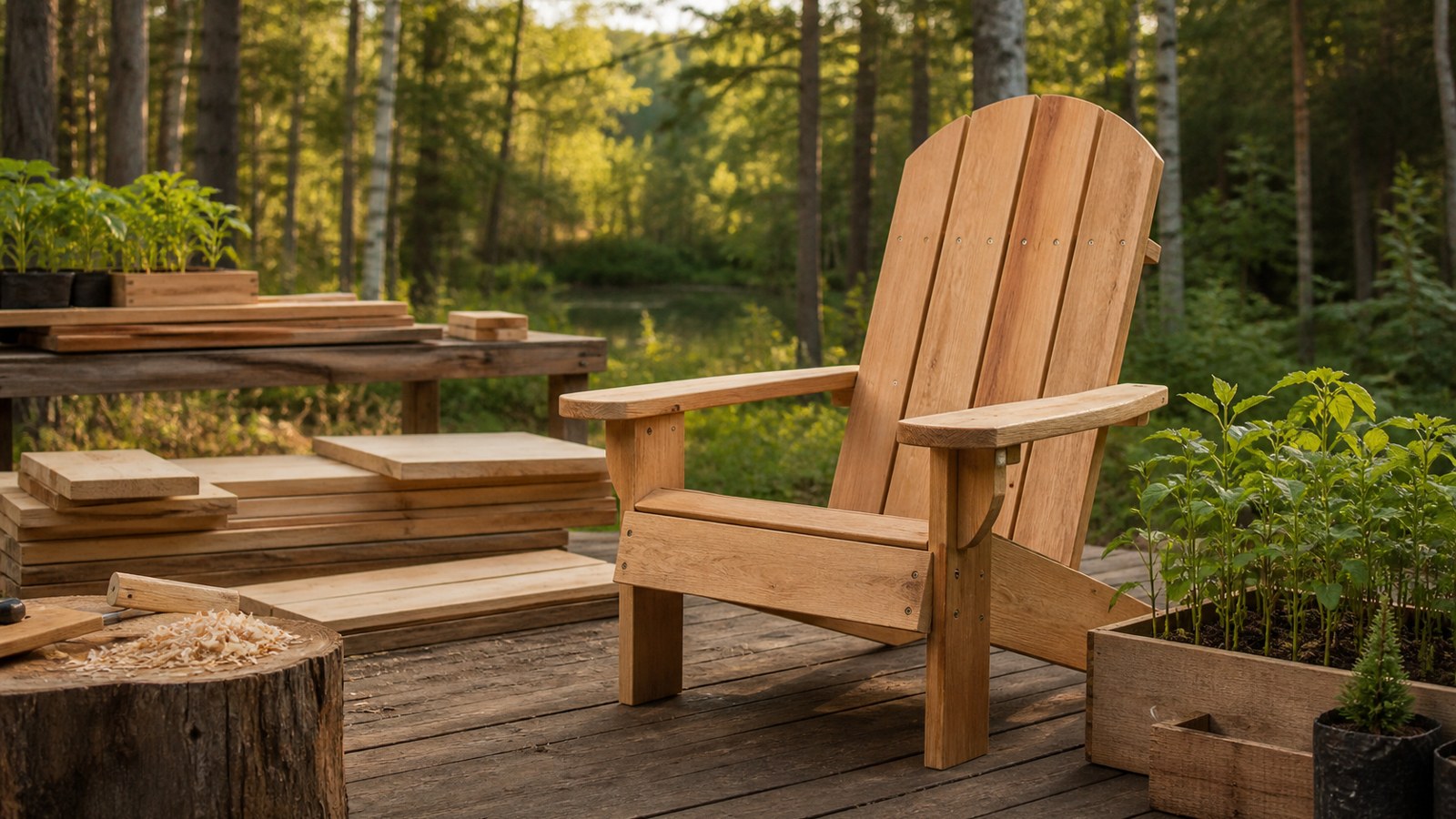
Wooden Adirondack chairs carry a natural warmth that no synthetic material can fully replicate. The grain patterns, knots, and organic textures make each chair unique, with its own personality and charm. Many homeowners enjoy the way wood ages, shifting colors over time as exposure to sun and rain creates a silvery patina. For others, carefully applied oils and sealants preserve the original warm tones, keeping the chair’s natural beauty intact. This connection to the earth and to tradition is one of the strongest reasons people continue to choose wood.
The Rise of Plastic Adirondack Chairs
While wood dominated for decades, innovations in manufacturing eventually introduced plastic versions of Adirondack chairs. Early models were often flimsy, prone to fading, and limited in color choices. But modern plastic, especially high-density polyethylene (HDPE) lumber, has revolutionized the category. HDPE is a durable, weather-resistant material made from recycled plastics like milk jugs and detergent bottles. Unlike earlier plastics, it is heavy, sturdy, and designed to mimic the look of painted or stained wood.
Plastic Adirondack chairs offer an entirely different kind of appeal. They are virtually maintenance-free, available in dozens of colors, and resistant to fading, cracking, and splintering. While wood requires upkeep and care, plastic chairs can be left outside year-round in most climates with little concern. Their practicality has made them a favorite for busy families, rental properties, and coastal homes where weather is especially harsh.
Durability: Which Lasts Longer?
Durability is one of the most critical considerations when choosing between wood and plastic Adirondack chairs. A well-made wooden chair can last anywhere from 10 to 50 years, depending on the species of wood and the level of care. Teak and cedar are particularly resilient, naturally resisting rot and insects, while pine requires more frequent maintenance to avoid warping or decay. Regular cleaning, sealing, and seasonal storage extend the life of wooden chairs significantly.
Plastic Adirondack chairs, on the other hand, are designed for longevity with minimal care. HDPE versions can last decades without splintering, rotting, or requiring protective coatings. They are impervious to insects and resistant to moisture. For homeowners in climates with heavy rain, salty air, or scorching sun, plastic often outlasts wood simply because it doesn’t require constant upkeep. In terms of sheer durability, plastic usually wins, though high-quality hardwoods can rival it with dedicated care.
Maintenance: The Effort Divide
The difference in maintenance between wood and plastic Adirondack chairs is stark. Wooden chairs demand attention. They need cleaning to remove dirt and mildew, sanding to smooth rough areas, and sealing or staining to protect against UV damage and moisture. Some homeowners see this as part of the charm, a ritual that keeps them connected to the furniture and ensures its beauty endures. Others find the upkeep frustrating, especially when life is already busy.
Plastic Adirondack chairs require almost no effort. They don’t need painting, staining, or sealing. A simple rinse with a hose or wipe with soapy water is enough to restore their appearance. This low-maintenance quality makes them especially attractive for rental properties or families who want outdoor furniture to simply function without demanding attention. For those who prefer to relax rather than refinish, plastic is the obvious choice.
Aesthetic Appeal: Natural Beauty vs. Vibrant Variety
When it comes to looks, wood and plastic each bring something unique to the table. Wooden Adirondack chairs radiate authenticity. Their natural grain, texture, and warmth give outdoor spaces a timeless, organic feel. Even as they weather and gray, they remain charming, blending into natural landscapes effortlessly. Wooden chairs also allow for customization—paint, stain, or carved details can personalize them in ways plastic cannot quite match.
Plastic chairs offer their own version of appeal. They come in a staggering range of colors, from subtle earth tones to bold, playful hues. Bright turquoise, fire-engine red, lime green, or sunny yellow plastic Adirondacks can turn a backyard into a vibrant retreat. For those who like matching furniture to themes, holidays, or coastal palettes, plastic provides endless possibilities. The sleek, consistent finish also appeals to homeowners who prefer a modern look. In aesthetics, it comes down to preference: rustic natural charm versus bold creative expression.
Comfort: The Equalizer
No matter the material, Adirondack chairs are designed for comfort. Their ergonomic slant, deep seat, and wide arms are consistent in both wood and plastic versions. However, the feel differs slightly. Wooden chairs often feel sturdier and warmer to the touch, while plastic chairs can feel smoother and slightly more forgiving. Accessories like cushions and ottomans enhance comfort equally for both types. In the end, comfort is more influenced by craftsmanship than material. A well-built chair, whether wood or plastic, will provide hours of restful lounging. Poorly designed chairs, no matter the material, will not deliver the same experience. When comparing comfort, quality matters more than whether the chair is wood or plastic.
Cost: Upfront Price vs. Long-Term Value
Cost is often a deciding factor when choosing Adirondack chairs. Pine and fir chairs are usually the most affordable wooden options, though they have shorter lifespans and require regular upkeep. Cedar and cypress sit in the middle range, while teak and mahogany command premium prices. A teak Adirondack chair may be expensive, but it can last for decades, making it an investment rather than a short-term purchase.
Plastic Adirondack chairs also span a wide price range. Budget-friendly models from big-box stores may cost less but are often lightweight and less durable. Premium HDPE chairs, however, can cost as much as or more than cedar. The advantage is that their longevity and low maintenance often make them more cost-effective over time. The key is weighing upfront costs against how long you want the chairs to last and how much effort you are willing to put into maintenance.
Sustainability and Environmental Impact
Sustainability is increasingly important in furniture choices, and both wood and plastic Adirondack chairs have environmental considerations. Wooden chairs made from responsibly sourced or FSC-certified wood support sustainable forestry practices. Reclaimed wood options add character while reducing waste. At the end of their life, wooden chairs are biodegradable, returning naturally to the environment.
Plastic Adirondack chairs, particularly those made from recycled HDPE, contribute to sustainability in a different way. They repurpose consumer waste, such as milk jugs, into long-lasting furniture. Their durability reduces the need for frequent replacements, which lessens overall environmental impact. However, they are not biodegradable, meaning disposal at the end of their lifespan requires consideration. Ultimately, both materials can be eco-friendly, depending on sourcing, manufacturing, and consumer care.
Climate Considerations: Matching Material to Environment
Your local climate should play a major role in choosing between wood and plastic. In dry, temperate climates, wooden Adirondack chairs can thrive with minimal care. In humid, coastal, or rainy environments, wood faces greater challenges—constant moisture invites rot, mold, and warping. Plastic chairs, impervious to these conditions, excel in such climates.
Extreme sun exposure also matters. Plastic chairs infused with UV inhibitors resist fading and cracking, while untreated wood suffers without protective finishes. Snow and ice bring challenges of their own. Wood can absorb water that freezes and expands, causing cracks, while plastic withstands freeze-thaw cycles more effectively. For homeowners in harsher climates, plastic often provides peace of mind.
The Role of Craftsmanship
While material is crucial, the quality of construction also determines how long an Adirondack chair lasts. Wooden chairs built with precise joinery, stainless steel hardware, and strong slats outperform mass-produced versions assembled with low-grade materials. The same is true for plastic—HDPE chairs from reputable manufacturers far outshine cheap injection-molded plastic chairs that wobble or crack within a season. Investing in craftsmanship ensures durability, safety, and comfort, regardless of whether the chair is wood or plastic. It is worth paying attention to brand reputation and product reviews, since the difference between a chair that lasts a season and one that lasts decades often comes down to how it was built.
Blending Both Worlds
Some homeowners find that they don’t need to choose strictly between wood and plastic. Combining both materials in the same outdoor space can bring the best of each world. Wooden chairs can anchor a porch with traditional charm, while colorful plastic chairs can brighten a poolside or garden. This blended approach allows flexibility, ensuring each space has furniture that suits its specific function and aesthetic. The Adirondack design itself is so iconic that it looks equally at home in wood or plastic. By mixing and matching, homeowners can create dynamic outdoor areas that celebrate tradition and innovation side by side.
Making the Right Choice for Your Lifestyle
Ultimately, the question of wood versus plastic Adirondack chairs comes down to personal lifestyle and priorities. If you value natural beauty, heritage, and the tactile warmth of real wood—and you don’t mind investing time in care—wooden Adirondack chairs may be your ideal choice. If you prefer convenience, bold colors, and worry-free durability, plastic will better suit your needs. Neither option is wrong, and both carry the enduring promise of relaxation that has defined Adirondack chairs for over a century. Whether you choose cedar, teak, pine, or HDPE, what matters most is that the chair brings joy, comfort, and style to your outdoor living. With the right decision, your Adirondack chair will become more than furniture—it will become a lasting part of your home’s story.