
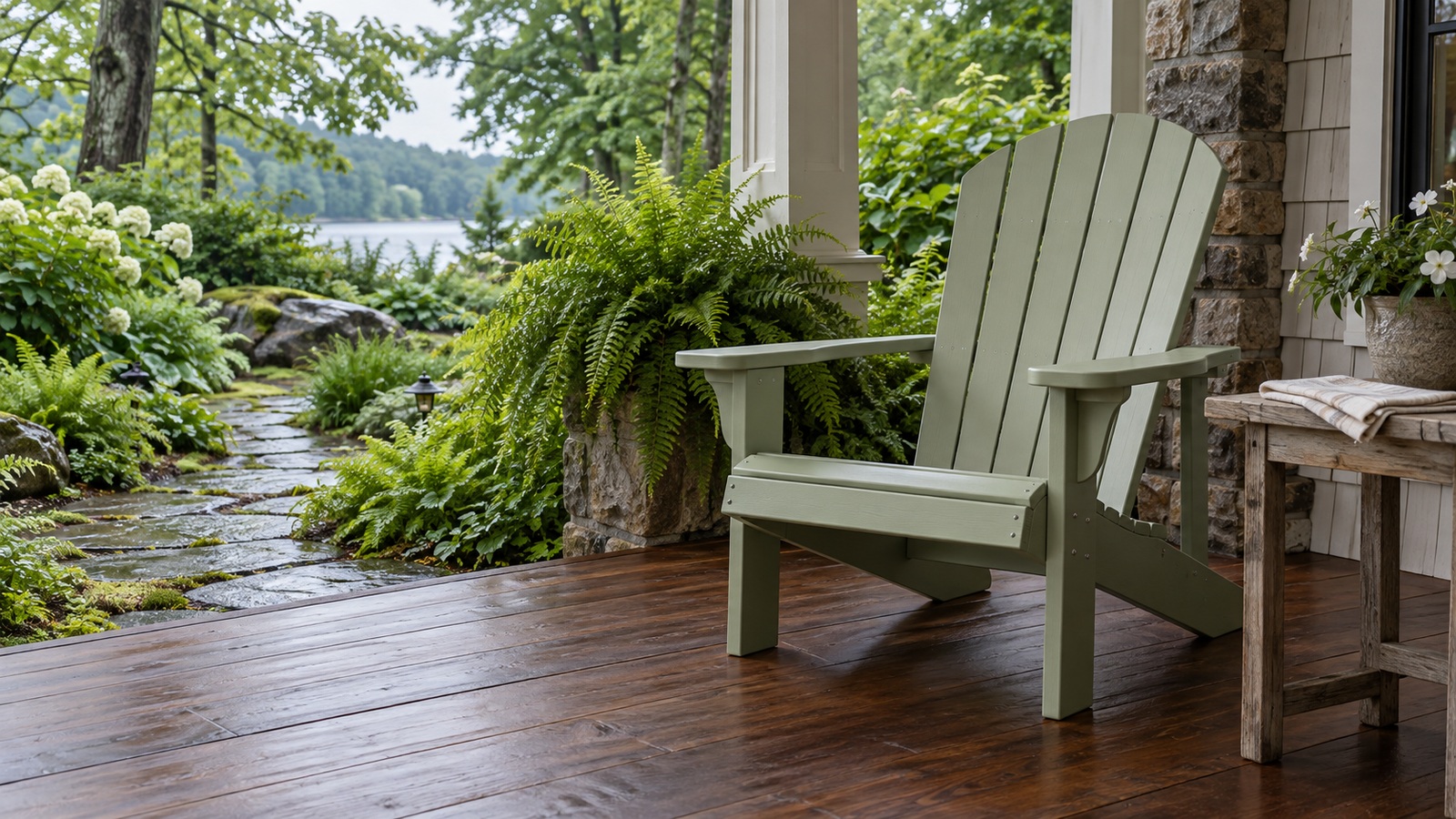
Compare the Complete Finish System in Its Real Conditions
Humidity can complicate the choice between paint and stain, but neither broad category supplies an automatic answer for every wooden Adirondack. The chair’s wood and existing surface, the conditions during application, the particular coating, and the setting after use all influence the decision. Moisture already in the timber is a different question from damp air while a product dries, and both differ from rain or condensation during later ownership. Begin by separating those situations rather than asking one finish label to solve all of them. A compatible system, applied to a suitable surface through its required conditions and maintained in a realistic location, is a more useful goal than a universal winner. This makes the comparison practical for your actual chair and household routine while keeping appearance and environmental claims in their proper place.
A: No universal winner follows; compare the actual compatible systems, surface readiness, conditions, and later care.
A: They concern different parts of coating preparation and application, with requirements defined by the selected process.
A: No. Verify the actual product's appearance and behavior instead of transferring assumptions between categories.
A: Use the system's substrate-readiness requirements rather than relying on a quick surface impression.
A: The accessories have their own instructions and conditions that remain part of the arrangement.
A: Resolve the actual cause and surface history before assuming a different finish category will correct it.
A: Ask what property, baseline, and evidence the comparison concerns and whether it applies to your project.
A: Follow the current directions for the specific products used and their actual conditions.
A: Keep wood and surface history, products, preparation, working conditions, dates, and observations together.
A: Choose a supported compatible system and pair it with suitable placement, realistic care, and clear surface records.
Separate Three Different Moisture Questions
The first question concerns the wood before finishing. A chair washed recently, exposed to rain, or stored under unsuitable conditions may need a supported assessment of its readiness for coating. The second concerns the surrounding conditions during application and the required waiting stages. Temperature, humidity, and later weather can influence whether the selected process can be completed as directed. The third concerns the location in which the finished furniture will serve. Keeping these questions apart makes it easier to ask the maker or supplier for useful advice.
Do not treat a surface that feels dry as an answer to every one of them. The selected system may have requirements for substrate condition beyond a quick touch of the armrest. Its label may also define when the new coating can be handled, recoated, or put into service. Later exposure remains a separate ownership task. Establish the actual requirements rather than turning a general impression of dryness into permission to begin or end the project.
Understand What Paint and Stain Actually Describe
Paint usually establishes an opaque surface appearance, while stain products span different levels of grain visibility and different coating behavior. Some penetrating stains and some more film-forming products present different maintenance questions, and a solid-color stain should not be assumed identical to a transparent one. Read the exact product description. The Forest Products Laboratory’s finishing chapter considers wood properties and protection from water, sunlight, and weathering alongside appearance and cleanability. That framework supports comparing actual systems rather than reducing the decision to paint on one side and every possible stain on the other.
Start with the Existing Chair Instead of the Weather Label
Identify the wood and existing treatment where possible. A bare chair, a sound factory-coated chair, and a chair with an unknown peeling finish do not share one preparation route. The new product must suit the surface it will meet. Keep any prior work in the record and ask the furniture or coating maker about compatibility. A humid-climate description is not enough to select a process without that starting information.
Inspect the complete chair before deciding that its appearance is the main problem. A loose connection, damaged member, or uncertain surface condition needs its own response. A decorative treatment does not establish structural readiness. Take a questionable chair out of use while the concern is resolved through appropriate guidance. This prevents the finish comparison from becoming an attempt to conceal a furniture problem that has not been understood.
When moisture appears to be involved in a coating issue, obtain a suitable assessment before repeating the same treatment. The observed problem might involve preparation, exposure, product compatibility, or another condition that the color layer alone will not explain. Record what happened, where it appeared, and the relevant history. Give that information to the maker or specialist who can advise on the actual product. An identified cause provides a clearer next step than choosing the other broad finish category by default.
Read Application Conditions from the Current Products
Sherwin-Williams’s exterior-staining guidance explains that moist conditions can affect drying of both stains and paints. That is a useful reminder to check the application environment whichever appearance you prefer. It does not create one permissible humidity limit for all products. Read the label and technical information for the specific compatible system. If the working conditions do not meet its requirements, change the plan rather than assuming the other category can be used immediately.
Review the forecast as part of the entire required process, not only the hour when the product is applied. The chair may need suitable conditions through drying, recoating, handling, or later readiness. A promising afternoon can be followed by conditions that the system does not support. Make enough space and time for the full route. A successful project begins with an application window that fits the products rather than a preferred weekend that the products must accommodate.
Distinguish Protection from a Promise of Waterproof Furniture
A finish can contribute protection through its intended design and supported application, but it should not be used to describe the complete chair as immune to moisture or every outdoor condition. Furniture includes ends, connections, moving parts where present, and surfaces that may be less obvious from above. Read the chair and coating instructions together. The complete product still needs suitable placement, inspection, and care. A strong appearance or a broad water-related claim does not remove those requirements. Ask what the actual product establishes, which conditions it covers, and what ownership tasks remain rather than turning one favorable attribute into a lifetime promise.
Compare Future Care as Carefully as Initial Appearance
Ask the maker or supplier how each proposed finish is renewed or repaired when its surface later needs attention. Different compatible systems can require different preparation. Do not assume every stained chair can receive another layer without further work, or that all painted chairs need the same stripping process. Keep the answer specific to the selected products and existing surface. That gives the household a realistic picture of the next maintenance decision.
Consider whether you have a suitable working area and the ability to complete those tasks through their directions. A process that is manageable in a workshop may be awkward in a small patio that must stay available for everyday use. The relevant supplies, support, and waiting space are part of ownership. This is a practical comparison of requirements, not proof that one finish always needs less maintenance in humid conditions.
Compare the appearance changes you are prepared to accept as well. A visible grain finish can retain natural variation, while a painted surface can provide a more uniform color field. Wear or condition changes should be assessed through the product’s care route rather than hidden automatically. The best choice connects the look you enjoy with the work you can actually perform. A finish whose future route is understood is easier to own than one chosen through an assumed maintenance advantage.
Review the Furniture’s Location and Everyday Drying Opportunities
Look at the actual sitting position, including the relationship to planting, roof edges, irrigation, and surrounding objects. A chair placed where it is repeatedly wetted can present a different care task from one in another supported location. Do not make a coating solve a placement issue that can be addressed through a suitable arrangement. Follow the furniture’s requirements when changing the location. The setting is part of the moisture question even after the finish has been chosen.
Keep access for cleaning and inspection practical. A chair wedged among planters can be difficult to reach underneath or move through its supported method. The concealed areas still belong to the complete furniture. Give the owner enough room to follow the care directions rather than forcing attention to the visible arms alone. A manageable layout can improve the clarity of maintenance without claiming a numerical durability benefit.
Cushions, covers, and other accessories have separate instructions that matter to the complete arrangement. Do not assume they can remain on or over the chair indefinitely because the main finish is marketed for exterior use. Read how each item should be cleaned, dried, placed, and stored. Keep accessory readiness distinct from the condition of the wooden frame. A damp or unsuitable accessory arrangement is not resolved by choosing paint instead of stain.
Use a supported storage routine when furniture needs shelter. A cover or enclosed destination should suit the chair and its actual requirements rather than be chosen through a vague idea of keeping moisture out. Ask the relevant maker if the arrangement is uncertain. The goal is a clear repeatable routine, not a tightly packed object whose condition becomes hard to inspect. Treat storage as part of the complete ownership process.
Respond to Stains and Coating Changes through Suitable Guidance
A surface mark in a humid setting does not automatically identify its cause. Review the product’s compatible cleaning information and obtain appropriate help when the condition remains uncertain. Stronger chemicals, aggressive abrasion, or another coat can alter the surface without establishing the right response. Keep observations and treatment history available. Cleaning should preserve the intended system and help you assess the complete chair, rather than become a series of experiments.
Where an existing coating needs removal or renewal, establish the correct preparation through the furniture and product information before disturbing it. An older uncertain finish can have requirements that are not visible from the color. Get suitable assessment when its history cannot be established. The work area, tools, protection, and readiness stages should follow the actual process. A choice made to improve moisture performance should still begin with compatible understood surface work.
Keep Comparison Claims Specific Enough to Use
If a seller says a product handles humidity better, ask what that comparison means. It may concern application conditions, a tested surface property, or an intended environment rather than the complete chair’s life in your garden. Ask for the named baseline and relevant evidence. A broad advantage without those details does not settle the buying decision. You can still prefer a product for its documented suitability, appearance, and manageable care, while leaving an unsupported comparative claim unresolved. Keeping those reasons separate makes the choice easier to explain and revisit if the household’s location or routine changes.
Choose a Supported System and Preserve Its History
Record the chair identity, wood and previous treatment, selected compatible products, preparation, application conditions, and relevant dates. Retain care and renewal information so the next decision begins with the actual surface. This can be especially helpful when more than one person maintains the furniture. A brief record prevents a later caregiver from treating a film-forming product as an unidentified penetrating stain or assuming the surface is still untreated wood.
Review condition through the maker’s guidance rather than applying one renewal calendar to every chair. Actual exposure, use, and product requirements can differ within the same household. Address unresolved damage separately from the finish appearance. The purpose of the record is to support informed care, not to turn a date into an automatic treatment instruction. Observation and relevant guidance should remain connected.
Paint and stain can each serve wooden Adirondacks in humid settings when the complete compatible system and ownership routine suit the actual chair. Separate wood readiness, application conditions, and later exposure; compare future care alongside the desired look. Avoid claiming that one broad category removes every moisture concern. A carefully selected finish is part of a sound, appropriately placed seat whose surface history and maintenance remain clear.


