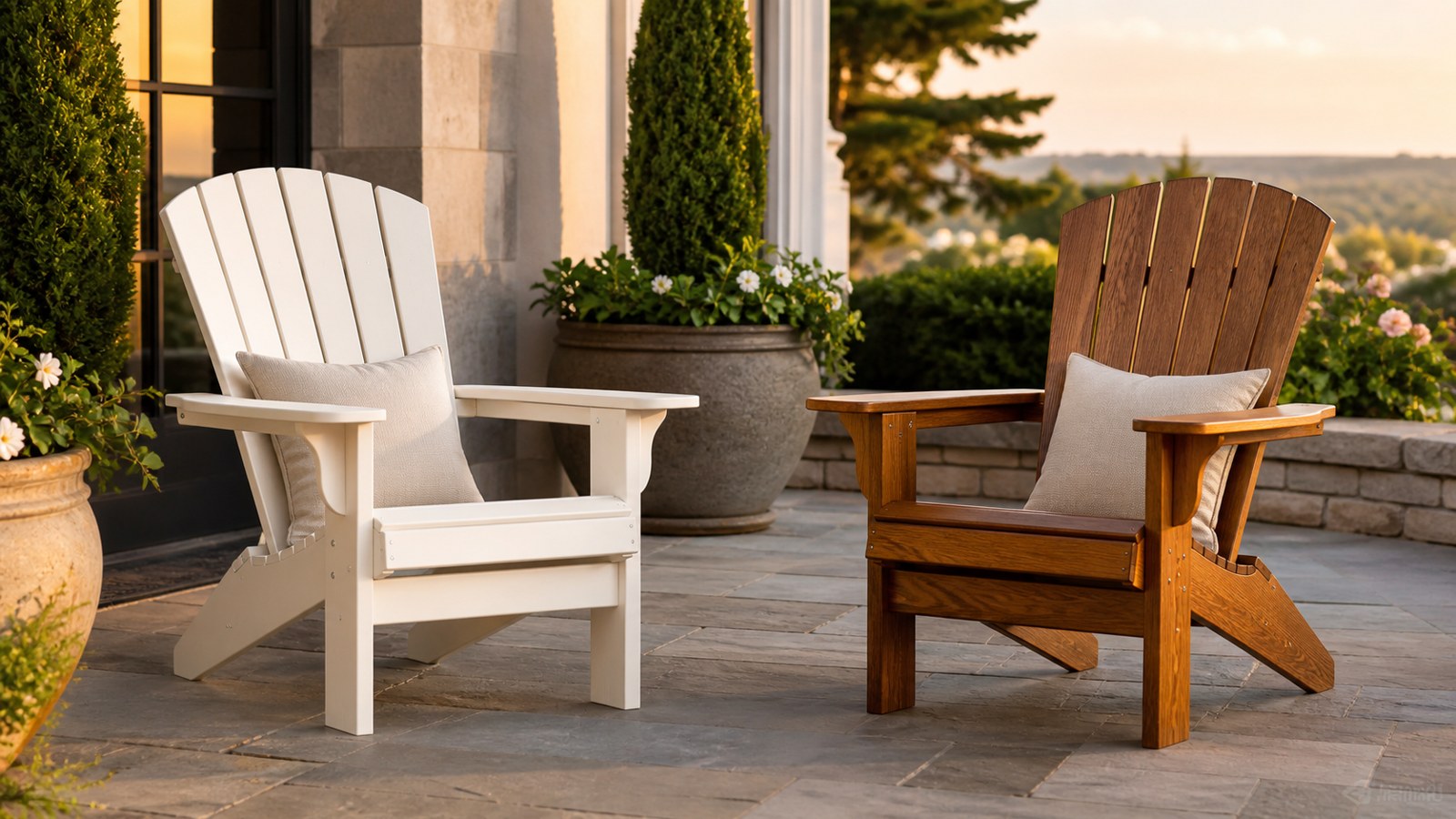
Adirondack chairs are iconic symbols of comfort, leisure, and outdoor charm. With their wide armrests, slanted backs, and rustic allure, they’ve long graced porches, patios, and lakesides across the country. But as much as we love these chairs, one debate continues to divide outdoor enthusiasts and homeowners alike: should you paint or stain your Adirondack chair? Both finishes can enhance the beauty of your chair and offer a layer of protection from the elements—but they do so in very different ways. The real question isn’t just about looks—it’s about longevity, durability, and maintenance. Which finish will last longer under the beating sun, soaking rain, and freezing winter snow? Let’s take a deep dive into the science, style, and practicality behind painted versus stained Adirondack chairs, so you can make the best choice for your outdoor retreat.
A: On sun-exposed chairs, quality exterior paint or solid-color stain typically lasts longest; transparent stains need the most frequent refresh.
A: Moisture in wood, poor edge rounding, or missing primer. Fix the cause, then sand to feather edges and re-prime.
A: Yes—clean/degloss, sand, spot-prime bare wood, then prime overall and topcoat.
A: Not directly; strip/sand to bare wood or choose a solid-color stain after full prime for a paint-like look.
A: Light/neutral tones with quality pigments; darks look sharp but run hotter and may age sooner.
A: Every 1–2 months in season—soap, soft brush, gentle rinse; prevents mildew and sunscreen buildup.
A: Rinse freshwater monthly; prefer breathable systems or robust primers and marine-leaning hardware.
A: After full cure (often several days), not just “dry to touch,” to avoid sticking/print-through.
A: Yes—back-prime and seal end grain; undersides see splash and wicking that shorten finish life.
A: Round edges, seal end grain, and choose a light, UV-stable color—those three alone extend seasons.
Understanding the Adirondack Chair: Beauty Built for the Outdoors
The Adirondack chair’s design dates back to the early 1900s, originally crafted for relaxation in the mountainous regions of upstate New York. These chairs were intended to withstand rugged outdoor conditions, often built from durable woods such as cedar, teak, acacia, or pine. Today, the same durability challenge persists—but the protective finish you choose plays an equally critical role. Without a proper seal, wood furniture can crack, fade, or warp under constant exposure to sun, moisture, and temperature fluctuations. That’s where paint and stain step in. Both finishes serve the purpose of safeguarding wood, yet they achieve it through contrasting mechanisms—paint forms a barrier on top of the surface, while stain penetrates into the wood fibers. This simple distinction is at the heart of their long-term performance differences.
The Case for Painted Adirondack Chairs
A freshly painted Adirondack chair is hard to resist. It exudes a crisp, clean look that can transform any outdoor space—from coastal blue by the beach to farmhouse white on a porch or bold crimson around a fire pit. But paint is more than just aesthetic; it’s also a defensive layer.
1. Paint as a Protective Barrier
When applied properly, exterior-grade paint acts as a waterproof shell over the wood. It seals off pores, blocking UV rays, moisture, and insects. This surface-level coating prevents the wood from absorbing water and minimizes swelling or shrinking caused by humidity changes.
High-quality outdoor paints, especially those formulated with 100% acrylic latex, create a flexible, breathable film that moves slightly with the wood rather than cracking immediately under stress.
With the right primer and multiple coats, paint can provide several years of solid protection—sometimes up to 8–10 years before requiring a full refresh.
2. Endless Color Options and Style Freedom
Paint opens up endless creative possibilities. You can coordinate your Adirondack chairs with your home’s exterior palette, match them to your garden, or even create contrast with vibrant tones. While stains preserve a natural look, paint allows you to define personality. However, this aesthetic power comes with a cost—maintenance and repair.
3. The Downside: Peeling and Maintenance
Paint, by nature, sits atop the surface. As wood expands and contracts with changing temperatures, this film can eventually crack or peel. Once water finds a weak spot, it seeps in beneath the paint layer, causing bubbling or flaking.
This means painted Adirondack chairs need occasional scraping, sanding, and repainting to stay fresh. While the initial paint job may look stunning, it demands commitment if you want to maintain that showroom finish.
4. Paint Longevity: Climate Plays a Role
In dry or moderately humid climates, painted finishes last longer. But in coastal areas with high salt exposure or regions that experience freeze-thaw cycles, even premium paints face faster wear. The key lies in preparation: properly sanding, priming, and sealing the chair before painting can double the lifespan of your paint job compared to a rushed one.
The Case for Stained Adirondack Chairs
If paint is the extrovert of the finish world—bright and commanding—then stain is its natural, understated counterpart. A stained Adirondack chair highlights the grain and character of the wood itself, giving a timeless, rustic look that blends seamlessly into natural surroundings.
1. Stain as a Penetrating Protector
Unlike paint, which sits on the surface, stain soaks into the wood, bonding directly with its fibers. This deep penetration allows it to move with the wood naturally, making it far less likely to peel or crack.
The best stains also contain UV inhibitors, mildewcides, and water repellents, adding an invisible layer of defense. Because it integrates into the wood rather than covering it, stain tends to age gracefully—fading gradually rather than flaking off dramatically.
2. Types of Stain and How They Differ
Not all stains are created equal. The finish and longevity vary significantly depending on the type you choose:
- Transparent or Clear Stain: Shows the most wood grain but provides the least UV protection. Best for shaded patios.
- Semi-Transparent Stain: Balances natural beauty and durability; excellent for showing grain while still offering strong protection.
- Solid Stain: Closest to paint in appearance but still penetrates slightly, offering robust coverage with less peeling risk.
For Adirondack chairs, semi-transparent or solid stains typically perform best since they provide enough color richness while still resisting weathering.
3. Low Maintenance Appeal
Perhaps the most attractive feature of stain is its low maintenance. When a stained chair starts to fade, you don’t have to sand it down completely. Usually, a quick cleaning and reapplication are enough to restore its vibrancy. Unlike paint, which requires stripping to achieve a uniform finish, stain naturally evens out over time. For homeowners who prefer simplicity, this is a major win.
4. Stain Longevity: More Predictable Aging
A high-quality oil-based or hybrid stain can last 3–6 years before a full restain, depending on exposure levels. Water-based options might fade sooner, but they’re easier to apply and eco-friendlier.
While that’s technically less than the top-tier lifespan of paint, the ease of renewal makes stain more sustainable in the long run—especially if you prefer a natural aesthetic.
Side-by-Side: Longevity and Durability
When it comes to outdoor furniture longevity, both paint and stain have their advantages. The deciding factor often comes down to maintenance tolerance, environmental conditions, and personal taste.
| Feature | Painted Adirondack Chair | Stained Adirondack Chair |
|---|---|---|
| Protection Method | Surface barrier | Penetrating seal |
| Average Lifespan | 7–10 years with good prep | 3–6 years, easier to renew |
| Peeling/Cracking Risk | Moderate to high | Low |
| Maintenance Effort | High (requires sanding/repainting) | Low (simple restain) |
| Appearance Over Time | May flake or dull | Fades gradually |
| UV Resistance | Excellent with topcoat | Good to very good |
| Natural Wood Visibility | Hidden under paint | Preserved or enhanced |
| Best For | Bold colors, statement pieces | Rustic or natural settings |
From a purely durability standpoint, a professionally painted chair will typically outlast a stained one before it needs major attention. However, stain wins in long-term maintenance and repair convenience, often making it the more realistically sustainable option for most homeowners.
Climate Considerations: Where You Live Matters
The longevity of your finish isn’t just about the product you choose—it’s about where your chair lives.
- Humid or Rainy Regions: Stain tends to perform better because it breathes with the wood, reducing moisture trapping and peeling risk.
- Dry, Sunny Climates: Paint offers better UV protection, helping prevent bleaching and cracking in intense sun.
- Coastal Environments: Stain can resist salt spray damage better, but marine-grade paint can also perform well with regular touch-ups.
- Cold and Snowy Winters: Painted finishes are vulnerable to cracking when wood contracts; stain handles these shifts more flexibly.
If you plan to leave your Adirondack chairs outdoors year-round, stain generally adapts better to environmental fluctuations. But for covered porches or decks, painted finishes can deliver exceptional longevity.
Preparation: The Hidden Factor That Determines Lifespan
Many homeowners overlook one crucial detail: the finish is only as good as the preparation beneath it.
A beautifully applied stain or paint job will fail prematurely if the surface isn’t properly prepped. Before finishing, every Adirondack chair should be:
- Sanded Smooth: Remove rough grain and previous coatings.
- Cleaned Thoroughly: Use a wood cleaner to strip oils, dirt, or mildew.
- Dried Completely: Ensure no residual moisture remains before applying any coating.
- Primed (if painting): Primer ensures paint adhesion and adds an extra layer of protection.
Skipping any of these steps can cut your finish lifespan in half, regardless of the product quality.
Environmental and Health Considerations
Today’s consumers care about sustainability as much as style. Fortunately, both modern paints and stains have evolved to meet these priorities.
- Low-VOC and Water-Based Products: These formulas reduce harmful emissions and are safer for application.
- Eco-Friendly Wood Preservers: Many stains include natural oils or UV stabilizers that extend life without toxic additives.
- Longevity Equals Sustainability: A longer-lasting finish means fewer materials and less frequent refinishing—reducing overall waste.
If you’re repainting or restaining older Adirondack chairs, choosing eco-conscious products helps protect both your investment and the environment.
The Aesthetic Equation: What Fits Your Outdoor Vision?
Beyond durability, there’s the emotional and stylistic factor. The finish you choose influences not just longevity—but how your outdoor space feels.
A painted Adirondack chair makes a statement. It pops against green lawns or sandy backdrops, ideal for bold, coastal, or modern settings. Painted chairs often complement architectural color schemes, helping your furniture feel like an intentional design feature.
On the other hand, a stained Adirondack chair connects with nature. It’s perfect for cabins, woodland retreats, or rustic patios. The visible grain and warm tones evoke craftsmanship and authenticity—a subtle luxury that only natural wood can deliver.
Your decision, ultimately, blends practicality with personality.
Real-World Example: How Finishes Age Over Time
Imagine two identical cedar Adirondack chairs placed side by side on the same deck—one painted navy blue, the other finished with a rich walnut stain.
After two years:
- The painted chair still looks vibrant but has developed a few small chips near the armrests where cups and elbows rest.
- The stained chair has faded slightly in tone but shows no cracking or flaking.
After five years:
- The painted chair now shows more significant peeling on the edges where moisture seeps in. It’s ready for a full sand-and-repaint.
- The stained chair’s color has mellowed but remains smooth. A quick cleaning and one coat of stain restore it beautifully.
After ten years:
- The painted chair (with periodic maintenance) may still hold strong, but only with consistent upkeep.
- The stained chair, maintained every few years, retains a timeless, aged patina with far less labor invested.
This side-by-side scenario underscores an important truth: paint can last longer—but stain often ages better.
Maintenance Secrets for Maximizing Finish Longevity
Whichever finish you choose, a few care habits will drastically extend its life:
- Keep chairs clean: Dirt and mildew shorten finish life. Wash annually with mild soap and water.
- Avoid standing water: Elevate or tilt chairs during heavy rain to prevent pooling.
- Store or cover in winter: Even weather-resistant finishes last longer when shielded from snow or freezing rain.
- Inspect annually: Look for dull spots, peeling, or rough texture—signs it’s time for touch-ups.
Think of maintenance as part of the ritual of owning outdoor furniture—an act of stewardship that keeps your investment beautiful for decades.
Hybrid Finishes: The Best of Both Worlds?
Some modern outdoor finishes blur the line between paint and stain. Products like solid-color stains or stain-paint hybrids offer enhanced UV protection with penetrating properties that minimize peeling. These innovative coatings are ideal for Adirondack chairs, providing color depth like paint but maintenance ease like stain. While not as glossy or opaque as true paint, they strike a balance many homeowners find appealing. If you love color but dread chipping, solid stains may be your best long-term choice.
Expert Verdict: Which Lasts Longer?
Strictly speaking, painted finishes tend to last longer before requiring a total redo, especially when high-quality materials and prep are used. Paint’s thick film shields against moisture, UV, and wear better than most stains—at least at first.
However, stained finishes win the long game. They may need reapplication sooner, but the process is simple, inexpensive, and doesn’t require stripping or sanding. Over a decade or two of ownership, stain typically results in less frustration, lower maintenance costs, and a more naturally aging appearance.
In the end, the “longest-lasting” choice depends on your priorities:
- Choose paint if you want bold colors, a sealed surface, and are willing to maintain it every decade.
- Choose stain if you prefer a natural look, minimal upkeep, and finishes that age gracefully without peeling.
Beauty and Durability in Harmony
The debate between painted and stained Adirondack chairs isn’t about right or wrong—it’s about matching the finish to your lifestyle and environment.
A painted chair is a statement piece, resilient and bright, perfect for porches where design takes center stage. A stained chair, by contrast, is timeless—rooted in nature, warm in tone, and quietly enduring.
Both can serve you beautifully for years with proper preparation and care. The key isn’t just choosing the right product—but respecting the process: clean, prep, protect, and maintain.
Whether you go bold with paint or embrace the authenticity of stain, your Adirondack chairs will continue to offer that unbeatable invitation—to sit back, breathe deep, and enjoy the serenity of outdoor life.