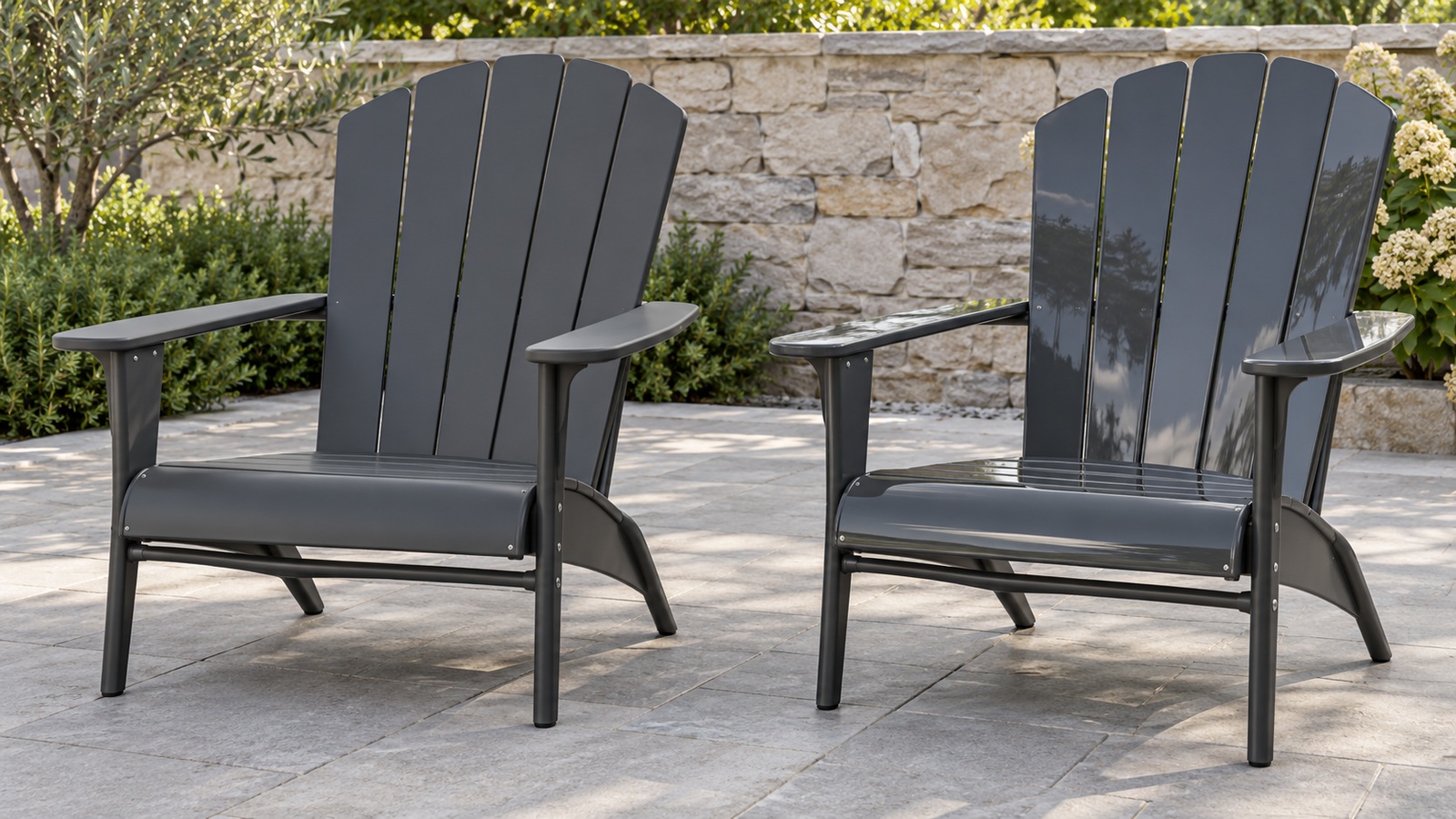
Choose the Surface Character You Want to Live With
The same metal Adirondack silhouette can feel quietly understated in a matte finish or more crisp and reflective in gloss. That difference can change its relationship with stone, planting, railings, and the light on a patio without changing the furniture’s basic role. Sheen, however, is only one part of a coating specification. A buyer also needs to understand the actual surface texture, intended exterior use, care, and supported response to wear. Start by comparing real finishes in a similar color under useful light, then ask what the manufacturer documents about each offered product. The most satisfying choice balances the appearance you enjoy with a realistic ownership routine, rather than assuming the shinier or duller surface automatically provides better protection, easier maintenance, or longer service.
A: You can judge the complete products, but matching colors better isolates the reflected-light difference.
A: No. Sheen and texture are separate characteristics to verify on the actual surface.
A: Read the complete exterior coating specification; sheen alone does not establish that performance.
A: Visibility depends on the coating, color, lighting, and type of mark rather than a universal sheen rule.
A: Review real samples or furniture in conditions close to your patio and ordinary viewing positions.
A: Follow the maker's care route instead of using an unsupported process that changes the intended finish.
A: Color, sheen, texture, and application can all affect the result; ask what the maker expects.
A: No. Structural condition requires its own supported assessment and response.
A: Compare actual samples and consider a deliberate difference instead of assuming the label guarantees sameness.
A: Keep exact model, color, sheen, texture, exterior suitability, care, repair support, and sample observations together.
Separate Sheen, Texture, and Color
Matte and gloss describe how a surface reads through reflected light, but they do not fully describe its physical texture or color. A matte coating can be relatively smooth or visibly textured, while a glossy surface can also differ in the way it is formulated and applied. Ask what the furniture maker actually offers. A product image may combine several characteristics without making their individual contributions clear. Keep the finish name attached to the exact chair and specification.
Compare similar colors when trying to understand the effect of sheen. A pale matte chair and a deep-black glossy chair change more than one variable at once. You may prefer one complete product, but that preference does not establish what matte alone contributes. Ask for samples or view comparable models where possible. A cleaner comparison makes it easier to identify whether the attraction comes from color, reflected highlights, texture, or the shape of the furniture.
Read the Chair in the Patio’s Ordinary Light
Review the finish in conditions close to where the chair will sit. Morning light, shaded afternoons, and evening lighting can emphasize different parts of the broad arms and fan back. A product photographed under studio lights may look unlike the same surface beside the house. Consider the times when you actually use or view the patio. The finish should be assessed in that everyday setting rather than only in its most flattering photograph.
Gloss can create more distinct highlights and reflections that draw attention to curves and edges. That can suit a crisp architectural arrangement or make a chair stand out against a quiet background. It can also create a visual effect you do not enjoy from a particular seated viewpoint. Look at the model from normal positions around the group. The right choice depends on your preference and location, not a rule that outdoor furniture should always be reflective or always subdued.
Matte can give the outline a more restrained presence, especially when the surrounding materials have their own texture. That does not make every matte surface look identical in sun or shade. A dark flat finish may still present strong contrast against light paving, and a textured coating may show different highlights from a smooth one. Judge the complete chair within the palette. Quiet sheen is one tool for the composition rather than a promise that the furniture will visually disappear.
Include the view through glass if the chairs are often seen from indoors. Reflections on the window can combine with reflections from the finish, changing the impression from the close-up sample. Look from that ordinary room position before ordering a group. The choice should serve the patio’s familiar views as well as the moment of selecting the furniture.
Let Existing Materials Guide the Relationship
Look at the surfaces already defining the patio: rough masonry, smooth tile, timber, metal railings, or a glazed planter. The chair can repeat a surface character or deliberately introduce another one. A matte frame might connect with rough stone, while a restrained gloss can echo a smooth glazed surface. Neither relationship needs exact sameness. Choose one clear connection so that the Adirondack’s broad arms and repeated back members feel deliberate in the setting. Review the whole group from the doorway and windows that normally show it. The finish is part of an everyday view, not merely a close-up detail you will inspect at purchase.
Ask for the Exterior Coating Specification
Do not infer weather suitability from sheen. The metal preparation, coating chemistry, application, and complete product design can all matter alongside appearance. Ask the manufacturer which finish is offered for the model and what environment it is intended to serve. The useful question is whether that specific system suits your outdoor location. A glossy surface is not automatically more protective, and a matte surface is not automatically more delicate.
TIGER’s Series 61 technical sheet, for example, describes a particular flat-matte coating with outdoor application information that includes patio furniture. It illustrates why a named coating specification is more informative than a broad sheen label. It does not establish that your chosen chair uses that product or that every matte coating shares its properties. Obtain the actual information for the furniture being offered.
Understand Visible Wear before Predicting Maintenance
Handling, contact with objects, cleaning, and movement can affect a coated surface. The type of change matters. A superficial appearance mark can differ from a cut through the coating or a concern at a joint. Ask the maker how to identify and respond to relevant damage. The owner should not treat every visible mark as the same problem merely because it interrupts an otherwise uniform finish.
TIGER’s furniture-coating discussion distinguishes abrasion, marring, and scratching, including changes to appearance or gloss. That distinction helps explain why everyday wear needs a more specific description than a statement that the surface looks old. Keep the terms connected to actual observations on the chair. They are a starting point for a useful maker inquiry, not a diagnosis of every marked metal Adirondack.
Do not assume that matte always hides scratches or that gloss always shows dirt more clearly. Color, texture, lighting, and the type of mark can change what is visible. Examine an actual finish sample and ask about its supported care. A surface may conceal one kind of small change while making another one noticeable. The comparison should reflect the furniture you are buying and the appearance changes you are prepared to manage.
Think about contact points around the chair as part of the routine. A table pushed against an arm, a hard object placed on a broad surface, or repeated dragging during cleanup can create a different wear pattern from ordinary seated use. Follow the furniture’s handling instructions and avoid making those contacts inevitable through a cramped layout. Preventing an unnecessary contact is a practical arrangement choice. It is more useful than choosing sheen on the assumption that it will erase every mark.
Follow Cleaning Guidance Rather Than a Finish Stereotype
Use the product’s actual cleaning instructions, including suitable cleaners, tools, and drying where specified. A textured matte finish and a smooth glossy finish may require different attention, but neither should receive an improvised abrasive treatment simply because dirt is visible. Avoid attempting to polish a matte surface into uniformity or to dull a glossy one with an unsupported cleaner. Those actions change the surface rather than establish the right maintenance method. Ask the maker about a stubborn mark before experimenting. Cleaning should preserve the intended coating character and help you observe the complete furniture’s condition, with a suitable process you can realistically repeat.
Keep Touch-Up Appearance Separate from Repair
Find out whether the manufacturer supports a touch-up product or a different response to coating damage. Matching the color name may not recreate the same sheen, texture, or application appearance. A small repair can therefore look different even when the color description sounds correct. Ask what result the maker expects and whether the work is intended for the owner. This makes later maintenance more understandable at the buying stage.
A finish treatment also does not resolve a structural concern. Loose hardware, a damaged member, or uncertain frame condition needs its own supported assessment. Keep those questions separate from the desire to make the surface look uniform again. The complete chair should be sound before it returns to use. A patch of well-matched paint is not evidence that an unresolved connection has been corrected.
When supported renewal is considered, establish the existing coating and appropriate procedure before disturbing it. Do not use a generic spray paint merely because its sheen matches the chair. Preparation, compatibility, work conditions, and readiness matter to the process. Obtain suitable advice where the existing system is unclear. A useful care record can prevent the next owner from treating a factory coating as an unidentified surface with no history.
Compare Real Samples before Ordering a Group
Ask whether available samples represent the actual offered finish rather than a similar color on another substrate. Review them beside the permanent patio materials and planned accessories. Notice reflections from ordinary viewing angles as well as the close-up texture. If several chairs are being purchased, consider the repeated effect across the group. A single glossy arm may be a pleasing highlight, while several together create a larger reflective field. Likewise, a matched matte group may establish a strong dark area despite its quiet sheen.
Clarify finish consistency when adding to existing furniture. The same broad label, such as matte black, does not guarantee an exact match across makers or production versions. Compare actual samples when consistency is central to the design. If an exact match is unavailable, a deliberate difference may be more satisfying than a near-match treated as identical. Keep the final arrangement visually understandable through color relationships and placement.
Choose Accessories That Support the Surface Character
Textiles and companion objects can soften or reinforce the chair’s appearance without changing its coating. A simple cushion may work with either sheen when it suits the product and sitter. Review the material, fit, and separate care requirements rather than choosing it solely as a decorative counterpoint. A glossy frame does not need a large number of matte accessories, and a matte frame does not require shiny objects to make it interesting. Let the chair’s shape, finish, and setting provide much of the visual detail. The most useful accessory earns its space through the household’s actual sitting routine as well as its appearance.
Make the Final Decision from the Complete Product
Put appearance and ownership information beside each other when comparing offers. Record the exact model, color, sheen, texture, intended exterior use, care, supported finish repair, and relevant warranty terms. Add your observations from outdoor samples or the real chair. This prevents a desirable surface character from obscuring another requirement that will affect daily use. A finish should be chosen as part of a comfortable suitable seat.
Keep uncertainty visible rather than resolving it through general claims about matte and gloss. If a maker cannot clarify exposure suitability or a repair route, that remains a separate question from whether you like the reflections. A different product may provide clearer documentation while offering the appearance you want. The best choice balances what can be observed with what the seller or manufacturer establishes about the actual furniture.
Metal Adirondacks in matte and gloss can each bring a useful character to an outdoor group. Compare real light, color, texture, and the way the surface belongs beside existing materials, then confirm the coating’s suitability and care. Treat visible wear and structural condition through their respective supported routes. The result is a finish selected for everyday enjoyment with its practical requirements understood, rather than a sheen chosen through an unsupported assumption about toughness or upkeep.