Coastal Readiness Is a Set of Specific Details
A classic Adirondack chair can suit a coastal home beautifully, but a pale finish and an ocean backdrop do not establish how it will handle the setting. Sunlight, salty deposits, humidity, wind, and the owner’s cleaning routine place different demands on the material and its connections. UV and salt-ready should therefore describe features you can examine rather than a promise that the furniture needs no attention. Look for product-specific information about the main material, finish, hardware, and maintenance, then compare those details with the chair’s actual location. A covered porch several streets inland presents a different assignment from an exposed terrace beside the shore. Understanding that difference helps turn a coastal furniture purchase into a realistic plan for comfortable use and continued care.
A: No. Material, hardware, finish, and care information establish the practical basis for selection.
A: No. Read the specific product claims and warranty scope.
A: Yes, when its construction, finish, exposure, and maintenance fit the site.
A: The main material and connections perform different jobs and can have different care requirements.
A: Use the instructions for the selected product and its components.
A: Its moving parts create additional areas that need appropriate cleaning and inspection.
A: Weight alone does not establish an adequate severe-weather plan.
A: Choose a care commitment that can be supported between and during visits.
A: Current specifications, care guidance, warranty terms, and identifying purchase records.
A: When it is supported by model-specific details and a realistic routine for the actual location.
Map Exposure at the Proposed Seat
Begin with the site instead of the product label. Notice how many hours of direct sun reach the furniture, whether rain enters beneath a roof, and where wind carries sand or plant debris. Conditions can differ across one patio. A chair near an outer railing may receive more exposure than a seat against the house.
Salt exposure is also a location-specific question. The general word coastal does not reveal how often deposits reach a particular chair. Observe nearby outdoor surfaces and consider your existing maintenance experience. Use that information to ask the maker about care for the model under consideration.
Think about absence as well as daily occupancy. A holiday home may go weeks without someone available to rinse or inspect furniture. A routine that suits a full-time household may be unrealistic there. Choose a construction and care commitment that can be supported during the property’s normal pattern of visits.
Write a short exposure description before shopping: shelter, sun, debris, likely salt contact, and storage access. It gives customer support a more useful question than asking whether a chair is good for the beach. It also keeps comparisons focused on the assignment the furniture must actually perform.
Separate Sun Resistance from Color Expectations
UV resistance refers to a material or finish’s ability to handle sunlight exposure within the maker’s stated conditions. It does not mean every color will remain visually unchanged forever. Ask what the product information and warranty actually cover. Distinguish a broad marketing description from documented limits for the specific model.
Color choice can still be part of a practical coastal plan. Light tones may create a quieter relationship with pale paving and house walls, while darker chairs can provide a clearer outline against a bright background. Surface comfort should be checked under the actual sun conditions where possible. Appearance alone cannot tell you how the chair will feel on a warm day.
The Main Material and Hardware Have Different Jobs
A chair’s slats may resist certain weather conditions while its fasteners still need regular attention. Evaluate the whole construction, including exposed screws, bolts, brackets, and moving parts. A claim about the main material is not automatically a claim about every component. This distinction is especially useful when salt exposure is part of the site.
Manufacturers may specify stainless steel and protective coatings for particular products. For example, POLYWOOD describes the hardware used in its furniture and also calls for appropriate care. Treat that as information about those products, rather than a universal specification for plastic-lumber Adirondacks. Verify the current details for the model you intend to purchase.
Inspect connection access as part of the comparison. Hardware that is difficult to see or reach can make routine condition checks more awkward. Ask how loose or damaged parts should be addressed and whether replacements are available. The answer should come from the maker’s directions rather than an improvised substitution.
Wood Can Work When Its Care Fits the Setting
Wooden Adirondacks can bring warmth to a coastal home, particularly where siding, decking, or garden structures already use timber. Their suitability depends on species, construction, finish, exposure, and maintenance rather than on rustic appearance alone. Review the manufacturer’s instructions for cleaning and finish renewal before buying. If regular surface work does not fit the property’s routine, that is a useful reason to compare another material. A wood choice should be made with its upkeep visible, not hidden beneath a beach-house styling idea. Ask where surface preparation and finish renewal could take place at the property. Access to a suitable work area can be as relevant as the purchase price. A household with limited storage or only short visits may find a substantial maintenance project difficult to schedule. Another owner may enjoy that work and value the resulting wood appearance. The comparison should reflect those different circumstances rather than presenting one material as the right answer for every coastal home.
Choose a Finish for Both Appearance and Care
Painted, stained, and other finished wood surfaces create different looks and maintenance projects. The USDA Forest Products Laboratory’s finishing guidance provides background on how finishes relate to protection and appearance. The correct system and renewal schedule still depend on the chair and product used. Avoid assuming that one attractive finish solves every form of coastal exposure.
Consider where finish problems would first become visible. Edges, joints, and frequently touched surfaces may deserve attention alongside broad slats. Cleaning can provide an opportunity to inspect these places. When a surface change appears, distinguish a cosmetic concern from damage that affects the chair’s suitability for use.
Do not combine cleaners or apply a new coating simply because another outdoor object tolerated it. Check compatibility with the existing finish and follow the relevant instructions. Preparation and drying conditions can matter to the result. If the chair’s previous coating is unknown, get appropriate advice before starting a refinishing project.
Keep records of the finish and any approved maintenance work. A future repair is easier when the owner knows what was applied. This is particularly useful at properties where several people share upkeep. Clear records reduce the chance that one well-intended task conflicts with an earlier treatment.
Use Salt-Care Directions for the Actual Product
Salt-ready construction does not eliminate the need to remove deposits as directed. In its hardware care guidance, POLYWOOD recommends prompt fresh-water rinsing and towel drying after contact with saltwater. That advice is specific to its hardware guidance and should not be turned into a universal cleaning formula. Follow the selected chair’s instructions for all materials and surfaces.
Make the routine easy to carry out at the property. Know where suitable water and cleaning supplies are available and where the chair can dry without obstructing access. If a task requires dragging furniture through a narrow house every time, it may not happen consistently. Practical care access belongs in the placement decision.
Sand and Debris Can Complicate Moving Parts
Classic fixed Adirondacks and folding versions have different construction details. Hinges, pivots, or locking mechanisms add areas that need inspection according to the model’s instructions. Sand or debris should not be ignored simply because the main material appears clean. Check the mechanism before changing positions or returning the chair to ordinary use.
Do not force a stiff folding part or add an unapproved lubricant as a first response. Identify the cause and consult the maker’s guidance. A product designed to fold still requires the correct sequence and locking condition. Convenience depends on the mechanism remaining suitable for its task.
Keep cleaning and handling responsibilities clear when the home is shared or rented. A chair that several people move can lose parts or acquire damage without one owner noticing the history. A simple condition check at changeover can reveal an issue before it reaches another user. Remove furniture from service when a concern requires repair.
Plan Wind and Severe-Weather Handling Separately
A heavier chair may feel substantial, but weight alone does not establish that it can safely remain in a particular wind event. Follow local weather guidance and the furniture maker’s recommendations. Identify an appropriate storage or securing plan before severe weather approaches. Do not assume that an everyday patio arrangement is a storm plan.
Consider the route as carefully as the destination. A rigid chair may be awkward through a narrow gate or doorway, especially when moved in a hurry. Test the normal handling process in advance and arrange help when needed. Remove loose accessories through the same planned routine.
Storage should be suitable for the furniture rather than simply out of sight. Avoid crowding it beneath unstable belongings or trapping moisture around surfaces. Check whether covers and ventilation are appropriate for the selected product. A planned response is easier to repeat than a last-minute pile of chairs and cushions.
After a weather event, inspect before inviting people to sit. Look for movement in connections, impact damage, and any changes to the mechanism or support. Cleaning away debris does not by itself confirm that the chair remains sound. Address an uncertain condition before reuse.
Coastal Styling Can Stay Simple
The setting already supplies a strong palette of sky, water, grasses, and house materials. Choose a chair color that relates to those elements without trying to repeat every coastal motif. One contrasting table or a restrained cushion can provide enough definition. Fewer objects also leave fewer items to clean and move.
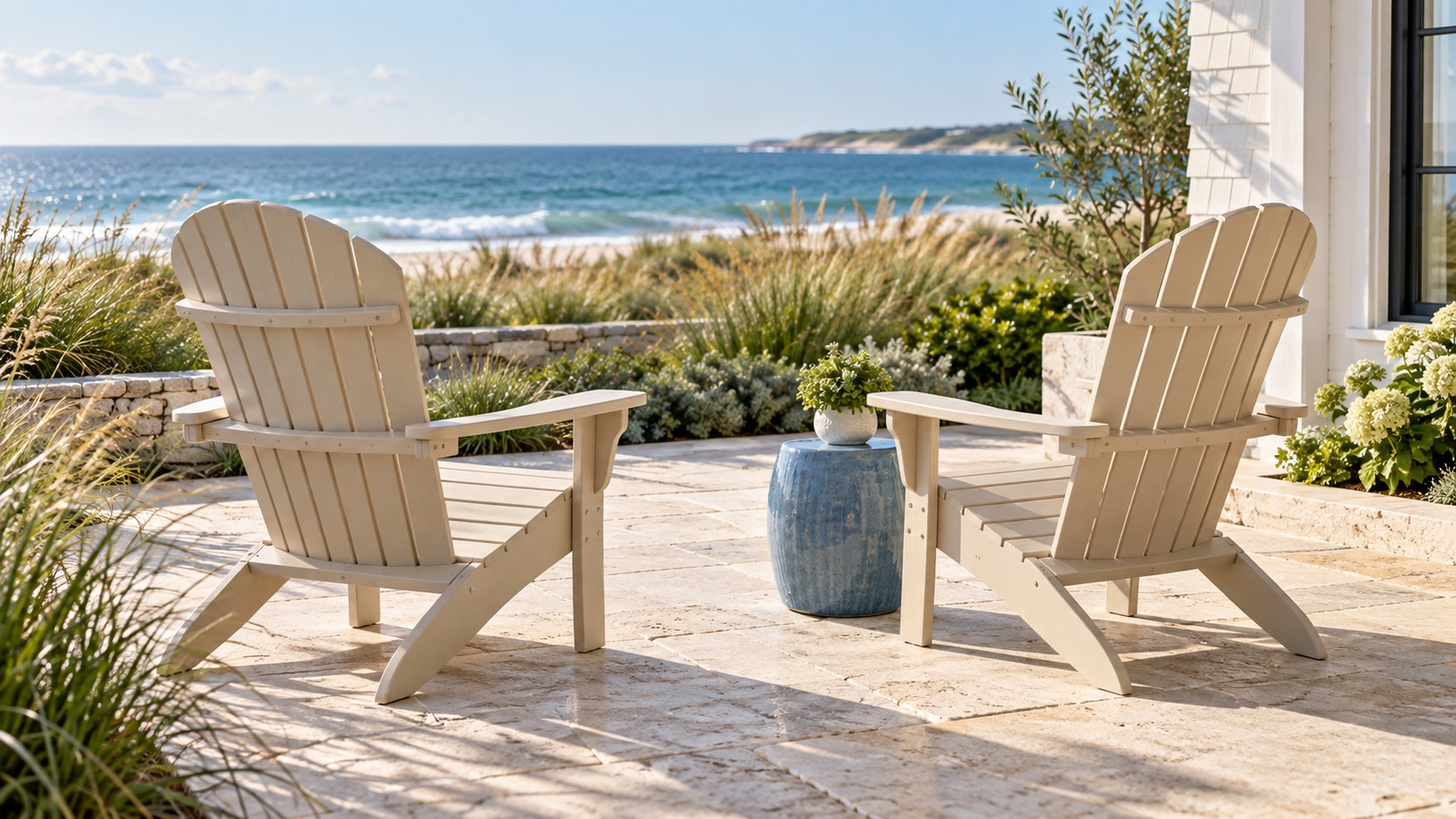
Keep the seated view useful. Angle a pair to allow conversation and look at the water without turning the arrangement into a barrier across the patio. Check access to doors and the routes people use with towels or drinks. A coastal look is most convincing when the furniture works comfortably in ordinary life. Try the arrangement at the time of day it will be used most often. A beautiful ocean-facing position can be less appealing when glare or exposure dominates the sitting experience. A modest rotation or a more sheltered location may produce a better everyday seat. The view should be one part of comfort rather than the only consideration.
Ask for Evidence Before Accepting a Readiness Claim
Request the material specification, hardware information, current care instructions, and warranty terms for the exact model. Ask how the maker addresses your described exposure and what routine the owner must provide. If the answer is only a general phrase such as built for outdoors, keep asking for details. Specific information makes competing chairs easier to compare. Record the answer alongside the model name so it can be checked later. If support refers you to a care sheet, read the whole relevant section rather than relying on a short summary. Pay attention to responsibilities that require regular presence at the property. A model whose instructions are clear can still be unsuitable if the household cannot perform the specified routine.
Check that those details describe the product being sold rather than another line or an older version. Keep the documentation with purchase records for future care and repairs. A well-supported choice can still require upkeep, but the obligations are clearer from the beginning. That clarity is part of coastal readiness.
Classic Adirondacks can offer a relaxed coastal welcome when their construction and care plan suit the site. UV resistance, hardware choices, and finish protection each contribute different pieces of the decision. Combine them with practical placement and weather handling, and the beach-house atmosphere can rest on a realistic ownership plan.