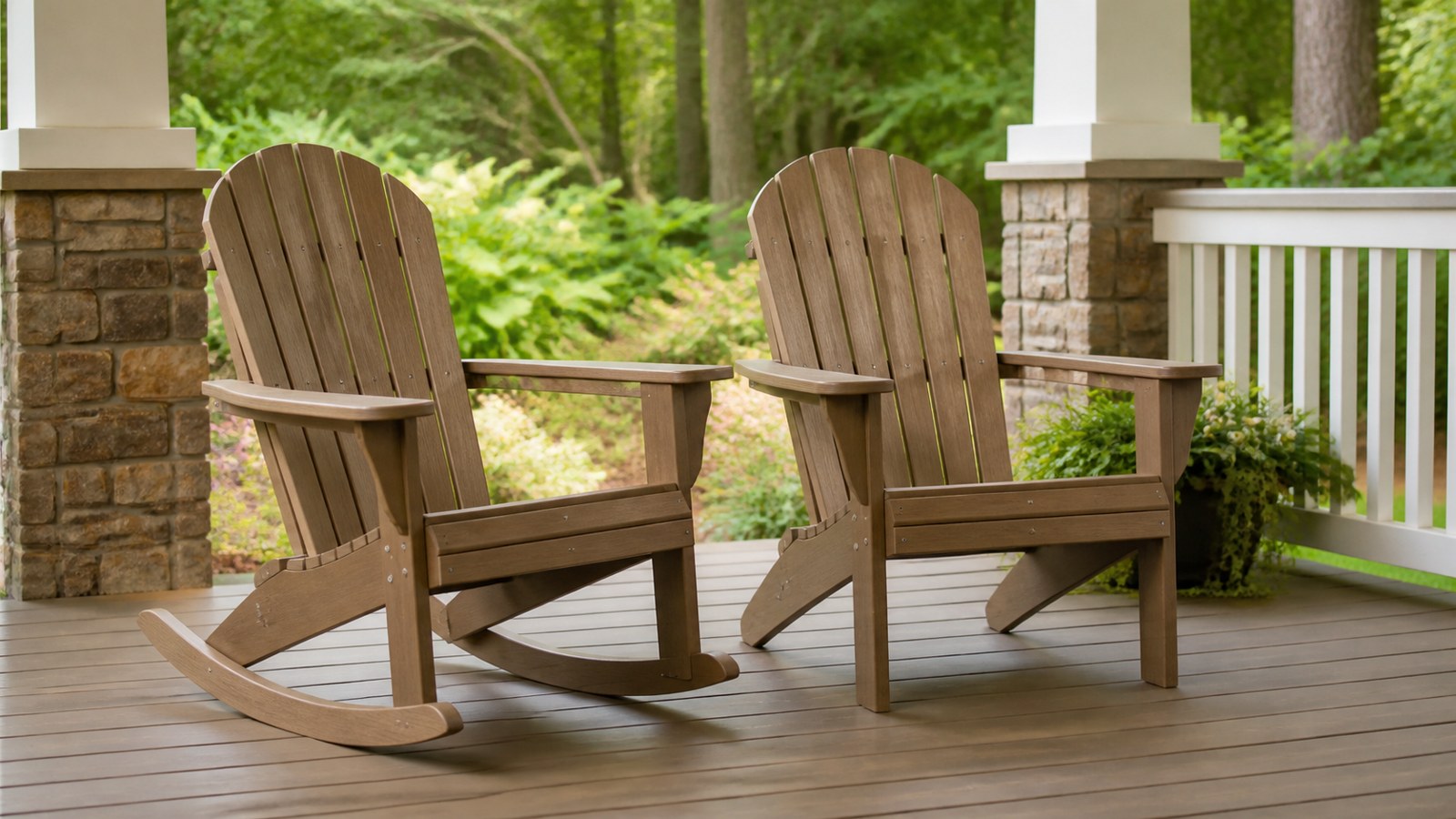
A Welcoming Porch Starts with a Usable Entrance
Adirondack chairs can give a front porch an immediate sense of welcome, but a successful arrangement does more than look good from the street. It leaves room for the door, the steps, deliveries, and the everyday movement of the household. It also gives someone a comfortable reason to linger outside. Those priorities work at a range of budgets because they begin with placement and scale rather than a long shopping list. A single well-positioned chair can improve a small porch more than a crowded matching set. Before comparing colors or accessories, measure the entrance area, consider who will use the seat, and identify what the porch already offers. The resulting plan will help you spend on changes that strengthen both appearance and daily use.
A: Yes. A useful chair with appropriate spacing can form a complete arrangement.
A: The usable floor, door swings, approach route, and full furniture dimensions.
A: No. Verify the actual width, depth, and clearance needed for use.
A: A related or deliberately contrasting color can work without an exact match.
A: Identify the layout and practical tasks before allocating funds to furniture and accessories.
A: No. Structural condition and appropriate repairs need separate assessment.
A: A well-sized table supports real use and helps the seat read as a coherent arrangement.
A: No. Actual exposure and the selected product's care guidance still matter.
A: After using the basic arrangement and identifying a clear need.
A: Use the entrance and the chair normally, then compare the close and street-side views.
Read the Porch as an Entrance First
The front porch carries several jobs at once. People pass through with bags, visitors wait near the door, and packages may temporarily occupy the floor. A seating arrangement should accommodate these activities without depending on constant repositioning. Watch how the household actually enters and leaves before deciding where a chair belongs.
Check the door swing and the space needed to operate it comfortably. Include screen doors and storm doors in the observation. Furniture that clears the main door but blocks an outward-opening secondary door creates an everyday conflict. A plan based on the complete entrance is more useful than one based on the porch’s overall width.
Steps and changes of level deserve the same attention. Keep the normal approach easy to see and use, and avoid placing a broad chair arm where someone naturally turns. Test the route while carrying something of ordinary size. This is a practical layout check, not a claim that a particular spacing automatically meets every applicable accessibility requirement.
One Chair Can Be a Complete Arrangement
A narrow porch does not need two Adirondacks to look intentional. One chair, a useful small table, and enough open floor can establish a clear place to sit. Choose the position so the chair relates to a window, railing, or architectural bay without interrupting entry. The empty space around it helps the arrangement read as considered rather than incomplete. It also makes routine cleaning and movement easier, which contributes to the porch’s appearance over time. A single-seat plan can be especially useful when the porch is a personal pause point rather than the household’s main entertaining area. Think about whether someone will read there, wait for a ride, or enjoy a brief conversation from the steps. These ordinary activities can justify a comfortable seat without requiring a second chair. The arrangement should explain its own purpose through placement and a usable resting surface.
Compare Footprint and Sitting Fit Separately
Adirondack arms and reclined backs can extend beyond what buyers expect from a simple front view. Use the model’s full dimensions and create a floor outline for the proposed position. Include any table or footrest you intend to use. The chair should fit when occupied and used normally, not only when pushed into a corner for a photograph.
Within that footprint, seat height and depth influence who will choose the chair. A comfortable lounge for one person may be difficult for another to leave. Try the actual model when possible and include regular porch users in the comparison. The seat that wins visually is not necessarily the seat that supports the household’s habits.
Think about duration as well. A brief conversation with a neighbor calls for a different experience from an hour of reading. Adirondacks can serve either purpose when the fit works, but the most reclined design is not automatically best. A front-porch arrangement benefits when furniture is selected around real activities.
Do not assume that a model described as compact will suit your entrance. Compact is a comparison word rather than a measurement. Verify the dimensions, the back’s projection, and the space required for movement. A full-size outline can reveal whether the advertised reduction is useful on your particular porch.
Make Color Respond to the House
Start with the house’s existing color relationships. Siding, trim, door, and roofing already create a palette, and furniture can either reinforce it or add a restrained contrast. A chair color does not have to match the front door exactly to belong. Its job is to make the seating area visible and connected to the entrance.
View samples in porch shade and from the street if possible. A dark blue may appear distinct at close range but merge into deep shadows at a distance. A light chair can stand out beautifully against a darker facade while showing dirt more readily. Decide which effect and care commitment fit your priorities. Color also interacts with the amount of visible furniture. Two strongly contrasting chairs occupy more visual attention than one, even when their dimensions are identical. If the facade already has several accents, a quieter chair color may make the entrance easier to read. Conversely, a simple house palette can give a single brighter chair room to become a focal point. Try to evaluate that relationship rather than selecting a shade in isolation. A sample held against the wall can offer a useful starting point, but the full-size layout remains part of the decision.
Set a Budget Around the Whole Job
A chair’s listed price is only part of a porch improvement. Delivery, assembly, cleaning materials, protective storage, and any needed companion table can affect the total. Record the tasks that remain after buying the chair before assigning all available funds to furniture. A modest purchase with room for practical finishing work can produce a more complete result.
If the budget is limited, begin with changes that clarify the space. Remove objects that no longer serve a purpose, clean the appropriate surfaces, and test a better layout with existing furniture. These steps help identify what actually needs replacing. They also reduce the chance of buying accessories to conceal a spacing problem.
When purchasing new furniture, compare the model’s care and support information alongside its price. A less expensive chair may suit light use well, while another model may offer features that justify a larger commitment for your situation. Avoid treating price as proof of longevity or comfort. The useful comparison is between complete ownership demands and the household’s needs.
Use Accessories to Support the Seat
A small table can make a front-porch chair more useful by providing a dependable resting place for a drink or book. Its height and location should permit a comfortable reach without placing it in the entry path. Choose a surface suited to the exposure and easy to keep tidy. A table that serves daily use can contribute more than several decorative objects.
A cushion may add color or adjust the sitting experience, but it also requires appropriate care and storage. Try it on the chair rather than selecting only by appearance. Padding changes effective seat depth and arm relationships. Removable soft goods should fit both the furniture and the household’s willingness to bring them in when needed.
Plants can frame the seating area without occupying every available corner. Place a pot where watering will not routinely soak furniture or create an inconvenient walking surface. Consider its mature spread as well as its current size. The porch should remain usable after the plant grows and after a delivery arrives.
Lighting affects whether the arrangement feels welcoming later in the day. Existing porch lighting may already do the necessary work once clutter is removed. If a lighting change is needed, assess it as a separate project with appropriate installation. Furniture styling should not obscure switches, fixtures, or the entrance’s ordinary function.
Consider Sound Used Furniture Carefully
A secondhand Adirondack can be a reasonable budget option when its condition is known and suitable. Examine the construction, movement in joints, damaged components, and the surface people will touch. An attractive photograph or a fresh coat of paint does not settle those questions. If the chair’s structural condition is uncertain, seek a qualified assessment rather than assuming a cosmetic project will make it ready.
Estimate the work before buying. Cleaning, repairs, transport, and finish preparation can turn a bargain into a substantial undertaking. Replacement parts may be difficult to identify when the model is unknown. Choose used furniture because the complete project makes sense, not because the initial price is the only visible cost.
Plan for the Porch’s Actual Weather
A roof does not always prevent wind-driven rain or afternoon sun from reaching chairs. Observe which parts of the porch receive exposure at different times. That information can affect material, finish, cushion, and placement decisions. Furniture near the outer edge may face a different assignment from a chair tucked closer to the house.
Follow care instructions for the selected model. Wood finishes, manufactured materials, and hardware have different requirements, and a universal cleaning recipe can create unnecessary damage. For wood, the Forest Products Laboratory’s finishing guidance provides background on appearance and protection. It does not replace the directions for the particular chair or establish that a covered porch requires no maintenance.
Build care into ordinary porch upkeep. Removing debris and inspecting condition while cleaning the entrance can make the routine easier to remember. Address a loose or damaged component before returning the seat to use. A tidy porch depends partly on keeping its main furniture sound and ready.
Judge Curb Appeal from Several Distances
Step back to the sidewalk or another safe viewing point once the proposed layout is marked. Look at how the chair relates to the door, steps, and windows. Then return to the porch and assess the sitting experience. A design that works from both distances has a better chance of feeling welcoming rather than merely decorative.
Photos can help compare two placements, but ordinary use should remain the final test. Open the doors, walk the approach, sit down, and reach for the planned table. If one arrangement looks slightly more symmetrical but makes entry awkward, reconsider the visual priority. Curb appeal should support the home’s welcome. Ask another regular user to try the approach and the seat. A different height, reach, or carrying habit may expose a conflict you missed. That feedback is particularly useful before ordering a second chair or committing to a companion table.
Spend in Stages and Keep the Useful Parts
A porch can improve through several small decisions rather than one complete makeover. Begin with an appropriate chair and a clear route, then see what the arrangement needs after actual use. A table or cushion may earn its place quickly, while other additions may prove unnecessary. Staged spending leaves room to respond to experience.
Keep pieces that work even when you refresh the color scheme later. A sound chair with suitable dimensions can remain useful through changes in plants, accessories, or exterior paint. Review its condition and care needs before deciding whether refinishing or replacement is appropriate. Reuse should be based on suitability rather than sentiment alone.
Adirondack chairs improve front-porch curb appeal when they create an inviting, usable place at the entrance. Scale, placement, and a coherent color choice do much of the work. A realistic budget then supports the arrangement’s comfort and upkeep, giving the household a welcome that lasts beyond the first photograph.