Rustic Seating with a Clear Sense of Place
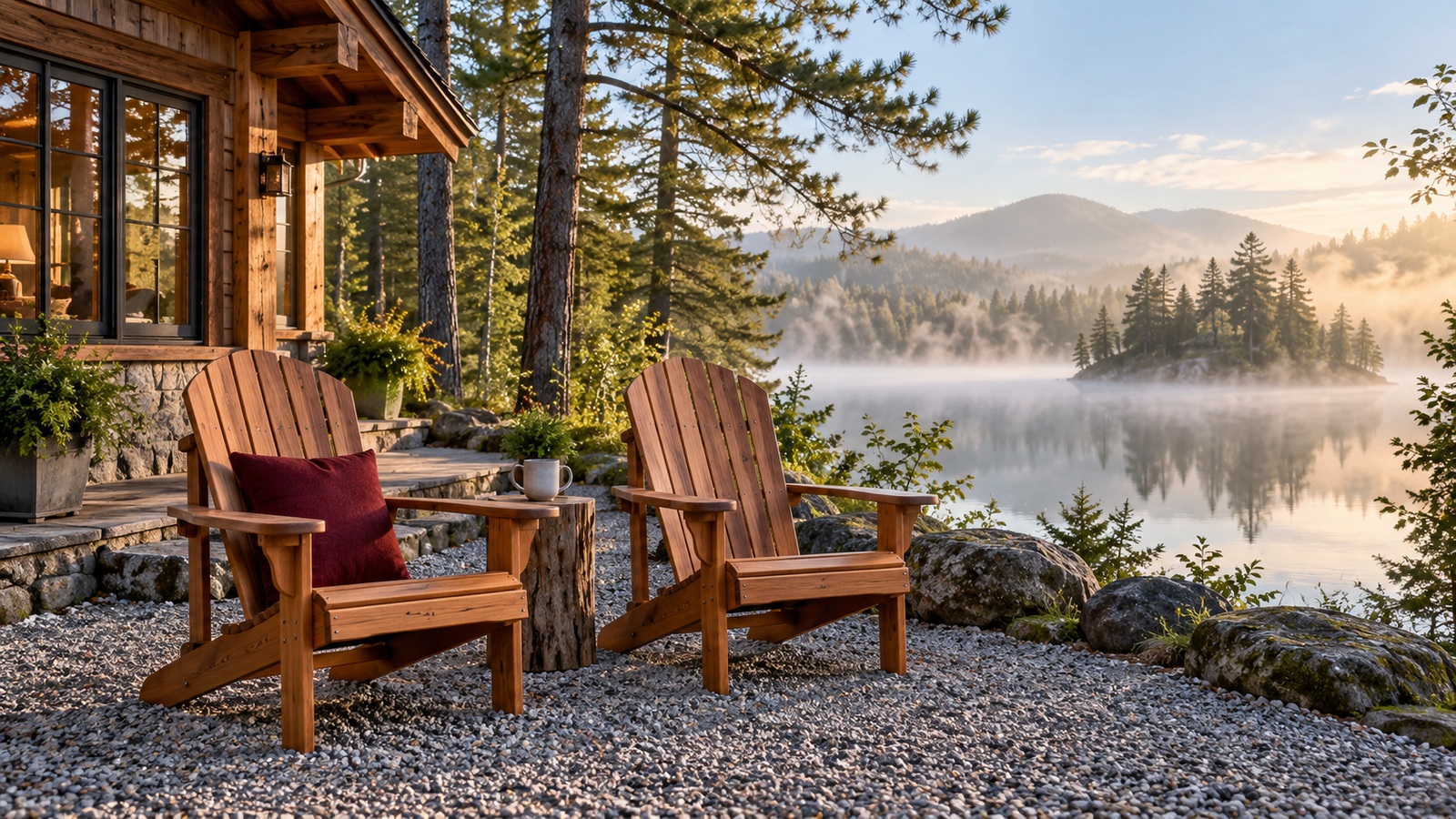
A cabin or lake house already has strong visual ingredients: timber walls, a changing shoreline, stone paths, and the colors of nearby trees. Classic Adirondack chairs work best when they respond to those ingredients instead of competing with every one of them. Their broad arms and recognizable backs can make a porch feel ready for a slow morning, while a considered material or color gives the arrangement enough presence to be noticed from the house. A rustic pick that pops does not need elaborate decoration. It needs a useful location, proportions that fit the porch, and a clear relationship to the building and landscape. Start with those decisions, then choose whether natural wood, a painted accent, or a quieter manufactured material will carry the character of the seating area.
A: No. Natural finishes, painted wood, and suitable manufactured materials can all work in a considered arrangement.
A: Try a lighter surface or a restrained painted contrast and judge it at the actual porch.
A: Check the view from the seated position as well as from indoors.
A: Full-size outlines reveal circulation conflicts that a catalog scene can hide.
A: No. Shelter, rain, debris, and handling conditions differ among locations.
A: Give it a clear role and avoid repeating it across every object.
A: No. Surface character does not verify structural condition.
A: Start with pieces that support real use and add others after checking the layout.
A: Condition, cleaning guidance, storage access, and any repair needed before the next visit.
A: Yes. Related proportions or colors can connect seats chosen for different users.
Let the Cabin Supply the First Clues
Look at the building before comparing chair finishes. A dark-stained cabin offers a different backdrop from pale cedar siding or a painted lake cottage. Roof trim, porch rails, and masonry can suggest a supporting color without requiring an exact match. The furniture should appear related to the property while remaining legible as a place to sit.
Consider the view from indoors as well. Chairs often form part of the scene through a living-room window, even when nobody is using them. A pair that looks balanced from the path may block the most useful sightline from the house. Check both perspectives before deciding which direction the backs should face.
Choose the Rustic Character You Want to Keep
Natural wood can connect the furniture to a timber building through visible grain and a warm surface. That relationship is strongest when the wood’s appearance suits the setting rather than merely sharing the same material category. A lightly finished chair can contrast pleasantly with dark logs, while a darker finish may settle into a pale porch without disappearing.
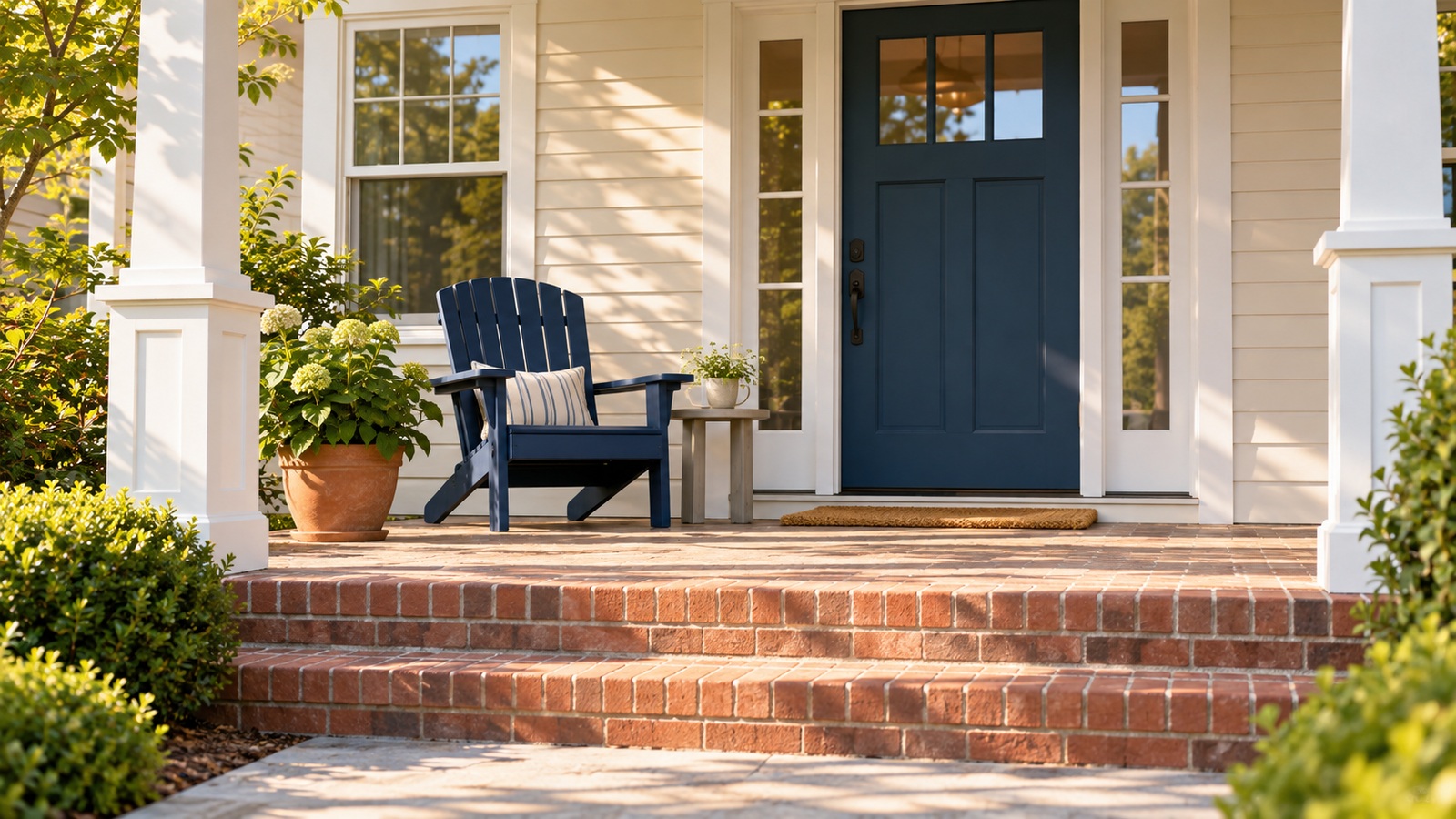
Paint creates a different kind of rustic character. Deep red, muted green, or an earthy blue can make a small seating group stand out against familiar cabin materials. Use the color intentionally and give it room to read. Repeating an accent in one nearby accessory may be enough; scattering it across every object can make the scene feel busy.
Manufactured outdoor materials can also belong at a cabin. Their appeal may be a consistent color and a care routine that suits occasional visits. Assess the actual model’s texture, construction, and instructions instead of assuming that every plastic-lumber chair looks or behaves alike. A convincing arrangement comes from the whole composition rather than a rule that rustic furniture must be wood.
Decide how much visible change you welcome over time. Some owners enjoy a finish that gradually acquires character, while others want a more consistent appearance. Neither preference excuses neglect of structural condition. Choose a material and finish whose upkeep agrees with the way the property is occupied.
Scale the Chairs to the Porch, Not the Photograph
A generous Adirondack can seem modest against a wide lake view but occupy substantial floor space. Measure the usable porch after accounting for door swings, steps, and the path people follow with bags or groceries. Include the chair’s rearward projection and any footrest. A layout that works only when every accessory is tucked away will become frustrating during ordinary visits.
Use full-size outlines on the floor to test placement. Temporary tape or movable objects can show how two chairs and a side table affect circulation. Try the route from the house to the water while the outlines are in place. This exercise often resolves a choice between one spacious seating pair and a larger, cramped group.
Seat dimensions matter separately from the furniture footprint. A low, deep chair may appeal to someone who wants a long lounge, while another regular user prefers an easier transition to standing. Try different heights and contours when possible. A cabin seat should invite the people who actually visit, not merely satisfy the visual plan.
Frame the Lake Without Blocking It
The lake can serve as the arrangement’s main focal point, so keep the furniture’s role clear. Angle chairs enough to allow conversation while preserving a comfortable view of the water. Check what railings, shrubs, and nearby structures hide from the seated position, not just from standing height. If the best-looking location produces a poor seated view, a modest shift may improve both comfort and composition. A chair’s back does not have to face the house squarely for the group to look organized. Imagine a regular visitor arriving with a book and choosing between the two seats. Both should offer a worthwhile experience rather than leaving one facing an obstacle. Where the view changes with the season, check whether growing shrubs or leaves will alter it. A flexible arrangement can make a small adjustment without requiring the entire porch to be reorganized. This gives the seating area room to respond to the landscape while retaining its clear purpose. Practical observation can preserve the atmosphere better than insisting on a fixed symmetrical layout.
Use One Accent to Give the Group Presence
A simple pair of chairs can gain definition from a deliberate accent. One painted chair among natural wood, a restrained cushion color, or a small side table with a contrasting tone can establish a visual center. The accent should be visible enough to do a job without requiring several supporting decorations. Rustic settings often benefit from restraint because their surrounding textures are already varied.
Check the accent under the site’s changing light. A color that appears rich beneath a store’s lighting may look very different in bright lake reflections or deep porch shade. If samples are available, view them against the cabin and the landscape. The point is not to find a color that looks identical all day, but one whose changes you enjoy.
Separate Lakeside Atmosphere from Difficult Exposure
Being near a lake does not give every porch the same conditions. One seating area may stay dry beneath a roof, while another receives wind-driven rain and damp debris. Notice the actual exposure of the proposed location. Choose materials and a care plan with that location in mind rather than relying on the general idea of lake-house furniture.
Leaves and needles can collect between slats and around connections. Regular removal helps keep the furniture available and makes inspection easier. Use cleaning methods approved for the chair’s material and finish. A household that visits only occasionally should choose a routine it can carry out at arrival and departure without turning every weekend into a maintenance project.
For wooden chairs, the Forest Products Laboratory’s wood-finishing guidance offers background on surface protection and appearance. Product instructions remain important because construction and finish systems vary. A picturesque weathered surface does not establish that the chair’s joints are sound. Inspect condition before treating visible aging as part of the rustic look.
Think Through Arrival, Departure, and Storage
A seasonal property has a furniture routine even if nobody has written it down. Someone carries cushions out, moves chairs for cleaning, and decides what remains exposed between visits. Identify that work before choosing heavy or bulky models. The right purchase can make the routine manageable; an awkward route to storage can make it easy to postpone.
Measure gates and doorways along the storage path. A chair may fit on the porch yet be difficult to move through a narrow shed entrance. Consider whether the same person will handle it alone and whether the route includes steps. Folding designs change the shape of the task, but they still need model-specific handling and inspection.
Keep removable soft goods in a suitable dry place when they are not needed. A cushion that repeatedly arrives damp can make a sound chair less inviting. Storage should protect accessories without trapping moisture in a tightly packed pile. The goal is to arrive to a seating area that can become useful with little preparation.
End-of-season inspection is also a good time to collect the chair’s documents and record any problem requiring attention. A loose connection should not be forgotten until the first sunny weekend of the next year. Plan repairs while the furniture is out of service. That makes reopening the property more predictable.
Build Around Real Cabin Habits
Some cabins are places for quiet reading, while others host large family gatherings. Adirondack seating should support those habits instead of assuming every lake visit looks the same. A pair near the porch door might serve morning coffee, while additional seats belong in a separate conversation area. Keeping these purposes distinct can improve circulation and prevent one arrangement from trying to do everything.
Include a useful resting surface where people naturally need one. Wide chair arms can be convenient, but they do not make every drink or book secure in every situation. A small table between two chairs can do more for daily comfort than several purely decorative objects. Choose a stable piece that fits the available space and outdoor exposure.
Avoid Buying a Complete Theme at Once
Cabin furniture collections can tempt owners to purchase a fully coordinated scene. Before doing so, ask which pieces have an immediate purpose. Chairs, a table, footrests, and decorative extras each consume room and add upkeep. A smaller arrangement can establish the right scale and leave space for the property’s habits to guide later additions.
Existing objects may already provide useful character. A sound side table, a familiar blanket stored indoors, or the porch’s own timber texture can make new chairs feel settled. There is no need to imitate age with unsafe repairs or rough surfaces. A rustic setting should still be pleasant to touch and dependable to use.
If you add more seating later, matching every detail is optional. Similar proportions or a shared accent can connect different models while accommodating different users. This approach allows the layout to evolve without making the original pair obsolete. It also gives comfort a place alongside appearance in the buying decision.
Make the Rustic Pick a Working Part of the Property
The best classic Adirondack arrangement remains appealing when the cushions are put away and the chairs are empty. Its scale suits the porch, its material agrees with the building, and its placement helps people enjoy the setting. Those qualities give an accent color or wood finish a clear purpose. They also make the group easier to maintain because the basic layout does not depend on constant styling. Before ordering, review the decision from the perspective of a normal arrival at the cabin. Think about unloading, walking to the door, sitting with a drink, and putting things away before leaving. A chair that supports that sequence earns its place. Rustic appeal then becomes part of a useful outdoor experience rather than a separate decorating exercise.
Classic Adirondack chairs can pop through a strong silhouette, a thoughtful contrast, and a well-chosen view. Let the cabin and lake provide most of the atmosphere. With practical fit and a realistic care routine, the furniture can offer a recognizable welcome through many visits.