Make the Attractive Seat the One People Choose
A chair can look perfect in the garden and still be the last seat anyone uses. Its color may suit the planting, its back may echo the architecture, and its proportions may photograph beautifully, yet a too-deep seat or awkward location can undermine the invitation. Adirondack chairs bring relaxation and aesthetic appeal together most successfully when those choices are made as one decision. The way the chair supports a sitter should agree with the way it occupies the space. Its materials should suit both the visual character of the setting and the care the owner can provide. Its position should offer a reason to stay without making the approach difficult. Looking at these relationships together turns style into something more useful than a finishing touch. It helps create outdoor seating that feels considered from across the garden and remains comfortable once someone settles into it.
A: Define the activity and body fit, then choose a visual treatment that supports the same setting.
A: Their proportions and relationship to the rest of the frame matter more than width alone.
A: No. The underlying dimensions may be unsuitable, and padding can change fit in other ways.
A: No. Scale, placement, and useful relationships between the pieces also matter.
A: Mark its complete footprint and inspect the area from the house and the normal approach.
A: Yes. Surface quality, proportions, finish, and placement can create refinement in different materials.
A: Cushions, tables, and footrests change the actual sitting position and surrounding space.
A: Its direction should serve the sitter's outlook and normal light conditions.
A: When it adds crowding or preparation work without supporting a real use.
A: The chair looks appropriate in the place and is repeatedly chosen because it works comfortably.
Define the Experience Before the Appearance
Begin by identifying what the chair should make possible. Quiet reading, relaxed conversation, and watching a garden require different relationships with light, nearby surfaces, and other seats. A reclined chair beside a table intended for close dining may be visually appealing while serving the activity poorly. Choosing an experience gives the design decisions a clear purpose. It also reduces the temptation to buy furniture simply because its photograph resembles a preferred setting.
Think about who will use the seat and for how long. A household with several regular users may need more than one set of proportions. Someone sitting briefly after gardening may have different preferences from a person reading for a longer period. These differences are not failures of taste. They are useful information about what the furniture needs to do before color and decorative details settle the choice.
Proportions Have Both Physical and Visual Effects
Seat height, depth, and back angle influence the sitting experience and the chair’s appearance. A low seat can emphasize the lounge character, while a somewhat higher model can communicate a more upright presence. A deeper recline may look especially relaxed but fit some sitters less comfortably. Compare the exact dimensions and test the actual position where possible. A familiar Adirondack outline does not establish identical fit across manufacturers.
The arms are part of the same relationship. Their breadth gives many versions a substantial silhouette and a generous resting surface, but it also increases overall width. A narrower interpretation may suit a small seating pocket without losing the features you value. Judge it by the way your arms rest and by its actual footprint. Space savings are useful when they preserve a sitting experience the household will enjoy.
Back treatment can alter the character while leaving the general form recognizable. A fan-shaped crown, a straight top, or a restrained contour can connect the chair with different architecture. Those visual choices should be read alongside the support the back provides. A striking outline is not enough if an individual slat presses awkwardly against the sitter. The finished chair should make sense from the side, from the front, and from the seat itself.
Use Scale to Connect Furniture with Its Setting
A chair’s visual weight depends partly on what surrounds it. Broad arms can look appropriate beside substantial timber posts but dominate a narrow porch bay. A slender contemporary interpretation can relate to a restrained deck without necessarily using less ground area. View the proposed furniture within the actual boundaries of the space. Physical dimensions and visual scale are different observations, and both belong in the decision.
Try a marked outline before buying, especially when several pieces will share the area. Include space for the sitter’s legs and normal standing movement. Then look at the area from the house and the garden. This simple comparison reveals whether the furniture has room to belong visually as well as physically. An arrangement can fit neatly on a sketch and still feel crowded from the route people actually use.
Accessories can change the scale of the scene. A large table or an ottoman may make a single seat read as a much bigger grouping. If the chair already supplies the visual focal point, nearby objects can stay quieter. Give each piece a useful role rather than choosing everything at the same level of prominence. A coherent arrangement usually benefits from a clear hierarchy.
That hierarchy need not be formal. A chair can be the main object while planting, a wall, or a view supplies the setting around it. Another space may put the landscape first and use seating as a calmer supporting element. Decide which relationship suits the place. The choice helps prevent a collection of individually attractive pieces from competing for the same attention.
Color Works through Relationships
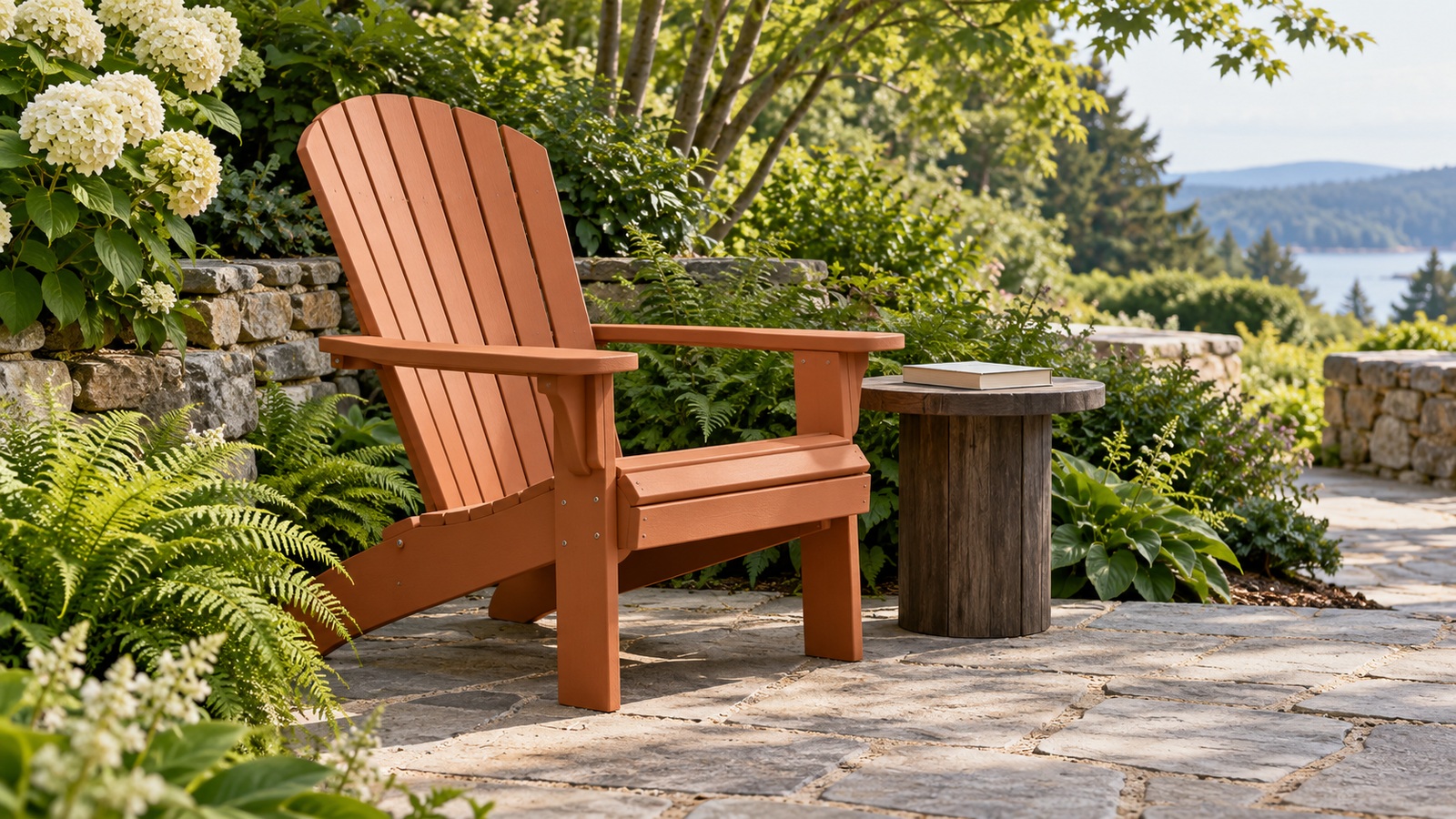
Choose a chair color in relation to the building, paving, planting, and light around it. A garden green can connect with foliage, a warm painted tone can stand apart from it, and a neutral surface can let the form carry more of the identity. None of those strategies is automatically better. The useful test is whether the chair’s color supports the experience and visual emphasis you want in that particular location.
Material Character Should Survive Ordinary Use
Wood offers grain and variation, while synthetic surfaces can produce a more uniform appearance. Metal brings different textures and construction possibilities. These qualities influence style, but they do not independently establish durability or care requirements. Examine the specific product’s construction and instructions. A natural-looking surface and a smooth uniform one can each be handled well or poorly.
Weathering should be considered before the initial appearance becomes the whole expectation. The Forest Products Laboratory’s guidance on finishing wood treats appearance, protection, cleaning, wood properties, and service life as related finish considerations. For an owner, the practical lesson is to choose a finish with a realistic maintenance plan. The visual character needs a workable route through exposure and care rather than a hope that the first-day appearance will remain unchanged.
Inspect the surfaces people touch. Smooth arm edges, well-prepared slat ends, and clean transitions can make a simple chair feel refined. Roughness or poorly seated hardware can interrupt that experience even when the furniture looks attractive from a distance. This is where appearance and relaxation meet directly. Quality in the contact areas turns the visible invitation into something pleasant to use.
Placement Gives the Chair Its Meaning
An outdoor seat becomes more intentional when it faces a worthwhile outlook. That may be a planting bed, an open landscape, or another chair arranged for conversation. The direction should agree with the intended activity. A chair facing a busy service route can look perfectly styled while feeling unsettled. Observing the place through normal use is more informative than choosing the orientation solely from a photograph.
Clear access also influences the appearance. Furniture with enough approach space often looks more composed because its role is easy to understand. Preserve the route to the house and avoid forcing people to turn sideways between broad arms. The chair should feel placed rather than parked. A practical approach contributes to both the physical comfort and the visual order of the setting.
Comfort Accessories Need to Belong
A cushion can soften contact or alter fit, but it should be appropriate to the chair and the user’s needs. Test the sitting position with the accessory in place rather than judging the bare seat alone. A thick pad may change arm height relative to the body or reduce usable seat depth. Follow the cushion’s care instructions and plan storage where needed. An attractive textile should support comfort without creating an impractical routine.
A table can supply a stable place for objects when the arms do not. Compare its height with the actual sitting position and check the reach. A surface selected only for its decorative shape may be awkward from a recline. Conversely, a well-sized table can improve the experience while giving the scene a purposeful second object. Useful relationships between pieces often create more coherence than matching finishes alone.
Ottomans add another kind of support and another footprint. Decide whether the intended activity warrants that extra space. Where an entrance or walking route lies nearby, a movable accessory needs a sensible place to go between uses. Avoid treating every companion piece in a product photograph as essential. The most successful grouping includes what the activity needs and leaves room around it.
Let Lighting and Shade Inform the Arrangement
Natural light changes both the appearance of a finish and the comfort of the sitter. A color may seem quieter under a porch roof than in open sunlight. A seat positioned for an evening view may be uncomfortable during the morning hours when the household actually uses it. Visit the proposed location at those times. The furniture should suit the real conditions that surround its everyday use.
Shade, exposure, and the movement of air can make a less obvious location more appealing. It is reasonable to choose the comfortable spot over the most dramatic backdrop. Adjust the orientation where possible and follow the furniture’s placement requirements. A coherent design can respond to the site instead of demanding that the site behave like a staged image. That responsiveness is part of aesthetic success.
Avoid Decorating around an Unresolved Problem
If a chair is uncomfortable, more cushions and decor may not solve the underlying proportions. Identify the issue first: seat depth, back contact, arm reach, or access. Some adjustments can help, while others indicate that a different model would be more suitable. The decision should follow the person’s experience rather than a desire to retain a complete visual suite. Useful design makes room for honest feedback.
The same applies to placement. A crowded corner may need fewer objects instead of smaller decorative additions. An awkward table may need to move rather than acquire a better centerpiece. Make one change and observe its effect during ordinary sitting. This approach keeps the setting understandable and prevents layers of accessories from concealing a problem that remains underneath.
Maintenance problems should be addressed directly as well. Wobble, damaged edges, and worn joints are not styling opportunities. Follow the manufacturer’s inspection and repair guidance, and keep compromised furniture out of use until its condition is understood. Dependability supports the feeling of relaxation. A chair cannot convincingly invite someone to settle in if its behavior asks them to remain cautious.
A Coherent Chair Is an Everyday Choice
Bring the decision back to the activity, the sitter, and the setting. Suitable proportions, pleasant contact surfaces, manageable care, and a clear purpose make the chair comfortable to choose repeatedly. Color and form then strengthen an arrangement whose practical foundation already works. The result can be restrained, traditional, or expressive without sacrificing usefulness. Aesthetic appeal does not require one fixed style.
Adirondack chairs combine relaxation and appearance most convincingly when their visual promise is supported by actual use. Someone can approach, sit comfortably, reach what they need, and enjoy the direction the chair faces. The garden benefits from an object that belongs there, and the household gains a seat that earns its place. Those two outcomes arise from the same thoughtful decisions rather than from separate acts of buying for comfort and decorating for effect.