
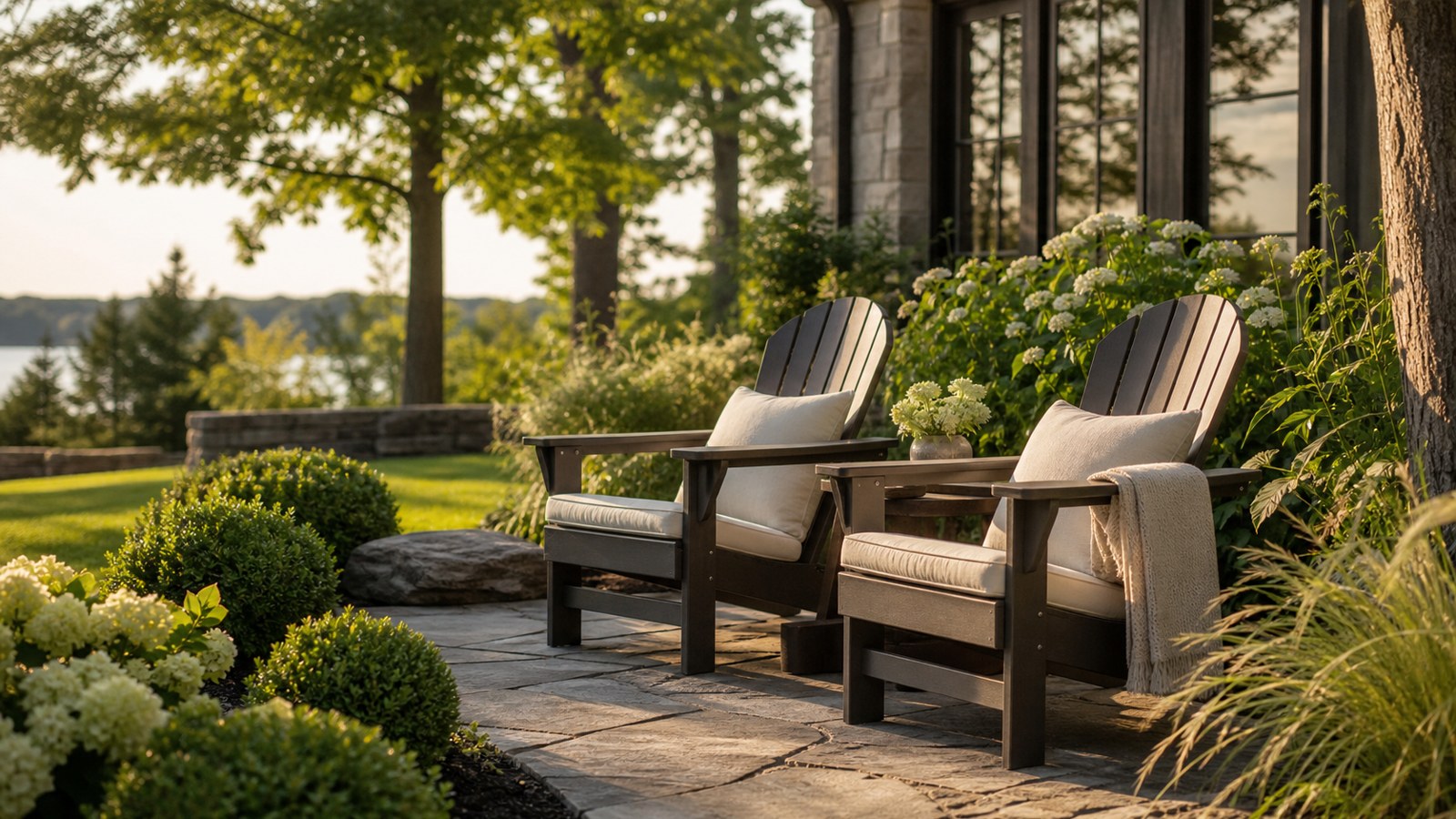
Elegance That Still Feels Relaxed
Adirondack chairs make a strong outdoor style statement because they combine recognizable comfort with architectural presence. Their broad arms, angled backs, and sculptural silhouettes look deliberate even in casual settings, which is why they can elevate a porch, terrace, lawn, or lakeside deck without making the space feel formal. Outdoor elegance is not the same as indoor polish. It depends on proportion, placement, material, color, and restraint. A well-chosen Adirondack chair can make a garden feel composed, a deck feel finished, and a view feel framed. The chair’s charm is that it suggests leisure while still giving the landscape a designed focal point. That balance is what makes it feel polished without losing the easy spirit people expect outside in daily use. It is graceful because it remains useful.
A: Yes, when proportion, color, placement, and upkeep are handled with restraint.
A: White, charcoal, forest green, muted blue, and natural wood often look refined when they suit the house.
A: They can, if they are tailored, weather-safe, and not so bulky that they hide the chair's shape.
A: Matching helps formal spaces, while coordinated variations can work in layered gardens.
A: High-quality versions can be, especially when the finish is matte and the profile is clean.
A: Two well-placed chairs can be stronger than a crowded group.
A: Clear sightlines, space around the furniture, and a reason for the chairs to face their direction.
A: They can when repeated in the landscape or architecture and used sparingly.
A: Faded surfaces, visible grime, crowded layouts, and accessories with no purpose.
A: No. It comes from how furniture, landscape, maintenance, and comfort work together.
What Makes an Adirondack Chair Feel Elegant
Elegance begins with proportion. A chair with balanced arms, a clean back angle, and a seat that does not look either cramped or oversized will usually feel more refined than one relying on decoration. Adirondack chairs already have a dramatic profile, so the strongest versions let the silhouette carry the style. The goal is not to make the chair ornate; it is to make the familiar form look intentional.
Material changes the impression quickly. Smooth painted wood can feel cottage-classic, recycled plastic can feel crisp and low-maintenance, and natural wood can feel warm and quietly luxurious. None of those choices is automatically elegant. The finish, setting, and surrounding details decide whether the chair looks considered or merely convenient.
The most elegant Adirondack settings also leave breathing room. Crowding too many chairs together weakens the effect. A pair angled toward a garden, a quiet group around a fire feature, or a single chair at the edge of a terrace can feel more composed than a row of seats pressed against a wall.
Color as a Design Signal
Color is often the first thing people notice. White chairs can brighten a porch and connect to trim, railings, or coastal architecture. Deep green can settle into a wooded landscape. Black can look graphic and modern against pale stone or light siding. Soft blue, muted red, and weathered gray can each create elegance when they relate to the house and garden rather than competing with them.
The mistake is choosing color in isolation. Adirondack chairs occupy enough visual space that their color becomes part of the outdoor palette. Before choosing a shade, look at roof tones, siding, masonry, planters, cushions, umbrellas, and nearby plants. A color that repeats or calmly contrasts with those elements will feel more elegant than one that demands constant attention.
Placement That Frames the View
Outdoor elegance often comes from alignment. Adirondack chairs should appear to know why they are where they are. If the best feature is a garden border, angle the chairs toward it. If the property has a lake, leave room for the water to remain the star. If the chairs sit near a fire pit, give the circle enough space to look relaxed rather than squeezed.
Sightlines matter from inside the house as well. A chair visible through French doors or a kitchen window becomes part of the interior view. That is a quiet opportunity. A well-placed chair can make the outdoors feel curated from inside, while a scattered chair can make the same area feel unfinished.
Small shifts matter. Moving a chair six feet toward shade, rotating it slightly away from a wall, or adding a low table can turn an ordinary seating spot into a place with purpose.
Materials, Cushions, and Accessories
Elegant outdoor rooms rarely depend on furniture alone. Cushions, pillows, side tables, planters, lanterns, and throws can all support the Adirondack chair’s presence. The key is editing. A cushion should improve comfort without hiding the chair’s lines. A side table should feel useful without becoming a clutter magnet. Accessories should make the setting more livable, not more complicated.
Texture is useful here. Smooth arms beside rough stone, painted slats near leafy planting, or natural wood against woven outdoor fabric can give a space depth. Because the Adirondack form is bold, surrounding textures should support it instead of fighting for attention.
Keeping Elegance Practical
Outdoor elegance has to survive weather. A chair that looks beautiful for one photo but stains, fades, wobbles, or traps water will not feel elegant for long. Durable hardware, washable finishes, smooth edges, and realistic storage plans are part of the style decision. Good maintenance is not separate from beauty; it is what lets beauty remain believable outdoors.
Seasonal care also protects the statement. Wash chairs before peak use, check surfaces guests touch, and refresh paint or oil before wear becomes obvious. When the chair looks cared for, the whole outdoor area feels more graceful.
Practical choices can even enhance the elegance. A heavier chair may sit more confidently on a terrace. A slightly taller version may welcome more guests. A muted high-performance material may preserve the visual mood better than a fragile traditional finish that fails halfway through the season.
Designing With Restraint
The Adirondack chair is already expressive, so restraint is usually the safest design instinct. Let the chair face something worth seeing. Let the color relate to the architecture. Let negative space remain around the arrangement. A composed outdoor setting feels elegant because every element seems to have been invited there for a reason.
This restraint does not mean the space must be plain. Flowers, patterned cushions, lanterns, and layered planting can all belong. The difference is that they should support the chair’s role rather than bury it. When the composition works, the chair becomes both a place to sit and a visual punctuation mark in the landscape.
Where the Statement Works Best
Adirondack chairs make especially strong statements on porches, terraces, lakefront lawns, pool edges, garden paths, and fire-pit areas. These are places where people naturally pause and where the chair’s profile can be seen clearly. In tiny or cluttered spaces, the same chair may still work, but the placement must be more disciplined.
A single chair can be enough in a narrow garden corner. Two chairs can create a conversational destination on a porch. Four chairs can define a fire area. The right number depends on the scale of the space and the kind of gathering the owner wants to encourage.
The chair’s statement is strongest when it matches the promise of the setting. A refined home can use Adirondack chairs to show warmth. A rustic property can use them to show care. A modern deck can use them to soften clean lines. In each case, elegance comes from fit, not fuss.
The same principle applies to transitional spaces. A chair near a side gate, pool path, or kitchen door can look elegant if it gives that threshold a reason to exist. When the seat feels useful and visually settled, even a modest corner gains presence.
Reading the House Before Choosing the Chair
A refined Adirondack setup starts by reading the house. The roofline, trim, siding texture, porch depth, and garden style all give clues about what kind of chair will feel natural. A crisp modern home may need a cleaner profile and restrained color. A cottage may welcome painted wood, softer cushions, and a more nostalgic palette. A lodge setting may call for heavier proportions and earthier finishes.
This does not mean the chair has to disappear. Contrast can be elegant when it is controlled. A black chair on a pale stone terrace, a white chair against deep evergreens, or a natural wood chair near a dark exterior can all create a strong statement. The difference is that the contrast feels related to the setting rather than dropped onto it.
Scale should be judged from several viewpoints. The chair may look perfect from the patio but too bulky from an interior window, or it may look charming alone but crowded once paired with tables and planters. Elegant choices hold up from the angles people actually see every day.
The Role of Negative Space
Negative space is one of the simplest ways to make Adirondack chairs feel more elevated. Because the chair has a wide stance and strong silhouette, empty space around it helps the shape read clearly. That breathing room also makes the seating feel more generous. Guests sense that they are being invited to occupy a place, not squeeze into one.
This matters especially on terraces and porches where furniture can accumulate quickly. A pair of chairs, a small table, and one planter may create more elegance than six chairs, three tables, and too many accessories. Editing the setting allows the chair’s form to do its work.
Negative space also improves movement. People can step around the arms, turn toward conversation, or carry drinks without brushing against every object nearby. Graceful outdoor rooms feel easy in motion as well as still in photographs.
The strongest arrangements often look slightly underfilled at first. Over time, that restraint proves useful because the space can absorb guests, blankets, trays, or seasonal plants without losing its composure.
Elegance for Everyday Living
A chair can look elegant and still be part of ordinary life. In fact, the best outdoor elegance usually becomes more convincing when the chair is used. A book on the arm, a folded towel nearby, or a pair of sandals beside the deck can make the setting feel inhabited rather than staged.
The trick is keeping everyday use from becoming visual noise. Storage for cushions, a place for drinks, and a simple cleaning routine all help the chair remain graceful through real use. Elegance outdoors is not fragility; it is order that can handle weather, guests, and repetition.
Choosing a Statement That Lasts
Trends can be tempting, but Adirondack chairs already have a long visual life. A statement that lasts usually depends on good proportions and honest materials more than novelty. If the chair looks balanced, feels comfortable, and belongs to the setting, it will continue to feel relevant after seasonal colors and accessories change.
Long-term elegance also comes from repairability. Touch-up paint, replaceable hardware, washable surfaces, and practical storage help the chair age with dignity. A beautiful chair that cannot be maintained eventually loses the very quality it was chosen to create.
The best statement is confident but not loud. It lets the outdoor space feel finished, gives guests a clear place to settle, and preserves the relaxed spirit that makes Adirondack chairs beloved in the first place.
The Lasting Impression
An elegant Adirondack chair arrangement does more than decorate. It tells people where to rest, how to look at the view, and what kind of outdoor life the home supports. That makes it powerful in a quiet way. It also gives owners a durable design language they can repeat across seasons without reinventing the entire patio.
The best setups feel inevitable. The chair seems to belong to the garden, the porch, or the water’s edge. Guests may not analyze the placement, but they feel the invitation immediately, and that feeling is the real statement.


