Polywood Mistakes Usually Start With Assumptions
The Top Mistakes People Make With Polywood Adirondack Chairs is about making a focused Adirondack chair choice that still feels easy and natural outdoors. The familiar sloped seat and broad arms do a lot of work, but Polywood Adirondack chair mistakes changes what has to be judged before buying. The chair has to handle heat, fading expectations, hardware, cleaning habits, weight, placement, and product comparison, and it has to do that without turning the patio, deck, pool edge, or porch into a maintenance project. That is why the smartest choice comes from looking past the first appealing product photo and studying how the chair will be used through an ordinary week. A good chair should suit the bodies using it, the surface beneath it, the weather around it, and the amount of care the owner will realistically provide. When those everyday details are clear, style becomes easier too, because the right material, finish, size, and accessory choices begin to support one another instead of competing for attention. The result is outdoor seating that looks intentional, feels comfortable, and remains worth keeping after the first season has passed.
A: Let the setting, surface, and primary user guide the choice before style details.
A: The best material is the one that fits heat, moisture, cleaning, movement, and storage needs.
A: People often forget the reclined back, broad arms, cup-holder reach, and walking paths.
A: They help when they fit the frame, dry quickly, and can be stored without becoming a chore.
A: Use lighter colors, shade, airflow, and touch checks during the hottest part of the day.
A: Rinse debris, wipe contact points, clear joints, and let everything dry before covering.
A: Use smooth feet, pads when needed, careful placement, and lift chairs instead of dragging.
A: A strong color works when it repeats nearby and does not fight the house or landscape.
A: Regret usually comes from ignoring dimensions, exposure, maintenance, or the real user.
A: Pay more when durability, comfort, finish quality, or convenience clearly extends useful life.
Match the Chair to the Setting
The Top Mistakes People Make With Polywood Adirondack Chairs starts with the setting, because the same Adirondack form behaves differently on a deck, path, patio, workshop bench, or shaded yard. The chair has to fit the surface, the traffic pattern, and the way people will approach it. When the setting is understood first, the buying or building decision becomes much more practical.
For Polywood Adirondack chair mistakes, the most important details are heat, fading expectations, hardware, cleaning habits, weight, placement, and product comparison. Those details decide whether the chair feels like a smart solution or a seasonal hassle. A good choice looks natural in the space, but it also handles the ordinary pressures that show up after the first week of use.
Think about where the chair will sit on an average day, not only where it looks best for a photo. Outdoor furniture has to survive weather, movement, cleaning, guests, and changing light. A chair that supports those conditions will be used more often and enjoyed longer.
Comfort and Body Fit
Comfort for Polywood Adirondack chair mistakes depends on seat height, back angle, arm reach, and the amount of space around the chair. Adirondack chairs encourage relaxed posture, but a poor fit can make them hard to enter, hard to exit, or awkward during longer sitting. The best version supports the sitter without making the chair feel oversized or cramped.
The arms matter more than many buyers expect. Wide arms can hold a drink, book, towel, brush, or small plate, but they also increase the chair’s footprint. In narrow spaces, that width must be planned. In larger areas, it becomes part of the comfort that makes the chair worth choosing.
Material Choices That Make Sense
Materials shape the long-term success of Polywood Adirondack chair mistakes. Wood offers warmth and repairability, but it asks for sealing, refinishing, and more careful inspection. Recycled plastic and resin can resist moisture and clean easily, though quality depends on density, color stability, and hardware. Painted surfaces add personality but need a finish that can handle outdoor use.
Hardware is part of the material decision. Screws, bolts, hinges, runners, and fasteners take the stress of movement and weather. If those parts corrode, loosen, or stain the frame, the chair can feel tired even when the main material is still sound.
Texture matters too. A surface that feels comfortable under bare arms and legs will invite more use. A rough edge, sticky coating, or brittle molded surface can make a chair less appealing even if it looks good from a distance.
The smartest material choice for Polywood Adirondack chair mistakes is the one that fits both climate and maintenance habits. A beautiful chair that requires more care than the owner will realistically provide may not remain beautiful for long.
Placement, Clearance, and Movement
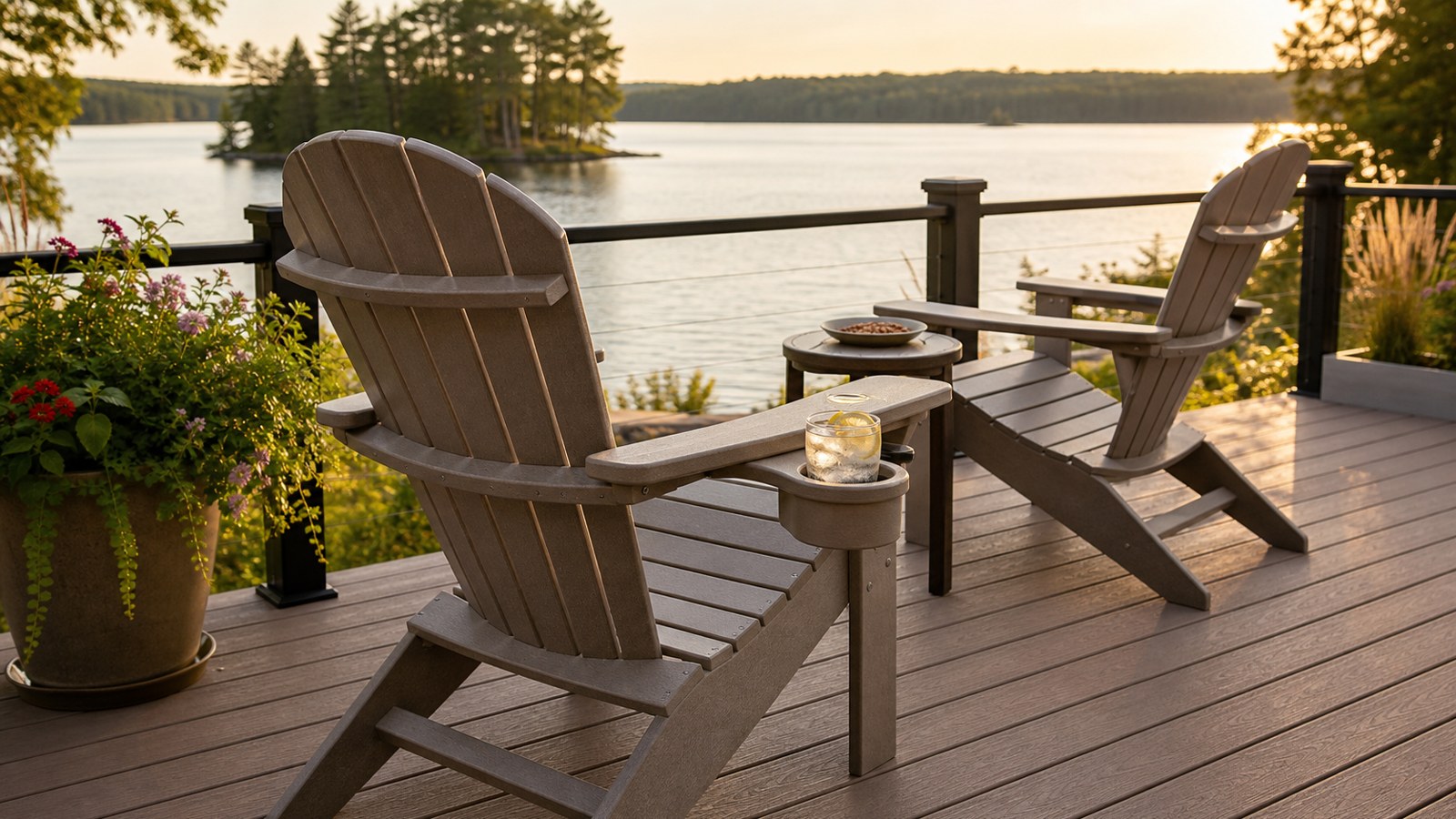
Placement is especially important for Polywood Adirondack chair mistakes. Adirondack chairs have reclined backs and broad arms, so they need more room than upright patio chairs. Rocking versions also need safe runner clearance. Folding versions need space to open and close without hitting railings, tables, or nearby walls.
Traffic paths should remain comfortable. People carrying food, tools, towels, cushions, or drinks should not have to squeeze around chair arms. A chair can be attractive and still be wrong for a spot if it interrupts the natural movement of the space.
The best placement creates a reason to sit. Face chairs toward a view, a garden feature, a work surface, a fire pit, or a conversation zone. When the orientation is clear, the chair feels intentional rather than stored.
Weather and Seasonal Stress
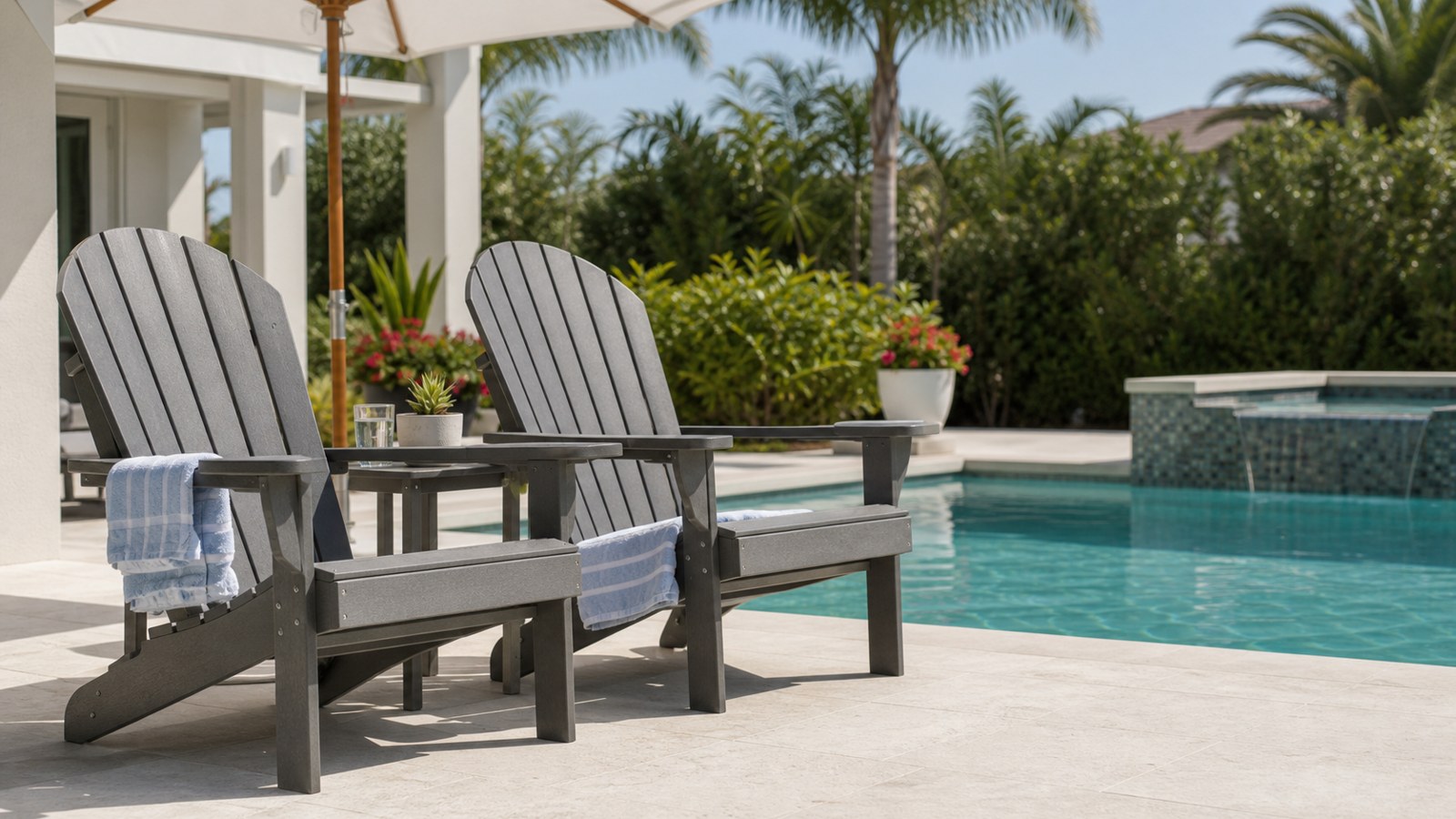
Weather exposure changes everything about Polywood Adirondack chair mistakes. Sun can fade color and heat dark surfaces. Rain can collect in joints and under arms. Humidity can slow drying. Wind can move lighter frames or stress folding hardware. Each condition should influence the chair choice before purchase or construction.
Storage is not an afterthought. Folding chairs need a dry place where hinges can stay clean. Rockers should not be left where runners sit in standing moisture. Oversized chairs may need covers or a protected area because moving them often is less convenient.
Maintenance Habits That Preserve the Chair
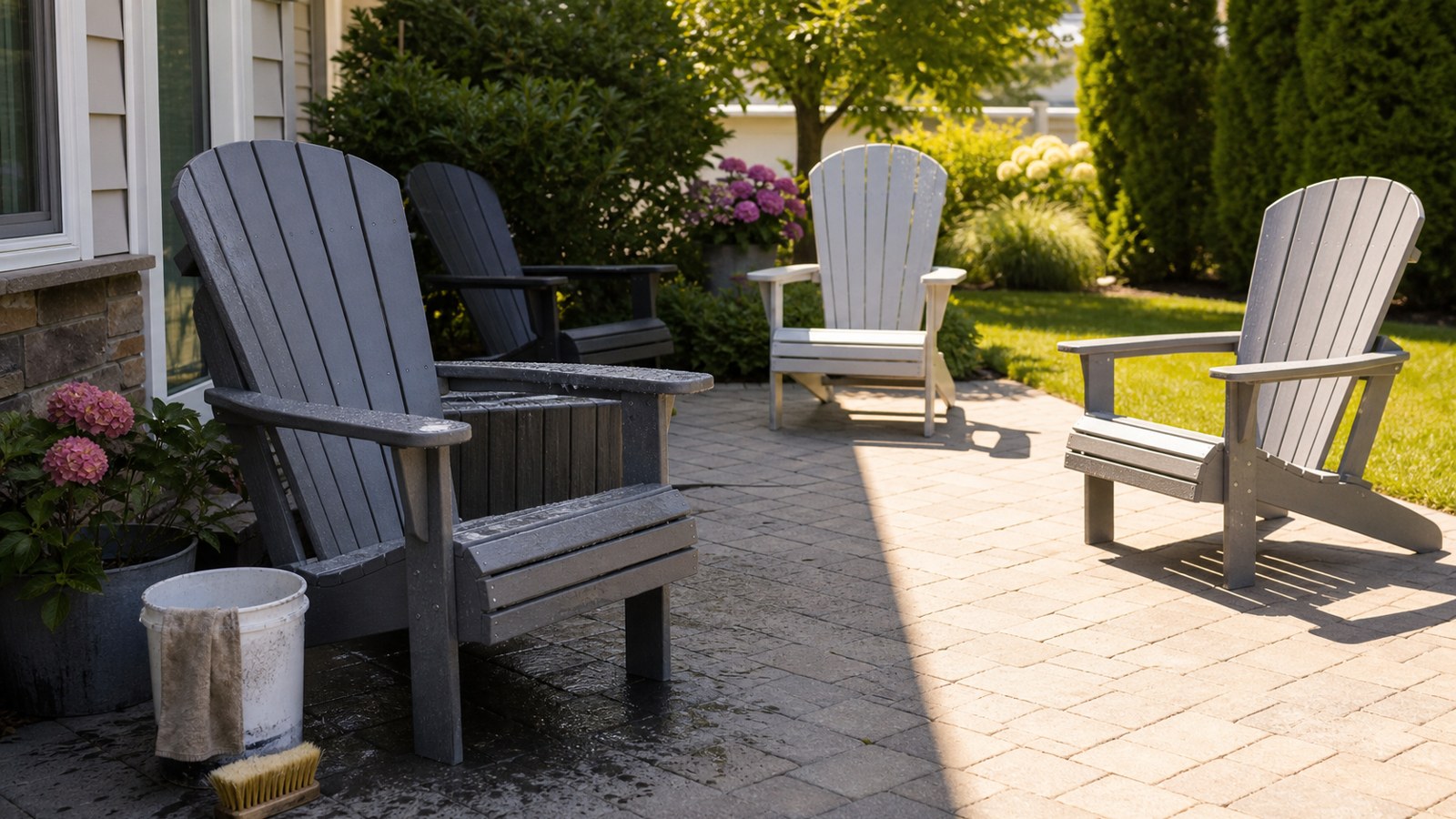
A simple maintenance rhythm keeps Polywood Adirondack chair mistakes from becoming frustrating. Rinse dust and pollen, wipe the arms, check fasteners, clear debris from slats, and let the chair dry before covering or storing it. These small tasks protect comfort as much as appearance.
For painted or refinished chairs, watch the edges first. Arms, front seat slats, feet, and lower supports usually show wear before broad back slats. Touching up small areas early is easier than stripping and refinishing a tired chair later.
For synthetic materials, avoid assuming maintenance-free means care-free. Dirt, sunscreen, grill residue, tree sap, and mildew film can cling to surfaces. Regular cleaning keeps the chair looking intentional and prevents stains from becoming part of the finish.
Safety and Everyday Use
Safety for Polywood Adirondack chair mistakes is practical and visible. Chairs should not rock into walkways, fold unexpectedly, pinch fingers, wobble on uneven surfaces, or hold hidden splinters. Kids’ chairs need extra attention to edges, coatings, and stability. Oversized chairs need frames strong enough for the larger scale.
A safe chair also feels predictable. Guests should understand how to sit, stand, rock, move, or store the chair without special instructions. If the chair asks for too much caution, it may not be the right fit for a busy outdoor area.
The surface under the chair contributes to safety. Smooth pavers suit rockers better than loose gravel. Level decks suit larger chairs better than uneven lawns. Work areas need stable support before sanding, painting, or assembly begins.
Good safety choices rarely look dramatic. They show up as smooth edges, sturdy legs, clean hardware, proper spacing, and finishes that suit the intended user.
For this specific article, the safety and everyday use step deserves a second look because Polywood Adirondack chair mistakes can look straightforward until the chair is used in real weather and real traffic. That extra check helps connect the recommendation to the way the outdoor space actually functions, which is where comfort, durability, and style either hold together or start to drift apart.
Design Details Worth Paying Attention To
Design details can improve Polywood Adirondack chair mistakes without complicating the chair. Slightly taller seats, cleaner hinges, better drainage gaps, smoother arm profiles, and more balanced back angles can make everyday use easier. These refinements are often more valuable than decorative extras.
Color and finish should support the purpose. A chair meant for full sun needs a color strategy. A chair meant for children can be playful without using finishes that chip quickly. A chair near food or drinks should be easy to wipe clean.
Common Mistakes to Avoid
A common mistake with Polywood Adirondack chair mistakes is buying for the best-case scenario. Outdoor furniture has to work when the deck is windy, the garden is damp, the grill is active, the child is impatient, or the chair needs to be moved quickly. Real use is less tidy than a product image.
Another mistake is ignoring dimensions. Adirondack chairs vary in height, width, depth, and recline. Oversized versions can dominate small patios. Folding versions can still take up meaningful storage room. Kids’ versions need correct scale rather than simply looking cute.
It is also easy to underestimate preparation. Painting, refinishing, or assembling a chair goes better when surfaces are clean, edges are smooth, and hardware is checked before final finish. Skipping those steps usually shows up later.
How to Choose With Confidence
Choosing well for Polywood Adirondack chair mistakes means ranking priorities before comparing products or plans. Stability, comfort, storage, weather resistance, visual style, repairability, and cost all matter, but they do not matter equally in every setting. Once the main priority is clear, weak options become easier to spot.
Use the chair’s future routine as a test. Imagine cleaning it, moving it, sitting in it after rain, storing it for a season, and seeing it from inside the house. If those ordinary moments feel manageable, the chair is likely a good fit.
The right choice should make the outdoor space easier to use. It should invite people to sit, support the setting, and hold up to the conditions that made the topic important in the first place.
When those pieces align, Polywood Adirondack chair mistakes becomes less about a single chair feature and more about a complete outdoor experience.
Long-Term Fit After the First Season
The real test of Polywood Adirondack chair mistakes usually arrives after the first season. A chair may look perfect when new, but outdoor value depends on how it behaves after sun, rain, cleaning, movement, and repeated use. Look for signs that the frame stays square, the finish remains comfortable to touch, and the chair still feels inviting after the novelty has worn off.
Owners should also notice whether Polywood Adirondack chair mistakes still matches the way the space is actually used. A chair purchased for a quiet corner may end up near a grill, path, play area, or damp storage wall. Outdoor spaces evolve, and the best Adirondack choices can adapt without becoming awkward.
If the chair needs small changes, make them early. Add a better storage spot, move it to a more stable surface, improve shade, tighten hardware, or refresh worn edges before the issue becomes a reason people stop using it. Long-term success is often the result of modest adjustments made at the right time.
Bottom Line
The Top Mistakes People Make With Polywood Adirondack Chairs is a practical design decision as much as a furniture choice. The best option respects the setting, the users, the climate, and the maintenance routine.
A chair that looks right, feels right, and survives ordinary use becomes part of how people enjoy the space. That is the real measure of success.
The strongest Polywood Adirondack chair mistakes choice should make the next step obvious: where the chair belongs, how it should be cared for, and who it will serve best. That clarity prevents overbuying, underplanning, and disappointment after weather or regular use begins.
When Adirondack comfort is paired with honest planning, the chair becomes easy to trust. It does not need constant adjustment or explanation. It simply fits the outdoor routine and keeps earning its place season after season.