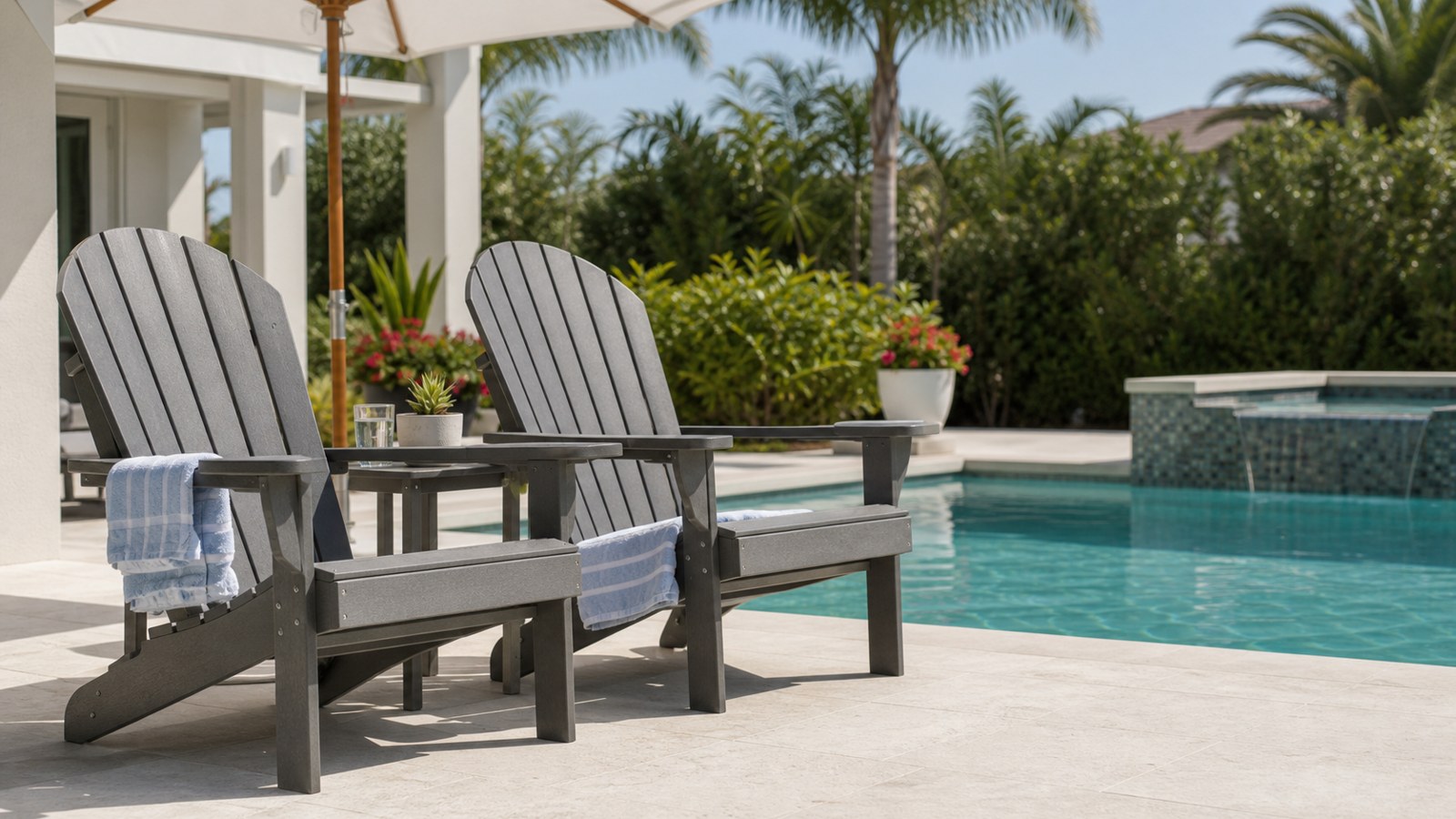
A Backyard Classic Reimagined
The Adirondack chair is one of the most recognizable silhouettes in outdoor living. With its broad arms, reclined seat, and sturdy build, it has become a symbol of leisure that has lasted more than a century. Yet today, buyers face a new decision that didn’t exist when the chair was first invented: should you buy one made from real wood or from Polywood, the modern recycled plastic lumber alternative? This choice is not just about budget; it shapes how your backyard feels and functions for years to come.
Real wood represents heritage and craftsmanship, offering an organic connection to nature. Polywood reflects modern innovation, emphasizing sustainability, durability, and minimal maintenance. Each material has strengths and limitations that impact comfort, longevity, and aesthetics. Understanding these differences allows you to align your purchase with your lifestyle, your design goals, and your long-term expectations.
A: Quality Polywood is very long-lived with minimal care; premium woods (teak/ipe) can rival it if you maintain finishes.
A: Polywood—no refinishing cycles. Wood needs periodic oiling, varnish refresh, or repainting.
A: Polywood and hardwoods are both hefty; softwoods are lightest and easiest to move.
A: UV inhibitors help keep color; darker hues show warming in sun—consider cushions or shade.
A: It’s designed to be used as-is; painting can void maker guidance. If you love color shifts, choose wood and high-quality paint.
A: Cedar offers good outdoor performance at fair cost; entry Polywood lines compete well when maintenance time is scarce.
A: Polywood excels—non-porous and corrosion-resistant hardware; teak also thrives with periodic care.
A: Many Polywood boards use recycled plastic; for wood, look for FSC certification or reclaimed sources.
A: Comfort is about geometry; both materials can be equally comfy if the seat angle and contours are right.
A: Choose Polywood if you want set-and-forget simplicity; choose wood if you love natural grain and don’t mind seasonal care.
Roots of an Outdoor Icon
The Adirondack chair was invented in the early 1900s by Thomas Lee while vacationing in the Adirondack Mountains. He sought a seat that worked on steep terrain yet delivered comfort for hours of outdoor relaxation. The resulting design, with its angled back and flat arms, spread quickly to porches, beaches, and lakefront cottages. Over time, it became part of the American summer tradition, appearing in postcards, resorts, and backyard gatherings.
For most of its history, the Adirondack chair was made exclusively from wood. Cedar, oak, pine, and later teak carried forward the tradition of craftsmanship and natural warmth. Today, wood still represents that link to heritage. Polywood, on the other hand, reimagines the classic by addressing challenges like weathering, upkeep, and environmental waste. Both materials honor the original design, but each reflects a different era of outdoor living: one rooted in history, the other in sustainability and convenience.
Breaking Down Polywood
Polywood is an engineered material created from recycled high-density polyethylene plastics. Milk jugs, detergent bottles, and other everyday plastics are collected, cleaned, and transformed into boards that replicate the look of lumber. These boards are then used to craft outdoor furniture that retains the character of traditional wood while offering a longer lifespan and less upkeep. For eco-conscious homeowners, it’s a material that combines practicality with responsibility.
Because the color runs throughout the entire board, scratches on Polywood are barely visible, and no repainting is ever needed. It is completely resistant to moisture, pests, and mold, making it ideal for humid climates or poolside use. Polywood also contains UV stabilizers to prevent fading from sunlight. The result is a chair that maintains its good looks through rain, snow, heat, and cold, offering peace of mind for anyone tired of replacing outdoor furniture every few years.
The Natural Appeal of Real Wood
Real wood Adirondack chairs carry an authenticity that no manufactured alternative can fully replicate. Each board is unique, with variations in grain, knots, and natural color. Sitting in a cedar, oak, or teak chair feels different from sitting in Polywood—it connects you directly to the natural world. The texture, the scent of the wood, and even the way it warms in the sun contribute to a sensory experience. Wood also has the remarkable ability to change with age. Cedar fades into a silvery gray, teak develops a warm patina, and oak darkens over decades while highlighting its bold grain. These transformations are often celebrated, turning outdoor furniture into pieces that tell a story of seasons and use. For those who love tradition and don’t mind upkeep, real wood offers beauty that evolves gracefully over time.
Weather Resistance Compared
Weather is the ultimate test for outdoor furniture, and it highlights the differences between Polywood and wood. Real wood, though strong, is vulnerable to moisture and sunlight. Rain and snow can cause swelling, warping, or rotting if the wood isn’t regularly treated. Even durable woods like cedar or teak require annual sealing or oiling to protect them from the elements. Without care, a chair may lose its strength and beauty in just a few years.
Polywood was designed to overcome these challenges. It does not absorb water, meaning it won’t rot, splinter, or crack. It’s immune to pests like termites and unaffected by freeze-thaw cycles that can destroy wood. The built-in UV protection ensures that bold colors remain vibrant season after season. Homeowners can leave Polywood chairs outside year-round, from scorching summers to snowy winters, without fear of weather-related damage. This makes it a truly worry-free option.
Ongoing Care and Maintenance
How much work you’re willing to put into your outdoor furniture is often the deciding factor in material choice. Real wood requires seasonal attention, including sanding rough patches, reapplying sealant, and repainting or staining surfaces as needed. These chores can become time-consuming and costly over the life of the chair. Some owners enjoy the process as part of caring for their investment, while others find it a burden that reduces the appeal of wood. Polywood offers a sharp contrast with its low-maintenance nature. A simple wash with soap and water is all it takes to restore its appearance. There is no need for paint, varnish, or specialized products. Even after years outdoors, Polywood maintains a nearly new look with minimal effort. For busy families or anyone who prefers enjoying their backyard rather than maintaining it, Polywood’s simplicity is an undeniable advantage.
Comfort and Feel of Each Material
Comfort has always been the Adirondack chair’s defining feature, thanks to its angled seat, wide arms, and supportive back. Both Polywood and wood chairs preserve this design, ensuring that you can lounge for hours in either material. The difference lies not in ergonomics but in how the materials feel to the touch during use. Real wood often feels warmer and more natural. It adjusts with ambient temperatures and has subtle variations that many find inviting. Polywood offers a smoother finish with rounded edges that prevent pressure points during long sitting sessions. Cushions can enhance comfort for either option, but the preference ultimately comes down to whether you appreciate the organic, varied feel of wood or the sleek consistency of Polywood.
Design Flexibility and Color
The style options available can strongly influence a purchase. Real wood can be stained to highlight its natural grain or painted for a custom look, but both require periodic refinishing. Paint chips and fades under sun exposure, and stains wear unevenly if not reapplied. This limits long-term flexibility for homeowners who want a wide range of color choices without the maintenance.
Polywood dramatically expands design potential with a palette that spans classic neutrals to bold, contemporary shades. Colors such as bright red, lime green, or deep navy remain vibrant year after year because they’re embedded throughout the material rather than applied as a surface layer. This variety allows homeowners to coordinate with outdoor décor, seasonal accents, or personal style without worrying about fading or chipping.
Weight, Stability, and Movement
Weight may not be the first thing you consider when shopping for furniture, but it plays a big role in usability. Hardwood chairs like teak and oak are very heavy, which makes them stable in high winds but difficult to move around the yard. Softer woods such as cedar or pine are lighter and easier to transport, but they’re also more likely to tip during storms or gusty weather. Polywood sits comfortably between these extremes. It’s denser than many softwoods, so it offers stability, but it’s not as heavy as premium hardwoods, making it easier to reposition. Families who like to rearrange furniture for gatherings or move chairs between a deck and firepit will appreciate this balance. It delivers enough weight for security but enough portability for convenience.
Long-Term Value and Longevity
Evaluating value requires looking beyond the price tag to the years of service the furniture will provide. Real wood can last decades if carefully maintained, especially premium species like teak, which may endure for half a century. However, neglect dramatically shortens its lifespan, and many softwoods break down in as little as five years when left untreated outdoors.
Polywood, by contrast, is designed for longevity without maintenance. Manufacturers commonly offer warranties of 20 years or more, reflecting the confidence they have in its resilience. While the upfront cost is often higher than budget wood options, the savings in upkeep and replacements make Polywood more economical over time. It is not just a purchase but an investment in reliability and peace of mind.
Considering Environmental Impact
Sustainability is an increasingly important factor for buyers today. Real wood, when responsibly harvested, is renewable and biodegradable. Certification from groups like the Forest Stewardship Council (FSC) ensures that wood comes from forests managed for long-term health. Still, global demand for tropical hardwoods such as teak and mahogany has fueled deforestation concerns, making sourcing critical.
Polywood contributes to sustainability in a different way. By turning post-consumer plastics into durable furniture, it reduces landfill waste and helps combat ocean pollution. Each chair represents hundreds of containers given a second life as functional, attractive outdoor furniture. While Polywood won’t biodegrade, its durability ensures it stays in use for decades rather than being discarded quickly, creating a net positive environmental impact.
How Materials Perform Indoors and Outdoors
While Adirondack chairs are most often used outside, they can also work in indoor or semi-sheltered environments. Real wood excels in covered patios, sunrooms, and porches, where it is shielded from harsh weather but still appreciated for its natural character. Indoors, wood develops a rich personality with minimal upkeep, making it a strong choice for hybrid spaces. Outdoors, Polywood outperforms in nearly every respect. It remains unaffected by rain, snow, sun, or salt air, and there’s no need to store it seasonally. This makes it a natural fit for pool decks, gardens, and waterfront properties where exposure is constant. For homeowners who want truly year-round furniture without worry, Polywood delivers unmatched convenience and durability.
Emotional and Personal Value
Furniture is never just about function—it also holds emotional meaning. Real wood offers a connection to tradition, reminding many of family cabins, coastal cottages, or childhood summers spent outdoors. Its imperfections—knots, grain shifts, and changing colors—become part of its personality, making it feel alive and unique. For many, this emotional bond makes wood more than just a chair; it becomes part of their personal history. Polywood provides satisfaction of a different kind. Owners often feel good knowing their purchase supports recycling and reduces waste. There’s also comfort in choosing a product that requires little worry and provides lasting reliability. This sense of simplicity and eco-responsibility appeals to modern homeowners who want peace of mind as much as aesthetic beauty.
Weighing the Costs
Price plays a central role for many buyers. Softwood Adirondack chairs, such as pine, can be affordable, but their limited durability means they often need replacement within a few years. Premium hardwoods like teak or oak are expensive upfront but reward the investment with longevity, provided they are meticulously maintained. Polywood occupies a middle ground in cost. It is generally more expensive than softwoods but less costly than high-end hardwoods. Over time, however, its minimal maintenance needs and long lifespan mean it often outperforms wood in value. Choosing Polywood is like paying more at the start to save both money and effort over decades.
Matching Material to Backyard Aesthetics
The right material depends as much on backyard design as it does on durability. A rustic garden, log cabin, or traditional porch pairs beautifully with the organic warmth of wood. Its natural tones and textures complement landscapes and historic architecture seamlessly. Wood feels at home in spaces that celebrate heritage and simplicity. Polywood excels in modern, vibrant, or coastal-inspired settings. With its spectrum of colors and sleek consistency, it provides a fresh, contemporary look. Bright turquoise chairs beside a pool or clean white ones on a minimalist deck capture the energy of modern living. Matching the material to your style ensures that your Adirondack chairs don’t just function well—they elevate the design of your outdoor retreat.
Arriving at the Right Decision
There is no universal answer to whether Polywood or real wood is the better choice. Real wood offers authenticity, heritage, and a timeless connection to nature. It rewards those who don’t mind the maintenance with evolving beauty and character that no manufactured material can replicate. For many, that authenticity is worth the effort. Polywood, on the other hand, emphasizes ease, durability, and eco-conscious innovation. It delivers long-term performance with virtually no upkeep and provides design versatility for any modern backyard. For busy households or climates where wood struggles, Polywood is often the more practical solution. The decision ultimately depends on whether you value tradition and craftsmanship or modern simplicity and convenience.
Closing Reflections
The Adirondack chair, whether made from wood or Polywood, remains an icon of comfort and relaxation. Real wood preserves the essence of the original design, offering warmth, individuality, and a direct link to the outdoors. Polywood redefines the chair for the modern era, addressing weather resistance, sustainability, and maintenance with equal success. Both options embody the same spirit of leisure but express it in different ways. The choice is deeply personal. If you love the ritual of care and value natural character, wood will reward you with evolving beauty. If you prefer to relax without worry and embrace sustainability, Polywood offers unmatched convenience. Either way, the Adirondack chair continues to symbolize the art of slowing down, making your backyard a sanctuary of style and rest.