Why Backrest Design Matters in Adirondack Chairs
The Adirondack chair has achieved legendary status in outdoor furniture, and much of its identity lies in the backrest. While the wide arms, deep seat, and angled posture are central to its comfort, the backrest determines how the chair feels against the spine, how it looks in different settings, and even how well it blends into resort patios, suburban lawns, or rustic cabins. Two main design styles dominate the conversation today: the fan-back and the curved-back. Both have their roots in the original Westport chair invented in the early 1900s, yet each reflects different priorities in comfort, style, and cultural meaning. Understanding how these two backrest types emerged and evolved over time is essential for appreciating the Adirondack chair not only as a practical piece of furniture but as a cultural icon that has adapted to changing tastes and lifestyles for more than a century.
A: Many prefer curved-backs for shoulder/lumbar support; well-made fan-backs are close.
A: Fan-back. Curved-back reads more contemporary/minimal.
A: Fan-back—straight slats and simpler jigs/templates.
A: Not by style; finish/material (wood vs HDPE) drives upkeep.
A: Thin quick-dry lumbar/head rolls—keep the back contour working for you.
A: Curved-backs can cost more due to shaping/CNC time; fan-backs trend budget-friendlier.
A: Weight > back shape. HDPE (35–50 lb) or heavier woods are ideal.
A: Yes—offered in both back styles; check for solid pivots and locking stops.
A: Fan-backs offer natural real estate on crest slats; curved-backs suit subtle plaques.
A: Curved-back—clean arc lines echo contemporary façades and railings.
The Origins: Westport’s Straight-Back Chair
When Thomas Lee first constructed his chair in 1903 in Westport, New York, its back was built of wide flat planks arranged vertically. This design provided support and rugged durability but very little contour for comfort. It was revolutionary compared to delicate indoor chairs, offering stability on uneven ground and a reclined angle that encouraged relaxation, yet the broad planks pressed against the back without adjusting to its natural shape. Guests sitting in these early Westport chairs could enjoy the view, but prolonged use sometimes made them feel stiff. Still, this straight-back design was a breakthrough because it introduced the essentials: recline, wide arms, and a stable frame. This foundation allowed others to build upon it, creating designs that were more refined, visually appealing, and ergonomically advanced. The Westport chair was the raw prototype, and from its straightforward beginnings grew the two dominant styles—fan-back and curved-back—that would shape the Adirondack chair’s future.
The Emergence of the Fan-Back Style
The fan-back emerged in the early to mid-twentieth century as the next logical evolution of the Adirondack chair. Craftsmen began to replace the broad planks of the Westport chair with narrow slats, spreading them outward in a fan shape. This design was lighter, more graceful, and more comfortable, as the spacing between slats allowed the back to contour gently while also providing ventilation in warm weather. The fan arrangement softened the heavy look of the original, giving the chair an elegance that made it more suitable not only for rustic cabins but also for coastal resorts and suburban homes.
The fan-back was also practical for builders. Narrower slats required less material, reduced overall weight, and allowed chairs to dry more quickly after rain. These qualities made fan-backs easier to produce and more versatile in different climates. By the mid-century, the fan-back had become the iconic image of the Adirondack chair, appearing in backyards, gardens, and vacation spots across North America.
Comfort Advantages of the Fan-Back
Comfort was one of the major reasons fan-backs became widely adopted. While the Westport’s wide planks created pressure points, the multiple narrow slats of the fan-back distributed weight more evenly. The slats flexed slightly with the sitter’s posture, creating a chair that felt more forgiving and suitable for long lounging. Airflow between the slats also made them cooler to sit in during hot summers, which further increased their popularity in beach towns and resorts. In addition to comfort, the fan-back carried a strong sense of tradition. Its distinctive silhouette quickly became tied to leisure culture, appearing in resort advertisements, postcards, and photographs that reinforced its status as a symbol of rest. This strong identity has allowed the fan-back to remain timeless, appealing to generations of homeowners who value its combination of durability, comfort, and visual charm.
The Arrival of the Curved-Back
The curved-back design appeared later, during the mid- to late-twentieth century, as builders experimented with ways to refine Adirondack ergonomics. Instead of radiating slats in a fan, curved-backs used slats arranged to form a smooth, continuous arc. This subtle change had a profound effect on comfort, as it more closely matched the natural curve of the spine. Sitting in a curved-back Adirondack felt like being gently cradled, reducing pressure points and providing more consistent support. The curved-back design also appealed aesthetically to modern sensibilities. Its smooth arc created a sleek profile that felt contemporary while still retaining the essential Adirondack DNA. For homeowners seeking furniture that combined tradition with innovation, curved-backs offered the perfect balance. This design began to flourish in both residential and resort settings, proving that Adirondack chairs could continue evolving without losing their essence.
Fan-Back vs. Curved-Back: Aesthetic Differences
Visually, fan-back and curved-back Adirondack chairs project very different moods. The fan-back has an instantly recognizable silhouette that evokes nostalgia, tradition, and rustic charm. Its radiating slats are decorative, almost floral in their arrangement, making fan-backs appear cheerful and classic. Resorts and gardens often favor fan-backs for their iconic look, which reinforces the timeless image of leisure.
Curved-backs, on the other hand, appear smoother and more understated. Their continuous arc lends them a refined and contemporary feel, blending easily into modern patios, minimalist landscapes, and upscale resorts. While they may lack the decorative flair of fan-backs, curved-backs appeal to those who prefer sleekness and subtlety. Choosing between the two often comes down to personal preference: do you want the traditional charm of a fan-back or the modern sophistication of a curved-back?
Ergonomic Comparisons in Everyday Use
The ergonomic differences between fan-back and curved-back Adirondacks are subtle but important. Fan-backs provide good support with their angled slats, but because the slats radiate outward, they do not form a continuous contour. Some users find that this creates small gaps in support. Curved-backs, however, offer consistent contact with the spine thanks to their smooth arc, which can make them more comfortable for long sitting sessions. That said, both designs deliver on the essential promise of Adirondack comfort: a reclined seat, wide arms, and a posture that reduces pressure on the lower back and legs. Resorts often provide a mix of both, knowing that individual preferences vary. Some people enjoy the firmness of a fan-back, while others prefer the enveloping support of a curved-back. The fact that both remain popular today is a testament to the strength of the Adirondack design itself.
Resorts as the Showcase for Both Styles
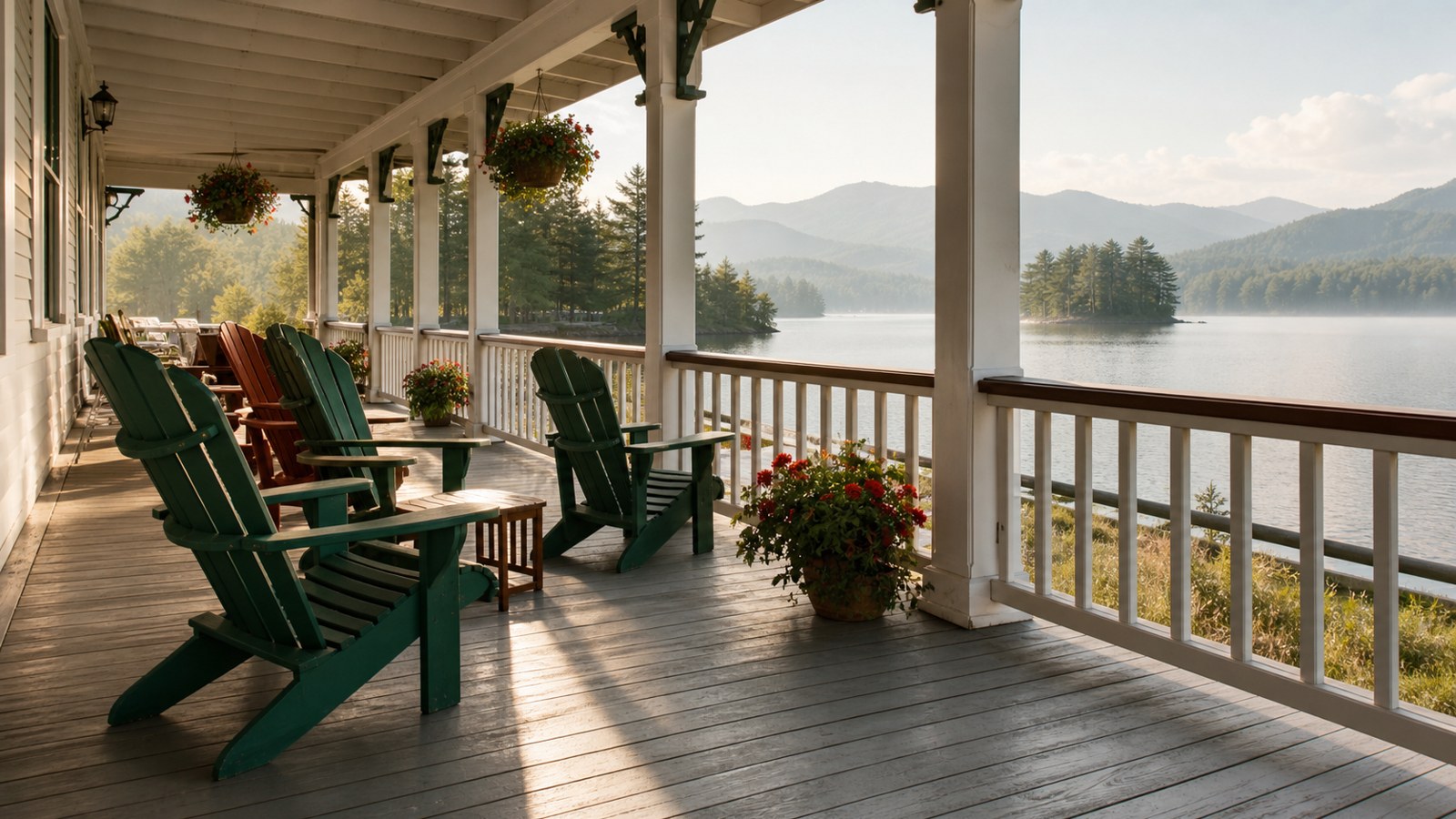
Resorts have long been influential in popularizing Adirondack chairs, and both fan-back and curved-back designs owe part of their success to these settings. In the mid-twentieth century, coastal and lakeside resorts often lined porches and beaches with rows of brightly painted fan-backs. These chairs became ingrained in the imagery of vacation marketing, appearing in postcards and promotional photos that reinforced their identity as symbols of escape.
Later, as curved-backs gained momentum, resorts again acted as trendsetters. Guests who experienced their enhanced comfort during holidays often returned home wanting the same chairs for their own patios. This cycle of resort exposure and homeowner adoption ensured that both designs spread widely. The visibility of Adirondack chairs in resorts reinforced their reputation as the ultimate leisure furniture, no matter the backrest style.
Materials and Manufacturing Influence Design
The materials available to builders had a major influence on backrest design. Traditional fan-backs were made almost exclusively of wood, such as cedar, pine, or teak. These woods could be cut into narrow slats and arranged in radiating patterns, which defined the fan-back’s appearance. The natural weathering of wood added to its rustic appeal, making fan-backs particularly suited to traditional or coastal settings.
The curved-back benefited from advances in material technology, especially with the rise of recycled HDPE plastics in the late twentieth century. Plastic allowed manufacturers to cut precise, uniform curves that were difficult to achieve with wood alone. This innovation not only improved ergonomics but also offered durability and low maintenance. As a result, curved-backs flourished in climates where wood required too much upkeep, such as coastal or rainy environments. In this way, materials directly shaped the evolution of Adirondack back designs.
Painted Fan-Backs and Neutral Curved-Backs
Color trends further distinguished the two backrest styles. Fan-backs often became associated with bright, cheerful paints—whites, reds, blues, and yellows—that gave them a playful, festive look in resorts and backyards. Their decorative silhouette lent itself naturally to bold color choices that stood out against beaches, gardens, and lawns. Curved-backs, meanwhile, leaned toward more neutral or natural finishes. Their sleek lines were complemented by subtle stains, earthy tones, or muted colors that suited modern design trends. While either style can be painted in any shade, cultural associations made fan-backs the colorful, nostalgic version and curved-backs the understated, modern choice. This distinction continues today, reinforcing the different moods each style conveys.
The Symbolism of Backrest Styles
Beyond comfort and aesthetics, fan-back and curved-back Adirondacks carry symbolic meanings. The fan-back embodies tradition, evoking images of family cottages, lakeside vacations, and multigenerational gatherings. It is the chair of nostalgia, representing continuity and the timeless joy of outdoor living.
The curved-back symbolizes progress and adaptation. It demonstrates how even a century-old design can evolve to meet modern needs. For many, the curved-back projects innovation while still honoring heritage. Together, the two styles show that Adirondack chairs are not frozen in time but living designs that continue to adapt to cultural and personal preferences.
Which Style Dominates Today?
Both fan-back and curved-back Adirondacks remain widely popular, and neither has completely replaced the other. Fan-backs continue to dominate in traditional settings, coastal resorts, and gardens where their iconic silhouette feels most at home. Curved-backs have become increasingly popular in contemporary homes, luxury patios, and eco-friendly markets where ergonomic refinement and modern aesthetics are valued. Manufacturers often produce both styles, recognizing that they appeal to different audiences. Many homeowners even own a mix of both, using fan-backs for their nostalgic charm and curved-backs for their superior comfort. This coexistence ensures that Adirondack chairs remain versatile, capable of suiting a wide range of lifestyles and tastes.
The Future of Adirondack Backrests
Looking ahead, it is likely that both fan-back and curved-back designs will continue to thrive, perhaps even blending in new hybrid forms. Advances in materials may allow for adjustable backs or more customizable options that combine the decorative flair of fan-backs with the ergonomic comfort of curved-backs. Sustainability will also play a role, with recycled plastics and responsibly sourced woods shaping the chairs of the future. What remains constant is that the backrest will continue to define the Adirondack chair. It is the feature that distinguishes it visually, affects comfort most directly, and symbolizes its evolution over time. Whether fan-back, curved-back, or something entirely new, the Adirondack chair’s backrest will remain central to its identity as the world’s favorite outdoor seat.