
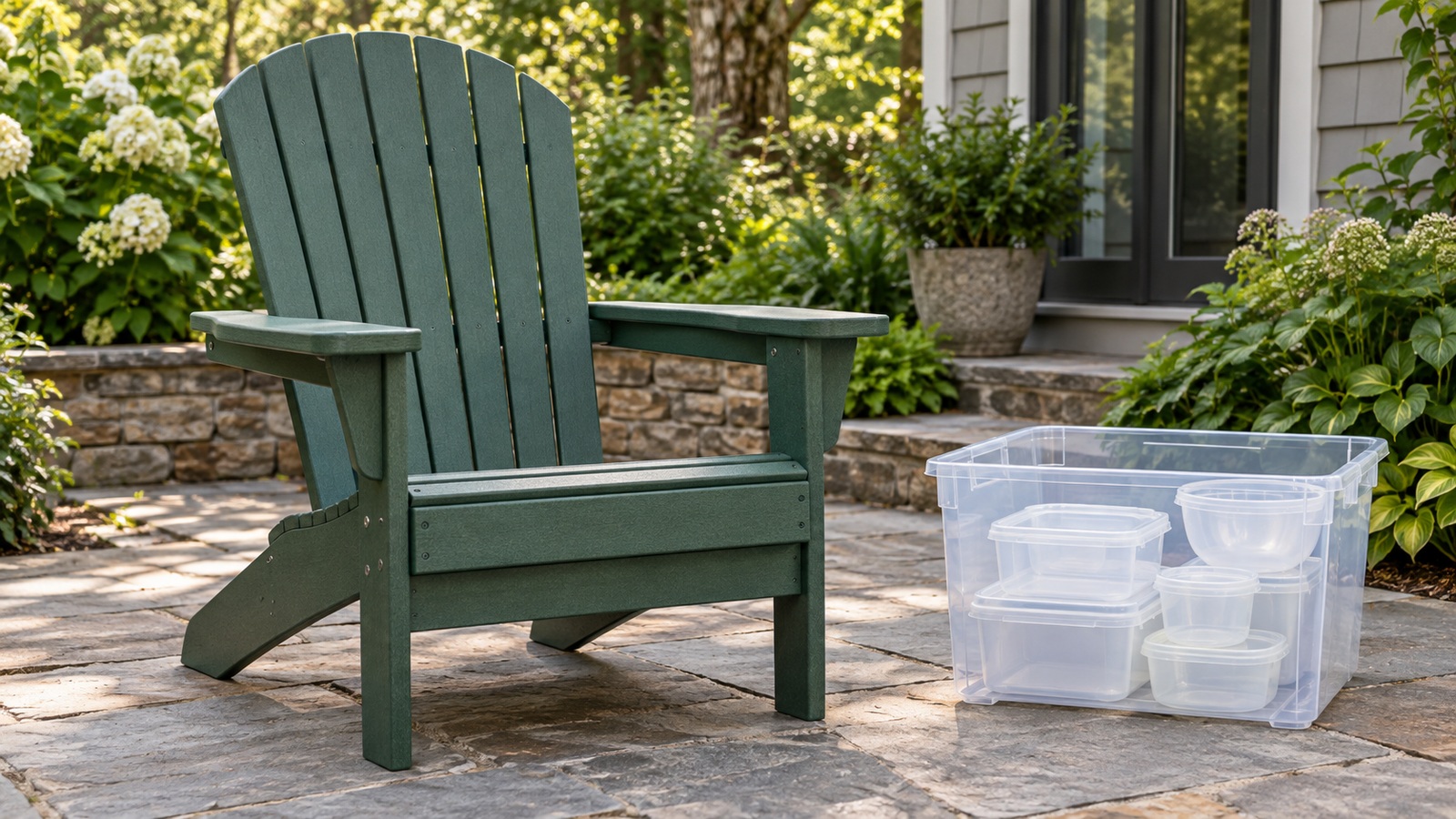
Look beyond the Recycled Label to the Complete Chair
A recycled-plastic chair can give recovered material another useful role, but that single attribute does not describe the furniture’s entire environmental impact. The product still involves material processing, manufacturing, delivery, maintenance, and an eventual next destination. A useful choice begins by checking the specific recycled-content claim and then asking how the complete chair will serve the household over time. Product fit, repair support, actual care, and available reuse or recycling routes all enter that decision. Broad labels such as green are less informative than evidence tied to a defined product and comparison. You do not need to invent a personal lifecycle calculation to ask better questions. Separate what the maker documents from what remains uncertain, and evaluate the chair as furniture you intend to keep useful.
A: No. It describes an attribute within a larger product life and needs a clear scope.
A: The claims can refer to different products or components and should not be treated as equivalent.
A: Review boundaries, assumptions, and the service being compared before drawing a broader conclusion.
A: Read coverage and support terms; a warranty is not an inevitable household service-life statement.
A: A supported route with actual components, instructions, and appropriate service information.
A: It is one stage-related detail rather than a complete assessment without suitable comparative evidence.
A: Confirm the exact product and available route with the receiving program.
A: No. Verify whether a real program exists and how eligibility, condition, and transport work.
A: Provide only appropriately assessed furniture and an honest condition record; do not pass unresolved concerns forward.
A: State the specific documented attributes and practical reasons separately, keeping uncertainty clear.
Identify the Material and the Claim’s Scope
Recycled plastic furniture can describe several constructions. A plastic-lumber chair, a molded product, and a mixed-material design may use different components and production methods. Find the exact product description before comparing claims. Ask which parts contain recovered material and what the stated percentage covers. The complete chair includes more than the broad visible body. Confirm whether any published figure applies to the assembled product, its principal lumber, or a selected collection before using it in your comparison.
Keep product and packaging claims separate. A recycled carton does not establish the recycled content of the seat, and a statement about one component may not describe every part. Read the qualifying information around the claim. If its scope is unclear, ask the maker. A useful environmental comparison needs a defined starting point.
A named example can show the kind of information available. POLYWOOD’s material-content page describes its lumber as HDPE sourced from post-industrial and post-consumer recovered materials. That is manufacturer information about its lumber, not an independent ranking of every finished chair’s overall impact. Verify current details for the product under consideration. Keep the claim and its evidence attached to the correct scope.
Prefer Specific Statements over Broad Environmental Language
The FTC’s Green Guides summary explains why broad environmental-benefit claims need care and why specific qualifications matter. For a buyer, the practical lesson is to ask what benefit is being claimed, for which product or component, and on what evidence. A familiar sustainability word is not the same as a measurable comparison. Read the details rather than accepting the headline as a complete assessment.
Do not fill missing information with a favorable assumption. An unclear percentage, an unqualified recycling promise, or a comparison without a named baseline leaves a question unresolved. Keep that uncertainty visible in your shortlist. The maker may be able to clarify it with current information. If not, compare the documented attributes rather than assigning an imagined overall score.
Consider the Product across Its Life rather than One Stage
The EPA’s sustainable materials management overview considers stages from obtaining materials through manufacture, use, maintenance, and waste management. That framework explains why recovered feedstock is one part of a larger picture. Use it as a way to organize questions. It does not supply a numerical result for a particular patio chair. Product-specific evidence is still needed for that claim. When a maker supplies an assessment, look for what it covers. The declared product, stages, assumptions, and comparison should be clear enough to understand the conclusion. A factory-stage result and a whole-life result can answer different questions. Ask for clarification instead of treating them as equivalent. The boundaries matter as much as the appealing number.
Check that the compared furniture provides a reasonably similar service. A small occasional chair and a broad long-term lounge seat may not serve the same household need. Comparing them solely by one manufacturing figure can miss those differences. Keep the intended sitting role visible. Environmental reasoning should be connected to the furniture service you are actually buying.
Avoid creating unsupported arithmetic from several unrelated claims. A recycled percentage, a warranty term, and a shipment distance cannot simply be combined into one impact score without a suitable method and data. Use them as separate information instead. State what each establishes and what it does not. Clear uncertainty is more useful than a precise-looking calculation with no common basis.
Make Product Fit Part of the Environmental Decision
A chair that does not fit the sitter, patio, or household routine is less likely to deliver the useful service intended at purchase. Check sitting dimensions, stated limits, complete footprint, and appropriate site conditions alongside the material claim. This is a practical ownership consideration rather than a quantified environmental result. Buying the right amount of suitable furniture is a clearer starting point than choosing an unsuitable product for its label. Keep the purchase connected to an actual need.
Evaluate Useful Life through Evidence and Care
A durable appearance does not establish how long the complete chair will remain useful. Read the actual product’s construction, care requirements, warranty terms, and support information. Look for documentation relevant to the intended exposure and use. Keep marketing language separate from a guarantee of household service life. The period a chair serves depends on more than a material name.
Review whether the care requirements are realistic for the household. A product described as low maintenance can still require cleaning, inspection, and appropriate handling. Read the directions and plan those tasks. Do not treat minimal care language as permission to ignore condition. The useful environmental intention is supported by furniture that remains suitable and maintained through its actual requirements.
A longer usable period can spread the purchase’s role over more seasons, but do not turn that observation into an unsupported impact percentage. A comparative result needs assumptions and evidence about the products involved. Keep longevity as one factor to examine. Ask for information about component support and actual limitations. That approach remains useful without inventing a lifetime claim.
Ask What Repair Support Actually Provides
Find out whether replacement components, compatible hardware, and relevant instructions are available for the exact model. A chair built from separate members may offer different service options from another construction, but availability must be checked. Ask how support works and what the owner may do. Repairability is practical only when a supported route exists. The shape alone does not establish it.
Keep repair separate from casual modification. Cutting a replacement part from another material or adding an improvised connection can change the complete product. Use maker-approved guidance or suitable professional assessment for uncertain work. The aim is to maintain appropriate service, not to keep an unsafe or unclear object in circulation. Environmental intention does not remove the need for sound furniture.
Read warranty coverage as its own document. Term length, components covered, exclusions, intended setting, and the response offered can differ. A warranty is not automatically a complete repair program or a statement of inevitable lifespan. Ask about the practical process when comparing chairs. The useful question is what happens if a relevant problem occurs.
Keep model records and support contacts after purchase. They can make a later component question easier to resolve and help a new owner evaluate the chair. A sound product with clear information is more useful than an unidentified object with a favorable material label. Documentation is a small ownership task. It supports informed care and future decisions.
Include Delivery without Making It the Only Comparison
Ask about the actual delivery arrangement when it matters to the purchase. Location, shipment form, packaging, and the number of orders can contribute to the product’s journey. Avoid assuming that a single distance or domestic label settles the entire impact. A complete comparison would need appropriate evidence about the relevant processes. Treat delivery as another stage to understand.
Plan the order so it suits the real furniture need. A clear layout and verified dimensions can reduce the chance of an unsuitable purchase and an avoidable return, although the exact environmental result is not established by this article. Confirm the product and quantities before ordering. Practical planning is valuable in its own right. It also keeps environmental intentions connected to a usable outcome.
Separate Recycled Content from Future Recycling
A chair made with recovered plastic is not automatically accepted by the local program at the end of use. The two claims concern different stages. The EPA’s municipal recycling terms page advises confirming acceptance with the local program. Ask about the exact furniture product and collection route. Do not place a whole chair into a household bin merely because its main material sounds familiar.
Check manufacturer take-back or other specialized options directly. Ask whether a current program exists, who is eligible, which products and conditions it accepts, and how transport works. A statement that a material can be reprocessed does not establish that the owner has an available route today. Keep technical possibility separate from practical access. The plan should name a real next destination.
Mixed components may need particular handling through the accepted program. Follow the provider’s instructions rather than dismantling the chair by assumption. Ask what must remain attached or be separated. A correct route begins with the receiving program’s requirements. End-of-life planning is useful when it describes what can actually happen locally or through a verified service.
Give Reuse an Honest Condition Check
A sound suitable chair may continue serving another household when the original owner no longer needs it. Provide product identity, instructions, care history, and an accurate condition description. Let the next user evaluate fit and intended use. Donation is not a reason to pass unresolved damage forward. Reuse should preserve furniture service through informed ownership.
Consider whether changing the setting or replacing a supported component can keep an existing suitable chair useful before buying another. That is a practical review, not proof that every repair has a lower measured impact than every replacement. Evaluate condition, support, and the household need. Use appropriate guidance for the actual product. The decision should remain clear about what is known.
Keep the Final Comparison Specific and Reviewable
Put the shortlisted products on the same practical comparison: intended service, dimensions, material claim scope, available evidence, care, component support, delivery, and verified next-destination options. Identify unanswered questions instead of filling them with broad green assumptions. Ask makers for the current details that would change the decision. A modest documented comparison can be more useful than an unsupported universal ranking.
Record the reasons for the purchase in plain terms. You may prefer recovered material, a suitable seat, manageable care, and a clear support route without claiming that the chair has no environmental burden. Those are distinct attributes. Keep them separate when explaining the choice to others. Accuracy makes the decision easier to revisit as programs and product information change.
Choosing recycled plastic chairs can support a useful role for recovered materials when the claim is clear and the furniture serves a real need. Evaluate the complete product across its intended life, preserve suitable use, and verify practical end-of-life options. Avoid turning one favorable attribute into an overall promise that the evidence does not establish. The strongest environmental decision is specific enough to understand and connected to furniture that remains useful.


