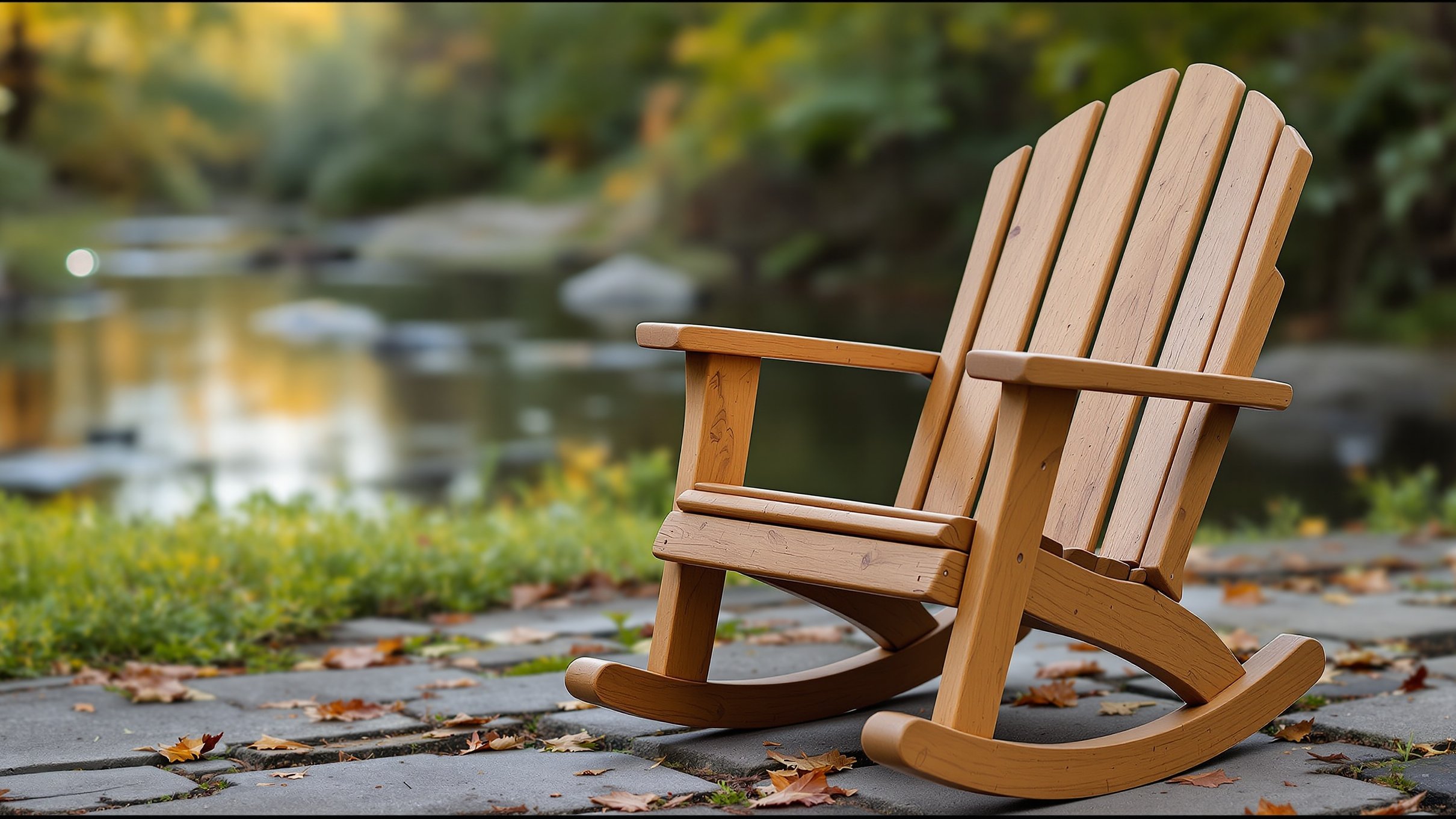
Why Wood Still Rules the Adirondack Rocker
Adirondack chairs have always been synonymous with outdoor comfort, and when the rocking base is added, they evolve into something even more relaxing. The gentle sway paired with the reclined seat makes rocking Adirondack chairs a favorite for porches, patios, and gardens. While many materials exist today, from poly lumber to metals, wood remains the gold standard for many homeowners who value tradition, natural beauty, and a warm, tactile feel.
Among the many types of wood available, teak and cedar stand out as two of the most popular choices. Both have long histories in outdoor furniture design, both offer unique benefits, and both carry their own character. But when it comes to rocking Adirondack chairs, the differences between teak and cedar become more apparent. Deciding between them often comes down to lifestyle, budget, and the desired balance of aesthetics and performance.
A: Teak. Oils + mass excel in salt, wind, and sun.
A: Cedar. Lighter and friendlier to carry/store.
A: Teak left to gray. Quick wash, done.
A: Cedar takes paint beautifully; teak prefers natural/sealer.
A: Teak’s weight = silkier momentum.
A: Cedar delivers premium feel at a friendlier price.
A: 316 stainless or silicon-bronze to avoid staining/corrosion.
A: Ease edges and sand to 180–220 grit; cedar needs it most.
A: Teak: optional annual sealer. Cedar: oil/paint every 1–3 years.
A: Teak—longest service life with the least fuss.
Teak: The Luxury Choice for Longevity
Teak has long been celebrated as the king of outdoor woods. For centuries, it has been prized in shipbuilding, luxury furniture, and high-end architecture for its unmatched durability. Its natural oils make it resistant to rot, mold, and insect damage. When crafted into rocking Adirondack chairs, teak brings with it a promise of long-term performance.
Fresh teak has a golden-brown tone that glows in the sunlight. Over time, if left untreated, it naturally weathers into a soft, silvery patina that many find just as attractive. This aging process does not weaken the wood. In fact, many families appreciate the way teak tells a visual story as it endures decades of use outdoors. A teak rocking Adirondack chair is not just furniture—it is often considered an heirloom, lasting half a century or more.
Cedar: The Rustic Classic With Natural Charm
Cedar, by contrast, has always been the people’s wood. Known for its lightweight feel and distinctive aroma, cedar has a rustic appeal that fits beautifully into natural landscapes. Cedar’s strength lies in its balance: it is durable enough to handle outdoor conditions, yet much lighter and more affordable than teak. When built into rocking Adirondack chairs, cedar delivers comfort and charm without requiring a premium investment.
The color of cedar varies depending on the species, ranging from reddish hues to soft ambers. Like teak, it will weather into a silvery gray if left untreated, giving it a timeless look. Cedar is also naturally resistant to rot and insects, though not to the same degree as teak. With proper care, a cedar rocking Adirondack chair can last for decades, making it a favorite among families who want premium wood without the luxury price tag.
Comparing Aesthetic Appeal
When deciding between teak and cedar rocking Adirondack chairs, the first thing most people notice is appearance. Teak exudes elegance. Its golden-brown color and dense grain feel refined, and its ability to age gracefully adds to its prestige. Many homeowners choose teak for upscale patios or resort-style outdoor living areas, where the chair itself becomes a design feature.
Cedar, on the other hand, has a more casual beauty. Its natural colors and lighter weight give it a rustic feel that works well in gardens, cabins, and family-friendly settings. A cedar rocking Adirondack chair feels approachable and warm, inviting users to sink in with a sense of simplicity. Both woods are attractive, but they create different moods: teak projects luxury, while cedar embodies comfort and familiarity.
Durability: A Battle of Strength and Resistance
Durability is often the deciding factor for homeowners, and here teak has the clear advantage. Teak’s dense structure and natural oils make it one of the most weather-resistant woods in the world. It can withstand rain, humidity, salt air, and intense sunlight without losing strength. A teak rocking Adirondack chair can easily last 40 to 50 years, even with minimal maintenance. Cedar is also durable but to a lesser degree. It naturally resists rot and insects, but it does not have the same oil content as teak. Over time, exposure to moisture and UV rays can cause cedar to wear more quickly. With proper sealing, staining, or covering, cedar can still last 20 to 30 years, but it requires more consistent care. For homeowners who prioritize longevity above all else, teak wins the durability faceoff.
Comfort in Motion
Rocking Adirondack chairs are not only about material—they are about the experience. Comfort comes from the chair’s design as much as from the wood itself. Both teak and cedar perform well here, as both woods are strong enough to support curved slats and contoured backs that define Adirondack comfort.
However, weight plays a role in the rocking experience. Teak is significantly heavier, which makes teak rockers incredibly stable. Once placed on a porch or patio, they rarely shift, even in strong winds. Cedar, being lighter, is easier to move but may not feel as grounded during rocking. Some users prefer the stability of teak, while others appreciate the portability of cedar, especially if they like to rearrange outdoor seating frequently.
Maintenance Requirements
Maintenance is where the differences between teak and cedar become more pronounced. Teak requires very little care. Owners can simply let it age naturally into its silvery patina or apply teak oil to maintain the golden color. Cleaning involves little more than soap and water, and its resilience means that even neglected teak often holds up well.
Cedar, while not high-maintenance, requires more attention than teak. To preserve its natural color, cedar should be sealed or stained regularly. It also benefits from being covered during harsh weather or winter months. While cedar is naturally resistant to many outdoor threats, its lighter structure means it requires more active care to maximize lifespan. For busy families who prefer low-maintenance furniture, teak is often the easier choice.
Sustainability and Environmental Impact
Both teak and cedar raise questions of sustainability. Teak, particularly old-growth teak, has been overharvested in the past, leading to environmental concerns. However, today, responsibly sourced plantation teak and Forest Stewardship Council (FSC) certified teak ensure sustainable practices. Buyers should look for these certifications to ensure their purchase supports ethical forestry.
Cedar is generally considered a sustainable choice, especially when sourced from North American forests that are carefully managed. It grows more quickly than teak, which makes it more renewable. For eco-conscious families, cedar may feel like the greener choice, though responsibly sourced teak remains an option for those who want luxury with environmental responsibility.
Cost and Value Over Time
The price difference between teak and cedar rocking Adirondack chairs is significant. Teak is among the most expensive outdoor woods, often costing several times more than cedar. This higher upfront cost reflects its durability, longevity, and prestige. For families who view their outdoor furniture as a long-term investment, teak often justifies the price by lasting for decades with little maintenance.
Cedar is far more affordable, making it accessible to a wider range of households. While it may not last as long as teak, cedar still provides decades of service if cared for properly. Its lower price also makes it easier for families to purchase multiple chairs, creating full outdoor seating arrangements without stretching their budgets. Value here depends on perspective: teak provides unmatched lifespan, while cedar balances affordability with charm.
Weight and Portability Considerations
Weight is another factor worth noting. Teak is dense and heavy, which makes it extremely stable. A teak rocking Adirondack chair will stay put during storms or windy days. This heaviness, however, makes it harder to move. For homeowners who want furniture that remains in one place, this is an advantage. Cedar’s lighter weight makes it much easier to reposition. Families who enjoy rearranging their outdoor spaces or moving chairs into storage during off-seasons often find cedar more convenient. Its portability ensures flexibility, especially in smaller yards or patios where space may need to be reconfigured frequently.
Suitability for Different Environments
The environment in which the chairs will be used can influence the decision. Teak is virtually unmatched in coastal or humid regions. Its natural oils protect it from salt air, moisture, and intense sunlight, making it perfect for beach homes or tropical climates. Cedar performs well in many environments but may not handle salty, humid air as gracefully as teak. It thrives in drier climates or moderate seasonal environments, where its natural resistance is sufficient to keep it looking great with moderate care. For mountain cabins, suburban gardens, or lakeside retreats, cedar is more than adequate.
Family Appeal and Lifestyle Fit
Families often consider how outdoor furniture fits their lifestyle. Teak rocking Adirondack chairs are excellent for those who want heirloom-quality furniture with minimal maintenance. They appeal to homeowners who see furniture as an investment in long-term comfort and style. Cedar rocking Adirondack chairs, on the other hand, suit families who want attractive, comfortable seating that is budget-friendly, lightweight, and versatile. For large gatherings, cedar may be the practical choice since multiple chairs can be purchased for the price of one teak rocker. For quieter spaces or statement furniture, teak offers a sense of luxury that elevates outdoor areas.
The Faceoff Summed Up
In the comparison of teak vs cedar rocking Adirondack chairs, both woods shine in different ways. Teak delivers unmatched durability, low maintenance, and timeless elegance. It is the premium choice for those who want outdoor furniture to last a lifetime. Cedar brings rustic charm, affordability, and portability, making it a practical yet attractive option for everyday family use.
Choosing between them depends on what matters most. If longevity, prestige, and minimal care are priorities, teak is hard to beat. If budget, warmth, and flexibility matter more, cedar is the clear winner. In either case, rocking Adirondack chairs made from either wood ensure comfort, beauty, and the joy of gentle motion that defines outdoor relaxation.