
Give a Small Outdoor Space a Usable Sitting Corner
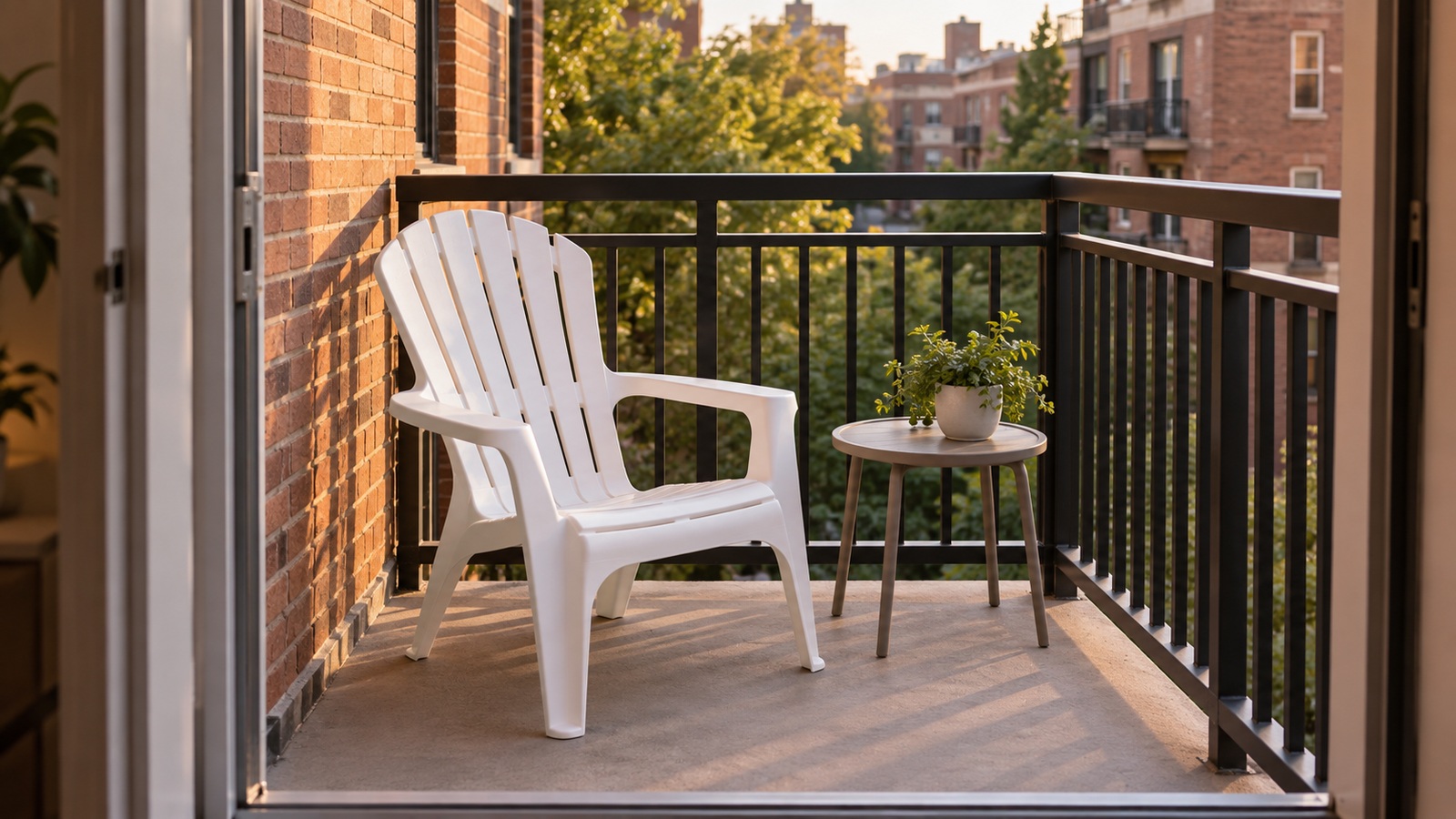
A tiny balcony or compact patio can still offer a satisfying place to sit when every object has a clear role. A resin Adirondack may appeal because a particular model is manageable to move and brings the familiar relaxed outline into an otherwise simple setting. The chair’s low profile, however, does not make its footprint small by default. Broad arms, a rearward back, and the space needed to sit down all compete with the doorway, neighboring furniture, and ordinary movement. Begin with the actual space and the building’s requirements, then compare a specific chair in both its occupied and unoccupied positions. The aim is a small outdoor corner that remains easy to use throughout the day, rather than one that only looks complete in a tightly composed photograph.
A: No. Compare overall arms, depth, and rear projection as well as the usable seat.
A: Assess the full occupied layout; a diagonal position can consume more room.
A: The layout must preserve practical required access during use, rather than only accommodating an empty seat.
A: Buy for the actual users and simultaneous seating need, within the space's practical and permitted arrangement.
A: Handling weight and exposure are separate decisions governed by product and property requirements.
A: Measure its complete top and leg outline and check seated entry, arm movement, and standing.
A: It starts the comparison; occupied movements, fit, and applicable location requirements still need review.
A: Confirm the delivered configuration and whether the entire route through the building can accommodate it.
A: The cushion has separate care and storage instructions that should be followed.
A: If the Adirondack's shape cannot provide comfortable sitting and practical access in the permitted space.
Begin with the Space You Are Allowed to Furnish
Confirm that the balcony or terrace is intended for the proposed use and check the relevant property arrangements before buying furniture. Building management, a landlord, or the responsible owner can clarify furniture restrictions, required access, and any location-specific conditions. The New York City Buildings Department’s rooftop safety guidance, for example, distinguishes approved gathering spaces from rooftops that should not be occupied; it is a reminder to establish the actual setting rather than a universal balcony rule. Follow the current requirements that apply to your own property. A compact chair does not turn an unapproved exterior area into a sitting space, and a decorative layout should never be used to infer what the structure or access arrangements permit.
Measure the Entire Chair, Not the Seat Alone
Record the clear dimensions of the usable floor, including interruptions such as a door swing, drain, wall projection, or fixed equipment. Then compare the product’s overall width, depth, and height, not only its seat measurements. Adirondack arms can extend far beyond the usable sitting area, while a reclined back occupies room behind it. A chair can have a comfortable seat and still be a poor fit for the location. Keep both sets of measurements visible when making the shortlist.
Use a simple floor outline to explore placement where the property’s surface allows it. The outline should represent the complete chair footprint from the maker’s dimensions and leave the required access untouched. Walk through the ordinary tasks you expect to perform there: opening the door, approaching the seat, caring for a planter, or reaching a utility fixture. A shape that fits between walls is only the first check. The surrounding movements decide whether it functions as furniture in the room you actually have.
Do not assume that every resin Adirondack is a compact model. Adams Manufacturing’s RealComfort Adirondack product page is one example of where a buyer can obtain specific product information rather than relying on a broad material category. Read the current dimensions and intended use of whichever chair you are considering. Similar fan backs can hide different arm widths, depths, and reclines. The smaller suitable product may also be another type of outdoor chair if the Adirondack outline cannot serve the space well.
Plan the Occupied Position as Well as the Empty Footprint
A person needs space beyond the chair’s static outline. Consider the position of feet, the movement used to enter the seat, and the forward motion involved in standing up. A low reclined design can feel different from an upright patio chair in a narrow area. Test ordinary movements with the actual model when possible, or compare its sitting relationships with furniture you already know. Avoid solving a tight arrangement by expecting users to squeeze sideways around an obstacle every time.
Keep practical access clear when the chair is occupied. A balcony that has one apparent route should not depend on the sitter moving the furniture to open the door or pass through the required space. The same principle applies to a small patio shared with household movement. Think about the person carrying a drink, opening a screen door, or coming out with a watering can. A workable layout accommodates normal use without constant negotiation around a seat chosen only for its appearance.
Choose One Strong Orientation before Adding More Furniture
Try the chair facing the most useful view, turned toward the doorway, and angled within the permitted area, then assess the complete occupied arrangement for each option. A diagonal placement can sometimes improve the visual relationship, but it can also consume more floor than a straight one. Do not treat that orientation as a universal small-space trick. Decide which position gives a comfortable seat, practical access, and an appealing view without crowding the space. The chair does not need to face the railing merely because the balcony is outdoors. A quieter outlook toward planting or the interior can work when it supports the household’s use and the location’s requirements.
Keep Lightweight Handling Separate from Exposure Planning
A manageable chair can make a small patio easier to rearrange for cleaning or a different activity. Read the weight and carrying information for the actual model, then consider the route it will take. Broad arms may still be awkward in a narrow doorway, even when the chair feels light enough to lift. Work out where it can be set down without blocking the route. The convenience lies in the entire movement, not in a weight number viewed by itself.
Balconies and exposed spaces also need an appropriate plan for weather and furniture storage. Follow the manufacturer’s guidance and the property’s requirements for unfavorable conditions. A resin label does not establish that a chair can stay unattended in every wind situation. Cushions, covers, and lightweight companion objects need consideration as well. The arrangement should have a clear way to move into suitable shelter when required, rather than relying on an improvised attachment after conditions have already changed.
Do not drill, tie, or add weight to the chair or building as an assumed solution. Changes can affect the furniture’s function or the property, and the correct response may require the responsible owner’s guidance. Keep placement questions distinct from decorative choices. If a model cannot be accommodated through a supported routine, choose a different product or location. A small outdoor corner works best when its furniture is easy to understand and manage without alterations that create new uncertainty.
Use a Side Surface Only Where It Serves the Layout
A small table can provide a useful place for a cup or book, but its top and legs occupy floor alongside the chair. Measure the complete object rather than the diameter of its visible top alone. Check how close it can sit without interfering with entry, arm movement, or standing. A table that looks compact from above may have outward-projecting feet. Include those projections when deciding whether the accessory belongs in the plan.
Built-in chair features can change the need for a separate surface, but examine their intended use before relying on them. A broad arm should not be assumed to support every object, and a cup holder may fit only particular containers. Choose a small number of functions that matter to your routine. The space does not need every accessory shown in a full-size patio scene. Removing a redundant item can preserve usable room without reducing the pleasure of the sitting corner.
Make Planting and Soft Furnishings Earn Their Space
Choose planting around the clear furniture and access arrangement, not as the first layer that the chair must fit around. A planter’s mature spread can extend beyond its container and affect the useful seat area. Watering, draining, and moving the pot are also part of its footprint in everyday use. Keep the planter in a supported location and include those tasks in the layout. The greenery should contribute to the outdoor corner without taking over its only working route.
A cushion can soften the visual setting and affect the seated proportions. Check that it is appropriate for the model and that the resulting position suits the sitter. A bulky pad can consume usable seat depth or alter the relation to the arms. Assess it as part of the complete chair rather than adding it simply because the balcony looks bare. Its separate drying and storage requirements also deserve a place in a compact household arrangement.
Keep decorative textiles selective. Several throws and cushions can create a welcoming photograph but leave a daily collection of items to bring indoors. Choose what the household will actually use and maintain. Avoid tying accessories to the chair or railing through a makeshift method merely to keep the styling in place. Follow each product’s instructions and the property’s requirements. A simple arrangement is easier to restore after weather, cleaning, or an ordinary change of activity.
Color can provide continuity without adding another physical object. A chair shade that relates to the wall, floor, or interior room can make the corner feel deliberate. Review the actual color in outdoor light where possible, since a small online sample does not show its full effect across a fan back and broad arms. The palette can do some of the decorative work that additional accessories would otherwise perform. This makes restraint feel intentional rather than unfinished.
Check the Delivery Route Before the Chair Arrives
Trace the chair’s route from collection or delivery through the building to its destination. Include the elevator, stair turn, doorway, and any narrow landing involved, and distinguish the chair’s own dimensions from those of its shipping package. A one-piece molded chair may not separate into smaller components, while another product may arrive in a different configuration. Ask the seller when that detail is unclear. Arrange suitable help if the complete handling task requires it, and follow the building’s delivery requirements. Fitting the final balcony is not enough if the furniture cannot reach it through a supported practical route.
Set a Storage Routine That Suits the Small Home
Identify where the chair and accessories will go when they need to leave the outdoor space. An indoor corner, permitted storage area, or another suitable destination has its own dimensions and access needs. Confirm any stacking or folding claim for the exact model rather than assuming that resin products share those functions. A stored chair can be wider or more awkward than the mental picture suggested by its low seat. Make the complete destination part of the buying decision.
Keep the next setup straightforward by retaining the model information and checking condition before use. Storage near household equipment can introduce impacts or movement even when the chair is sheltered from weather. Inspect the complete product through its maker’s directions, then restore the intended placement and any appropriate accessories. A space that changes seasonally needs a repeatable arrangement, not an improvised puzzle each spring. The easier the routine is to follow, the more likely the sitting corner will continue serving its purpose.
Judge Success by the Everyday Use of the Corner
After using the arrangement, notice which objects matter and which ones get moved out of the way. If a table repeatedly obstructs entry or a cushion regularly remains indoors, review whether it belongs in the permanent setup. Keep the chair’s placement and use within the relevant guidance while making those adjustments. Experience can refine a suitable layout without justifying an unsupported shortcut. The small space should become easier to enjoy over time.
A single comfortable seat can be a complete outdoor destination. It does not need a second chair simply to imitate a larger patio, particularly if a pair consumes the useful access or creates an unrealistic storage task. Think about the actual users and whether seating is needed simultaneously. Another occasional seat may have a different role elsewhere in the home. Choose the quantity that the space can serve well.
Resin Adirondacks can belong on tiny balconies and small patios when a particular model suits the sitter and the permitted location. Check the full dimensions, occupied movement, delivery route, accessories, exposure, and storage before committing to the familiar silhouette. Let the room’s actual use guide the final arrangement. A clear, manageable sitting corner can offer more everyday comfort than a crowded miniature version of a full-size garden scene.


