Find an Affordable Seat That Fits the Way You Use the Patio
A resin Adirondack can make the familiar sloping seat and broad arms accessible when the outdoor furniture budget is limited. For a household creating its first sitting corner, adding occasional guest seats, or keeping a simple summer setup manageable, the lower purchase cost of a particular molded model can be appealing. The useful comparison is still between complete chairs rather than the words resin and wood on their labels. Resin products vary in proportions, construction, limits, and support, while wooden alternatives span a broad range of designs and prices. Start with the sitting experience you need and the complete amount you will spend. An affordable chair succeeds when it serves that purpose without requiring a string of additions, awkward handling, or an early replacement that the original budget overlooked.
A: No. Check the product's actual material and whether it is molded or assembled from separate members.
A: Compare named models using current delivered totals, required extras, setup, and the seating role each will serve.
A: A low price helps only when the complete seat fits its users, location, and intended routine.
A: Use the rating for the exact product instead of a visual judgment about one component.
A: Evaluate the complete shape and supported handling route, not only its mass.
A: Confirm the model's storage arrangement and limitations with its maker.
A: Check coating compatibility first; choosing a suitable factory color may provide a simpler affordable purchase.
A: It can change the seated proportions, but it does not guarantee fit or correct an unsuitable product.
A: Ask about defect handling, warranty scope, and the supported response to damage for that specific construction.
A: Choose the quantity that serves the layout and users and can be stored and cared for realistically.
Understand What Resin Means on the Product Listing
Resin is a broad furniture description, not a single specification. Many familiar lightweight patio chairs are molded plastic products, but the listing should identify the actual material and construction. A chair formed as a molded body differs from an Adirondack assembled from solid plastic-lumber members. Both may appear in a broad plastic-furniture search, yet their prices, weight, connections, and storage arrangements can be quite different. Identify what you are comparing before attributing a benefit to the material name alone.
Adams Manufacturing’s Big Easy Adirondack, for example, identifies polypropylene as its material and provides dimensions and a model-specific capacity. That is useful documentation for one product, not a specification for every inexpensive resin chair. Use the same discipline with a wooden alternative: identify its species or material description, construction, intended use, and actual dimensions. A clear pair of product records makes the comparison more meaningful than a general contest between plastic and timber.
Compare the Complete Purchase, Including Necessary Extras
Check current delivered prices for the particular products offered where you live. Retailers, seasonal stock, delivery charges, and required quantities can change the apparent difference between options. A chair photographed with a cushion or footrest may be sold without those pieces. Read the contents of the purchase carefully rather than assuming the scene represents the complete package. An inexpensive seat remains inexpensive only when the final order matches the amount you planned to spend.
Add accessories because they serve a real need, not because they appear next to the chair online. If the seat needs an appropriate cushion for the sitting experience you want, include that item and its separate care requirements in the comparison. A matching table can also be useful, but it is another purchase with its own footprint. The goal is to choose a workable sitting corner, rather than to discover after delivery that the starting price covered only part of it.
Compare assembly and transport requirements at the same time. A molded chair may arrive ready for use, while another product may require assembly; verify the actual offer instead of assuming either arrangement. Think about how you will collect or receive it and whether it fits the vehicle, gate, or doorway involved. If help or another delivery service is necessary, that belongs in the practical cost. Time and handling can affect whether an apparently cheap purchase is convenient for your household.
Start the Comfort Comparison with the Sitting Position
Try the chair where possible, paying attention to the usable seat, back support, arm position, and the movement needed to sit down and stand up. Adirondacks can differ substantially in recline and seat height despite sharing the recognizable fan-shaped back. A low, deeply relaxed chair may suit one person while another prefers a more upright version. Overall width does not reveal whether the usable seat fits comfortably between the arms. Compare those relationships with furniture you already enjoy using, and include the actual users rather than judging comfort from the outline. The budget should support a seat that gets used; a small saving has little value if the product remains empty because its proportions do not work.
Look at the Molded Structure from More Than One Angle
A molded chair may use contours and reinforcing ribs to support its shape instead of the individual boards and braces familiar on a wooden Adirondack. Examine the manufacturer’s photographs and documentation for the complete construction. The broad visible surface does not tell you everything about the underside or supporting legs. Avoid treating a thin-looking edge as proof of weakness, or a thick-looking arm as proof of strength. The product’s documented limits and condition provide a better basis for use than a visual guess about one detail.
Before putting the chair into service, inspect it for damage from delivery or storage. A crack, distorted member, or other unresolved defect should be addressed with the seller or maker rather than hidden under a cushion. Read the care instructions to understand which changes require taking the chair out of use. Budget furniture deserves the same clear condition assessment as a costly product. An affordable price does not reduce the importance of a sound complete seat.
Distinguish Easy Moving from Secure Placement
Lower chair weight can make routine rearrangement easier, especially when one person handles the patio cleanup. The useful question is whether the particular product can be moved through its intended method along your actual route. Broad arms and a reclined back can still be awkward at a narrow gate. A chair that feels easy to lift on the display floor may require a different approach on steps or uneven garden ground. Review the handling task alongside the weight specification.
Choose the sitting location through the product’s guidance and make sure the intended supports rest correctly on the surface. A leg partly over a deck gap or a chair rocking on uneven paving is a placement problem that material choice does not automatically solve. Leave enough room to enter and exit without pushing the furniture against another object. The final arrangement should allow ordinary use, not merely fit when no one is sitting in it.
Lightweight furniture also needs an exposure plan appropriate to the property. Follow the manufacturer’s severe-weather instructions and move chairs into suitable shelter when required. Do not assume that an open porch, enclosed courtyard, and exposed rooftop present the same conditions. A decorative cushion or loose cover can introduce another object to manage. Make the storage destination clear before the chair becomes part of a setting that is difficult to clear quickly.
Never add an improvised attachment solely to keep an inexpensive chair in place. Drilling, weighting, tying, or modifying the frame can affect its intended use and condition. Ask the maker about supported options if the location creates a genuine handling or placement concern. Sometimes another model or a different sitting area is the clearer choice. The advantage of easy movement should remain connected to a supported routine rather than an altered structure.
Make Low Maintenance a Specific Care Plan
A molded resin chair does not need to be treated as an unfinished wooden chair, but low maintenance still includes appropriate cleaning and inspection. Read the exact product directions for suitable cleaners, tools, drying, and storage. Reach the accessible underside and seat recesses as well as the broad visible surfaces through supported handling. Do not use a stronger solvent, abrasive, or pressure setting simply because dirt has accumulated. Material compatibility matters to the chosen method. Cleaning should help reveal the chair’s condition, not become a substitute for addressing damage. A short, realistic routine is often easier to maintain than occasional aggressive treatment of a product whose requirements were never established.
Consider Color as Part of Ownership, Not Just the Display
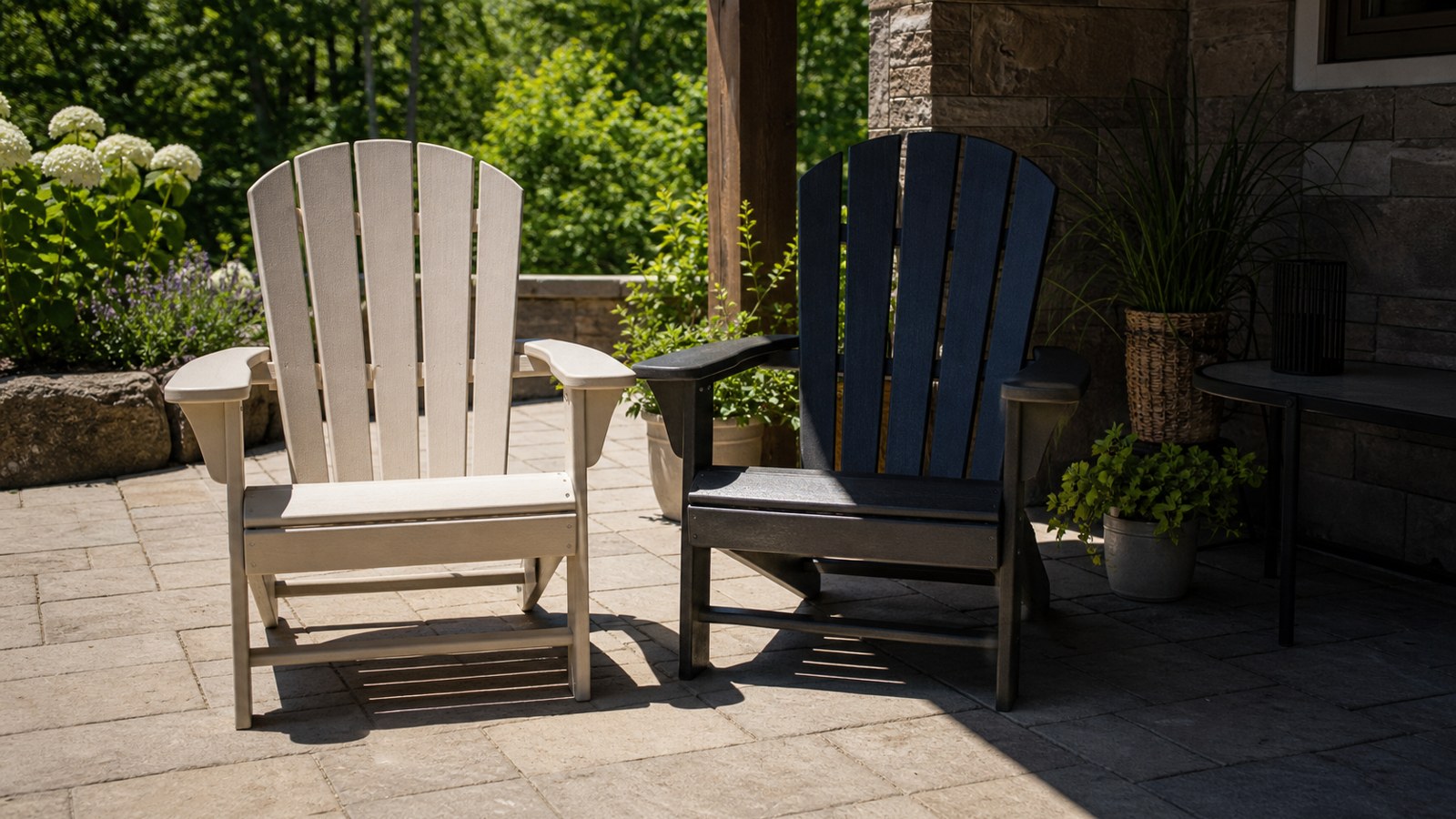
Look at available colors in the intended outdoor setting when possible. A darker chair, pale chair, or saturated shade can have a different relationship with paving, brick, and planting. The broad arms and repeated back elements make the color more prominent than a small product thumbnail suggests. Select a tone you are likely to enjoy with the existing patio materials. Buying a complete seat in a suitable color may be simpler than choosing an unsuitable shade with an immediate repainting project in mind.
Read color and exposure claims as product-specific information. A UV-related claim does not establish that a chair will never change appearance in every location. Keep warranty terms separate from a prediction about the exact number of seasons your furniture will look new. Placement, use, and care all belong in the ownership picture. If matching an older chair, compare the actual surfaces rather than assuming the same color name guarantees an exact match.
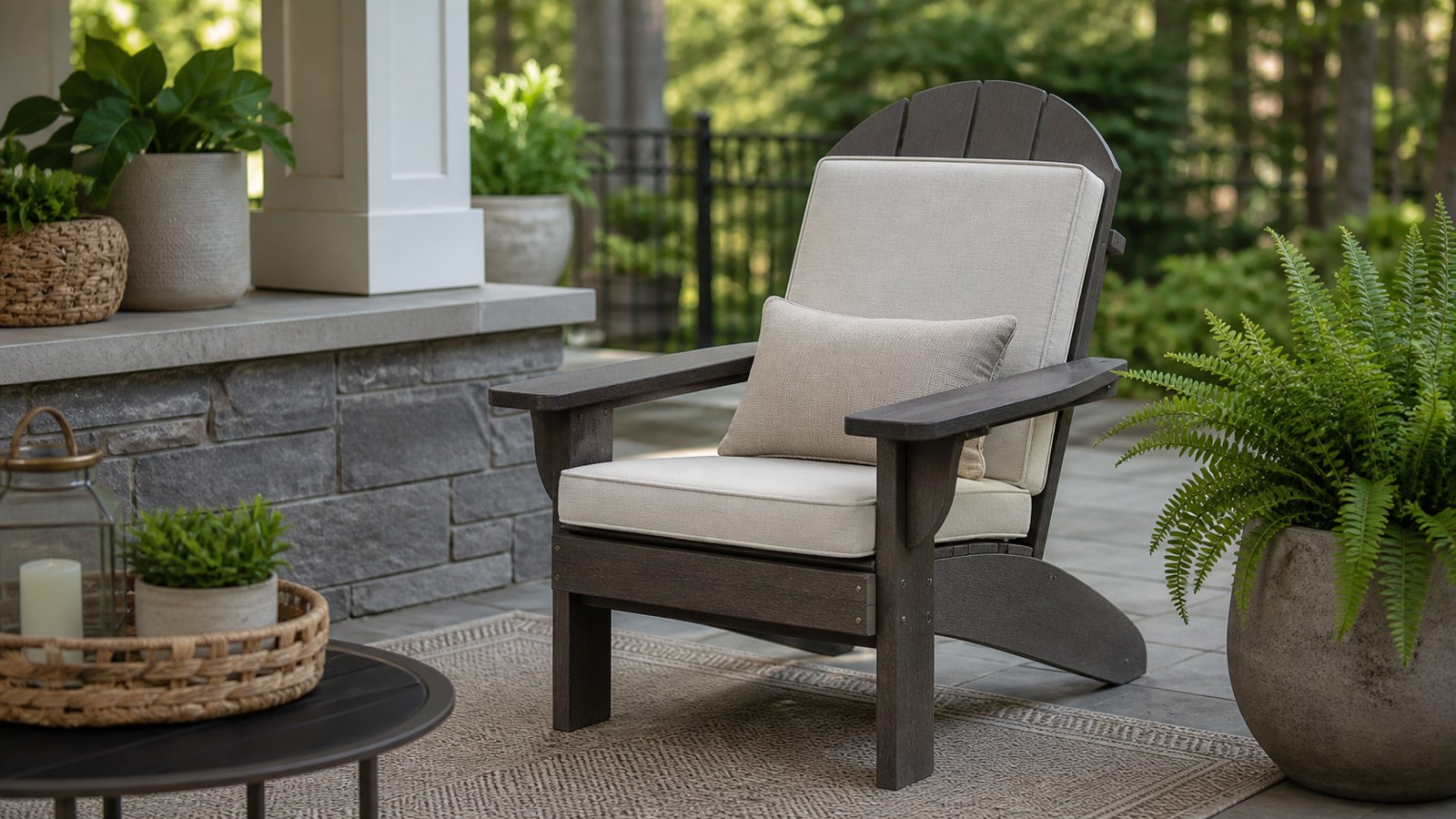
Adding soft furnishings can refresh the setting without changing the chair’s coating, provided the accessories suit the product. Check that a cushion does not create an unsuitable sitting arrangement or interfere with intended operation. Include its cleaning and storage separately. The simplest affordable update may be a restrained companion item, but it should have a purpose and a place in the budget. More decoration is not automatically better value.
Check Storage Claims Before Buying Several Chairs
Some resin products are intended to stack, while others use a different arrangement or should remain separate. Confirm the exact model’s storage instructions and any limitations. A photograph of several similar chairs nested together does not establish that yours can be handled the same way. Measure the stored group when more than one chair is involved, including the space needed to lift or remove the next seat. The storage advantage has to work as a complete household task.
Inspect a stored chair again before returning it to use. Impacts from nearby equipment, shifting stacks, or another person’s handling can change its condition even when it spent the winter out of the weather. Keep the model information available so that uncertainty can be resolved with the correct maker. A clean chair is not automatically a ready chair. Reopening the patio should include understanding the furniture’s condition as well as choosing where it looks best.
Ask What Happens if a Component or Frame Is Damaged
Find out what support is available for the exact product before assuming it can be repaired like a wooden frame. A one-piece molded body can present different service options from an assembly with individually replaceable members. Ask the seller about warranty coverage, model identification, and the response to a defect. Do not improvise a patch and infer that the original capacity has been restored. A clear repair or replacement route belongs in the comparison, especially where several inexpensive chairs will become the household’s main outdoor seating. The question is practical support, not a promise that one construction always lasts longer.
Choose the Affordable Alternative for a Defined Role
Resin can be a sensible alternative when a documented model fits the users, the outdoor setting, and the budget. It can also be less suitable when the household wants a different sitting proportion, a particular repair route, or a furniture weight that supports its handling routine. Write the priorities down before comparing offers. That makes it easier to distinguish an appealing purchase price from a chair that actually meets the need.
Consider how often the seat will be used and how many people it must serve. Occasional extra seating and a primary daily lounge chair can justify different priorities, even in the same garden. Buy the quantity that fits the real arrangement rather than using a low unit price as a reason to fill every available space. Suitable furniture with a clear role is easier to store, maintain, and continue using.
A budget-friendly resin Adirondack is best judged as a complete product with an understood place in the household. Compare the delivered cost, sitting fit, documented limits, care, movement, and support against a specific wooden alternative. Keep expected additions and storage tasks visible from the beginning. The result can be an affordable sitting corner chosen for everyday use, with its value grounded in what the furniture actually provides.