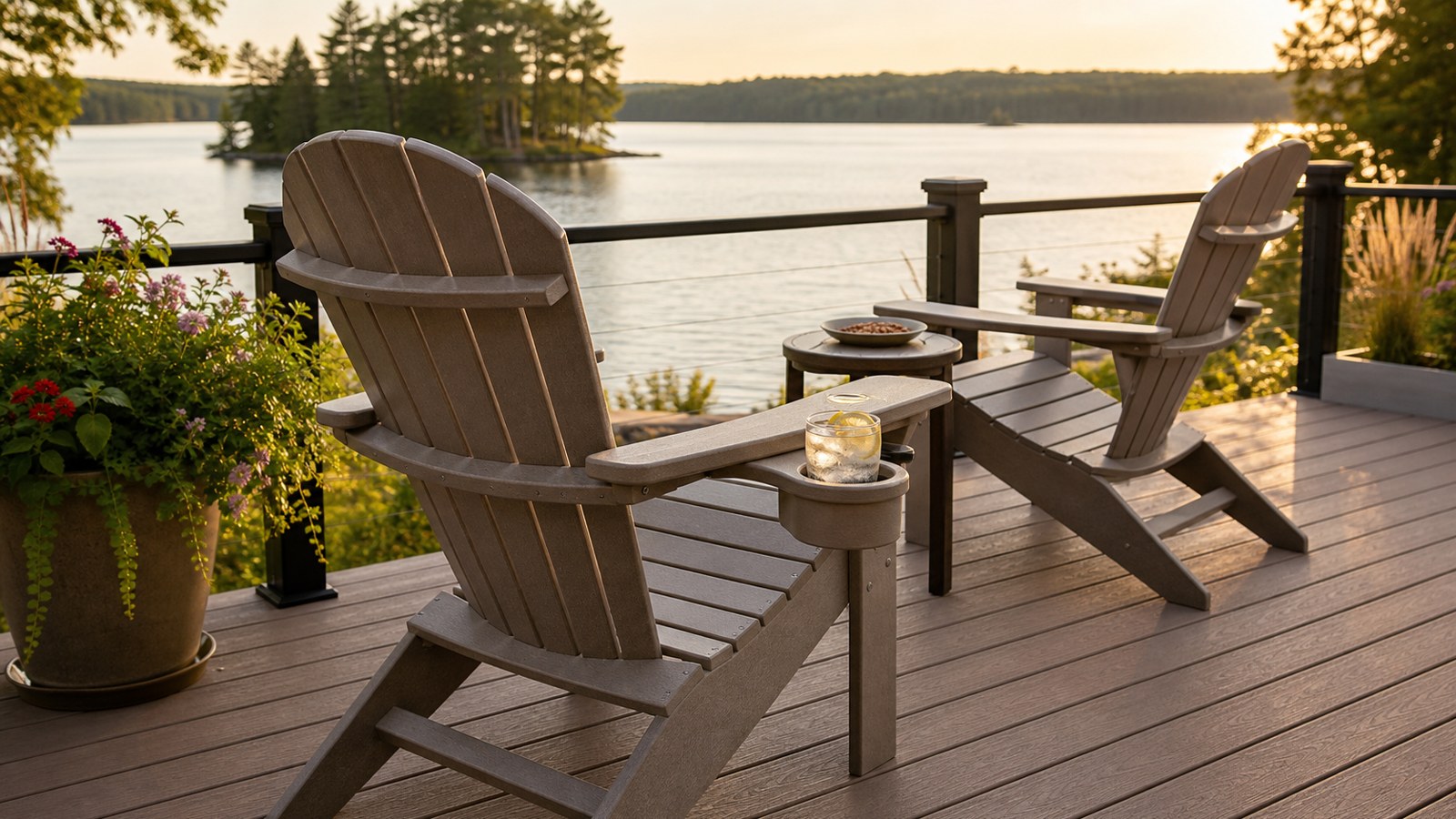
The Rise of Polywood and HDPE in Outdoor Living
Outdoor furniture has long been defined by durability challenges. Wood can splinter, rot, and demand seasonal maintenance. Aluminum can dent and grow uncomfortably hot under the sun. Wicker, even synthetic varieties, tends to unravel after a few years. In this context, the search for better, longer-lasting materials has shaped the outdoor furniture market. Two terms frequently emerge at the top of this conversation: Polywood and HDPE.
The two are closely related, yet they are not identical. Both have reputations for toughness, weather resistance, and eco-friendly sourcing. Yet homeowners, designers, and commercial buyers often find themselves wondering whether Polywood and HDPE are interchangeable or whether there are subtle but important differences. Exploring these materials in depth not only clears up confusion but also empowers buyers to make informed choices for their patios, porches, or poolside retreats.
A: No—POLYWOOD is a brand that uses HDPE; many brands also use HDPE.
A: Longevity depends on board quality, UV package, hardware, and design—premium lines (including POLYWOOD) generally last 10–20+ years.
A: No. It’s color-through; just clean with mild soap and water.
A: Extrusion control, hardware grade, design complexity, and warranty support drive price.
A: Gradually over years; UV inhibitors slow it. Lighter shades show it least.
A: Choose marine-grade stainless and rinse after salt exposure to prevent staining.
A: Comfort is geometry: seat height, contour, recline—not just the material.
A: They vary by brand/collection. Read terms—coverage for fade, crack, or hardware differs.
A: Yes, but color/texture may not match perfectly across different HDPE sources.
A: Rinse monthly in season; deep clean at season start/end. Avoid abrasive pads and harsh chemicals.
A Closer Look at HDPE Lumber
High-density polyethylene, or HDPE, is a thermoplastic polymer widely recognized for its strength and stability. It begins life as recycled plastics, commonly milk jugs, detergent bottles, and other post-consumer containers. These plastics are shredded, cleaned, melted, and then extruded into dense, wood-like boards. The result is a material that is solid, weatherproof, and remarkably resilient.
HDPE lumber is heavier than hollow plastics, which makes it suitable for furniture that needs stability. Unlike painted wood, its color runs throughout the plank, minimizing visible scratches and preventing peeling. It is non-porous, meaning water cannot soak in and cause swelling or rotting. It resists mold, mildew, and insect damage. From a purely material standpoint, HDPE is one of the most durable resources available for outdoor applications.
Polywood: From Brand to Benchmark
Polywood began in the 1990s as a company dedicated to transforming recycled plastics into attractive outdoor furniture. In many ways, it pioneered the commercial application of HDPE lumber in furniture form. The company’s founders saw not only the waste problem caused by discarded milk jugs but also the potential of repurposing these plastics into lumber-like boards. Their Adirondack chairs quickly became a symbol of durability and sustainability. Over time, “Polywood” has evolved into more than a brand name. For many consumers, it has become a shorthand for HDPE lumber furniture in general. Just as people say “Kleenex” for tissues or “Xerox” for copies, “Polywood” is often used as a catch-all term. But in reality, Polywood is one specific manufacturer, while HDPE is the raw material used by many different companies. Understanding this distinction is key to evaluating quality and performance.
The Manufacturing Journey
One of the main differences between Polywood and generic HDPE furniture lies in the manufacturing process. While all HDPE lumber is derived from recycled plastic, not every producer applies the same level of quality control. Polywood has invested in precise extrusion methods, color stabilizers, and marine-grade hardware that complement its HDPE boards. Every step of the process is designed for consistency and long-term reliability.
Generic HDPE products, by contrast, can vary widely. Some companies use high-quality recycled plastics and rigorous processes similar to Polywood’s. Others cut corners, producing planks that may be lighter, less color-stable, or assembled with inferior screws and bolts. For buyers, this variance means that while “HDPE” describes the material, “Polywood” signals a guaranteed standard of engineering.
Durability and Lifespan
From a durability perspective, both Polywood and HDPE lumber furniture can last decades. The HDPE itself is resistant to moisture, fading, cracking, and insects. Whether the chair comes from Polywood or another brand, these qualities are inherent in the material. The difference lies in consistency. Polywood’s twenty-year residential warranty is one of the longest in the industry, a reflection of its confidence in controlled production.
Generic HDPE furniture may not always carry such lengthy guarantees. In some cases, the lumber might be excellent but the hardware subpar, leading to rust or instability before the boards themselves ever degrade. This illustrates why some buyers swear by the Polywood name—it represents not just the raw material but a proven package of longevity and craftsmanship.
Resistance to Weather Extremes
Outdoor furniture must survive under relentless weather stress. Rain, snow, wind, salt air, and sun all conspire to weaken materials. Here again, HDPE excels regardless of brand. It is non-porous, so it will not absorb water, swell, or rot. It is dense enough to resist warping, and UV inhibitors added during manufacturing prevent fading. In this respect, both Polywood and other HDPE brands hold an advantage over wood, wicker, and aluminum. The difference comes in details. Polywood emphasizes marine-grade stainless steel fasteners, which prevent rust in coastal regions. Some non-Polywood HDPE chairs use cheaper hardware that may corrode. This is why two chairs made from HDPE lumber can perform differently after five years on the same beachfront deck. Material and craftsmanship go hand in hand in determining resilience.
Maintenance Requirements
For homeowners, one of the greatest advantages of HDPE furniture—Polywood or otherwise—is minimal maintenance. Unlike wood, which must be stained, painted, or sealed annually, HDPE requires only occasional cleaning with soap and water. The color is integrated throughout the material, so no refinishing is needed. Scratches remain discreet, and mildew does not take hold.
Polywood reinforces this low-maintenance appeal by designing furniture that is easy to clean with a garden hose or cloth. Generic HDPE shares these advantages, but design details like smoothness of finish and hardware placement can affect ease of cleaning. In essence, the difference is less about maintenance requirements and more about user experience.
Eco-Friendly Credentials
Both Polywood and HDPE share impressive sustainability credentials. Polywood proudly advertises that it has recycled millions of milk jugs since its founding, converting waste into durable products. Generic HDPE lumber is often similarly sourced from post-consumer plastics. In both cases, the material prevents plastics from entering landfills and waterways.
What sets Polywood apart is branding transparency. The company emphasizes not only its recycling statistics but also its closed-loop production process, in which scraps and waste from manufacturing are reprocessed back into lumber. Other HDPE manufacturers may or may not disclose such details. For buyers who prioritize verified eco-friendly practices, Polywood offers reassurance that the sustainability story is more than surface-level.
Cost Considerations
Price is another area where distinctions emerge. Polywood furniture is often more expensive than generic HDPE competitors. This is partly due to brand recognition, partly due to higher production standards, and partly due to the warranty included. Buyers are essentially paying for quality assurance and long-term confidence. Generic HDPE chairs can be significantly cheaper, sometimes half the price of Polywood equivalents. For budget-conscious shoppers, this affordability is appealing. However, the trade-off may come in reduced hardware quality, shorter warranties, or less refined finishing. The decision often comes down to whether one values upfront savings or long-term reliability.
Aesthetic Differences
HDPE lumber can be produced in a wide range of colors and textures. Both Polywood and generic HDPE chairs mimic the grain and feel of wood while offering vibrant hues from classic white to bold red or navy. Polywood, however, is known for offering consistent finishes across its collections, ensuring that a set of chairs purchased years apart still matches in color.
Other manufacturers may not achieve the same color stability, especially if UV stabilizers are not as robust. Over time, a generic HDPE chair may fade slightly, creating mismatched sets. While this does not affect function, it does influence aesthetic longevity. For many homeowners, this subtle distinction becomes significant when they are curating cohesive outdoor spaces.
Commercial Versus Residential Performance
In residential use, both Polywood and generic HDPE chairs can perform admirably for decades. The difference often becomes clearer in commercial settings. Resorts, cruise ships, and restaurants subject furniture to constant use, spilled drinks, sunscreen residues, and heavy wear. Polywood’s consistent use of premium hardware and controlled processes ensures its furniture holds up under these conditions.
Generic HDPE can also last well, but performance varies more widely by manufacturer. Some deliver excellent commercial results, while others fall short. For businesses, this unpredictability makes Polywood appealing despite the higher cost, as it reduces the risk of early replacements and enhances guest satisfaction.
The Emotional Element of Longevity
When comparing Polywood and HDPE, it is easy to focus solely on technical details—lifespan, warranties, or maintenance. Yet longevity also has an emotional component. Furniture that remains sturdy, attractive, and dependable year after year becomes part of the fabric of family life. Adirondack chairs where morning coffees are shared or where generations gather for summer barbecues take on a symbolic permanence. Polywood’s emphasis on durability and warranty speaks directly to this desire for reliability. HDPE furniture from other manufacturers can also deliver it, but buyers must navigate the variability of production. The emotional reassurance Polywood provides is as much a selling point as its technical credentials.
Clearing Up Misconceptions
One common misconception is that Polywood and HDPE are two different materials. In reality, Polywood is made from HDPE lumber. The distinction lies in branding, consistency, and reputation. Another misconception is that all plastics behave the same. Cheap hollow plastics used in bargain furniture often crack, fade, or warp within a few years, leading some buyers to assume “plastic” equals short-lived. HDPE, however, is a far superior category, engineered to withstand decades of outdoor stress. Clarifying these points helps buyers understand why Polywood furniture commands higher prices and why HDPE in general has become a trusted material for quality outdoor furnishings.
Comparing Value Over Time
Value is not just about upfront cost but about cost per year of use. A $200 generic HDPE chair that lasts ten years equates to $20 per year. A $400 Polywood chair that lasts twenty years equates to the same annual value, with the added benefits of warranty and consistent quality. In some cases, the Polywood chair even proves cheaper in the long run, as buyers avoid the hassle of repairs or early replacements. This cost-per-use calculation reveals that Polywood and HDPE are not at odds but part of the same continuum of smart outdoor investments. Buyers simply need to decide which balance of upfront cost and long-term confidence aligns with their priorities.
Which One Should You Choose?
Choosing between Polywood and generic HDPE ultimately depends on needs, budget, and expectations. If brand assurance, warranty, and consistent finishes are top priorities, Polywood is the natural choice. If affordability and basic durability are sufficient, other HDPE furniture may provide excellent service at a lower cost. The good news is that both options represent a leap forward compared to wood, wicker, or aluminum alternatives. In either case, buyers enjoy the resilience of HDPE, the sustainability of recycled materials, and the convenience of minimal maintenance. The decision is less about “good versus bad” and more about “premium versus practical.”
Looking Toward the Future of Outdoor Furniture
As sustainability and longevity become more central to consumer choices, HDPE and Polywood will continue to dominate outdoor furniture conversations. The ability to transform waste into beautiful, lasting products positions both as leaders in a changing market. Over time, we may see even more innovation in color variety, surface texture, and eco-friendly practices. Polywood will likely remain the benchmark brand, while other HDPE manufacturers expand accessibility through competitive pricing. For homeowners and businesses alike, the rise of HDPE and Polywood represents a turning point: outdoor furniture that no longer needs to be disposable. Instead, it can be purchased once, enjoyed for decades, and even recycled at the end of its life.