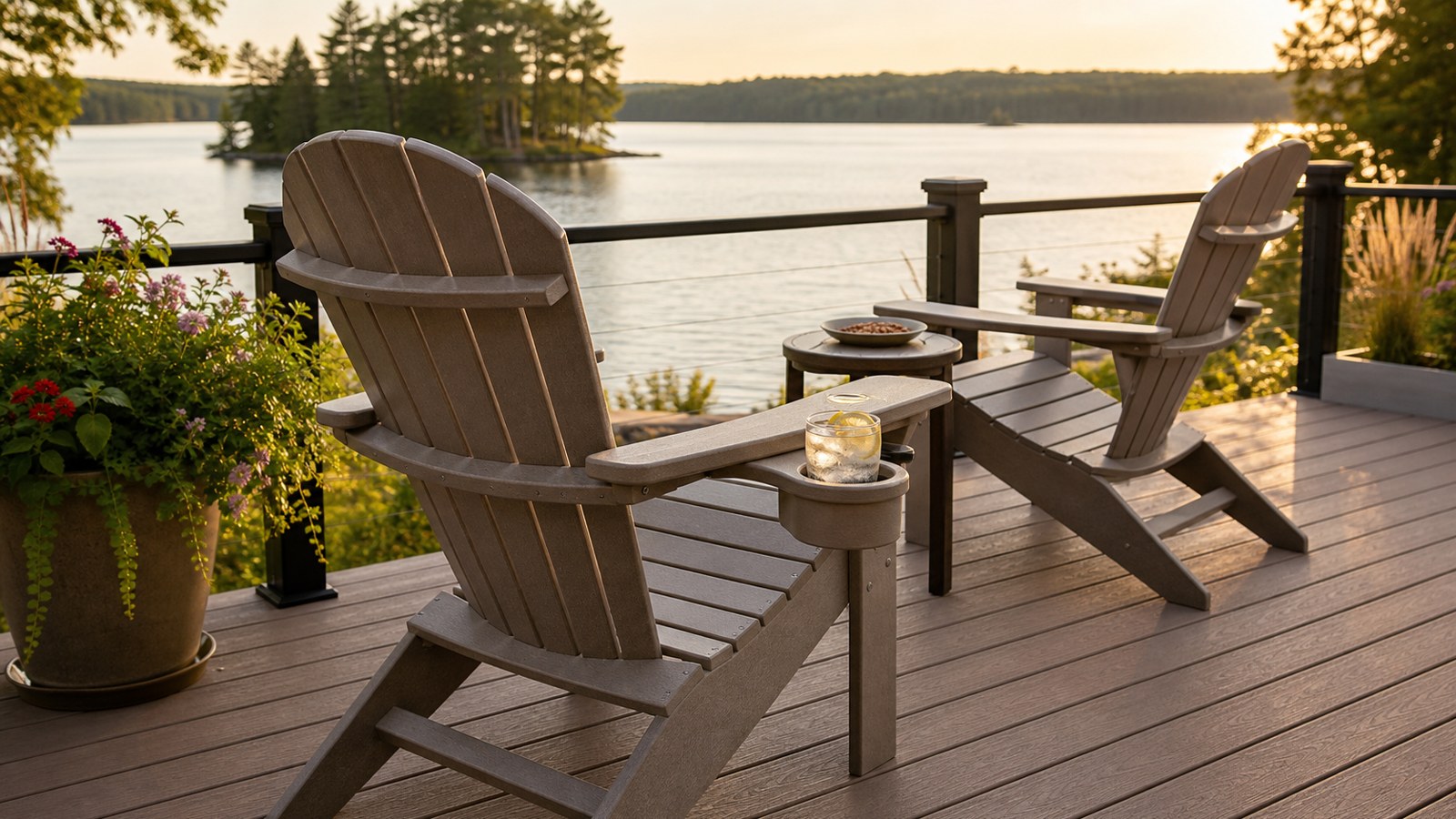
From Bottle to Backyard Classic
Outdoor furniture has always walked a delicate line between beauty and endurance. Wooden chairs exude charm but require constant care. Metal furniture offers strength but often corrodes. Plastics have long promised convenience but rarely delivered longevity. Then came Polywood, a company that saw possibility in what most of us throw away every day: plastic bottles. By transforming discarded containers into stylish, weatherproof furniture, Polywood created a revolution in outdoor living. The process is not only a technical feat but also a sustainability story that gives new life to millions of bottles while providing chairs that last for decades.
A: The feedstock is primarily HDPE (milk/detergent jugs). Soda bottles are usually PET, a different plastic.
A: Extruded HDPE boards shaped like wood lumber, machined for furniture parts.
A: No—pigment is blended through the board; there’s no surface paint to peel.
A: UV inhibitors are integrated into the resin; lighter colors show change the least.
A: HDPE won’t absorb water or rot; it’s stable through wet seasons.
A: Marine-grade stainless resists corrosion best, especially near pools/coasts.
A: Boards are formulated with recycled HDPE; exact percentages vary by color and line.
A: Not recommended; choose a factory color. The surface is non-porous.
A: Mild soap + warm water + soft brush; avoid abrasives and harsh solvents.
A: Yes—just rinse occasionally; the boards and hardware are designed for exposure.
The Spark of an Idea
The story of Polywood began in the early 1990s when its founders recognized two problems at once. First, mountains of plastic waste were filling landfills and polluting waterways, with no clear path to reuse. Second, outdoor furniture kept failing under harsh weather conditions, forcing homeowners into a cycle of replacement and disposal. By combining these problems into one opportunity, they imagined furniture built from recycled plastic that looked like wood but resisted the elements. This vision sparked the creation of a process that could turn something as simple as a milk jug into a chair worthy of a sunlit porch or lakeside deck. What started as a small experiment soon grew into an industry standard, reshaping how consumers think about sustainability and durability in furniture design.
Gathering the Raw Materials
The first step in creating a Polywood chair begins long before it ever resembles furniture. It starts with the collection of high-density polyethylene, or HDPE, plastic bottles. These bottles are most often milk jugs, juice containers, and detergent bottles—the everyday items that households discard by the billions. Recycling facilities collect, sort, and clean them, ensuring they are free from contaminants that could weaken the final product.
Once collected, these bottles are sent through a rigorous cleaning process to strip away labels, adhesives, and residues. This level of detail is critical because any impurities would interfere with the consistency and durability of the lumber that will eventually form the chair. What was once a jumble of discarded containers is now a clean feedstock, ready to be reborn as something far more enduring.
Breaking It Down
After collection and cleaning, the bottles undergo shredding. Industrial machines grind the containers into small flakes, not unlike confetti. This step increases surface area, making the plastic easier to process in later stages. The flakes are inspected and sometimes color-sorted to ensure uniformity in the final product. These flakes are then melted down into a molten form, creating a raw material that can be shaped and molded. This transformation from solid to liquid is where waste begins to look less like trash and more like a building block. It’s also the point where the commitment to sustainability shines, as each melted flake represents one less item polluting the environment.
Turning Plastic into Lumber
The melted HDPE is extruded into dense, solid planks known as Polywood lumber. Unlike thin, injection-molded plastic, these planks are heavy, durable, and closely mimic the heft of real wood. Pigments are added during this process, ensuring that the color runs through the entire board rather than sitting only on the surface.
The result is lumber that not only looks like painted wood but also behaves like an upgraded version of it. Scratches remain discreet because there is no lighter material beneath the surface to reveal. The density prevents brittleness, giving the lumber strength to endure for decades. This lumber is the true foundation of every Polywood chair, a material born from bottles but destined for comfort.
Color That Lasts
One of the defining features of Polywood lumber is its ability to retain color year after year. This is achieved by adding UV inhibitors and stabilizers during the extrusion process. Unlike paint, which fades, chips, or peels under constant sunlight, the embedded color resists fading. For homeowners, this means their chairs stay vibrant whether they are classic white, earthy brown, deep navy, or bold red. The science of embedding color during production ensures that the furniture not only performs well structurally but also continues to enhance outdoor spaces aesthetically. It’s a detail that makes all the difference in the investment’s perceived value over time.
Precision Crafting in the Workshop
Once the Polywood lumber is produced, it is sent to the company’s workshops, where the planks are cut, shaped, and smoothed into components. Computer-guided machines ensure precision, cutting each board into the exact shapes needed for legs, arms, backs, and seats. This accuracy reduces waste while guaranteeing that every chair aligns perfectly when assembled.
Edges are rounded and surfaces smoothed to make them comfortable to touch. Unlike traditional wood, which requires sanding to remove splinters, Polywood lumber emerges splinter-free from the start. This meticulous shaping stage bridges the gap between raw material and recognizable furniture, transforming simple planks into pieces that invite comfort.
Hardware That Matters
Durability doesn’t depend on lumber alone. The fasteners and joints that hold a chair together are equally critical. Polywood pairs its HDPE lumber with marine-grade stainless steel hardware. This choice is intentional, as stainless steel resists rust and corrosion, even in coastal environments where salty air can quickly weaken metals.
By combining engineered plastic lumber with premium hardware, Polywood ensures that the finished product is more than the sum of its parts. It is a chair built not just to survive but to thrive in the harshest outdoor conditions. The marriage of lumber and hardware is one of the details that elevate Polywood from generic plastic furniture to an industry benchmark.
Assembly into Timeless Designs
With components ready and hardware selected, the final stage is assembly. Craftsmen and technicians bring together planks and fasteners to build chairs in the classic Adirondack style. Wide arms, deep seats, and angled backs are carefully measured to balance comfort with durability. Each chair is tested for stability, ensuring it meets rigorous standards before reaching customers. This assembly process is where engineering meets tradition. While the material may be modern, the silhouette pays homage to a design over a century old. The result is a fusion of heritage and innovation, turning recycled bottles into pieces that feel timeless yet progressive.
Quality Control for Decades of Use
Every Polywood chair undergoes strict quality control before it leaves the workshop. Inspectors check for alignment, finish consistency, and stability. Because the brand offers a 20-year residential warranty, each chair must meet standards that will hold up over decades. This layer of assurance reassures buyers that they are not just purchasing furniture but investing in reliability. The consistency of this quality control is one reason Polywood has built a reputation for trustworthiness. Customers know that whether they buy one chair today or add a set five years later, the craftsmanship and color will remain consistent.
The Environmental Payoff
Beyond durability, one of the greatest rewards of the Polywood process is its environmental impact. Each chair represents dozens of bottles diverted from landfills or waterways. By transforming discarded containers into furniture, Polywood demonstrates the possibilities of a circular economy, where waste is not an endpoint but a resource. Over time, this effort adds up to millions of bottles repurposed. Buyers gain furniture that lasts decades while simultaneously supporting efforts to reduce plastic pollution. It’s a rare instance where personal comfort aligns directly with global responsibility, making each chair more than just a product—it’s part of a solution.
Performance in Real Life
Polywood chairs aren’t just theoretical eco-wonders; they have proven their worth in real-world conditions. Homeowners across climates report chairs lasting for decades, retaining color, and resisting damage. In coastal towns, they stand firm against salty air. In snowy states, they endure winters without cracking. In deserts, they resist bleaching from relentless sun. These real-world testimonials underscore the effectiveness of the recycled-to-lumber process. What began as a bottle tossed into a recycling bin ends as a chair that comfortably hosts family gatherings, backyard barbecues, and peaceful evenings year after year.
Beyond the Chair
While the Adirondack chair is the flagship product, the recycled plastic process extends far beyond. Polywood produces dining sets, benches, swings, and even rocking chairs, all using the same HDPE lumber derived from bottles. Each product carries the same promise of durability, sustainability, and aesthetic appeal. This expansion illustrates that the process is scalable and adaptable. Once perfected, the transformation of bottles into lumber opened possibilities across the spectrum of outdoor living. The chair is just the beginning of a much larger sustainability journey.
Why It Matters
The question of how Polywood chairs are made from recycled plastic bottles is more than a curiosity about manufacturing. It is a window into a future where sustainability and quality are not mutually exclusive. The process proves that waste can become beauty, and that durability does not have to come at the expense of the planet. For consumers, it redefines what investment in furniture means. A purchase becomes both a personal gain and a contribution to a global effort. The bottles once used for a morning glass of milk or a household chore now live on as part of an enduring outdoor retreat.
Looking Ahead
As environmental awareness grows, the model set by Polywood may become the standard rather than the exception. More companies are beginning to experiment with recycled materials, but few have achieved the balance of aesthetics, durability, and sustainability that Polywood has mastered. Looking forward, the process may expand beyond furniture to new products and industries, proving that recycled materials can redefine quality across sectors. For now, each Polywood chair tells a story. It is the story of transformation, where plastic bottles once destined for waste have been reborn as furniture that invites rest, conversation, and memories. It is a story of design and responsibility, woven together in a product that proves recycling can be both practical and beautiful.