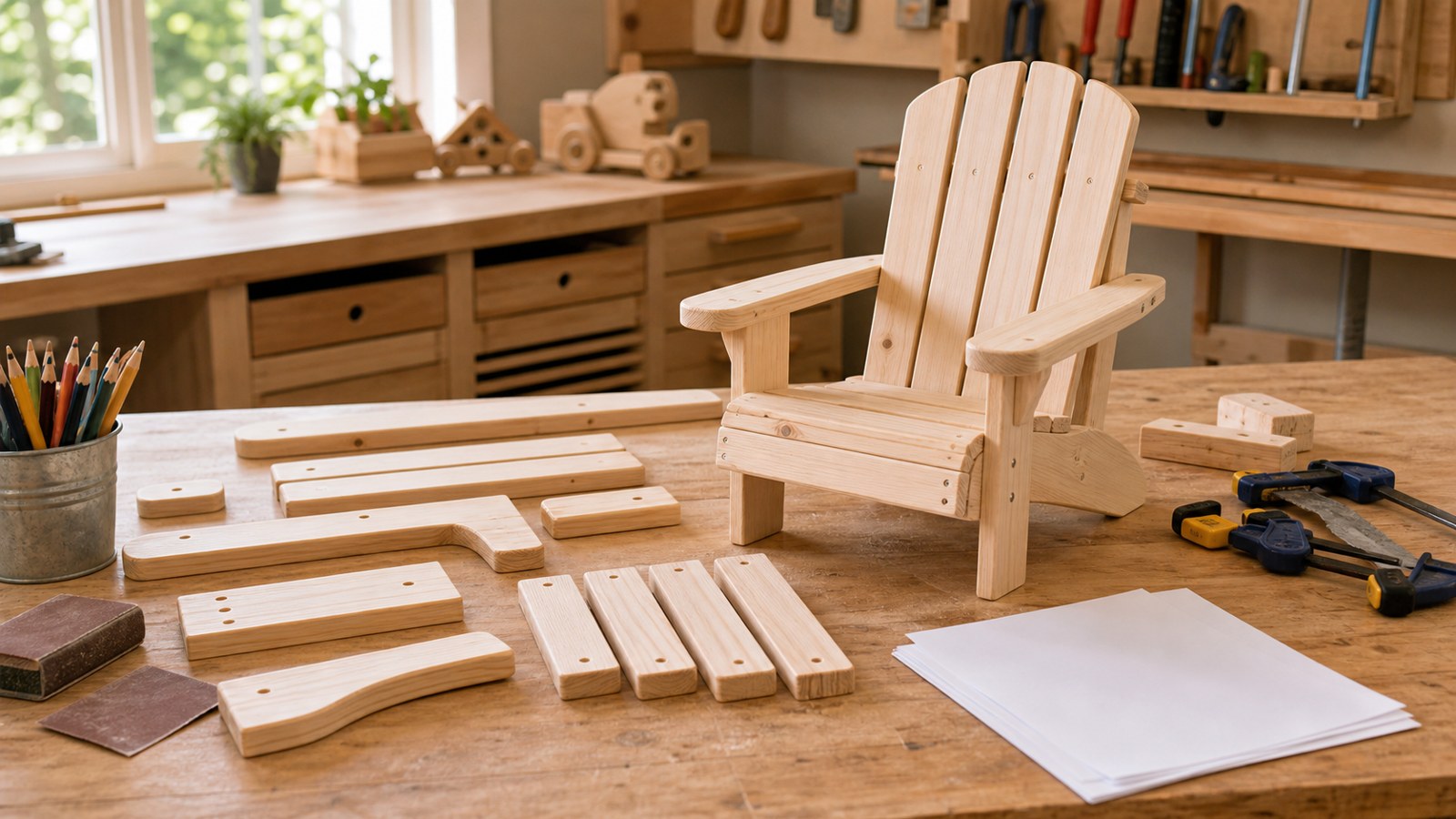
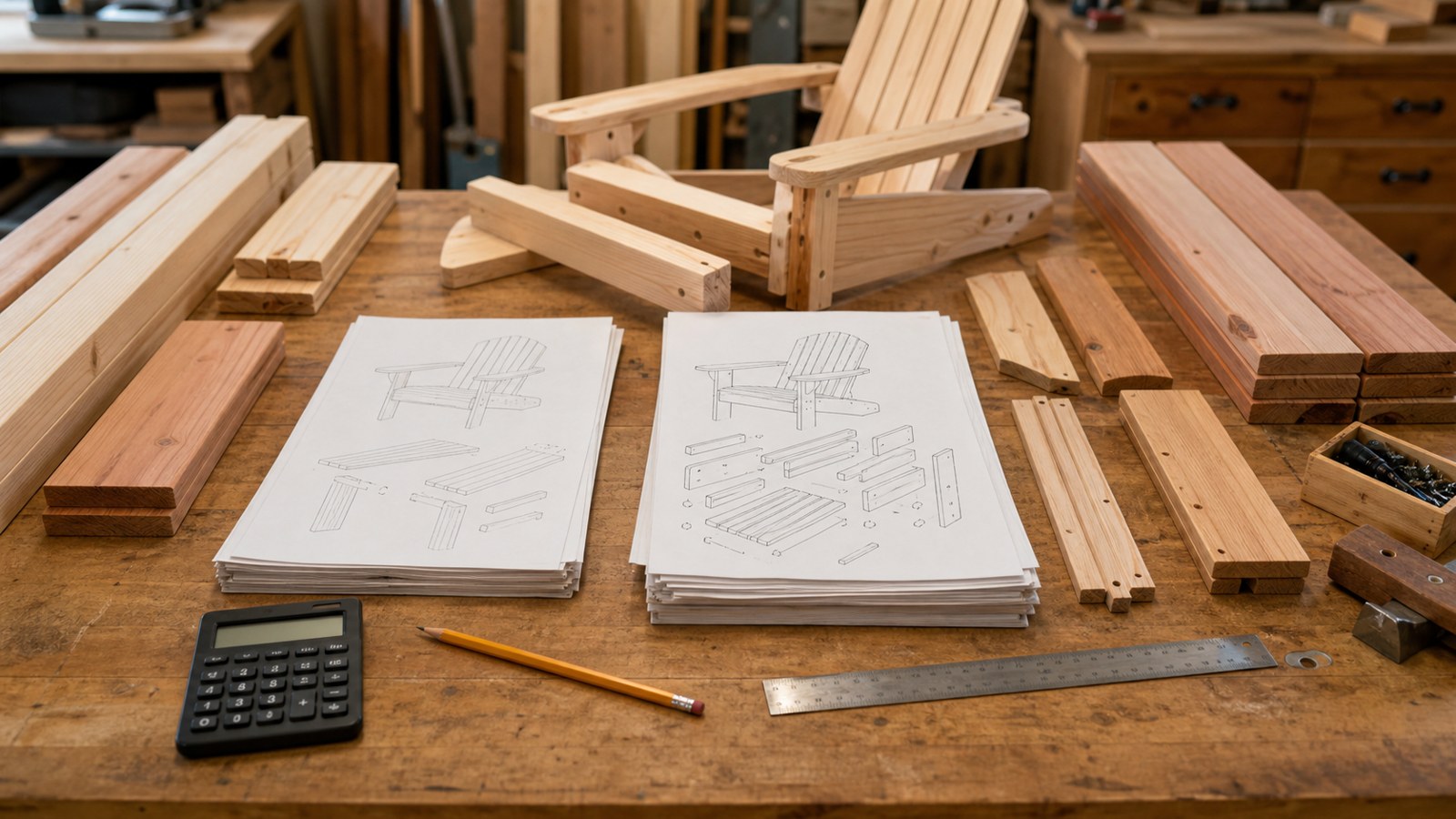
When it comes to building your own Adirondack chair, few decisions carry as much weight as whether to go with free plans or invest in paid ones. On the surface, paying for a set of chair plans might seem unnecessary—after all, there are hundreds of free templates floating around online. But serious DIYers, woodworkers, and weekend crafters often discover that the true value of paid Adirondack chair plans lies not just in convenience, but in the hidden hours saved, the precision gained, and the costly missteps avoided. Let’s dig into what sets premium plans apart, how they can streamline your project, and whether they’re worth it for you.
A: Yes—templates, angles, and sequences cut layout and rework by hours.
A: Pre-tested geometry prevents “wobble” and mis-fit arms; fewer recuts.
A: Absolutely—plans note where to widen seats, raise height, or tweak arm width.
A: Digital goods vary; check creator policy before purchase.
A: Use 100% scale, “no fit to page.” Most sets include a 1" test square.
A: Choose dual-dimensioned plans or convert using included metric tables.
A: Only if license permits; many are personal-use by default.
A: Look for versions using pocket holes + pattern routing; jigs are optional.
A: Plans should specify thicker stock, thread type, and expansion gaps.
A: Start with standard classic geometry before tackling contoured seats.
1. The Adirondack Chair: A Symbol of Simplicity and Skill
Before diving into the plans themselves, it’s worth remembering what makes the Adirondack chair so special. This classic outdoor seat, born in the early 1900s in the rugged beauty of the Adirondack Mountains, has endured for over a century because of its comfort, stability, and timeless silhouette. With its wide armrests, deep recline, and angled seat, it invites relaxation in any setting—from mountain cabins to lakefront decks and suburban patios. However, while the design looks simple, building one is deceptively challenging. Each curve, joint, and bevel contributes to the comfort and integrity of the chair. Slight miscalculations—like a wrong backrest angle or uneven leg cut—can turn an inviting lounger into an awkward, wobbly project. That’s where detailed plans come in.
2. The Reality of Free Plans: Pros, Cons, and Common Pitfalls
Free Adirondack chair plans can be a great way to start. Many hobbyists find them online through blogs, community forums, or design-sharing sites. They often provide basic diagrams and material lists, sometimes with step-by-step guides. But the quality varies dramatically.
Advantages of Free Plans:
They’re easy to find and, of course, cost nothing. For those testing their skills or experimenting with scrap wood, free options can be a fine starting point.
The Downsides:
However, free plans often come with limitations that can cost you in time, materials, and frustration. Many lack scale accuracy, omit crucial assembly angles, or assume you already have advanced woodworking knowledge. It’s not uncommon to find discrepancies between part measurements or unclear instructions for joints and fasteners.
A missing angle measurement might not seem like a dealbreaker—until your back slats don’t align or your armrests wobble under weight. The hours spent re-measuring, adjusting, and guessing can easily exceed the cost of a professional plan.
3. Paid Plans: More Than Just Blueprints
A high-quality paid Adirondack chair plan is not simply a diagram—it’s a complete workshop guide. You’re not just buying measurements; you’re investing in the builder’s expertise, precision drafting, and clear communication.
Detailed Drawings and 3D Views:
Many paid plans include multiple view perspectives—front, side, top, and isometric—to make visualization effortless. Some even include 3D rendering files that allow you to rotate the chair digitally before cutting your first board.
Cutting Templates and Jigs:
The curves of the backrest or the armrests are notoriously difficult to shape consistently. Paid plans often come with printable templates that you can trace directly onto your lumber. This ensures identical cuts and reduces error—a huge advantage when building multiple chairs.
Step-by-Step Build Guides:
Paid plans typically include an illustrated manual detailing every stage: from material selection and tool setup to assembly sequence and finishing tips. These guides are written by experienced builders who’ve tested the designs themselves, so they know where beginners are likely to stumble.
Material Optimization:
Another underrated benefit is efficient material use. Premium plans often include cutting layouts that maximize yield from standard lumber sizes. That not only saves wood but also prevents unnecessary trips to the hardware store.
4. The True Cost of a Mistake
When evaluating whether paid plans are “worth it,” consider what a single mistake costs you. Mis-cutting a curved arm or leg could waste a pricey cedar board. Misaligned joints might force you to rebuild entire sections. A poorly angled backrest could make the chair uncomfortable, undermining the entire effort. Let’s say you buy $60 worth of lumber and spend eight hours cutting and assembling based on a free plan. If one measurement error forces you to replace just two boards, that’s another $15–$20 in material—and possibly a wasted weekend. A paid plan, often priced between $10 and $25, can easily pay for itself after preventing one such error. In woodworking, precision is priceless. The more complex the project, the greater the potential savings from accurate planning.
5. How Paid Plans Improve Your Workflow
Paid Adirondack chair plans don’t just prevent errors—they make the entire building process smoother. From setup to sanding, every phase benefits from professional guidance.
Time Efficiency:
Professionally drafted plans reduce guesswork. You’ll know exactly how to sequence the build, which parts to cut first, and when to assemble versus pre-finish. This order matters: for instance, finishing slats before attaching them prevents drips and uneven coats.
Tool Readiness:
Detailed plans specify required tools and even blade angles, drill bit sizes, and screw lengths. This foresight prevents mid-project delays caused by realizing you lack the correct bit or fastener.
Confidence Boost:
There’s an intangible but important benefit—confidence. When you trust your plans, you approach each step with purpose. There’s less second-guessing, fewer “should I recut this?” moments, and more satisfaction as you see the design come together exactly as intended.
6. When Paid Plans Truly Shine: Advanced or Specialized Designs
For simple straight-back models, free plans might suffice. But when you move into more sophisticated Adirondack variations—like curved backs, folding designs, double-seaters, or chaise-style loungers—paid plans become invaluable.
Curved-Back Chairs:
Creating a comfortable contour requires precise angles and spacing between slats. Paid plans ensure each curve segment flows smoothly, producing that signature Adirondack “hug” around your shoulders.
Rockers or Gliders:
These moving versions demand exact balance and alignment to prevent tipping or uneven motion. A minor misalignment in rocker geometry can ruin functionality. Professional plans detail the proper arc radius and pivot placement.
Scaled Versions:
Want a child-sized or oversized model? Paid plans often include multiple scaling options with proportional adjustments already calculated. You won’t need to guess how much to shrink or enlarge each piece.
7. What’s Actually Included in a Paid Adirondack Chair Plan?
Every plan differs slightly depending on the creator, but most reputable ones include:
- Comprehensive cut list: every board dimension labeled, including thickness, width, and length.
- Full-scale templates: especially useful for curved components.
- Material and hardware list: screws, bolts, dowels, glue, and finish recommendations.
- Exploded diagrams: showing how all parts fit together.
- Angle and bevel specifications: essential for accurate assembly.
- Step-by-step instructions with photos or CAD illustrations.
- Finishing and maintenance tips: choosing stains, sealants, and outdoor finishes.
Some even include access to video tutorials, helping visual learners follow along more easily. In many cases, you’re also paying for ongoing support—creators may answer builder questions via email or community forums.
8. Are Paid Plans Beginner-Friendly?
Yes—and they’re often designed that way intentionally. Many woodworking beginners find paid plans worth every dollar simply because they provide structure. Rather than piecing together information from multiple sources, you follow a single clear roadmap. The best paid plans are tested repeatedly by users of varying skill levels, and creators adjust instructions based on real feedback. Good paid plans will often include skill-level indicators (e.g., “Beginner,” “Intermediate,” “Advanced”) so you can choose accordingly. They also highlight required tools up front, helping you avoid surprises like needing a router jig or special clamp midway through the build.
9. Comparing Popular Sources: Where to Find Quality Paid Plans
When shopping for Adirondack chair plans, it’s smart to vet the source. Look for reputable woodworking designers or marketplaces known for precision and support.
Etsy and Independent Designers:
These often feature handcrafted plans with a personal touch. Many sellers include photos of completed chairs built by actual customers, which helps you gauge clarity and realism.
Professional Woodworking Websites:
Sites like Wood Magazine, Rockler, and Woodcraft offer plans that have been professionally drafted and reviewed. These usually come with clear metrics and tested ergonomics.
Digital Libraries and Builders’ Networks:
Some subscription sites provide bundles—offering multiple chair styles and related outdoor furniture plans for one flat fee. This can be a cost-effective route if you plan to build a matching set (tables, footrests, or loveseats).
Always read reviews. If past buyers praise clarity, accuracy, and photo quality, that’s a strong indicator of value.
10. The Ergonomic Edge: Comfort by Design
Paid Adirondack plans often incorporate ergonomic refinements that DIY versions lack. Experienced designers understand seat-to-back ratios, lumbar curvature, and recline angles that feel “just right.” An ideal seat angle, for example, typically ranges between 15 and 20 degrees, with a backrest leaning between 20 and 25 degrees. Subtle variations within these ranges determine whether the chair feels supportive or strain-inducing. Free plans rarely fine-tune these proportions. By contrast, paid plans often emerge from multiple prototypes—builders tweak dimensions until they achieve comfort and stability. When you buy a plan, you’re essentially buying into that perfected geometry.
11. Material Matters: Choosing Lumber with Confidence
Another advantage of premium plans is their guidance on materials. Free blueprints might just say “use 1×6 boards,” while paid plans specify ideal wood species for strength, weather-resistance, and finish.
For instance:
- Cedar: lightweight, naturally rot-resistant, easy to work with.
- Teak or Ipe: premium options for long-lasting outdoor performance.
- Pine: economical but requires heavy sealing.
Some plans even include regional sourcing advice—like recommending redwood for dry climates or cypress for humid zones. This insight prevents you from choosing a beautiful but unsuitable wood that warps after a single rainy season.
12. Precision Tools and Cutting Angles Simplified
Angles are a make-or-break detail in Adirondack builds. Paid plans excel at eliminating confusion here. They provide precise miter and bevel angles, saving time recalculating with protractors or trial-and-error cuts. A difference of two degrees can throw off alignment and require re-cuts—wasting both lumber and patience. Paid designs minimize those risks by spelling out exact saw settings and joinery methods, sometimes even including jigs or patterns you can print and attach to your boards for accuracy.
13. Finishing Touches: From Sanding to Sealant
Even the most perfectly cut chair can disappoint if finished poorly. High-end plans go beyond construction—they guide you through the finishing process too. They may recommend sanding sequences (for example, starting at 80-grit and working up to 220-grit), outdoor stains, or UV-resistant sealers designed for longevity.
Some paid guides even discuss color palettes that complement natural surroundings or help you match the chair to decks and porches. These finishing insights are invaluable if you want your project to look professional rather than “homemade.”
14. The Time Factor: How Much You Really Save
For many builders, time is the deciding factor. Free plans might seem to save money, but paid plans save time—often the more precious commodity. Design Phase: You’ll skip the hours spent comparing conflicting instructions or redrawing diagrams.
Cutting Phase: Templates and optimized layouts reduce measuring and marking.
Assembly Phase: Step-by-step visuals mean fewer pauses to interpret vague directions. On average, builders report saving three to five hours using premium plans versus free alternatives—enough to finish in a single weekend rather than stretching across two or three.
15. Lessons from Real Builders
Ask anyone who has built multiple Adirondack chairs, and you’ll hear the same thing: once you’ve used a professional plan, you don’t go back.
Beginners appreciate the clarity. Intermediate woodworkers appreciate the precision. Experts appreciate the efficiency. Paid plans become not just a one-off expense but a reusable resource—you can build a matching set, gift chairs to friends, or even sell them at craft fairs, all from the same blueprint.
Many hobbyists also credit paid plans for boosting their woodworking confidence. By following a well-tested guide, they learned techniques like cutting compound angles or assembling contoured slats that once seemed intimidating.
16. Customization Freedom: Starting from a Strong Foundation
Another misconception is that paid plans lock you into one style. In fact, they’re often the ideal foundation for creative customization. Because dimensions and joints are reliable, you can modify details safely—widen the armrests, alter back-slat spacing, or change seat height—without compromising structure. Many builders use paid plans as a professional baseline, then experiment with finishes, stains, or accents like cup holders and engraved nameplates. It’s easier to personalize when you’re confident the fundamentals are sound.
17. The Economics of Quality: A Cost-Benefit Perspective
Let’s break it down mathematically. Suppose:
- Paid plan: $20
- Lumber: $80
- Hardware and finish: $25
- Total investment: $125
If the paid plan prevents one major measurement mistake that would cost $15–$25 in replacement lumber, it has already justified itself. Add in saved hours, reduced frustration, and improved results—and the real return on investment becomes clear.
For professionals who sell handcrafted chairs, the economics are even better. A clean, consistent design means faster production, less waste, and higher perceived value. A single sale can pay for multiple sets of plans.
18. The Hidden Education Value
One of the most underrated perks of paid plans is educational. They expose you to professional woodworking principles—joint reinforcement, material expansion, weatherproofing, and ergonomic design. Over time, you internalize these lessons and apply them to future projects. Think of it as paying not just for a plan but for mentorship through design. Each instruction sheet subtly teaches layout, sequencing, and the reasoning behind measurements. That learning curve shortens dramatically compared to self-taught trial and error.
19. Are There Any Drawbacks?
To be fair, paid plans aren’t perfect. Some creators overprice simple designs, while others provide overly technical documents better suited for professionals. Always examine sample pages or previews before buying.
Additionally, while paid plans reduce guesswork, they can’t replace good craftsmanship. You still need accurate cutting, patient sanding, and attention to assembly. Think of them as tools—not guarantees.
Another minor drawback: once you experience the convenience of premium plans, it’s hard to go back. You may find yourself investing in more designs simply because building becomes more enjoyable.
20. How to Evaluate Before You Buy
Before purchasing a plan, consider three checkpoints:
- Clarity: Are sample pages readable and well-illustrated?
- Completeness: Does it include measurements, angles, and step-by-step instructions?
- Credibility: Has the designer built the chair themselves? Are there user photos or reviews?
A good rule of thumb: if the plan includes actual build photos or customer galleries, it’s a sign the design has been tested in real workshops.
21. Building Satisfaction: The Emotional Payoff
The heart of DIY woodworking lies in the satisfaction of creating something tangible and lasting. Adirondack chairs are especially rewarding—they transform rough boards into functional art. Paid plans enhance that journey by minimizing frustration and maximizing flow. Instead of pausing to double-check unclear instructions, you can stay immersed in the tactile rhythm of cutting, sanding, and assembling. The result feels professional—not just because of the design, but because the process itself was guided by precision and care. That’s the subtle difference between a weekend experiment and a legacy piece you’ll proudly display on your porch for years.
22. The Verdict: Are Paid Adirondack Chair Plans Worth It?
In most cases—absolutely. While free plans have their place, paid versions deliver far greater value in saved time, improved accuracy, enhanced comfort, and reduced waste. They transform the project from a guessing game into a guided craft experience.
If woodworking is more than a one-time hobby for you, consider paid plans as part of your toolkit—just like a high-quality saw or a reliable measuring square. They’re not about spending more money; they’re about building smarter.
23. Crafting Without Regret
Building an Adirondack chair is as much about the process as the product. Whether you’re crafting for relaxation, resale, or the satisfaction of hand-built beauty, the right plan ensures the journey is enjoyable, not exhausting. Paid Adirondack chair plans don’t just show you how to cut wood—they help you cut out mistakes. They save you time, teach better techniques, and give you the confidence to create something durable, comfortable, and undeniably yours. In a world full of quick fixes and shortcuts, investing in precision might be the most timeless decision you can make—just like the chair itself.