Mobility Depends on More than the Presence of Wheels
A large Adirondack chair can be pleasant to settle into and awkward to move when the shade changes or the patio needs cleaning. Wheels can reduce part of that handling task, especially on a suitable route, but they do not erase the chair’s weight or width. Many outdoor designs use rear transport wheels that engage when an empty chair is tilted, rather than supporting ordinary occupied movement. Other models have different arrangements. The practical question is how the exact design works at your property: where it rolls, how it is gripped, what happens at a threshold, and how it rests for sitting. Checking those details turns the promise of easy movement into a realistic comparison and helps prevent a convenient feature from being mistaken for universal mobility.
A: No. Many wheel arrangements serve empty-chair transport; follow the exact intended use.
A: Some designs require a tilt or partial lift before rolling.
A: The actual path, transitions, turns, and final resting position.
A: No. Storage has its own route and dimensional limits.
A: Parking behavior depends on the design and its instructions.
A: Transport components form a separate functional part of the chair.
A: A structural modification needs appropriate support rather than an appearance-based assumption.
A: A permitted handling sequence that suits their route, effort, and available assistance.
A: No. Fit and ordinary entry and exit remain important.
A: A revised layout, a lighter suitable chair, or planned help may address the actual task.
Identify the Kind of Wheeled Chair Being Offered
Start with the manufacturer’s description of the wheel arrangement. Rear transport wheels, swiveling casters, and wheels on an extended chaise do not describe the same furniture behavior. The Adirondack label can also appear on different lounge forms. Look at the complete product and its operating instructions before assuming how it moves or sits.
Manufacturer examples establish that wheeled designs exist without proving that every version is oversized or suitable for your site. Texacraft’s Coeur d’Alene mid-height Adirondack, for example, specifies two rear wheels for maneuverability. Use that as a concrete design example. Confirm the dimensions and handling of the particular chair being considered rather than carrying one model’s features across the category.
Ask whether the chair must be empty during movement and what lifting or tilting action is required. Follow the maker’s stated intended use. Do not infer that a wheeled outdoor seat is designed to transport a person. A convenient furniture-handling feature is a different function from occupied mobility equipment.
Measure Width Along the Entire Route
Wheels can make a straight movement easier while leaving the chair too wide for a gate. Measure arms, back projections, and other limiting dimensions against the actual route. Include bends and the space needed to turn. A broad chair’s travel path is larger than a line drawn between two locations.
Think about the destinations you expect to use. Moving between sun and shade on one open terrace is a different assignment from passing through the house into winter storage. Identify the limiting points for each task. One successful route should not become evidence that all desired movements will work.
Surface Suitability Determines Practical Rolling
A level paved area can present a different task from gravel, soft ground, gaps, or uneven boards. Wheel size, placement, and the manufacturer’s guidance affect the comparison. Ask about the specific surfaces at your property rather than accepting a general easy-to-move statement. A wheel arrangement should be evaluated where it will actually operate.
Check transitions between surfaces. A doorway sill, paving edge, or change of level may require a different handling action from ordinary rolling. Do not force the chair across an obstacle or assume momentum is an appropriate solution. Use the permitted method and assistance needed for that part of the route.
Try the product on the intended surface when practical. A showroom demonstration on smooth flooring can explain the mechanism without establishing the outdoor experience. Include the turning movement and the final resting position in the trial. Useful mobility should work through the whole task.
Weather can change the route. Wet surfaces, accumulated leaves, or other debris can make a previously convenient path less suitable. Evaluate conditions before moving the furniture and follow relevant product guidance. The presence of wheels does not make ordinary obstacles irrelevant.
Some Lifting Effort May Remain
A rear-wheel design may require the owner to raise part of the chair before the wheels carry the movement. Its mass, balance, and gripping position determine how practical that is. Folding or tilting changes geometry rather than removing weight. Assess the action for the people who will perform it, including the return movement and the point where the chair is lowered again. When handling is awkward, arrange appropriate assistance instead of turning a broad marketing claim into an obligation to move it alone.
Check How the Chair Rests for Sitting
A chair needs an appropriate stationary position as well as a useful transport mode. Find out which legs or supports contact the surface when it is set down. Follow any instructions about locks, adjustment, or parking. Different wheel designs can require different steps, so avoid assuming all products have or need the same brake.
Test entry and exit after the chair is placed correctly. A generous seat should remain suitable for its user in the actual setting. Seat height, depth, back contour, and arm reach still matter. Mobility does not compensate for an uncomfortable sitting arrangement.
Keep the chair on a surface the maker permits for use. A location may be easy to reach yet inappropriate as a sitting destination. Consider level changes and the relationship to nearby furniture. The final position should support normal use rather than simply complete the movement.
Plan Repositioning Around Everyday Tasks
Decide what the wheels are expected to make easier. Cleaning beneath the chair, following shade, or clearing a patio for an occasional gathering can each justify the feature. The benefit becomes clearer when tied to a repeated task. Buying mobility without a purpose may add complexity without much use.
Map a normal move in advance. Remove loose items from the furniture as instructed, clear the route, and identify suitable gripping points. Keep drinks and accessories from becoming uncontrolled objects during handling. A simple prepared movement is easier to repeat than a hurried push through a crowded terrace.
Do not use a companion table or footrest as a steering aid. Each piece has its own handling requirements, and attachments may alter the permitted movement. Check how the selected furniture group is intended to be relocated. An attractive coordinated arrangement can still involve several separate moves.
Consider frequency when comparing designs. A chair shifted a few feet daily may benefit from a different wheel system than one moved into a shed once a year. The feature’s usefulness depends on the owner’s actual routine. A lighter fixed chair or a more suitable layout may sometimes solve the task better.
Inspect the Wheel Assembly as Part of the Chair
Wheels, axles, mounting points, and nearby components belong in the product’s care plan. Follow the manufacturer’s inspection and cleaning directions. A sound-looking seat surface does not establish that the transport assembly is unchanged. Look for unexpected movement, damage, or a change in rolling behavior.
Debris around moving parts may need appropriate removal. Avoid forcing a stiff wheel or applying an unapproved lubricant because another object used it successfully. Identify the cause and consult the relevant guidance. A repair should preserve the designed arrangement rather than quietly modify it.
Keep model records and support details available. Replacement parts may need to match the wheel or mounting version precisely. A generic component that appears similar can change the chair’s behavior or support. Ask the maker about the correct route before making a substitution.
Avoid Treating Wheels as a Simple DIY Upgrade
Adding wheels to an existing oversized chair can affect support, height, balance, and how loads reach the legs. A few fasteners do not establish that the modification is suitable. Choose a design intended for the function or seek appropriate manufacturer approval. The appeal of easier movement is not enough evidence for a structural change.
Images of homemade conversions can be useful as questions to investigate, but they do not verify the underlying furniture. The original chair may not have been designed for the new loading or motion. Do not copy a modification on appearance alone. A supported mobility design gives the owner clearer operating and maintenance information.
Distinguish replacement of an approved component from a change in function. Installing the specified replacement wheel according to instructions is a different task from converting fixed legs to casters. Keep that distinction in the maintenance record. It can matter when future users try to understand how the chair is meant to behave.
If moving the chair is the only problem with an otherwise good layout, compare less intrusive solutions first. A more convenient storage destination or help during a seasonal move may resolve the task. There is no need to change the furniture’s structure simply because a wheeled option exists. Choose the solution around the actual burden.
Include Storage and Weather in the Mobility Plan
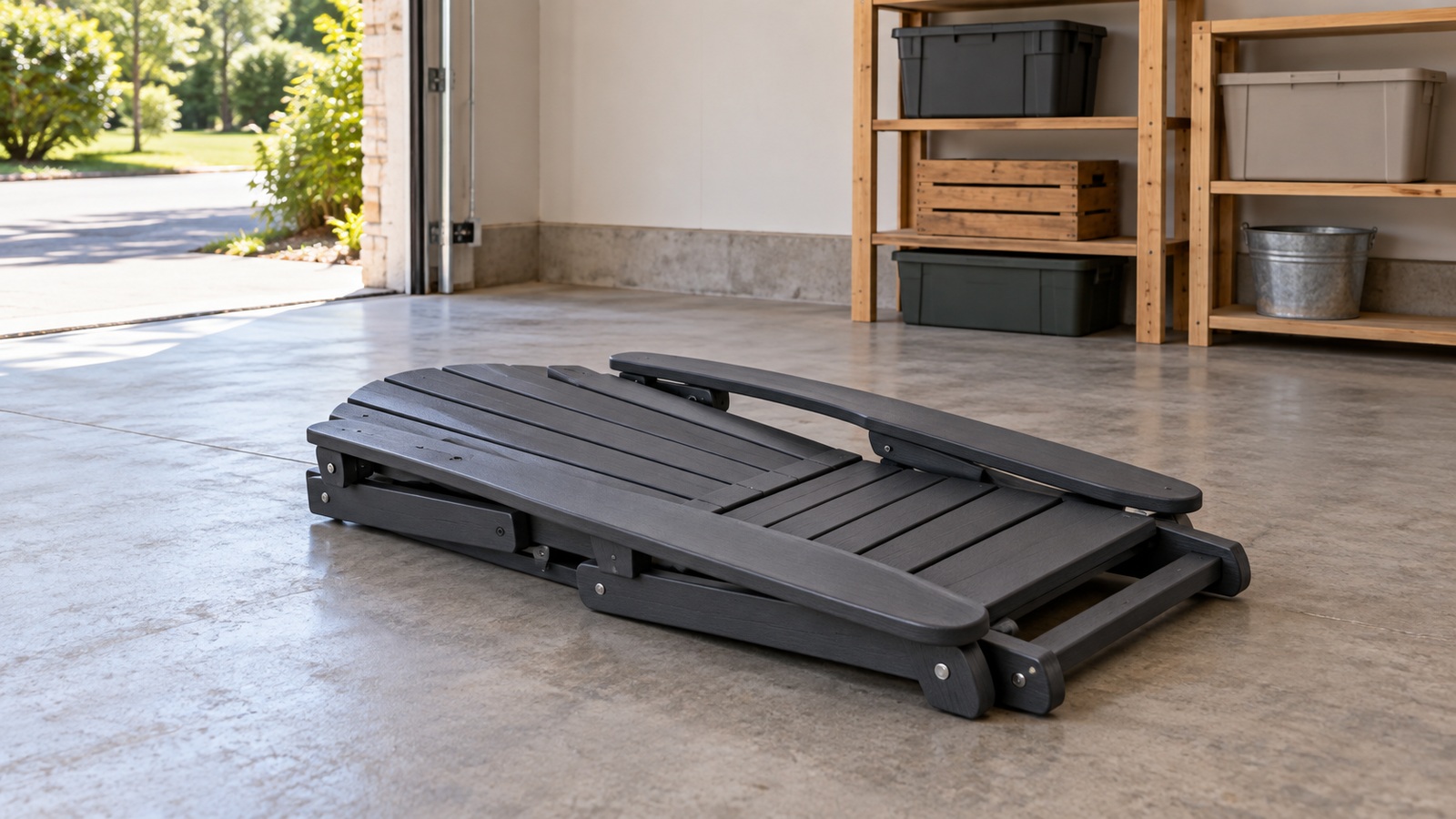
Being easy to roll does not guarantee a chair can fit indoors. Verify the full dimensions and any genuine folding capability separately. A wheeled chaise may have a long profile even when its back adjusts. Product terms should describe the exact storage state you are permitted to use.
Prepare a suitable place for the furniture before a weather-driven move is needed. Follow relevant local guidance and the maker’s instructions for severe conditions. Wheels can help one part of handling but do not establish a complete wind or storm plan. Loose accessories and other furniture need their own arrangements.
Inspect after rough handling, impacts, or severe weather before returning the chair to use. Check both the seating structure and transport components. Cleaning away debris is not the same as confirming sound condition. Address an uncertain concern through the proper support or repair route.
Judge Ease Through a Complete Trial
A useful demonstration begins with a correctly positioned empty chair, follows the permitted movement, and ends in a suitable resting state. Include width, grip, surface transitions, and any assistance required. Ask whether the same process is manageable for the regular owner. This is stronger evidence than watching the chair roll briefly on ideal flooring. Keep the sitting experience in the final comparison. Oversized dimensions and mobility features should serve the person and property together. A chair that moves well but feels wrong to use is not a complete success. Nor is a comfortable chair convenient if its required route remains impractical.
Wheels can make large Adirondacks easier to reposition when the design and setting agree. Their value comes from a defined task, supported handling, suitable surfaces, and appropriate care. With those details checked, mobility can be a practical feature instead of an exaggerated promise about every chair and every route.
Balance Mobility with the Reason for a Wider Seat
A wheeled model still needs to provide the sitting experience that prompted the oversized purchase. Compare the seat dimensions, back shape, arm position, and any stated user limits independently from its movement feature. A chair that rolls conveniently but does not suit the intended sitter has solved only one part of the decision. Keep the original seating requirements visible while reviewing the wheels. That approach also prevents a visually impressive mechanism from dominating the comparison between otherwise different chairs. Consider how often movement will actually happen and who will perform it. Occasional seasonal relocation may justify a different choice from a patio arrangement that changes every day, and a useful wheel system can still leave doorways or thresholds awkward. Evaluate the whole route with the appropriate adult handling and the chair unoccupied. Use the manufacturer’s directions to judge whether the remaining effort fits the household. The best practical result combines suitable seating, a supported way to move it, and a destination where the complete chair can stand as intended.