
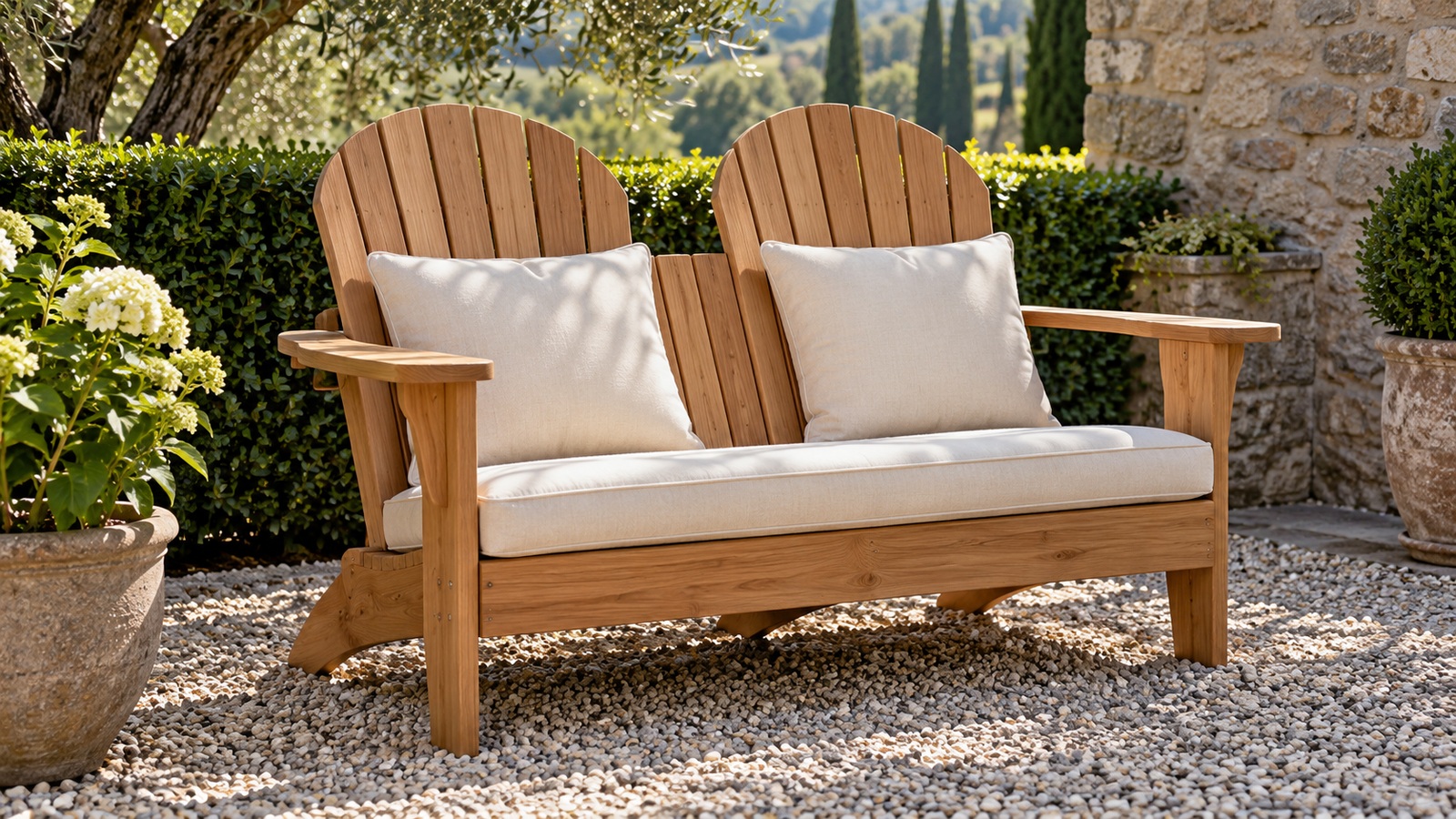
Let the Timber Set the Mood for Two
A natural finish gives a double Adirondack a quiet presence that can feel at home beside old stone, a lawn, or a simple cottage porch. The broad seat and paired back shapes already make a strong silhouette, so visible grain can supply interest without asking color to do all the work. Choosing that look requires more than selecting the lightest photograph in a catalog. Wood species, surface preparation, the actual coating, exposure, and the surrounding palette all affect what you will see over time. The seat must also work as furniture for two people, with a footprint and care routine the household can manage. Start with the character you want from the timber, then bring finish protection, shared comfort, and the garden setting into the same decision.
A: No. It can describe several appearances and treatments; obtain the actual finish description.
A: It may provide a warm tone, but compare its construction and care separately from real timber.
A: View samples against the patio, house, planting, and light where the seat will live.
A: Exact matching is optional; compare undertones and the complete garden composition.
A: Do not assume that. Read the selected coating's performance and maintenance information.
A: Clarify each person's usable seat space and how the center feature affects reach and access.
A: They can change sitting proportions; assess the complete arrangement for both users.
A: Only use stacking or other space-saving methods explicitly supported for that product.
A: Use its directions and observed condition rather than a universal wooden-furniture schedule.
A: Yes. Appropriate textiles, companions, and placement can renew the setting while the timber remains its anchor.
Understand What Natural Finish Actually Describes
Natural finish is a description of appearance, not one standardized treatment. It can mean clear-coated timber, a lightly tinted exterior stain, an oil-like finish, or a product sold without a coating at all. Those options may look similar in a small image while having different application and maintenance requirements. Ask the seller exactly what is on the wood and request the relevant care instructions. The answer should identify a treatment rather than repeat the word natural.
Separate a real timber surface from a wood-colored alternative. A plastic-lumber loveseat in a teak-like color may give a warm visual effect without being a wooden chair, and a printed grain surface has its own character. Neither needs to be dismissed, but the care comparison changes. Check the complete construction and finish description before deciding that two warm brown products belong in the same maintenance category.
The visible grain is part of the attraction. Broad arms, repeated seat slats, and a double back can show several orientations and tones even when the finish is consistent. Expect a real wood product to have individual variation rather than a perfectly uniform brown field. If you prefer strong consistency, ask how the maker selects and finishes components. A sample helps establish whether natural variation feels appealing in your particular setting.
Choose the Tone Against the Garden’s Existing Materials
Look at the patio, house, and planting before choosing the chair’s warmth. Honey-colored timber can brighten a gray stone setting, while a muted brown may sit quietly beside red brick or weathered boards. There is no universal pairing rule; compare a sample where the furniture will live. Morning light, open sky, and dense shade can change the relationship. A tone selected only against a white screen may feel different when surrounded by the garden.
Keep the number of competing wood tones manageable. A fence, deck, pergola, and loveseat do not need to match exactly, but they should form a combination you enjoy viewing together. Repeated undertones can create continuity without making everything identical. If the existing structures are visually busy, a simpler finish on the seating may provide a restful center. The double chair’s width makes that decision especially visible.
Distinguish Appearance from Outdoor Protection
A finish that preserves the look of grain still needs to suit exterior furniture and the actual wood. Check the coating maker’s intended uses, preparation requirements, application conditions, and maintenance directions. Clear appearance should not be interpreted as a promise that the timber will never change. Use the technical information for the selected finish rather than assuming every transparent treatment performs alike. The complete system matters, from preparation to later renewal.
Ask what appearance the maker expects as the finish ages. A lightly tinted treatment may shift the wood’s starting tone, while exposure can alter the surface between maintenance cycles. Decide whether gradual change belongs to the classic look you want or whether you expect a more closely maintained appearance. That preference should guide the care commitment. A chair that develops character naturally and a chair kept near its original tone represent different ownership goals.
Do not apply another product over the factory finish simply because it is described as protective. Compatibility and preparation determine whether that treatment belongs on the surface. Obtain suitable guidance before recoating, especially when the existing finish is unknown. Extra layers can complicate later work rather than simplify it. Keeping the finish information with the purchase record is useful even if you will not perform the maintenance yourself.
Review warranty and care language separately from decorative photographs. A beautiful covered-porch scene does not establish performance in an exposed garden. The product documentation should tell you how the actual loveseat is intended to be used and cared for. Compare that information with your site. Visual inspiration becomes more useful when it is connected to conditions you can realistically provide.
Check Shared Comfort Before Committing to the Look
A double Adirondack is a shared seat, and its proportions should suit both intended sitters. Compare the usable width, seat depth, height, back shape, arm arrangement, and stated capacity for the exact product; do not infer them from the apparent width of a photograph. If a central surface or divider is built in, clarify how it changes each person’s usable space. Try the seating when possible and consider getting in and out as well as relaxing. The warmest finish will not compensate for a seat that does not work for the people who will use it.
Give the Loveseat Enough Space to Feel Settled
The classic effect often comes from a clear, deliberate placement. A broad double chair pushed tightly between planters can look squeezed, while the same chair with a little visual room can feel like the garden’s natural destination. Measure its complete outline and the practical access around it. Include projecting arms, the reclined back, and any separate footrest. The seat should fit the route into the garden as well as its final resting place.
Place the loveseat so two people can enjoy the view without obstructing ordinary movement. That might mean facing a planting bed, turning toward a broad lawn, or sitting at an angle to a porch opening. Check the arrangement from inside the house too, since a double back can become a prominent view through a window. A slight change in orientation may make the setting feel more composed. Use the actual furniture dimensions rather than judging by the seat alone.
Consider the ground and the maker’s placement requirements. A decorative gravel terrace, paved patio, and timber deck provide different practical conditions. Make sure the complete chair can sit as intended on the chosen surface and that routine care remains accessible. The furniture should not be forced into an uneven decorative nook just to match an inspiration image. A suitable foundation supports both daily use and the finished appearance.
Use Accessories to Support the Timber
Soft furnishings can bring comfort and seasonal flexibility without covering the feature that attracted you. Cream, oatmeal, muted olive, or a restrained striped fabric can leave the grain visible around the edges. Choose products suited to the chair and follow their separate care requirements. A thick cushion can change the sitting position, so check the complete arrangement. The fabric should work with the furniture rather than merely look coordinated in a flat sample.
A side table or footrest does not have to reproduce every detail of the loveseat. A related timber tone, a simple painted surface, or another material already present in the garden can create a coherent group. Compare height, reach, and scale before buying. Avoid accumulating accessories that crowd the broad seat’s access. The calm classic effect often benefits from a few useful pieces whose roles are clear.
Plan Maintenance Around Reachable Surfaces
A double chair contains more surface area than a single seat, and some connections may be harder to reach. Read the maker’s cleaning and finish-care directions before establishing a routine. Look at the underside, repeated slat gaps, arm ends, and any built-in center feature as part of the complete product. Broad furniture can make a quick visual check misleading. Work with appropriate handling and access rather than treating the upper surfaces as the entire job.
Keep garden debris from becoming a neglected layer through the approved care process. Leaves and soil can collect where the chair meets nearby planting, and a shaded position may behave differently from an open one. Observe the actual setting over the season. Adjust placement or routine care when supported by the product guidance. A classic natural appearance is easier to maintain when its surroundings are part of the maintenance plan.
Schedule finish work from the coating’s directions and observed condition, not a universal claim that every wooden chair needs the same annual treatment. Note the product name, preparation requirements, and any previous work. If another person handles maintenance later, that record can prevent incompatible choices. Resolve damaged or uncertain areas appropriately before use. The aim is a coherent care history for the actual surface.
Consider seasonal storage early. A double seat may be too broad for a shed route that easily accepts individual chairs, and its design may not permit folding, stacking, or disassembly for storage. Confirm supported handling and storage methods before assuming space can be saved. Measure the route and destination together. Finish care and physical storage are connected through the conditions the furniture will experience.
Decide How Much Patina Belongs in Your Classic Look
Classic does not have to mean unchanged. Some owners enjoy a timber surface that acquires variation with age, while others prefer the crisp warmth of a recently maintained finish. Define that preference before comparing products. A chosen appearance should be compatible with the maker’s care requirements and the wood’s condition. Neglect and desired patina are different decisions, even when both can produce a less uniform surface.
Review the loveseat in the garden after a season rather than judging it only on delivery day. Does the tone still work beside the masonry and planting? Are cushions doing too much visual work, or could a simpler combination reveal the grain more effectively? Changes in styling may restore the composition without altering the furniture itself. Evaluate appearance and condition as related but separate concerns.
When refreshing the setting, preserve the parts that still work. A new textile, repositioned table, or change in surrounding planting can renew a natural-finish seat’s role. Refinish only through an appropriate process for the existing surface when that work is needed or deliberately chosen. The chair can remain the garden’s stable visual anchor while its smaller companions change. That flexibility is one of the appealing qualities of a restrained wood tone.
Bring the Purchase Back to Everyday Ownership
Compare actual products using the same information: complete dimensions, sitting suitability, material, finish identity, care requirements, and the route into your chosen location. Put unanswered details on the list rather than filling them with general expectations about natural wood. A sample, written finish description, and clear product instructions can resolve more than another attractive catalog scene. Choose the seat whose appearance and responsibilities are both understood.
A natural finish double Adirondack earns its classic character through proportion, visible timber, and a thoughtful relationship with the garden. Its long-term success also depends on shared comfort and manageable care. Let those practical considerations support the quiet look instead of treating them as later chores. The result can be a generous, familiar place for two people to enjoy the outdoor space through changing seasons.


