
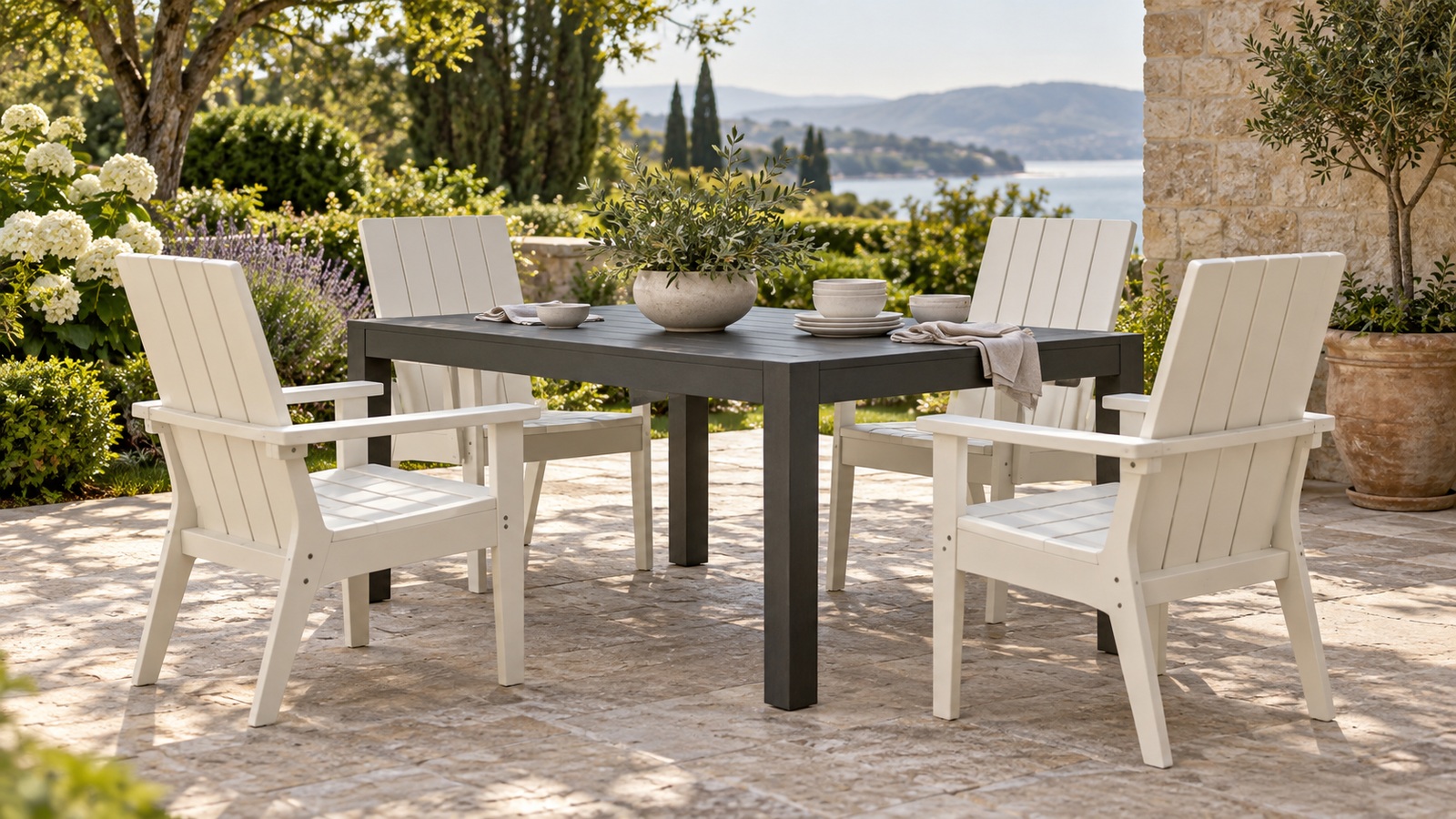
Bring Adirondack Character to a Proper Dining Arrangement
A modern Adirondack dining set can carry the recognizable slatted back and generous outdoor character into a setting designed for meals. The important distinction is in the actual furniture, not the style name. A low reclined lounge chair and a side table serve a different purpose from dining-height seating arranged around a usable tabletop. Before choosing a palette or a packaged offer, check how the chair, arms, table underside, and seated position work together. Then consider the patio, the number of diners, serving routes, and the surface space needed for ordinary meals. Style becomes more convincing when the set is comfortable to approach, practical to use, and easy to maintain. Start with those relationships and let the modern lines provide the visual coherence.
A: Verify the intended pairing and seated relationship; the lounge shape alone does not establish dining compatibility.
A: Aprons, rails, legs, and supports can affect arms, knees, feet, and the chair's approach.
A: Assess the supported configuration and usable seated position rather than assuming full tuck-in is the only criterion.
A: Resolve compatibility first; then evaluate approved cushions as part of the complete sitting arrangement.
A: Not completely. Compare the tabletop with the meals and place settings you actually use.
A: Review diner positions, serving pattern, base placement, and the measured patio layout.
A: Include ordinary occupied and resting positions along with entry, exit, and serving movement.
A: The repeated backs increase its visual area, so judge the palette at the full-group scale.
A: Use each product's actual instructions, including any different components and accessories.
A: Review the supported setup and ordinary meal movements in the complete arrangement.
Confirm That the Chairs Are Intended for Dining
The familiar Adirondack outline appears in products designed for several sitting heights and activities. Read the exact model description and dimensions rather than inferring function from a slatted back. A dining model may have different proportions from a low lounge chair in the same collection. Verify the intended use before comparing sets. The product name should lead to specific information about the seat you will actually receive.
One concrete example is the POLYWOOD Modern Adirondack Dining Chair, whose current product page lists a 17.3-inch seat height. That measurement belongs to that model and illustrates the value of reading dining specifications directly. It should not become a universal dimension for every Adirondack-inspired dining chair. Compare the complete sitting arrangement and the particular table pairing offered for the products on your shortlist.
Keep dining, counter, and bar variants separate during shopping. Similar photographs can hide different heights, and a collection may offer several versions. The manufacturer’s height-matching guidance distinguishes these categories, reinforcing why a style match is only part of the decision. Check model identifiers and the intended pairing before ordering. A coordinated appearance does not correct mismatched functional heights.
Review the Tabletop and Its Underside
Overall table height is useful but incomplete. An apron, support rail, trestle, or other structure beneath the top can affect the space available to a seated person and the chair’s movement. Request the relevant clearance information for the actual table. Compare it with the chairs and intended users. A clean tabletop photograph rarely shows every relationship beneath it.
Look at the leg and base positions too. A corner leg can influence an end seat, while a central support can affect foot placement at several positions. These are practical details to evaluate on the complete arrangement. Ask the maker or retailer about the intended seat count and compatible chair layout. Do not assume that any arrangement fitting around the outer edge is equally usable.
Check the Arms in the Position You Will Use
Adirondack-inspired dining chairs may retain substantial arms, which can be part of their appeal. Confirm the arm height and projection in relation to the table’s underside and the movement needed to approach the place setting. A chair does not necessarily need to disappear fully under a table to serve its intended role, but the resulting position must be workable. Read compatibility guidance and test the pair when possible. The real question is how the diner can sit and use the table.
Consider both the seated position and moving the empty chair. A combination that works while someone is sitting may occupy more space when chairs are left around the table afterward. Include that normal resting arrangement in the patio plan. The visual outline changes with the chairs pulled out or pushed closer. Measure the setting through its ordinary states.
Use cushions as part of the fit comparison if you plan to add them. Their thickness can change the seated height and the relationship with the tabletop and arms. Choose suitable accessories and follow the product’s guidance about their use. Do not add a thick pad solely to compensate for an uncertain chair-and-table pairing. Resolve compatibility first and then evaluate the complete arrangement.
Assess each intended user’s experience where practical. Getting into position, placing feet comfortably, reaching the setting, and leaving the table are all part of dining use. A furniture group can look orderly without meeting everyone’s needs equally. Keep the actual household in view. The best set is the one whose supported configuration works for the people who will eat there.
Choose Table Shape for the Patio and Meal Pattern
A rectangular, square, or round table creates a different arrangement of diners and serving space. Compare the complete dimensions with the patio and the meals you normally host, including whether dishes are shared in the center or placed individually. The preferred shape is the one that supports the intended use without forcing awkward access. Review chair positions and the table base together. A shape chosen for appearance alone may not provide the practical layout the household expects.
Count Diners and Serving Space Separately
A marketed seat count describes an intended arrangement, but it does not tell you how much space remains for your particular meal setup. Compare the tabletop with plates, glasses, serving bowls, and other ordinary items you use. A table that works for a simple breakfast may feel different during a shared family meal. Think through the actual activity. The comparison becomes more concrete when the serving pattern is visible.
Leave decoration subordinate to the table’s working purpose. A large centerpiece can look appealing in a photograph while occupying space that dishes need during use. Choose a restrained object or move it when meals require the surface. The furniture should not depend on a permanently staged arrangement to look finished. A practical table can still provide a clear modern composition.
If a nearby serving surface is part of the plan, measure and specify it as another object. It may help keep the dining top available, but it also needs a suitable location and care routine. Check the route between that surface and the table. Adding one should solve a real use problem. Avoid transferring clutter to an awkward spot beside the diners.
Plan Space with the Chairs in Use
Place the complete table and chair outlines into a measured patio plan. Include arms, chair backs, and the normal movement needed to sit and leave. Then review paths to doors, the garden, and any serving area. A plan showing chairs tightly pushed in may describe storage appearance rather than a working meal. Evaluate the arrangement through the positions people will actually occupy.
Consider fixed features before deciding orientation. A door, step, railing, or planting container can make one side of a table less practical than another. Turning the table may improve the relationship without changing the furniture. Use the actual dimensions and intended users’ needs to judge it. The aim is a usable arrangement in the real site rather than a generic clearance figure applied to every patio.
Connect the Modern Look to the Home
Modern Adirondack dining furniture can coordinate through restrained lines, simple slat patterns, and a deliberate material palette. Pick one or two nearby architectural references rather than trying to match every surface. A dark table can relate to window frames, while lighter chairs may connect to a pale wall or soften the group’s visual weight. Compare actual samples outside. The complete setting should feel associated with the home.
Matching chairs and table finishes are one option, but a supported pairing can also use related contrasting colors. Review the amount of each color across the table plane and repeated chair backs. Several chairs multiply the impact of an accent. A shade that feels modest on one sample can become a dominant field around a table. Choose the palette at the group scale.
Keep textiles and table objects selective. Plain outdoor cushions, unmarked ceramics, and a simple table setting can leave the furniture’s lines visible. Compare pattern scale with repeated slats if you prefer decorative fabrics. The goal is a composition you enjoy during real meals, including the ordinary dishes and serving items. Modern style should not require hiding everyday use.
Check the setting from interior views as well as from the patio. A dining group may appear as several backs and one broad horizontal plane through a window. A small orientation change can make that view feel more composed. Balance the appearance with the diners’ outlook and routes. The furniture participates in both the house’s view and outdoor activity.
Choose Materials through Their Actual Care Requirements
Read the construction and maintenance information for the offered set. Plastic lumber, timber, coated metal, and mixed designs bring different surfaces and components. A matching palette does not establish a common cleaning method. Follow the directions for the actual table, chairs, and any accessories. Keep the information accessible to whoever handles outdoor maintenance.
Dining adds its own ordinary cleanup tasks. Spills, crumbs, and dishes make the tabletop a working surface, so select a product whose supported care fits the household. Do not use an aggressive method merely because the surface is outdoors. Address stains through the relevant guidance and inspect components as required. A practical routine helps the set remain ready for meals without turning every cleanup into an experiment.
Consider exposure and storage before buying. The complete dining group may require more seasonal space than a lounge pair, and the table may define the most difficult moving route. Verify any folding, stacking, or disassembly methods for each model rather than assuming a set has one shared solution. Include accessories and permitted handling. Ownership should work through the whole year.
Prepare Delivery and Assembly as Part of the Layout
Check the supported delivery and assembly sequence for the largest components. A table that fits the terrace may still need an appropriate route and work area, and its assembly task can differ from the chairs. Arrange the required assistance and follow the maker’s procedure. Keep model-specific components together. Coordinated furniture does not make hardware interchangeable.
Once assembled, review the table and chair setup against the plan. Confirm that the intended positions remain practical and that the complete products are ready for use according to their instructions. Test ordinary meal movements before filling the group with extra accessories. Resolve an awkward arrangement while the space is still simple. The final check connects the purchase details with everyday use.
Choose the Set for the Meals You Actually Want to Share
A useful modern Adirondack dining set combines a suitable seated position, a compatible table, manageable access, and an appearance that belongs to the home. Compare the exact models through those relationships before letting a packaged image settle the decision. Keep the planned diner count and serving pattern clear. The style works best when it expresses a practical outdoor meal setting. After a few meals, note what the arrangement does well and what needs a small adjustment. A serving surface may be unnecessary, a chair position may improve with a table rotation, or simpler accessories may leave more usable top area. Change the layout within the product’s supported use rather than inventing modifications. Thoughtful proportions and a calm palette can give outdoor dining an Adirondack character that remains comfortable beyond the first photograph.


