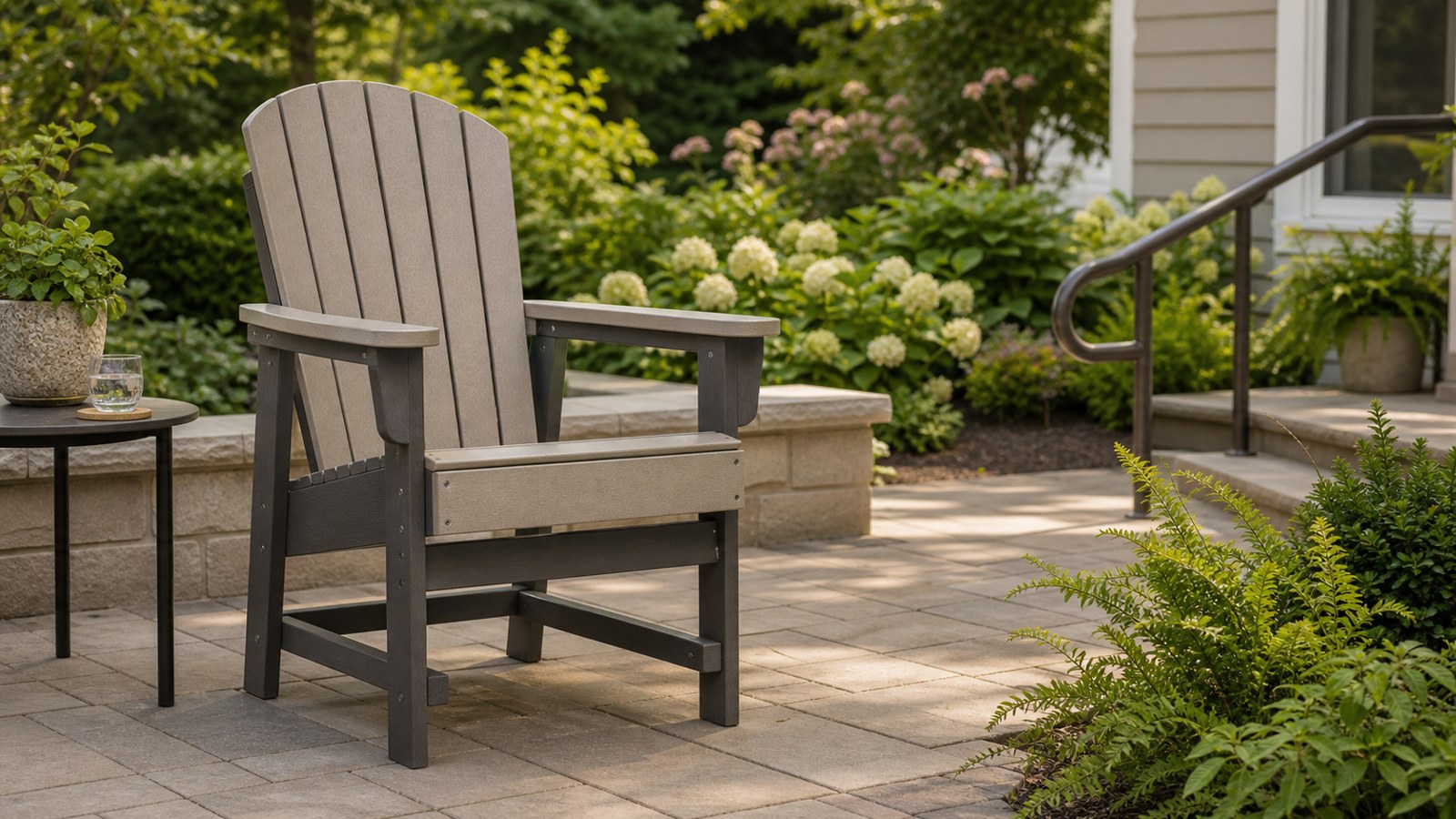
Few outdoor furniture pieces are as recognizable—or as comforting—as the Adirondack chair. Its wide arms, reclined back, and deep seat invite long conversations and quiet afternoons. Yet not every Adirondack chair is prepared for the realities of a windy deck perched above the ocean, on a mountain ridge, or on an exposed urban rooftop. Heavy-duty modern Adirondack chairs are designed specifically for these demanding environments, blending classic relaxation with engineering that resists gusts, salt air, and sudden weather shifts. Choosing the right chair means thinking beyond style and considering weight, materials, aerodynamics, and smart design details that keep both the furniture and its occupants secure.
A: Denser materials, a wider stance, reinforced joints, and hardware that won’t loosen from vibration.
A: HDPE poly lumber or marine-grade aluminum with stainless fasteners—both resist salt, moisture, and gusts.
A: Aim for roughly 35–55 lb per chair, depending on exposure and deck surface grip.
A: Choose non-marking glides or rubber pads; avoid bare metal feet on soft composite surfaces.
A: Usually not if they’re heavy-duty, but extreme wind zones may benefit from discreet tie-down points or storage.
A: Not if they’re tailored, strapped, and quick-dry—loose cushions are the problem, not cushions themselves.
A: Face chair backs into prevailing wind and keep them slightly away from rail gaps where gusts accelerate.
A: Add high-grip feet, use a low heavy table as an anchor, and avoid slick pads that reduce friction.
A: Check bolts seasonally, rinse salt and grit, and keep feet/glides clean for maximum grip.
A: Fixed is often more stable, but a well-engineered folding chair with locking stops can still perform well.
Why Wind Changes Everything
Wind is an invisible but powerful design challenge. Lightweight patio furniture can become unstable or even dangerous when a strong gust funnels through deck railings. Traditional wooden Adirondack chairs were often heavy enough to stay put, but many modern versions are made from lighter composites or thin plastics that can slide or tip. Wind also accelerates wear. Constant movement loosens joints, vibrates fasteners, and grinds dust into finishes. A chair that feels solid in a showroom may behave very differently on a blustery hillside. For that reason, heavy-duty models are built with lower centers of gravity, broader footprints, and materials that resist flexing.
The Evolution of the Modern Adirondack
The Adirondack chair has traveled far from its early 1900s origins in the mountain camps of New York. Contemporary versions retain the familiar silhouette but incorporate advanced materials such as high-density polyethylene lumber, marine-grade aluminum, and reinforced hardwoods. Designers now consider wind tunnels, UV exposure, and ergonomic science alongside aesthetics. The result is a new generation of chairs that look sleek on a minimalist deck yet perform like outdoor equipment. These modern designs often feature subtly curved slats that allow air to pass through, reducing lift while maintaining comfort.
Materials That Matter Most
When evaluating chairs for windy locations, material choice is the single most important factor. Poly lumber, often called HDPE, has become a favorite because of its density and weather resistance. Unlike hollow plastics, poly lumber is solid throughout, giving it a reassuring weight that discourages movement. It will not absorb moisture, rot, or splinter, making it ideal for coastal decks where sea spray is constant. Marine-grade aluminum frames paired with composite seats provide another strong option. Aluminum is light yet incredibly rigid, and when powder-coated it shrugs off corrosion. Traditional hardwoods such as teak and eucalyptus remain excellent choices, but only when crafted with thick stock and stainless hardware.
Weight Versus Stability
A common misconception is that heavier is always better. Weight certainly helps, but stability comes from balance and geometry. Heavy-duty Adirondack chairs designed for wind typically have slightly wider legs and longer rear runners that increase the contact area with the deck surface. Some models include discreet leveling feet made of rubberized compounds that grip without scratching. The goal is to prevent rocking and skidding rather than simply adding bulk. A well-engineered chair can feel lighter to carry yet stay planted during storms because its structure channels force downward instead of sideways.
Fasteners, Joinery, and Hidden Strength
What you cannot see often matters more than what you can. Premium wind-ready chairs rely on stainless steel bolts, not basic screws that can shear over time. Mortise-and-tenon joints, reinforced brackets, and internal ribs prevent the slow loosening that plagues cheaper furniture. Modern composite chairs may include molded gussets beneath the arms and seat pan, distributing pressure across the frame. These details reduce creaking and extend lifespan. When shopping, it is worth lifting the chair and giving it a gentle twist; a heavy-duty model will feel like one solid piece rather than a collection of parts.
Aerodynamics and Design Intelligence
Wind interacts with furniture much like it does with architecture. Flat surfaces act as sails, while curved or slatted surfaces allow air to escape. Many contemporary Adirondack chairs feature slightly contoured backs and spaces between planks that reduce resistance. Some brands experiment with tapered legs and open arm undersides to prevent uplift. Even the angle of recline plays a role: a moderate slope keeps the chair grounded, whereas an exaggerated lean can invite tipping. Designers now test prototypes on exposed decks to observe real-world behavior before finalizing shapes.
Comfort That Does Not Sacrifice Strength
Durability should never cancel comfort. The best heavy-duty chairs cradle the body while remaining robust. Deep seats support the thighs, and gently curved backs follow the spine’s natural arc. Wider arms provide a stable platform for drinks or books without creating excess wind surface. Modern cushions made from quick-dry foam add luxury without becoming parachutes. Because these chairs are built to stay outside year-round, comfort must be baked into the structure rather than relying on delicate accessories that could blow away.
Placement Strategies on Windy Decks
Even the strongest chair benefits from thoughtful placement. Positioning seating with the back toward prevailing winds reduces direct pressure on the broadest surface. Grouping chairs around a low table creates mutual shelter, while placing them near solid walls or glass wind screens can cut gusts dramatically. Some homeowners anchor chairs to discreet deck rings using stainless tethers that remain hidden beneath the seat. These strategies complement the chair’s design rather than replacing it.
Maintenance in Harsh Conditions
Wind carries sand, salt, and grit that gradually abrade finishes. Heavy-duty chairs minimize this problem, but periodic care keeps them looking new. Poly lumber requires little more than a rinse and mild soap. Aluminum frames benefit from occasional waxing to preserve the powder coat. Hardwood chairs need annual oiling to maintain natural oils and prevent cracking. Inspecting bolts each season ensures that vibration has not loosened anything. Because these chairs are investments, a small amount of maintenance pays large dividends in longevity.
Sustainability and Modern Values
Many buyers now seek furniture that aligns with environmental ethics. Poly lumber is frequently made from recycled milk jugs and detergent bottles, giving plastic waste a second life. Aluminum is endlessly recyclable, and responsibly harvested teak supports sustainable forestry. Heavy-duty construction also means fewer replacements over time, reducing the overall ecological footprint. Choosing a chair that survives decades of wind is inherently greener than replacing flimsy models every few summers.
Comparing Traditional and Modern Approaches
Classic wooden Adirondack chairs carry undeniable charm, yet they were not designed with today’s exposed architectural decks in mind. Modern heavy-duty versions reinterpret tradition through the lens of engineering. Where older chairs relied on sheer mass, new models use structural intelligence. They integrate hidden steel cores, interlocking slats, and weather-proof finishes. The aesthetic can range from rustic to ultra-contemporary, proving that resilience does not require sacrificing beauty.
Safety Considerations
On high balconies or cliffside decks, a flying chair is more than an inconvenience—it is a hazard. Heavy-duty Adirondack chairs reduce this risk through thoughtful design, but owners should still consider local conditions. In hurricane-prone regions, even the best furniture may need to be secured during extreme events. Some manufacturers offer optional anchoring kits engineered to work with specific models, preserving warranties and appearance. Safety also extends to the user: stable chairs make it easier for children and older adults to sit and stand confidently.
Cost Versus Value
Heavy-duty chairs typically cost more than lightweight alternatives, yet their value becomes clear over time. Cheaper furniture may need replacement after a single season of wind exposure, while premium models often carry warranties of ten to twenty years. The price reflects better materials, thicker components, and meticulous assembly. When spread across years of reliable use, the investment is modest. Moreover, a well-chosen chair enhances the enjoyment of a deck, turning a breezy overlook into a true outdoor living room.
Trends Shaping the Market
Current trends blend minimalism with durability. Neutral colors such as coastal gray, matte black, and weathered white dominate, allowing the landscape to take center stage. Modular collections enable homeowners to match Adirondack chairs with dining sets and loungers built to the same heavy-duty standards. Smart accessories like weighted footrests and integrated cup holders are becoming common, designed not to catch the wind. Technology has even entered the scene with UV-resistant pigments that prevent fading under intense sun.
Real-World Scenarios
Imagine a lakeside deck where afternoon winds sweep across open water. A lightweight chair scoots across the boards, but a heavy-duty poly lumber Adirondack remains unmoved, its rubber feet gripping the surface. On a coastal balcony, salt air once destroyed metal furniture within a year; now a marine-grade aluminum model stands untouched by corrosion. In a mountain cabin, sudden downdrafts used to topple seating; today a thoughtfully engineered chair waits patiently for the next sunrise. These scenarios illustrate how design translates into daily peace of mind.
Choosing the Right Model
Selecting the ideal chair involves matching features to environment. For extreme wind, look for weights above forty pounds, wide rear legs, and slatted backs that allow airflow. Check for stainless hardware and solid, not hollow, construction. Consider how the chair will be stored during off-season months; some heavy-duty models are stackable without sacrificing strength. Colorfast materials prevent the patchy fading that strong sun and wind can cause. Reading manufacturer specifications and user reviews provides additional confidence.
The Human Element
Beyond engineering, Adirondack chairs represent moments—sunsets shared with friends, morning coffee in cool air, the simple pleasure of pausing outdoors. A chair that constantly needs chasing or repairing interrupts those experiences. Heavy-duty modern designs quietly support them, becoming dependable companions rather than chores. The best compliment a chair can receive is that its owner forgets about it entirely and focuses on the view.
Built for the Breeze
Windy decks demand more from outdoor furniture, and heavy-duty modern Adirondack chairs rise to the challenge. Through smart materials, balanced geometry, and careful craftsmanship, these chairs transform exposed spaces into comfortable retreats. They honor the heritage of the classic Adirondack while embracing the realities of contemporary living. Whether overlooking ocean swells, city skylines, or rolling fields, the right chair stays grounded so that relaxation can soar. Choosing wisely means years of steady comfort, no matter how hard the wind blows.