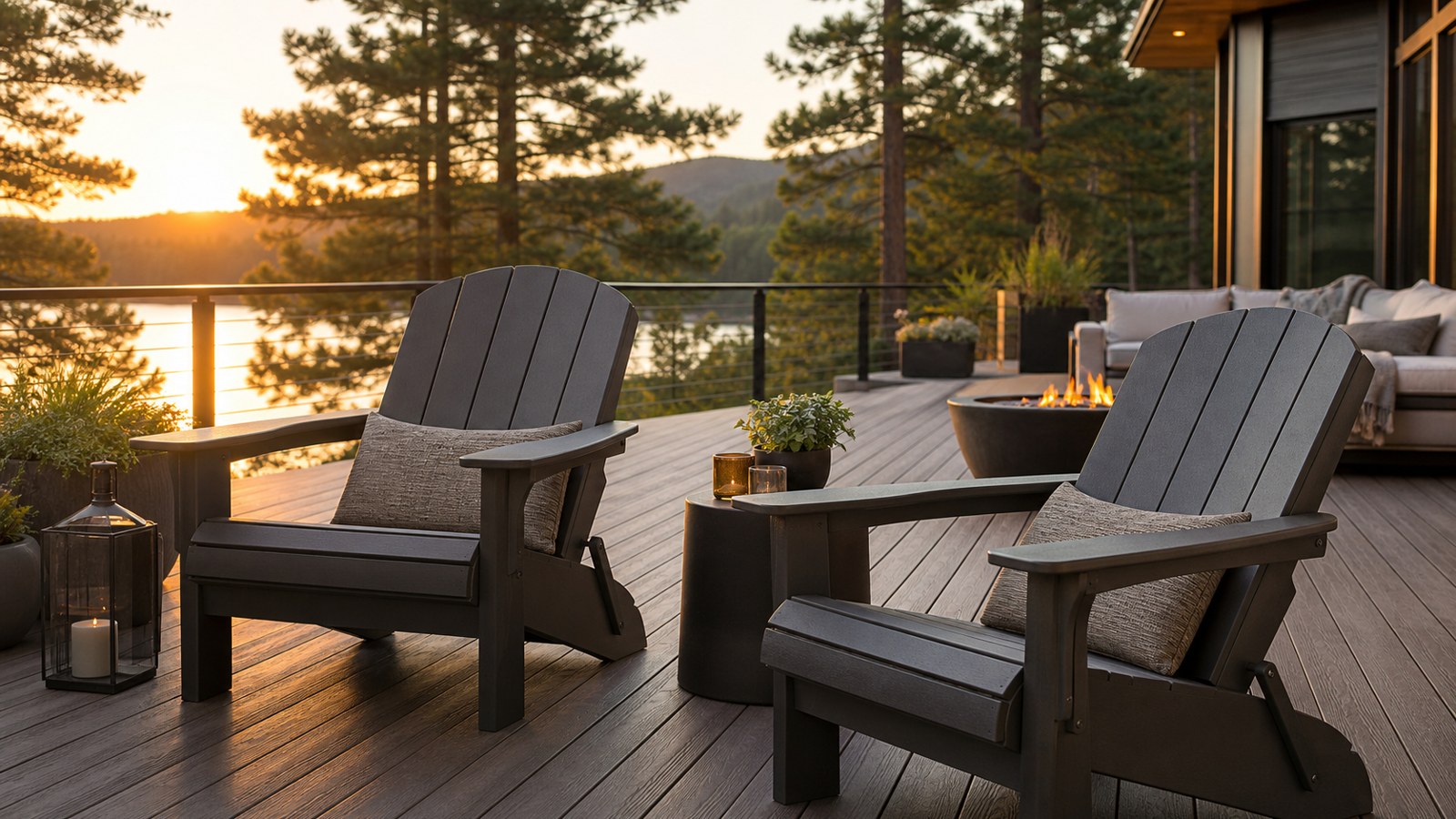
A Fresh Spin on a Timeless Classic
The Adirondack chair has stood for more than a century as one of the most recognizable silhouettes in outdoor living. With its wide arms, slanted back, and deep recline, it was born in the Adirondack Mountains of New York in the early 1900s as a simple wooden chair designed for comfort. Over the years, it has evolved into countless forms, with materials ranging from cedar to recycled plastics. Today, a new interpretation has emerged that speaks directly to contemporary design enthusiasts: the minimalist modern Adirondack chair. This updated style pares back ornamentation and rustic charm in favor of clean lines, sleek proportions, and a polished aesthetic. For homeowners seeking furniture that aligns with modern architecture or urban sensibilities, minimalist Adirondacks offer the perfect balance between comfort and sophistication.
A: Yes—comfort comes from back angle, seat tilt, and lumbar support. Minimal models achieve this with flatter facets and precise geometry instead of bulky curves.
A: Many do for cups or cans, but the cleanest solution is a narrow side table or a hidden clip-in holder that doesn’t clutter the profile.
A: Color-through HDPE in bone or drift tones resists salt and sun, while teak weathers to a uniform silver that pairs beautifully with white textiles.
A: Dark colors absorb heat; consider graphite over true black, add midday shade, or select lighter hues for touch-cool performance.
A: Choose low-profile, squared cushions in solid, solution-dyed fabrics with minimal piping; secure with discreet underside ties or tabs.
A: Rinse grit first, then use mild soap, soft cloth, and plenty of water. Avoid abrasive pads that can add sheen or micro-scratches.
A: Not when pre-drilled—kits often include jigs or marked parts. Follow torque guidance to keep reveals even and faces flush.
A: Look for 28–30" widths, lighter aluminum frames, and a C-table that tucks under the arm to save square footage.
A: Quality powder coat and HDPE resist everyday wear; add felt pads under trays and avoid dragging metal decor across arms.
A: Plinth-style cubes, thin-top pedestals, or C-tables in the same finish/wood tone maintain the clean lines and keep sightlines open.
What Defines the Minimalist Modern Style
Minimalism in design has always been about stripping away the unnecessary to reveal pure form and function. When applied to Adirondack chairs, this philosophy results in pieces that maintain the ergonomic comfort of the original but reinterpret the form in sharper, more streamlined ways. The exaggerated slant may be softened, the arms narrower, and the backrest composed of wider, fewer slats. The effect is a chair that feels lighter, more geometric, and better suited to sleek patios, rooftop terraces, or contemporary garden settings.
These chairs often feature neutral colors like white, black, or gray, though bold monochromes also make appearances in modern palettes. Materials such as Polywood or powder-coated aluminum reinforce the minimalist theme, emphasizing smooth finishes and durability without excess texture. The result is a piece that feels at home in spaces where architecture and landscape design lean toward simplicity, balance, and understated luxury.
The Evolution from Rustic to Modern
Traditional Adirondack chairs are often associated with cabins, cottages, and coastal homes. Their rustic charm comes from wood grains, weathered patinas, and a sense of heritage. The modern reinterpretation, however, shifts the aesthetic focus. By flattening curves, tightening proportions, and reducing visual clutter, minimalist versions open the door to new environments.
Placed on a city balcony, a modern Adirondack complements glass railings and concrete floors. In a mid-century modern home, the chair’s clean lines echo architectural principles of openness and simplicity. Even in suburban settings, these chairs can transform patios into sophisticated retreats that feel carefully curated. This evolution does not abandon tradition but reimagines it for a new era of design-focused outdoor living.
Comfort Without Compromise
One might assume that cleaner lines and slimmer silhouettes come at the cost of comfort, but minimalist Adirondack chairs prove otherwise. The slanted back remains supportive, the seat angle still encourages lounging, and the armrests continue to provide convenience. The ergonomic science behind the Adirondack is timeless, and modern versions adapt it without losing what makes the design so inviting. Many minimalist designs feature slightly higher seats, making it easier for people to get in and out—a practical upgrade for older users or those who dislike the deep drop of traditional Adirondacks. Cushions, often tailored in neutral fabrics, enhance the comfort while reinforcing the sleek look. The marriage of form and function ensures that these chairs serve as much more than visual statements; they remain genuine havens of relaxation.
Materials That Shape the Look
Minimalist Adirondack chairs often rely on materials that accentuate their modern appeal. Recycled HDPE plastics, such as Polywood, are popular for their smooth, uniform finishes and resistance to weathering. These materials can be molded into precise forms that showcase the clean geometry of modern design. Unlike natural wood, which varies in texture and grain, HDPE provides a consistent aesthetic that aligns perfectly with minimalist principles.
Metal also makes an appearance in certain designs. Powder-coated aluminum frames may support slatted seats and backs, combining lightness with durability. The use of metals brings an industrial edge, appealing to urban homeowners who prefer furniture that echoes architectural steel and concrete. For those who still appreciate natural wood, modern Adirondacks often use hardwoods like teak or eucalyptus in sleeker profiles, balancing organic warmth with modern restraint. Each material carries its own maintenance requirements, but all can be chosen to reinforce a clean, uncluttered look.
Neutral Palettes and Bold Statements
Color plays a central role in minimalist aesthetics, and modern Adirondack chairs reflect this with both restraint and boldness. White, black, and gray dominate, creating versatile pieces that fit seamlessly into nearly any environment. These neutrals emphasize shape and shadow, allowing the design itself to take center stage.
For those who want a bolder approach, minimalist Adirondacks in striking colors like navy blue, forest green, or even bright red serve as focal points without relying on patterns or ornamentation. Because the forms are so simple, bold colors appear intentional rather than overwhelming. The fade resistance of modern materials ensures that these colors remain consistent, even under full sun, allowing homeowners to design confidently around long-term palettes.
Durability in Contemporary Settings
Minimalist Adirondack chairs are designed not only for beauty but also for resilience. Polywood and other recycled plastics resist fading, warping, and cracking, even under harsh UV exposure. Aluminum frames are powder-coated to withstand rust and corrosion. Teak, when used in minimalist forms, retains its legendary weather resistance while contributing a natural yet streamlined aesthetic.
This durability ensures that modern Adirondacks can thrive in settings where they may be exposed to full sun, rain, or fluctuating temperatures. Whether positioned on a windswept rooftop terrace, a sun-drenched pool deck, or a shaded garden nook, they maintain their sleek profiles and vibrant finishes for years. Homeowners who invest in minimalist Adirondacks often find them to be low-maintenance companions that blend style with practicality.
Maintenance for Modern Living
Another hallmark of minimalist Adirondack chairs is ease of maintenance. Busy lifestyles demand furniture that remains beautiful without excessive upkeep. HDPE plastics and aluminum frames require little more than occasional cleaning with soap and water. Even teak, when used in modern designs, can be left untreated to weather naturally into a sophisticated silver-gray, complementing minimalist aesthetics with effortless elegance. The simplicity of care reinforces the philosophy behind minimalist design: life is easier and more enjoyable when unnecessary burdens are removed. With furniture that resists fading, cracking, and peeling, homeowners can focus on enjoying their outdoor spaces rather than constantly maintaining them.
Space Efficiency and Versatility
Minimalist Adirondack chairs often feature slightly slimmer profiles than their traditional counterparts, making them more space-efficient without losing comfort. This is particularly valuable in urban environments where patios, balconies, or porches may be smaller. Their lighter weight and sleeker dimensions also make them easier to move, reposition, or pair with other furniture. Versatility is another advantage. A pair of minimalist Adirondacks can flank a modern firepit, line up neatly beside a pool, or create symmetry on a porch. Their streamlined design means they can complement other contemporary furniture without overwhelming a space. For homeowners seeking harmony in their outdoor layouts, minimalist Adirondacks offer endless flexibility.
The Eco-Friendly Angle
Minimalism often goes hand in hand with sustainability, and many modern Adirondack chairs reflect this connection. Recycled HDPE plastic models are made from post-consumer materials like milk jugs, keeping plastics out of landfills while producing furniture that lasts decades. The longevity of these chairs reduces waste further, ensuring that fewer replacements are needed over time.
For wood enthusiasts, responsibly sourced teak and eucalyptus are often certified by organizations like the Forest Stewardship Council, ensuring that harvesting practices support forest regeneration and ecological balance. By choosing minimalist Adirondacks built with eco-conscious principles, homeowners can enjoy both the aesthetic clarity of modern design and the ethical satisfaction of sustainable living.
Cost and Long-Term Value
Minimalist Adirondack chairs often fall into the mid-to-high price range, reflecting both their materials and design. Polywood models may cost more than basic plastic chairs, but their longevity ensures excellent long-term value. Teak or metal versions, while premium, provide heirloom-level durability when properly maintained.
When evaluating cost, it’s important to consider not just the purchase price but also the lifespan and maintenance requirements. A well-built minimalist Adirondack can easily last decades, outliving multiple cheaper alternatives. For design-conscious homeowners, the investment is as much about aesthetic integrity as it is about financial value. The assurance of lasting beauty and function makes these chairs a wise choice for those who see their outdoor spaces as long-term extensions of their homes.
Minimalism and Emotional Impact
Furniture is more than material—it shapes how we feel in a space. Minimalist Adirondack chairs, with their uncluttered lines and calm presence, contribute to outdoor environments that feel serene and intentional. They invite relaxation not just through physical comfort but through visual clarity. A row of sleek white Adirondacks on a porch communicates order, while a single black chair in a garden creates striking contrast. For many homeowners, these chairs become part of daily rituals: sipping coffee in the morning, unwinding with a book in the afternoon, or sharing a glass of wine in the evening. The simplicity of their design encourages focus on the experience rather than the furniture itself, allowing the environment and the people within it to take center stage.
Placement and Design Inspiration
Where and how minimalist Adirondack chairs are placed can transform the feel of a space. On a porch, they can create symmetry, framing a doorway or window. In a backyard, they can define conversation areas around a firepit or outdoor rug. On a balcony, their compact form allows for comfort without clutter. Designers often pair minimalist Adirondacks with other contemporary elements: sleek side tables, geometric planters, or linear outdoor lighting. Cushions in solid, muted colors can soften the look while maintaining the minimalist ethos. The key is restraint—letting the clean lines of the chairs anchor the space while accents add texture and warmth.
Why Minimalist Adirondacks Are Here to Stay
The popularity of minimalist modern Adirondack chairs reflects broader trends in architecture and design. Homeowners are increasingly drawn to simplicity, sustainability, and spaces that feel uncluttered yet welcoming. As outdoor living becomes more integrated with daily life, furniture that bridges comfort and aesthetics takes on greater importance. Minimalist Adirondacks achieve this balance beautifully. They honor the legacy of a century-old design while reinterpreting it for contemporary tastes. They provide comfort without excess, style without ornamentation, and durability without hassle. For anyone seeking furniture that aligns with modern living while celebrating timeless relaxation, these chairs are a perfect fit.