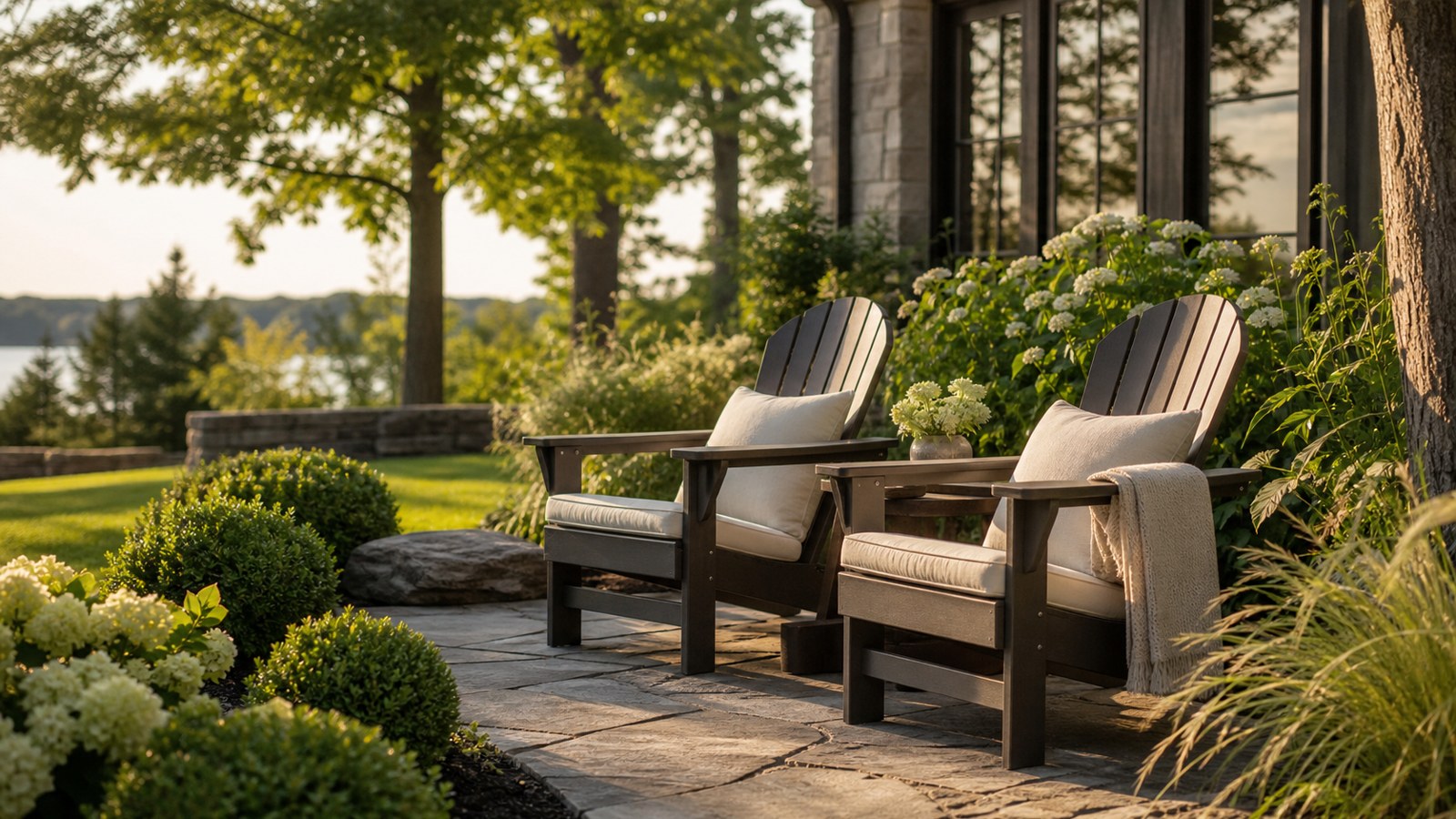
Few pieces of furniture have influenced outdoor living as deeply as the Adirondack chair. What began as a simple wooden seat designed for the rugged hills of upstate New York has become a global symbol of relaxation, craftsmanship, and thoughtful design. More than a century after its creation, the Adirondack chair continues to guide the way patios, porches, and landscapes are imagined. Its wide arms, slanted back, and low profile are instantly recognizable, yet its impact extends far beyond appearance. The chair helped redefine how people interact with nature and how designers approach comfort in open spaces. Modern outdoor design—whether minimalist rooftops or sprawling lakeside decks—still borrows heavily from the philosophy first embodied by this humble seat.
A: Yes—choose clean silhouettes, neutral tones, and pair with simple concrete/metal tables.
A: Angle them slightly toward each other with a small table between; keep a clear path behind.
A: Use a unified palette, add textured outdoor pillows, and anchor with a rug or paver “zone.”
A: Pick higher-seat or “comfort height” versions, or add an ottoman to help with standing.
A: Wood adds warmth; HDPE offers crisp color consistency and a sleek, uniform finish.
A: Usually more than 4–6 can crowd a patio—use pairs and create multiple small zones instead.
A: Fire pit for social warmth; coffee table for lounging and snacks—choose based on how you host.
A: Absolutely—choose quick-dry cushions or skip cushions and rely on contoured seats.
A: Repeat one material or color across zones (chairs, planters, lanterns) for visual continuity.
A: Repaint in a modern tone, swap hardware, and style with new textiles and lighting.
Origins That Changed Design Thinking
The Adirondack chair was born at the turn of the twentieth century when outdoor leisure was becoming an essential part of American life. Early vacationers in the Adirondack Mountains wanted sturdy furniture that could handle uneven terrain and unpredictable weather. The resulting design was practical, honest, and deeply connected to its environment. Unlike delicate Victorian garden furniture, this new chair embraced simplicity and durability. Its creator was not chasing fashion but solving real problems of comfort and stability. That practical mindset would later inspire generations of architects and landscape designers who sought to blend beauty with function.
The earliest versions were made from wide wooden planks, often cut by hand and left in natural finishes. The structure sat low to the ground, encouraging a relaxed posture that mirrored the easy pace of summer afternoons. This was a radical departure from the formal upright seating popular at the time. By inviting people to lean back and gaze at the horizon, the Adirondack chair subtly changed how outdoor spaces were used. Gardens and porches were no longer just places to pass through; they became destinations for rest and reflection.
Comfort as a Design Principle
One of the most significant contributions of the Adirondack chair to modern outdoor design is its focus on human comfort. The angled seat and reclined back were carefully calculated to support the body without cushions. This ergonomic thinking was decades ahead of its time. Contemporary designers often speak of “designing around the body,” and the Adirondack chair is an early masterclass in that philosophy. It proved that outdoor furniture could be both beautiful and deeply comfortable without relying on excessive ornamentation. Today, the emphasis on comfort drives the layout of patios, decks, and poolside lounges. Deep seating areas, fire pit circles, and conversation nooks all owe a debt to the relaxed posture first popularized by the Adirondack chair. The idea that outdoor spaces should feel as welcoming as living rooms grew directly from the experience of sinking into that wide wooden seat. Even modern materials like molded plastic and aluminum continue to follow the same proportions established over a century ago.
Blending Architecture and Landscape
Another lasting influence of the Adirondack chair is its ability to connect architecture with the natural landscape. The original chairs were often left unfinished, allowing them to weather into soft gray tones that echoed surrounding rocks and tree trunks. This respect for natural color and texture encouraged designers to view outdoor furniture as part of the environment rather than separate from it. Modern landscape architecture frequently follows the same principle, using materials that age gracefully and complement their settings.
Contemporary outdoor spaces often feature wood, stone, and neutral fabrics chosen to harmonize with gardens and views. The Adirondack chair helped normalize this approach. Instead of bright, artificial colors dominating patios, designers began to favor earthy palettes that let nature take center stage. Even when the chairs are painted in bold hues today, the underlying idea remains: furniture should enhance the scenery, not compete with it.
Simplicity That Inspired Minimalism
Long before minimalism became a design movement, the Adirondack chair demonstrated the power of simplicity. Its form is honest and straightforward, with every board serving a purpose. There is no unnecessary decoration, yet the chair possesses undeniable character. This balance between function and beauty has inspired countless modern designers who strive to strip away excess and focus on essentials.
Mid-century modern architects admired the chair’s clean lines and democratic spirit. They saw in it the same values they were bringing to homes and public buildings—clarity, utility, and respect for materials. Outdoor furniture collections from the 1950s and 1960s often echoed the Adirondack’s low profile and generous proportions. Even today’s sleek composite versions trace their DNA back to that original wooden prototype.
The Social Life of Outdoor Spaces
The Adirondack chair also influenced how people gather outdoors. Its broad arms were perfect for holding drinks or books, encouraging long conversations and leisurely afternoons. Unlike narrow garden chairs that kept occupants rigidly upright, this design invited people to linger. Modern outdoor living areas are built around the same idea of social comfort. Designers arrange multiple chairs in gentle arcs around fire pits or facing water views, recreating the informal circles that Adirondack chairs naturally form. This social aspect has shaped everything from resort planning to backyard landscaping. Hotels place rows of Adirondack chairs along beaches and lawns because they signal hospitality and ease. Homeowners replicate the arrangement on patios to create instant gathering spots. The chair became not just an object but a tool for bringing people together, influencing the emotional tone of outdoor environments.
Materials and Modern Innovation
While the original chairs were crafted from local woods, their influence encouraged experimentation with new materials. Designers realized that the form could be adapted to teak, cedar, recycled plastic, and even metal without losing its character. This adaptability helped shape the broader outdoor furniture industry, which now blends traditional shapes with advanced technology. Weather-resistant composites and marine-grade hardware allow modern versions to survive harsh climates while maintaining the classic silhouette.
The willingness to reinterpret the chair reflects a broader trend in outdoor design: honoring tradition while embracing innovation. Contemporary spaces mix old and new, pairing classic Adirondack forms with concrete fire tables or glass railings. The chair acts as a bridge between eras, reminding designers that progress does not require abandoning the past.
Color and Personality in Outdoor Design
Another subtle influence of the Adirondack chair is its relationship with color. Early chairs were often painted in cheerful reds, blues, and greens, adding personality to rustic camps. This tradition encouraged homeowners to treat outdoor furniture as an expression of style rather than purely functional equipment. Modern design continues this playful approach, using vibrant Adirondack chairs as focal points against neutral decking and stonework. Colorful chairs have become a signature element in coastal towns and mountain retreats. They appear in wedding venues, public parks, and boutique hotels, proving that a single piece of furniture can define the mood of an entire space. Designers frequently start with a row of Adirondack chairs and build the rest of the palette around them, demonstrating the chair’s ongoing creative power.
Influence on Public Spaces
Beyond private homes, the Adirondack chair has shaped the design of public landscapes. Parks and waterfront promenades often feature versions of the chair to encourage relaxation and community interaction. Urban planners recognize that comfortable seating can transform how people use shared spaces. The presence of these chairs signals permission to slow down, enjoy views, and engage with neighbors.
This philosophy has influenced the broader movement toward human-centered public design. Cities now prioritize seating that supports long stays rather than quick turnover. The Adirondack chair’s welcoming form helped prove that public furniture could be both durable and emotionally inviting, a lesson applied to plazas, campuses, and cultural centers worldwide.
Sustainability and Timelessness
Modern outdoor design increasingly focuses on sustainability, another area where the Adirondack chair set an early example. The original designs used locally sourced wood and simple construction methods that allowed easy repair. Many vintage chairs survive for decades with minimal maintenance, demonstrating a level of longevity rare in disposable modern products. Today’s designers look to that durability as a model for responsible manufacturing. Recycled materials, replaceable parts, and classic forms that never go out of style reduce environmental impact. The Adirondack chair shows that sustainability is not only about materials but about creating objects people love enough to keep for generations.
The Chair as Cultural Symbol
Over time the Adirondack chair became more than furniture; it turned into a cultural icon representing leisure and connection to nature. Photographs of the chairs overlooking lakes or sunsets appear in travel advertising, real estate listings, and art galleries. This imagery has influenced how designers stage outdoor environments, often positioning chairs to frame views and create postcard moments.
Modern outdoor design frequently borrows this storytelling approach. Patios are arranged to capture sunsets, and chairs are angled toward gardens or water features, inviting users to become part of the scene. The chair taught designers to think not only about function but about emotion and memory.
Contemporary Interpretations
In the twenty-first century the Adirondack chair continues to evolve. Designers experiment with sculptural versions, folding models, and lightweight interpretations suitable for urban balconies. Yet even the most radical adaptations retain the essential spirit of the original: generosity of scale, relaxed posture, and honesty of materials. This continuity proves the strength of the underlying design. Outdoor collections from leading brands often include an Adirondack-inspired piece because consumers instinctively trust the form. It represents a promise of comfort and authenticity in a world of fleeting trends. Architects designing luxury resorts or modest cottages alike return to the chair as a reliable anchor for their concepts.
Lessons for Modern Designers
The enduring influence of the Adirondack chair offers valuable lessons for anyone shaping outdoor spaces today. It demonstrates that great design begins with understanding real human needs. It shows that simplicity can be more powerful than ornament and that objects rooted in their environment age with grace. Most importantly, it reminds designers that furniture can shape behavior, encouraging people to slow down and appreciate the world around them.
Modern outdoor design continues to chase those same goals. Whether through high-tech materials or handcrafted wood, the spirit of the Adirondack chair guides decisions about proportion, placement, and purpose. Every comfortable deck chair and every inviting porch owes something to that original mountain creation.
A Legacy Carved in Wood
More than a century after its debut, the Adirondack chair remains a quiet architect of outdoor living. It influenced how designers think about comfort, how landscapes connect to buildings, and how people gather under open skies. From minimalist terraces to rustic cabins, its DNA is woven through modern design. The chair’s story proves that a single thoughtful object can reshape an entire field, inviting generations to sit back, breathe deeply, and rediscover the simple pleasure of being outside.