Resort Seating With a Sense of Place
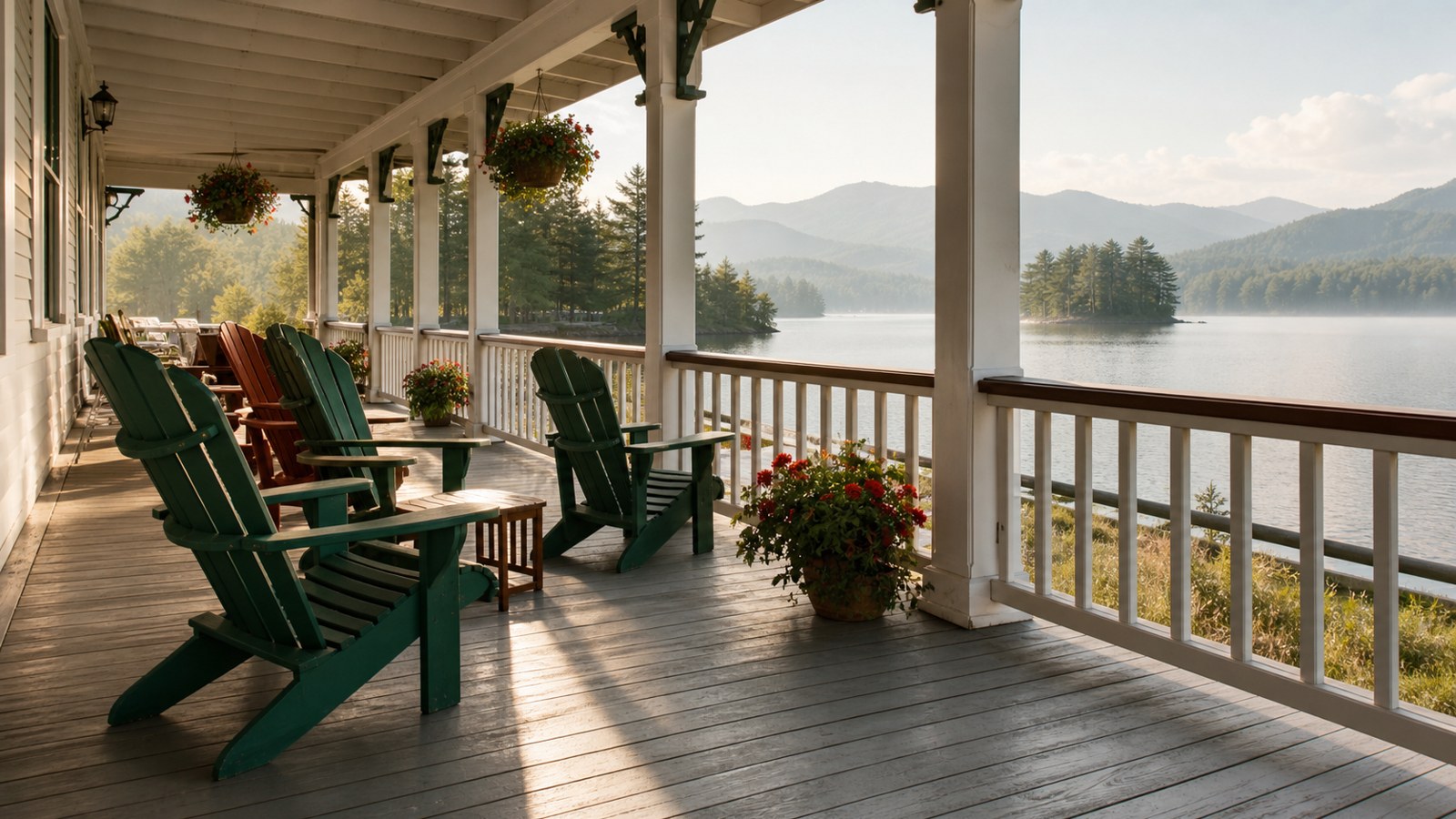
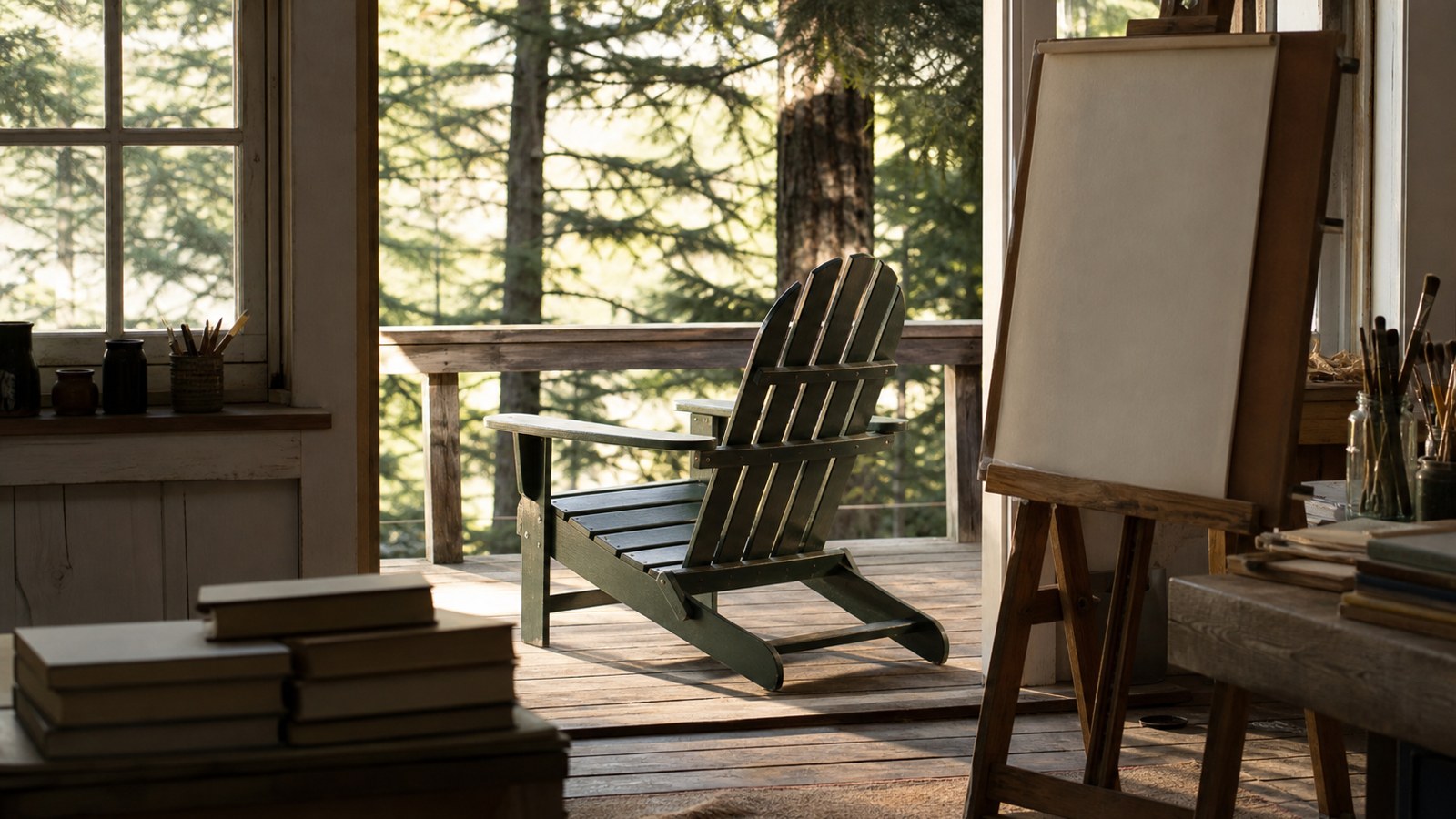
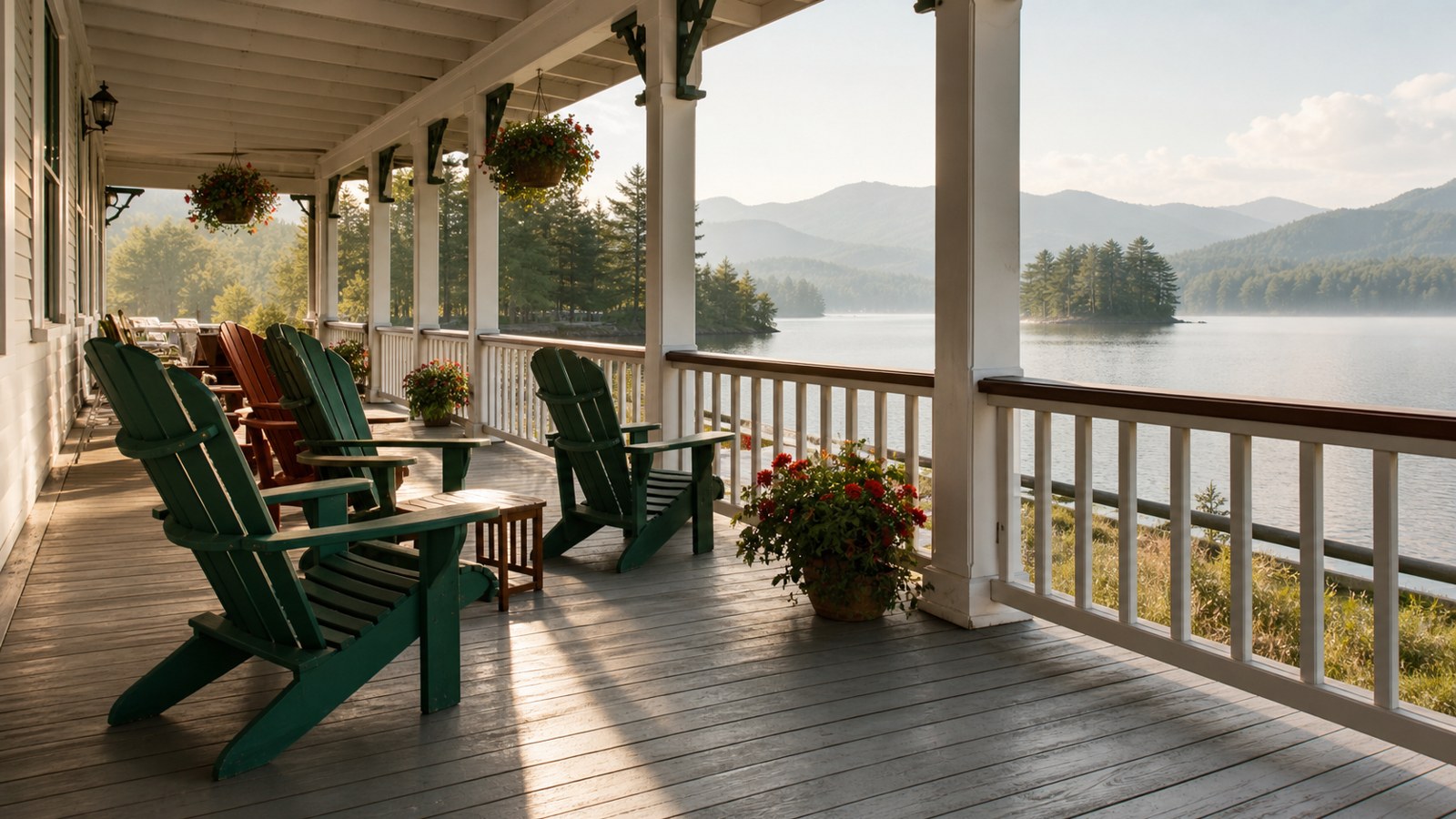
Adirondack chairs feel natural at historical resorts and hotels because they solve a hospitality problem with uncommon grace: they invite guests to slow down without making the setting feel staged. On a lakefront porch, beside a stone lodge, or along a quiet garden path, the chair gives people a recognizable place to pause, read, talk, and look outward. Its deep seat and broad arms suit vacation rhythms, while its rugged silhouette belongs beside timber, shingle, stone, canvas awnings, and mountain views. For historic properties, the chair is more than outdoor furniture. It becomes part of the visual language that tells guests they have arrived somewhere restful, rooted, and a little removed from ordinary pace. The right chair placement can make a restored building feel inhabited rather than merely admired, which is exactly the difference between a pretty property and a memorable stay.
A: Their shape suggests outdoor leisure, regional craft, and informal comfort, which supports the mood many historic properties want guests to feel.
A: Wood offers traditional character, while quality recycled plastic may be better for high-use areas where durability and easy cleaning matter most.
A: They can be, especially on cottage properties, but the color should connect to the building palette and not overwhelm the architecture.
A: Enough to feel generous, but not so many that guests lose walking room or the porch begins to look like storage.
A: Not necessarily. Simple, tailored cushions can improve comfort if they respect the chair's lines and the property's style.
A: Toward water, mountains, gardens, fire pits, or social focal points, with some pairs angled for conversation.
A: At least seasonally, and more often during busy periods when chairs are moved, leaned on, and exposed to spills.
A: Yes, if the differences look collected and intentional rather than random, damaged, or forgotten.
A: Low-sheen paint, natural oil, or softly weathered wood usually feels more believable than a hard, glossy coating.
A: They frame unhurried moments, and those moments often become the emotional center of a resort stay.
From Mountain Camps to Guest Porches
The Adirondack chair’s resort connection begins with the broader idea of outdoor retreat. Early mountain hotels and camps were built around escape from heat, noise, and crowded city life. Their porches, docks, and lawns were not leftover spaces; they were part of the attraction. Guests came to breathe, watch weather move across the lake, and experience comfort that felt close to nature without being uncomfortable. Furniture had to support that promise in a way that was sturdy, informal, and visually tied to the outdoors.
That is why the Adirondack form became so useful. It sits low, leans back, and points the body toward the horizon. Unlike a dining chair, it does not imply a schedule. Unlike a delicate wicker piece, it can hold its own against rough boards, pine needles, and damp air. In a resort context, the chair communicates leisure before anyone sits down.
The chair also suited the democratic side of resort life. A grand lobby might separate guests by dress, price, or ceremony, but a porch chair made the shared view feel accessible. It allowed a guest to participate in the landscape without needing a guide, a boat, or a formal activity. That modest usefulness is one reason the form continues to feel at home beside old hotels.
Why the Shape Suits Historic Hospitality
Hospitality design depends on cues. Guests may not consciously analyze a porch chair, but they understand what it offers. The broad arms suggest a drink, a folded map, a novel, or a camera placed within reach. The reclined seat suggests a longer pause. The slatted back lets the chair look architectural, which matters beside lodges, cottages, and hotels with strong exterior lines.
The chair also bridges public and private space. A guest can sit in an Adirondack chair on a shared lawn and still feel as though the moment belongs to them. That balance is valuable for hotels, where outdoor areas must serve couples, families, solo travelers, and groups without constant rearrangement.
Because the form is familiar, it reduces uncertainty. People know how to use it. They know it is meant for looking out, not perching formally. At a historic property, that familiarity can soften the grandeur of an old building and make the guest experience feel welcoming.
There is also an economic intelligence to the shape. Historic hotels need furniture that can support many small experiences without constant staff intervention. One chair can serve a guest reading after breakfast, another drying off after a swim, and another waiting for family before dinner. The more naturally a chair supports those shifts, the less the property has to explain itself through signs, rules, or rearranged furniture.
Materials That Match the Setting
The best material choice depends on the property’s maintenance capacity as much as its style. Painted wood is the classic resort answer, especially for inns with trim colors, porch railings, and cottage clusters. It can be refreshed, repaired, and allowed to age in a way that feels honest. Cedar, cypress, teak, and other outdoor-suitable woods bring warmth that looks at home beside stone steps and shingled walls.
Modern recycled plastic chairs can also make sense, particularly for high-traffic hotels or waterfront rentals where cleaning and weather resistance matter. The key is restraint. A historically minded property should choose profiles, colors, and finishes that support the architecture rather than announcing themselves as maintenance-free substitutes. If the surface looks too shiny, the color too synthetic, or the proportions too bulky, the maintenance advantage may come at the cost of atmosphere.
Scale is just as important as material. Oversized chairs may feel luxurious on a broad lawn, but they can overpower a narrow balcony or an old cottage porch. Slimmer classic profiles often sit more comfortably near delicate trim, screened doors, and small guest-room entries. The chair should look as if it belongs to the building, not as if it was dropped in for a promotional photograph.
Layout Lessons From Old Resorts
A long hotel veranda can easily become a furniture lineup, so placement matters. Chairs should be arranged in small destinations: a pair at the rail, three near a side table, several around a fire feature, or a quiet single chair at the end of the porch. These arrangements help guests understand where to settle without making the space feel rigid.
Sightlines deserve special attention. Adirondack chairs are often about the view, but historic resorts also have arrival sequences, garden paths, and architectural details worth preserving. A chair should not block a doorway, crowd a column, or make luggage movement awkward. Comfort begins before anyone sits.
Spacing also changes the mood. Tight rows feel like an event setup. Generous spacing feels like a resort. When chairs are angled slightly rather than squared off, they create a softer rhythm across porches and lawns.
The quietest layouts usually serve more than one kind of guest. A couple may want a private pair near the end of a railing, while a family may need a looser cluster where adults can talk and children can move around safely. A good historical resort plan offers both experiences without turning the porch into separate zones with hard boundaries.
Color, Patina, and the Question of Authenticity
Color can either strengthen or flatten a historic setting. White, forest green, deep red, slate blue, and muted black often work because they echo old trim palettes and landscape tones. Brighter colors may be right for lake cottages or family resorts, but they need a visual reason. Without that reason, the chairs can feel imported from a catalog rather than belonging to the property.
Patina is appealing only when it is backed by care. A slightly worn arm can feel beloved. A splintered arm feels neglected. A faded paint surface can suggest seasons of use, but peeling flakes near a guest’s sleeve tell a different story. Historic hospitality depends on this distinction.
Finishes should also be judged in changing light. A color that looks charming in a maintenance shed may glare on a south-facing porch or disappear under deep eaves. Testing samples near the actual building helps owners see how the chairs will relate to stone, siding, plants, water, and guest photography throughout the day.
Using Chairs to Tell the Property's Story
Adirondack chairs can help a resort tell its story quietly. A group near the old boathouse speaks to lake life. A line of chairs below a great-room window connects indoor gathering with outdoor rest. A pair outside a guest cottage makes the room feel larger than its walls. None of this requires signage; the furniture does the narrative work.
For hotels with archival photographs, old postcards, or long guest traditions, chair placement can echo historical patterns without becoming a museum display. The goal is not to freeze the property in time. It is to preserve the feeling that outdoor leisure has always been part of the place.
That feeling is powerful because it is experienced physically. Guests remember the chair not as an object, but as the place where they watched rain over the lake, talked after dinner, or drank coffee before the day began.
This storytelling can extend to quieter service choices. Staff might reset chairs toward the sunset before evening, leave a few blankets near a covered porch during shoulder season, or keep a favorite old chair in a protected corner rather than replacing every piece at once. Small decisions like these make the outdoor setting feel cared for instead of merely furnished.
Maintenance as Part of the Guest Experience
Historic properties cannot separate aesthetics from upkeep. A chair that looks beautiful in spring can become rough, stained, or unstable by late summer if no one owns the maintenance routine. Seasonal inspections should check joints, screws, slat edges, feet, finish wear, and hidden mildew. The work is not glamorous, but it protects the atmosphere guests came to enjoy.
Storage matters too. Winter conditions, stacked chairs, and damp sheds can undo a season of careful presentation. Photographing layouts before storage, labeling repair needs, and refreshing finishes before peak occupancy all help chairs return to their familiar places looking intentional.
Repairs should be consistent enough that guests do not notice them as repairs. A mismatched screw, a glossy touch-up patch, or a replacement board with a different edge profile can distract from the calm effect the property is trying to create. Thoughtful maintenance keeps attention on the setting, not on the work behind it.
Balancing Heritage With Modern Expectations
Today’s guests bring modern expectations to historic places. They may love old railings, creaking floors, and framed photographs, but they still expect outdoor seating to be clean, stable, and comfortable. Adirondack chairs can satisfy both sides when owners choose durable construction and keep the presentation simple.
Accessibility is part of that balance. A property can preserve the classic low chair while also offering a few taller lounge chairs or benches nearby. That choice does not weaken the historic mood; it broadens who can enjoy it. Heritage hospitality should feel generous, not restrictive.
Lighting, pathways, and nearby surfaces matter as well. A beautiful chair placed beyond a dark step or muddy lawn will be used less than a modest chair placed where guests can reach it easily. The setting should invite the pause and make leaving it just as effortless.
When heritage and function work together, the chair disappears into the pleasure of the place. Guests notice the lake, the porch, the conversation, and the quiet first. Later, they remember the chair because it made those moments possible.
The Lasting Appeal
The reason Adirondack chairs endure at historical resorts and hotels is simple: they make leisure visible. They give architecture a human scale, turn a view into an invitation, and let guests participate in the romance of the property without needing instructions.
When chosen and maintained well, these chairs do more than fill outdoor space. They become part of the stay itself. Their silhouettes appear in vacation photos, memory, and sometimes even in a guest’s idea of what a return visit should feel like. That is a rare achievement for a piece of outdoor furniture: it becomes both practical equipment and a symbol of welcome. For a historic resort, that combination is hard to replace because it supports comfort, identity, and memory at the same time.